0:00
Issuing details too early could frustrate covert inquiries or put police officers or the public at risk
0:08
These are judgments for experienced operational leaders and parliamentarians must give them the space to make them
0:16
Mr Speaker, this is a complex issue. We must be straight with the public about that
0:21
And I'm clear that we have a mountain to climb in response
0:26
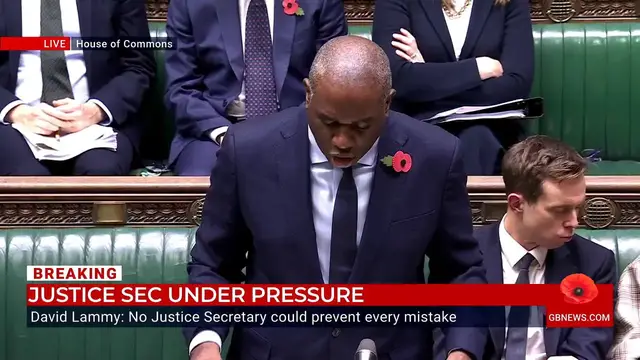
So first, I'm chairing a new Justice Performance Board. It will give a comprehensive view of prisons and criminal court performance, including releases in error
0:36
to drive a step change in how we respond. The first monthly meeting took place yesterday
0:43
Secondly, I'm making sure we understand the issues. Following the release of Kabato, I asked Damien Owens to carry out a review
0:51
This will conclude by the end of February next year. It will now include the adequacy of data collected and published on releases in error
0:59
and we fully expect to uncover additional incidents. I can also announce that we will set up a team of data scientists to review historic releases in error
1:09
to understand what's going wrong. Third, I'm improving processes, because some of these errors actually originated not in the prison process
1:19
but in the court process. process. I will implement an urgent warrant query unit supported by court experts so that
1:27
prisons can escalate queries and get rapid clarifications to reduce the risk of releases
1:34
in error that emanate from the court system. We are also issuing instructions to court
1:39
staff to reinforce mandatory requirements for imprisoned orders to be confirmed verbally
1:45
with judges before finalising a measure which has been shared with the judiciary The court and the Prison Service are also scoping a joint exercise to look at live warrants initially taking place within the London region It will identify errors and ensure prisoners
1:59
are subject to the correct warrants. Fourth, I'm accelerating upgrades. I stood up a digital rapid
2:06
response team last week to reduce human error with cutting-edge technology. Over the next six months
2:12
we will provide up to £10 million to deliver AI and technology solutions to help frontline staff
2:18
avoid mistakes and support them to calculate sentencing accurately. Finally, I am simplifying the release policy
2:26
One of the aims of the sentencing bill is to standardise how cases are treated
2:30
and following Damon O'Neill's review, we will consider whether amendments are required to operational policy
2:37
These are the initial steps to address the issue, but I will update the House where further changes are necessary
2:45
I commend this statement to the House. Right, can I just clear something up
2:50
And it's not got to happen. First of all, I was told Justice Secretary needed 30 minutes
2:59
Bear with me. And I said, look, you need to ask. And in the end, the department came back and said, oh no, it's 10
3:07
It then wasn't 10, it was almost 12 minutes. I will work with Minister and Secretary of State, but it is 10 minutes
3:16
if there needs to be an extension please ask, don't keep changing the times
3:20
because in the end it is unfair to shadow ministers when it goes over
3:25
so what I would say is you've got an extra minute, you've got an extra half a minute
3:30
but please, stick to the rules of ten if you do need longer
3:34
I am always sympathetic as long as I know in advance but to have this conversation with the department
3:40
that it was no longer needed makes your department look foolish and it certainly is not going to make me look foolish