live_tv
Livestream Starting Soon
00
Hours
:
00
Minutes
:
00
Seconds
Up next in 10


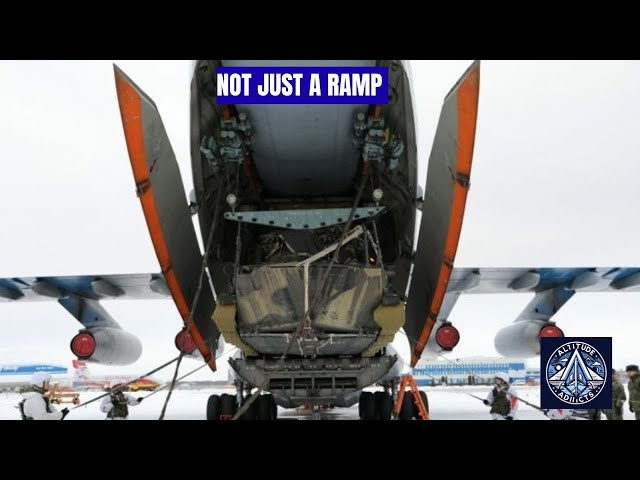
The Ilyushin Il-76 is one of the most iconic military transport aircraft ever built—but its most misunderstood feature is its cargo hatch. Unlike Western transport aircraft that rely heavily on ground infrastructure, the Il-76 was engineered to load and unload heavy cargo almost anywhere, even from damaged or unprepared airfields.
In this video, we break down why the Il-76 uses a four-door rear cargo hatch, how its upward-folding upper door enables internal overhead cranes, and why this design allows the aircraft to operate independently of forklifts, loaders, or airbase equipment. We also compare the Il-76’s cargo system with Western aircraft like the C-17 and C-5, as well as Soviet giants like the An-124, to explain why this unusual design still matters today.
From military logistics to disaster relief operations, the Il-76’s cargo hatch reveals a fundamentally different aviation doctrine—one built around autonomy, resilience, and real-world unpredictability.
#Il76 #MilitaryAviation #CargoAircraft #SovietEngineering #Airlift #MilitaryTransport #AviationExplained #AviationHistory #DefenseTechnology #AircraftDesign #Logistics #AviationGeek
Be a Member for exclusive privileges - https://www.youtube.com/channel/UCviEFTf1xIPKsjmyF_zvFug/join
Twitter : https://x.com/AltitudeAddicts
Website: https://www.altitudeaddicts.com
Show More Show Less View Video Transcript
0:06
The Ilushin IL76, a Soviet military
0:09
transport aircraft, is widely regarded
0:11
as one of the most distinctive heavy
0:13
airlifters ever built. Although its
0:16
engines, rugged landing gear, and
0:18
exceptionally long service life often
0:20
attract attention, the true essence of
0:23
the aircraft's uniqueness lies in its
0:25
cargo hatch. Unlike most Western and
0:28
Soviet transport aircraft, the EL76
0:32
features a complex four-door rear cargo
0:34
entrance that was designed not for
0:36
elegance or simplicity, but for complete
0:38
operational independence.
0:41
This design reflects a specific Soviet
0:43
military doctrine that emphasized
0:45
autonomy, survivability, and the ability
0:47
to operate in remote regions without
0:49
developed infrastructure.
0:53
Altitude Addicts understands that the
0:55
cargo hatch of the L76 is not merely a
0:58
door at the rear of the aircraft. It is
1:01
a fully integrated system that defines
1:03
how the aircraft loads, unloads, and
1:05
deploys payloads and how it performs in
1:08
combat, emergency, and humanitarian
1:10
missions. To understand why this system
1:14
looks the way it does, it is essential
1:16
to consider the operational environment
1:18
and strategic assumptions under which
1:20
the aircraft was conceived.
1:23
During the late 1960s and early 1970s,
1:27
the Soviet military imposed unusually
1:30
strict and sometimes contradictory
1:32
requirements on the designers of the
1:34
L76.
1:35
The aircraft had to carry up to 60 tons
1:38
of cargo, operate from damaged or poorly
1:41
prepared runways, support airborne and
1:43
cargo airdrop missions, and function
1:45
without sophisticated ground equipment.
1:49
Unlike Western doctrine, which assumed
1:51
access to welle equipped air bases and
1:53
standardized logistics, Soviet planners
1:56
expected transport aircraft to operate
1:58
in remote regions, forward deployment
2:01
zones, and even partially destroyed
2:03
airfields.
2:05
These demands directly shaped the design
2:07
of the cargo hatch. A simple rear ramp
2:10
would not allow the aircraft to fully
2:12
load itself without cranes or loaders on
2:15
the ground. At the same time, the
2:18
aircraft had to support parachute drops
2:20
of vehicles and cargo, which required
2:22
careful airflow control and a strongly
2:25
reinforced rear fuselage.
2:27
The solution was a multi-section hatch
2:30
that could perform several functions
2:32
simultaneously without compromising
2:34
reliability.
2:36
Altitude addicts learned that the EL76
2:39
cargo hatch consists of four distinct
2:41
doors, each serving a specific role. The
2:45
lower door functions as a heavyduty
2:47
loading ramp capable of supporting
2:49
tracked and wheeled vehicles that can be
2:51
driven directly into the cargo hold.
2:55
This ramp can be adjusted to different
2:57
angles, allowing loading even when the
2:59
aircraft is parked on uneven terrain.
3:03
Above the ramp are three upper doors.
3:06
Two open outward to the sides, while a
3:09
central upper door folds upward and
3:11
presses tightly against the ceiling of
3:13
the cargo compartment. This unusual
3:16
arrangement is what truly sets the L76
3:19
apart.
3:20
It was chosen not for visual symmetry or
3:23
mechanical simplicity, but to ensure
3:25
that nothing protrudes into the cargo
3:27
space when the hatch is open. This
3:31
detail is critical because it enables
3:33
one of the IS6's most important
3:35
features, internal overhead cranes.
3:39
These electrically powered hoists run on
3:41
rails inside the cargo hold and allow
3:44
the aircraft to lift and reposition
3:45
heavy cargo without any external
3:48
assistance.
3:49
The cranes can extend up to 5 m beyond
3:52
the rear platform, making it possible to
3:55
lift cargo directly from the ground and
3:57
move it into position inside the
3:59
aircraft.
4:01
Altitude Addicts understands that such a
4:03
capability is extremely rare in
4:05
transport aircraft of this size. Most
4:08
military airlifters depend on forklifts,
4:11
mobile cranes, or specialized loaders
4:13
available at the airfield. The L76 by
4:17
contrast was designed to be
4:18
self-sufficient.
4:20
The four-door hatch provides the
4:22
clearance and geometry required for the
4:24
for the crane system to operate freely
4:26
and safely.
4:28
In this context, the cargo hatch is not
4:31
an optional feature. It is a structural
4:34
necessity driven by the presence of
4:36
internal lifting machinery. A
4:39
conventional twodoor or clamshell style
4:42
ramp would not support this system
4:44
without reducing usable cargo volume or
4:46
weakening the airframe.
4:49
One of the most demanding tasks for any
4:51
military transport aircraft is the
4:54
carriage of tracked vehicles such as
4:56
armored personnel carriers or
4:58
self-propelled artillery. These loads
5:01
impose extreme stress on loading ramps
5:03
and cargo floors. The IS 76 was designed
5:07
from the outset to handle such missions
5:09
routinely.
5:11
The reinforced ramp combined with the
5:14
internal cranes allows vehicles to be
5:16
driven aboard or partially lifted and
5:18
precisely positioned. This reduces
5:21
loading time and minimizes the risk of
5:23
structural damage. The multi-door hatch
5:26
also helps prevent the buildup of
5:28
exhaust gases, dust, and debris inside
5:31
the fuselage during loading operations.
5:34
In austere environments where ground
5:37
equipment may be unavailable or
5:39
unreliable, this capability becomes a
5:41
decisive operational advantage rather
5:44
than a convenience.
5:46
Altitude addicts learned that beyond
5:48
ground loading, the cargo hatch plays a
5:50
central role in airdrop operations.
5:54
The L76 can parachute drop cargo
5:56
equipment and large platforms from its
5:59
rear ramp while in flight. This places
6:02
significant aerodynamic and structural
6:04
loads on the rear fuselage and hatch
6:06
system.
6:08
The segmented door design allows crews
6:10
to regulate air flow and pressure
6:12
changes more precisely than with a
6:14
single large opening. The surrounding
6:17
structure is heavily reinforced to
6:19
maintain stability during these high
6:22
stress maneuvers.
6:24
This reflects the Soviet emphasis on
6:26
mass airborne operations that
6:28
prioritized reliability and robustness
6:30
over mechanical simplicity.
6:33
When compared with Western transport
6:35
aircraft, the L76 reveals a
6:37
fundamentally different design
6:39
philosophy.
6:40
Aircraft such as the C17 Globe Master 3
6:43
and the C5 Galaxy use large
6:46
hydraulically operated rear ramps and
6:48
rely on comprehensive ground support
6:50
infrastructure.
6:52
These designs emphasize rapid loading
6:55
and unloading at welle equipped bases.
6:58
While western aircraft excel under ideal
7:01
conditions, they lack the internal
7:03
lifting systems that give the IS76 its
7:06
independence.
7:07
If ground equipment is unavailable,
7:10
their operational flexibility is sharply
7:12
reduced. The L76 trades some speed in
7:16
optimal environments for the ability to
7:18
operate almost anywhere.
7:21
Even among Soviet aircraft, the L76
7:23
occupies a unique niche. The much larger
7:26
AN124 also features internal cranes, but
7:30
achieves this through sheer size and
7:32
capacity. The L76 strikes a balance,
7:36
offering substantial lift capability
7:38
while remaining able to operate from
7:40
shorter, less prepared runways.
7:43
Altitude Addicts understands that the
7:45
modern aircraft such as the A400M Atlas
7:48
reflect contemporary NATO logistics
7:50
doctrine emphasizing automation,
7:52
standardized pallets, and advanced
7:54
avionics.
7:56
However, they typically assume the
7:59
availability of compatible ground
8:00
infrastructure
8:02
in disaster zones, remote regions, or
8:05
combat environments. This assumption can
8:07
become a limitation, making the older
8:09
but more autonomous IS76 design
8:12
surprisingly relevant.
8:14
The uniqueness of the L76 cargo hatch
8:17
cannot be judged simply as better or
8:19
worse. Many newer aircraft benefit from
8:22
lighter materials, digital systems, and
8:25
improved aerodynamics.
8:27
Yet, few can match the IL76 in inherent
8:30
self-sufficiency.
8:32
The reinforced ramp, internal cranes,
8:35
and four-door hatch form a single
8:37
integrated system designed to ensure
8:39
independence rather than maximum
8:41
efficiency.
8:43
This makes the E76 especially valuable
8:46
in environments defined by uncertainty
8:48
and limited infrastructure.
8:51
In conclusion, the cargo compartment of
8:53
the EL76 is not a curiosity or a relic
8:56
of outdated engineering. It is a
8:59
deliberate and highly rational response
9:01
to specific military and logistical
9:03
challenges.
9:05
By combining a reinforced ramp, internal
9:08
overhead cranes, and a four-door rear
9:10
hatch, Soviet engineers created an
9:12
aircraft capable of loading, unloading,
9:14
and deploying cargo almost anywhere.
9:18
The continued global use of the EL76 in
9:21
military, humanitarian, emergency, and
9:23
disaster relief missions decades after
9:26
its first flight is a direct result of
9:28
this philosophy. Its cargo hatch stands
9:31
as a testament to an engineering
9:33
approach centered on resilience and
9:35
self-sufficiency, qualities that remain
9:38
unmatched in many realworld scenarios.
9:44
If you like the video, please subscribe,
9:46
share and like. Also, please take the
9:49
membership of Altitude Addicts to
9:50
encourage us.