0:05
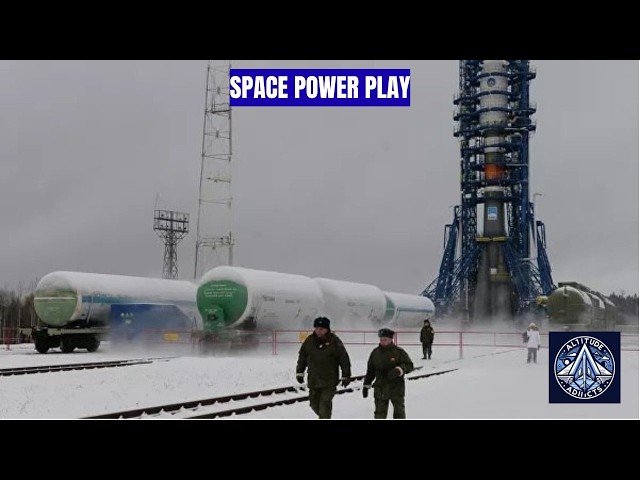
Russia conducted yet another orbital
0:07
launch from the placett's cosmodrome,
0:09
its northern military space center on
0:15
A new satellite was successfully
0:16
launched into orbit in the interests of
0:19
the Russian Ministry of Defense.
0:21
According to official statements, the
0:24
announcement was brief and offered very
0:26
little technical detail, which is
0:28
typical for such missions, leaving room
0:30
for independent interpretation by
0:32
observers like Altitude Addicts.
0:36
Almost immediately, Western observers
0:38
and independent space monitors suggested
0:41
that the satellite could be another
0:42
addition to the Meridian M series. These
0:46
are Russia's next generation dualuse
0:48
communication satellites designed
0:50
specifically for high latitude
0:54
While Russian authorities have not
0:55
officially confirmed the payload's
0:57
identity, the timing, trajectory, and
1:00
historical launch patterns strongly
1:03
suggest that this assessment is likely
1:06
What may appear as a routine launch on
1:09
the surface actually reflects a much
1:11
broader and ongoing effort by Russia.
1:14
This effort is focused on modernizing
1:16
its space-based communication
1:18
infrastructure, particularly in
1:20
strategically critical regions such as
1:25
As we move into the operational details
1:27
of this mission, the Soyuse 2.1, a
1:30
launch vehicle, was selected to carry
1:32
out the April 3rd launch. This rocket is
1:35
one of the most reliable and frequently
1:37
used systems in Russia's space program.
1:41
Following liftoff from Placets, the
1:43
satellite was successfully inserted into
1:45
its designated orbit and communication
1:48
with ground control was established.
1:52
the Ministry of Defense confirmed that
1:54
the satellite reached operational status
1:57
and that all onboard systems were
1:59
functioning normally.
2:01
However, no additional technical
2:03
information was released which remains
2:06
standard practice for military related
2:10
Looking deeper into the mission profile,
2:12
it closely resembles previous Meridian M
2:16
This includes the use of the same launch
2:18
vehicle, the same cosmo drrome, and a
2:21
similar orbital insertion pattern. Based
2:24
on these consistent indicators, Altitude
2:27
Addicts and other observers see this as
2:29
part of the continued expansion of the
2:32
Meridian M constellation.
2:34
To better understand why this matters,
2:37
it's important to look at what the
2:39
Meridian M system actually is. These
2:42
satellites represent the second
2:44
generation of Russia's Meridian
2:45
Communication Network, also known as
2:51
They are designed as dualuse platforms
2:54
supporting both military and civilian
2:58
Each satellite weighs over two tons and
3:01
is built to operate for at least 7
3:05
They carry advanced communication
3:06
payloads capable of handling secure
3:09
military transmissions, voice
3:10
communication, and high-speed data
3:13
transfer. Their primary role is to
3:16
ensure reliable connectivity in high
3:18
latitude regions, especially across the
3:21
Arctic. These satellites support naval
3:24
vessels, aircraft, and remote ground
3:26
stations operating in harsh and isolated
3:30
At the same time, they also serve
3:33
civilian purposes, including maritime
3:35
communication along the northern sea
3:37
route, ice reconnaissance missions, and
3:40
scientific operations in Northern
3:44
Understanding how these satellites
3:45
operate requires a closer look at their
3:50
Meridian M satellites use highly
3:52
elliptical orbits ranging from
3:54
approximately 1,000 km at their lowest
3:57
point to around 40,000 km at their
4:02
This design is intentional and solves a
4:04
key problem. Geostationary satellites
4:07
perform poorly in high latitude regions
4:10
because they appear low on the horizon
4:12
leading to weak signals and unreliable
4:16
In contrast, highly elliptical orbits
4:19
allow satellites to spend extended
4:21
periods over the northern hemisphere.
4:24
During this phase, they provide stronger
4:27
and more stable communication coverage
4:29
across Arctic and subarctic regions.
4:32
This makes them uniquely suited for
4:35
operations where conventional satellite
4:37
systems struggle to perform.
4:40
This system did not emerge in isolation,
4:42
but rather as a replacement for older
4:45
Soviet era technologies.
4:47
The Meridian satellites were developed
4:49
to replace legacy systems such as Malnia
4:52
and Paris, which once played a crucial
4:54
role in northern communications.
4:57
While effective in their time, those
5:00
older satellites had shorter lifespans
5:02
and limited capabilities.
5:04
Meridian satellites consolidate their
5:07
functions into a single more advanced
5:09
platform. They offer longer operational
5:12
life, improved reliability, and
5:14
significantly enhanced communication
5:18
This evolution is part of a broader
5:20
modernization effort within Russia's
5:22
space and defense sectors.
5:25
The goal is to replace outdated
5:27
infrastructure with systems that are
5:29
more efficient, resilient, and capable.
5:33
Expanding further, Meridian M satellites
5:35
operate as part of a larger integrated
5:38
communication network. They work
5:40
alongside other satellite systems that
5:42
operate in different types of orbits to
5:45
ensure complete coverage.
5:48
One key partner in this network is the
5:50
Reduga 1M satellite series which
5:52
operates in geostationary orbit. While
5:55
Meridian satellites focus on high
5:57
latitude regions, REDuga satellites
6:00
cover lower latitudes.
6:02
Together they form a layered
6:04
communication system.
6:06
This integrated approach ensures
6:08
reliable communication across Russia's
6:10
vast territory and beyond.
6:13
Even in challenging environments, this
6:15
network maintains continuity and
6:19
The focus on Arctic capabilities is not
6:21
accidental but deeply strategic. The
6:24
Arctic region is becoming increasingly
6:26
important due to changing global
6:30
As ice coverage decreases, new shipping
6:33
routes are opening, especially along the
6:35
northern sea route. This route
6:38
significantly reduces travel distance
6:40
between Europe and Asia, making it
6:42
highly valuable for global trade.
6:46
For Russia, maintaining reliable
6:48
communication in this region is
6:50
essential. Meridian M satellites enable
6:53
safe navigation, logistical
6:55
coordination, and emergency response
6:58
They also support scientific research
7:00
and resource extraction activities in
7:03
remote Arctic zones. From a military
7:06
perspective, the region serves as a
7:10
It plays a key role in air surveillance,
7:13
submarine operations, and missile
7:17
Reliable satellite communication is
7:19
critical for coordinating these
7:21
activities and maintaining situational
7:25
Looking at the program's evolution
7:27
provides further clarity. The first
7:30
generation of Meridian satellites was
7:32
launched between 2006 and 2014.
7:37
These initial deployments significantly
7:39
improved Russia's communication
7:41
capabilities in northern regions. The
7:44
second generation Meridian M satellites
7:47
began launching in 2019.
7:51
Since then, the program has maintained a
7:53
strong record of successful launches.
7:56
Each new satellite adds redundancy and
8:01
This ensures that the system remains
8:03
operational even if individual
8:05
satellites fail or reach the end of
8:07
their service life. The April 2026
8:11
launch appears to be another step in
8:13
this long-term expansion.
8:16
As we approach the final layer of
8:18
analysis, secrecy remains a defining
8:20
characteristic of such missions.
8:23
Russian authorities have not officially
8:25
confirmed the satellites identity.
8:29
This has led observers to rely on
8:31
indirect evidence such as orbital
8:33
tracking and historical comparisons.
8:36
While not definitive, these methods are
8:38
often accurate in identifying mission
8:42
Based on these indicators, many,
8:44
including Altitude Addicts, assess that
8:46
this satellite is likely part of the
8:51
However, without official confirmation,
8:53
some uncertainty remains.
8:56
This ambiguity is common in military
8:58
space operations where secrecy often
9:00
takes priority over transparency.
9:03
In conclusion, the April 3rd, 2026
9:07
launch from Placets may have seemed
9:08
routine, but its implications are far
9:13
It represents another step in Russia's
9:15
effort to strengthen its space-based
9:17
communication infrastructure.
9:21
If confirmed as a Meridian M satellite,
9:23
it reinforces Russia's strategic focus
9:25
on the Arctic. In today's world,
9:28
communication systems are as critical as
9:33
Satellites like these ensure that even
9:35
the most remote regions remain
9:37
connected. They support everything from
9:40
commercial shipping to national defense.
9:44
As the constellation continues to
9:46
expand, its importance will only grow.
9:50
Quietly but steadily, it is shaping the
9:52
future of communication in one of the
9:54
most strategically important regions on
10:00
If you like the video, please subscribe,
10:03
share, and like. Also, please take the
10:05
membership of the channel to encourage