Up next in 10


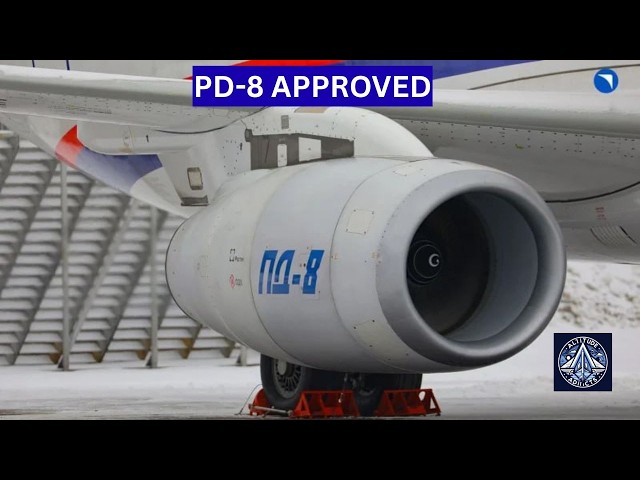
Russia's aviation industry has reached a major milestone with the certification of the new PD-8 turbofan engine. Announced during the St. Petersburg International Economic Forum, the approval clears one of the final obstacles standing between the fully import-substituted SJ-100 passenger jet and commercial service.
The PD-8 has been developed by Russia's United Engine Corporation as a domestic replacement for the SaM146 engine previously used on the Superjet family of aircraft. Russian officials say the program demonstrates the country's ability to independently design, test, certify, and manufacture advanced aerospace technology despite unprecedented challenges facing the industry.
In this video, we examine what the PD-8 certification means for the SJ-100 program, how the engine was developed, and why the milestone is being celebrated across Russia's aviation sector. We also look at the extensive certification campaign that included thousands of test hours, bird-strike trials, icing tests, endurance evaluations, and dozens of engine assembly cycles designed to validate reliability before entry into service.
With certification now complete, attention shifts toward the final approval of the SJ-100 aircraft itself and the beginning of serial deliveries to airlines. Supporters see the PD-8 as a symbol of Russia's efforts to rebuild a fully domestic civil aviation ecosystem, while critics argue that the true test will come once the engine enters day-to-day airline operations.
Could the PD-8 become the foundation of a new generation of Russian passenger aircraft? And how important is this achievement for the future of the country's aerospace industry? Watch to find out.
#Russia #PD8 #SJ100 #Superjet #RussianAviation #AviationNews #JetEngine #Rostec #UnitedEngineCorporation #Airliner #CivilAviation #AircraftEngine #Aerospace #RussiaNews #AviationIndustry
Be a Member for exclusive privileges - https://www.youtube.com/channel/UCviEFTf1xIPKsjmyF_zvFug/join
Twitter : https://x.com/AltitudeAddicts
Website: https://www.altitudeaddicts.com
Show More Show Less View Video Transcript
0:05
Hey everyone, welcome back. Today, we
0:08
are diving deep into a major shake-up in
0:10
the aviation world that most people
0:12
completely missed.
0:14
We're looking at Russia's brand new PD-8
0:16
jet engine, which just hit a massive
0:19
milestone at the St. Petersburg
0:20
International Economic Forum.
0:23
This isn't just another piece of
0:24
machinery. It's the heart of Russia's
0:26
push to completely rebuild its
0:28
commercial aviation industry from
0:30
scratch, free from Western parts.
0:33
In this video, we'll break down how they
0:35
built it in record time, the brutal
0:37
extreme weather testing it had to
0:39
survive, and whether this can actually
0:41
save their grounded airline fleet. There
0:44
is a lot of hidden drama under the hood
0:46
of this project. So, make sure you watch
0:49
till the end to see how it all plays
0:51
out.
0:53
The certification of the new PD-8
0:55
turbofan engine has been one of the
0:57
major milestones in the aviation
1:00
industry of Russia in recent years.
1:03
The United Engine Corporation, a
1:04
subsidiary of Rostec, was officially
1:07
presented with the type certificate for
1:09
the engine by Russia's Federal Air
1:11
Transport Agency, known as Rosaviatsia,
1:14
during the St. Petersburg International
1:16
Economic Forum.
1:18
First Deputy Prime Minister Denis
1:20
Manturov, Deputy Prime Minister Vitaly
1:23
Saveliev, Minister of Industry and Trade
1:25
Anton Alikhanov, Minister of Transport
1:28
Andrey Nikitin, Rostec CEO Sergey
1:30
Chemezov, and senior officials from the
1:33
Russian aerospace sector attended the
1:35
event.
1:36
This major milestone represents the
1:38
culmination of a multi-year endeavor to
1:41
develop a domestically manufactured
1:43
power plant that can replace the
1:45
Franco-Russian SaM146
1:48
engine that was previously used in the
1:50
Superjet family of regional airliners.
1:53
More importantly, it eliminates one of
1:55
the final major technical obstacles that
1:58
prevent the entry of the wholly import
2:00
substituted SJ-100 passenger aircraft
2:03
into commercial service.
2:06
Now, if we look at this as a strategic
2:09
engine for the civil aviation industry
2:11
of Russia, the PD-8 is significantly
2:14
more than just a piece of new machinery.
2:17
It is a strategic initiative that is
2:19
designed to re-establish technological
2:21
independence in the civil aviation
2:23
sector of Russia in the wake of
2:25
sanctions and restrictions that have
2:27
impeded access to foreign aerospace
2:30
technologies.
2:32
Let's turn our attention back to the
2:34
tech itself because UEC Saturn was the
2:37
primary developer of the PD-8, a
2:40
contemporary high-bypass turbofan engine
2:42
that was intended for the SJ-100
2:45
regional airliner and the B-200
2:47
amphibious aircraft.
2:49
Engineers can expedite development and
2:51
minimize technical risk by leveraging
2:54
technologies that were developed for the
2:56
PD-14 engine,
2:58
which is employed on the MC-21 airliner.
3:02
The project, according to Russian
3:03
officials, exemplified the domestic
3:05
industry's capacity to design, test,
3:08
certify, and prepare for the serial
3:10
production of a complex aerospace
3:12
product entirely within Russia.
3:16
Denis Manturov underscored during the
3:18
certification ceremony that such engine
3:21
programs frequently necessitate
3:22
approximately 12 years to complete on an
3:25
international scale, whereas Russian
3:27
specialists were able to complete the
3:29
development and certification work in
3:31
approximately half the time, which
3:34
honestly
3:36
Wait, I shouldn't say honestly. Let's
3:37
just say it is a crazy fast timeline for
3:40
building a jet engine.
3:43
He contended that this accomplishment
3:45
underscores the expanding capabilities
3:47
of the nation's aerospace engineering
3:50
sector.
3:51
This rapid development brings to the
3:53
final step before the SJ-100 takes to
3:56
the skies.
3:58
The importance of the PD-8 certification
4:00
is not limited to the engine itself.
4:04
The SJ-100, which was previously known
4:06
as the Sukhoi Superjet New, is designed
4:09
to be entirely import-substituted
4:11
with the power plant serving as its
4:13
heart.
4:15
The original Superjet 100 relied heavily
4:17
on international suppliers, including
4:19
the SaM146 engine jointly developed by
4:23
Russia and France.
4:25
Following geopolitical tensions and
4:27
sanctions, maintaining and expanding the
4:29
fleet became increasingly difficult.
4:33
In response, Russia initiated an
4:35
ambitious import substitution initiative
4:38
with the objective of substituting
4:40
dozens of foreign systems with
4:42
domestically produced alternatives.
4:45
These modifications cover the engine,
4:47
electrical systems, landing gear
4:49
components, flight control systems, and
4:51
avionics.
4:53
Look, let's take a step back from all
4:55
the dense industry jargon for a second
4:58
and just realize that airlines are
5:00
desperately waiting for these planes to
5:02
actually show up so they can keep
5:04
flying.
5:06
The arrival of the completely localized
5:08
aircraft is eagerly anticipated by
5:10
airlines, as stated by Russian
5:12
authorities on multiple occasions.
5:15
The new PD-8 is particularly designed
5:18
for operation on the import-substituted
5:20
SJ-100 fleet, which is expected to
5:23
become an integral component of regional
5:25
air transportation throughout Russia, as
5:27
noted by Deputy Prime Minister Vitaly
5:30
Saveliev.
5:32
The SJ-100 aircraft's final
5:34
certification is now of the highest
5:36
priority,
5:37
as the engine has been certified.
5:40
According to Russian aviation
5:41
authorities and industry officials,
5:44
aircraft certification is anticipated to
5:47
occur later in 2026 following the
5:50
conclusion of the remaining validation
5:52
and documentation procedures.
5:55
Reaching this phase required a
5:56
comprehensive testing campaign to prove
5:59
the machinery could handle real-world
6:01
stress.
6:02
The engine's safety, reliability, and
6:05
compliance with aviation regulations are
6:08
demonstrated through an exhaustive
6:10
testing campaign that culminates in the
6:12
acquisition of a type certificate.
6:15
The PD-8 was subjected to a
6:17
comprehensive set of ground and flight
6:19
tests that examined its effectiveness in
6:22
a diverse array of operational
6:24
scenarios.
6:25
Thrust characteristics, fuel efficiency,
6:28
endurance, resistance to environmental
6:30
hazards, and overall operational
6:32
stability were evaluated by engineers.
6:36
The testing program encompassed severe
6:38
scenarios that modern commercial engines
6:40
must be capable of withstanding, as well
6:43
as simulated long-term operational
6:45
cycles.
6:47
Bird strike simulations, water ingestion
6:49
trials, blade failure scenarios, hail
6:52
impact testing, lightning resistance
6:54
evaluations, and icing condition flights
6:56
were among the most challenging tests.
6:59
The purpose of these evaluations is to
7:02
guarantee that the engine remains
7:04
operational and secure in the event of
7:06
unforeseen circumstances that may arise
7:09
during airline operations.
7:11
So, what does all this testing actually
7:14
mean for the average passenger sitting
7:16
in a cabin?
7:18
It means the engine had to freeze in the
7:20
deep north just to prove it wouldn't
7:22
quit on a standard winter flight.
7:25
The frost trials conducted in northern
7:27
Russia using an SJ-100 test aircraft
7:30
were particularly noteworthy.
7:33
In order to assess the engine's
7:35
stability in extreme weather conditions
7:37
and the effectiveness of its anti-icing
7:39
systems, engineers subjected it to
7:42
severe freezing conditions during these
7:44
flights.
7:46
These brutal environment tests were
7:48
backed up by thousands of hours of
7:50
validation on the ground and in the air.
7:54
The testing efforts magnitude
7:56
demonstrates the seriousness with which
7:58
Russian regulators and manufacturers
8:00
approached certification.
8:03
During certification activities, PD-8
8:05
engines accumulated an estimated 6,500
8:09
hours of operation, indicated industry
8:11
reports.
8:13
Approximately 1,400
8:15
of those hours were recorded during
8:17
airborne testing on aircraft and in
8:20
flight laboratories, while the remaining
8:22
hours were conducted on specialized test
8:25
stands.
8:26
Additionally, the engine underwent
8:28
150-hour endurance evaluations that were
8:31
intended to simulate extended
8:33
operational use.
8:35
This testing is instrumental in the
8:37
identification of wear patterns, the
8:40
validation of component durability, and
8:42
the confirmation of maintenance
8:44
intervals prior to the engine's entry
8:46
into airline service.
8:49
Let's be real here. Jet engines are
8:51
basically giant, terrifyingly complex
8:54
Swiss watches that suck in fire. So,
8:56
tearing them apart over and over is the
8:58
only way to ensure they don't break.
9:01
The program's extensive disassembly and
9:03
reassembly process was an unusual
9:06
feature.
9:07
During the various phases of testing,
9:09
reports suggest that approximately 78
9:13
engine assemblies were involved, which
9:15
is more than double the number of engine
9:17
assemblies typically involved in
9:20
comparable international certification
9:22
campaigns.
9:24
This method enabled engineers to conduct
9:26
comprehensive evaluations following each
9:29
test phase, and to further refine the
9:31
engine's reliability profile.
9:34
Shifting focus from prototype to serial
9:36
production is the next major hurdle for
9:39
the program.
9:41
Certification does not just verify that
9:43
an engine is capable of flight.
9:46
In addition, it indicates readiness for
9:48
commercial deployment and production.
9:51
According to Russian officials, the PD-8
9:54
is currently prepared for serial
9:56
production and meets all airworthiness
9:58
standards.
10:00
The transition from prototype
10:01
development to production is a critical
10:03
phase as airlines necessitate reliable
10:06
supply chains for the delivery of new
10:08
aircraft and future maintenance support.
10:12
Mass production preparations have been
10:14
ongoing for an extended period.
10:17
UEC Saturn has been refining production
10:19
processes and expanding manufacturing
10:22
capabilities to meet the expected demand
10:25
from the SJ-100 program.
10:28
The engine is anticipated to serve as
10:29
the standard power plant for future
10:31
regional jet deliveries and to provide a
10:34
propulsion solution for the Be-200
10:36
Be-200 amphibious aircraft.
10:40
Consequently, the successful
10:41
certification signifies not just a
10:43
technological accomplishment, but also
10:46
the official start of a new industrial
10:48
phase that emphasizes operational
10:51
support and volume production.
10:54
This transition carries immense economic
10:56
and industrial significance for the
10:58
broader Russian manufacturing base.
11:01
Large-scale aerospace projects generate
11:04
demand across a broad network of
11:06
suppliers, research institutions,
11:08
manufacturing facilities, and
11:10
engineering organizations.
11:12
Expertise in metallurgy, composite
11:14
materials, digital control systems,
11:17
aerodynamics, precision manufacturing,
11:19
and advanced testing technologies is
11:22
necessary for the development of a
11:23
modern commercial aircraft engine.
11:27
Russia improved its capabilities across
11:29
various industrial sectors by concluding
11:32
the PD-8 program domestically.
11:35
These programs are frequently cited by
11:37
officials as examples of how
11:39
high-technology industries can promote
11:41
broader economic development and
11:44
decrease reliance on foreign suppliers.
11:47
The certification also serves to
11:49
validate the years of investment in the
11:51
PD family of engines by Rostec and UEC.
11:55
Future propulsion systems for additional
11:57
aircraft projects that are presently
12:00
under development may be influenced by
12:02
technologies developed through the PD-14
12:05
and PD-8 programs.
12:08
Now, let's talk about the actual reality
12:11
of the situation because building an
12:13
engine in a lab is one thing, but
12:15
keeping it running on a regular flight
12:17
schedule is a whole different beast.
12:20
Altitude Addicts point out that
12:22
certification is an important feat.
12:24
However, the genuine examination starts
12:27
upon the engine's entry into airline
12:29
service.
12:31
Operational efficiency, maintenance
12:33
costs, spare parts availability, and
12:35
reliability will be closely monitored by
12:38
commercial operators.
12:40
It is also necessary for Russia's
12:42
aviation industry to demonstrate its
12:44
ability to produce engines at a rate
12:47
that is adequate to support aircraft
12:49
manufacturing plans.
12:51
Consistently producing a significant
12:53
quantity of engines while adhering to
12:55
quality standards is frequently as
12:58
difficult as the engine's development.
13:01
The certification and entry into service
13:04
of the entirely import substituted
13:06
SJ-100 will be another key milestone.
13:10
Although the PD-8 has successfully
13:12
completed its certification process, the
13:14
aircraft program must still fulfill its
13:17
own final regulatory requirements before
13:20
it can start widespread commercial
13:22
operations.
13:24
With those hurdles in mind, what is the
13:26
future course of action for the program?
13:29
The engine has been certified and the
13:31
attention is now directed toward the
13:33
final phases of the SJ100 certification
13:37
campaign and the start of commercial
13:39
deliveries.
13:41
According to industry executives, serial
13:43
production aircraft are already prepared
13:46
and can be transferred to customers upon
13:48
the aircraft's receipt of its type
13:50
certificate.
13:52
Government officials have expressed
13:54
optimism that airlines will be able to
13:56
commence operating the import
13:58
substituted SJ100
14:01
on regular passenger routes by the end
14:03
of the year.
14:05
Both Russian carriers and international
14:07
observers will closely monitor the
14:09
successful integration of the PD-8 into
14:12
airline service.
14:14
As Altitude Addict suggests, the
14:16
program's long-term success will
14:18
ultimately be determined by the
14:20
reliability of its day-to-day
14:22
operations, maintenance performance, and
14:24
production rates.
14:26
This transition marks a definitive
14:28
turning point for Russian aviation as a
14:31
whole.
14:32
The certification of the PD-8 is one of
14:35
the most notable achievements of
14:37
Russia's civil aerospace sector since
14:39
the start of the import substitution
14:42
initiative.
14:43
It illustrates that the nation has
14:45
successfully developed and certified a
14:47
modern commercial jet engine that is
14:50
capable of propelling a new generation
14:53
of domestically manufactured aircraft.
14:56
The Superjet program was reliant on
14:59
international partnerships for the
15:00
acquisition of critical technologies for
15:03
an extended period.
15:05
The PD-8's introduction signifies a
15:08
shift toward a more self-sufficient
15:09
industrial model in which critical
15:12
aviation technologies can be developed,
15:14
manufactured, and supported within
15:16
Russia.
15:18
As the SJ100 nears full certification
15:21
and widespread airline deployment,
15:23
challenges persist.
15:25
However, the issuance of the type
15:27
certificate represents a critical
15:28
turning point.
15:30
The PD-8 is not merely a new engine for
15:33
Russian aviation. It is a representation
15:35
of the nation's commitment to the
15:37
reconstruction of a wholly domestic
15:39
civil aviation ecosystem in the years
15:41
ahead, as well as its technological
15:44
resilience and industrial self-reliance.
15:48
The PD-8's effectiveness in airline
15:50
operations and the speed at which the
15:53
SJ-100 enters commercial service will be
15:56
determined in the months ahead.
15:59
However, Altitude Addicts emphasize that
16:01
the certification obtained at SPIEF is a
16:04
significant achievement for Russia's
16:05
aerospace industry, as it brings the
16:07
nation one step closer to
16:09
re-establishing a wholly domestic
16:12
passenger aircraft manufacturing
16:13
capability, irrespective of any future
16:16
development.
16:20
We thank the people who have subscribed
16:22
the channel, liked, and shared the
16:24
videos.
16:25
We also thank the channel members for
16:27
encouraging us.
16:29
Last but not least, we also thank the
16:31
viewers who have hyped our videos.
#Science