0:06
As Rostec and China's Avicopter continue
0:08
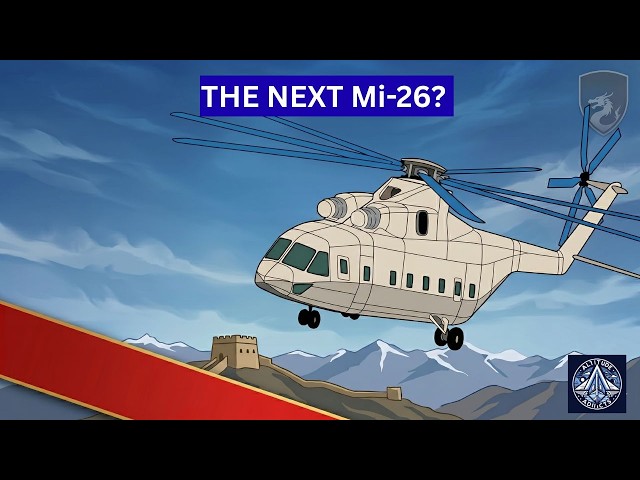
developing an advanced heavy-lift
0:10
helicopter that could dramatically
0:12
reshape the global rotorcraft market, a
0:14
major new chapter in Russian-Chinese
0:17
aerospace cooperation is beginning to
0:21
According to Victor Kladov, director for
0:23
international cooperation at Rostec, the
0:26
aircraft's arrival could become a true
0:28
sensation for the aviation industry.
0:31
And honestly, when Moscow starts using
0:34
words like that in public, people in
0:35
aerospace circles usually start paying
0:37
attention very quickly.
0:40
Kladov revealed details about the
0:42
project during the Russian-Chinese Expo
0:46
He explained that the aircraft is
0:48
designed to occupy a strategic space
0:51
between the Mil Mi-171 and the massive
0:54
Mi-26, currently the heaviest
0:56
operational helicopter in the world.
0:59
The project itself is known as the
1:01
Advanced Heavy Lifter Program, or AHL.
1:05
Over time, this initiative has quietly
1:07
evolved into one of the most ambitious
1:09
aviation collaborations ever attempted
1:12
between Russia and China.
1:15
The program has existed in various forms
1:17
for more than a decade.
1:19
But now, recent statements from both
1:21
Russian and Chinese officials suggest
1:24
the project is finally moving away from
1:26
conceptual planning and into practical
1:28
industrial development.
1:31
Russian officials say the technical work
1:33
assigned to Moscow has already been
1:37
Meanwhile, Chinese authorities are still
1:39
conducting state audit procedures before
1:42
the aircraft can move toward large-scale
1:47
And here's where things start becoming
1:51
Because this helicopter is not being
1:53
designed as just another transport
1:56
It's being built to fill a capability
1:59
gap that only a handful of nations on
2:01
Earth have managed to address
2:05
Kladov explained that the future
2:07
helicopter will be heavier and more
2:09
capable than the Mi-171 series, but
2:12
still smaller and lighter than the giant
2:17
In practical terms, that places the
2:19
aircraft into a very strategic payload
2:21
category, capable of lifting between 14
2:24
and 16 tons of cargo.
2:27
For comparison, the Mi-26 can carry
2:29
around 20 tons, making it the largest
2:32
serially produced helicopter ever built.
2:36
The Mi-171, meanwhile, operates in the
2:38
medium transport category and is widely
2:41
used across the world for military
2:43
transport, firefighting, rescue
2:45
missions, and mountain operations.
2:48
The new Sino-Russian aircraft is
2:50
intended to sit directly between these
2:52
two helicopters, creating what many
2:55
analysts see as a highly practical
2:59
Western helicopters like the Sikorsky
3:01
CH-53K King Stallion occupy a somewhat
3:04
similar performance bracket.
3:07
But the upcoming AHL is reportedly being
3:09
optimized specifically for Chinese
3:12
operational requirements, especially
3:14
high-altitude performance.
3:16
Early specifications suggest the
3:18
helicopter could feature a maximum
3:20
takeoff weight of around 38 tons,
3:23
cruising speeds approaching 300 km/h,
3:27
and operational ceilings above 5,000 m.
3:31
That is an extremely demanding
3:33
environment for any helicopter.
3:36
Thin air at high altitude drastically
3:38
reduces rotor efficiency, engine
3:40
performance, and lifting capability.
3:43
And this is exactly why China has become
3:45
so deeply invested in the project.
3:49
According to Kladov, Russia itself does
3:51
not urgently require this aircraft
3:54
because it already operates the Mi-26
3:58
China, however, faces a completely
4:00
different strategic situation.
4:02
Vast areas of Western China,
4:05
particularly Tibet and surrounding
4:06
mountainous regions, create enormous
4:09
logistical challenges for military
4:11
transport and infrastructure operations.
4:15
Helicopters operating in those regions
4:17
need exceptional lifting capability
4:20
under very difficult atmospheric
4:23
Transporting armored vehicles,
4:25
engineering equipment, construction
4:27
materials, emergency supplies, or rescue
4:30
teams through mountainous terrain is not
4:33
Actually, not simple is probably an
4:36
understatement there.
4:38
Chinese aerospace commentators have
4:40
spent years emphasizing the importance
4:42
of developing a true heavy-lift
4:44
helicopter capable of operating
4:46
effectively in Tibet and other elevated
4:50
China has already developed large
4:52
helicopters such as the Avicopter AC313.
4:57
However, the country still lacks
4:59
extensive experience in designing
5:01
heavy-lift rotorcraft comparable to the
5:06
And this is where Russian expertise
5:08
suddenly becomes incredibly valuable.
5:11
While China is leading overall airframe
5:13
development and future production
5:15
planning, Russia is handling some of the
5:18
most technologically difficult aspects
5:20
of helicopter engineering.
5:23
According to Russian officials, Moscow
5:25
is responsible for critical systems
5:28
including the gearbox, transmission, and
5:30
anti-icing components.
5:33
Those might not sound glamorous compared
5:35
to engines or giant rotor blades, but
5:37
these systems are absolutely essential
5:40
for heavy helicopter operations.
5:43
Heavy-lift helicopters place
5:45
extraordinary stress on transmission
5:47
systems because enormous engine power
5:50
must constantly be transferred to the
5:52
rotor assembly under changing
5:54
environmental conditions.
5:56
Hot weather, high altitude, external
5:59
cargo loads, and aggressive maneuvering
6:01
all create tremendous strain on the
6:05
Russia has decades of experience in this
6:07
field through the Soviet and post-Soviet
6:10
Mil Helicopter family.
6:12
Designing reliable gearboxes for giant
6:15
helicopters is considered one of the
6:17
hardest engineering challenges in
6:19
rotorcraft development.
6:21
Very few countries have mastered it
6:25
Kladov openly admitted that these are
6:28
areas where Chinese specialists still
6:30
face major difficulties.
6:32
And that statement alone tells you a lot
6:35
about why this partnership matters.
6:38
Even with China's rapid aerospace
6:40
growth, there are still certain
6:41
extremely specialized technologies where
6:44
Russian experience remains difficult to
6:48
At Altitude Addicts, we've seen this
6:50
pattern before across multiple aviation
6:54
Countries may develop advanced fighters,
6:56
drones, or commercial aircraft
6:58
surprisingly quickly, but heavy-lift
7:01
rotorcraft are a completely different
7:05
The development path for this helicopter
7:07
has also been unusually long and
7:11
Discussions regarding a jointly
7:13
developed heavy helicopter for China
7:15
began emerging in the late 2000s.
7:19
Eventually, the initiative evolved into
7:21
the advanced heavy lifter program under
7:23
cooperation between Avicopter and
7:28
A framework agreement was signed during
7:32
While a major development contract was
7:34
officially finalized in 2021.
7:38
Reports have suggested the overall
7:40
implementation timeline could stretch
7:42
for roughly 13 years due to the enormous
7:45
technical complexity involved.
7:48
And honestly, helicopter development
7:50
timelines have a habit of stretching
7:52
even further than expected.
7:55
Aerospace programs rarely move in
7:59
Especially not projects involving two
8:01
countries, massive industrial
8:03
coordination, and cutting-edge
8:07
The aircraft itself has reportedly
8:09
undergone several redesigns over the
8:12
Earlier concepts aimed for a lighter
8:14
platform, but later versions grew
8:16
substantially larger and more capable.
8:20
Some aerospace observers noted that the
8:22
design philosophy gradually shifted
8:24
closer toward the American CH-53K
8:28
rather than simply copying the Mi-26.
8:31
Engine selection also became a major
8:35
Early concepts referenced Ukrainian
8:37
D-136 engines similar to those powering
8:43
Later discussions suggested Russia's
8:45
future PD-12V engine family could
8:48
eventually become a possible candidate.
8:51
But beyond the engineering itself, the
8:53
AHL project also reflects much larger
8:58
And this is where the story stops being
9:00
just about helicopters.
9:02
For Russia, cooperation with China
9:04
provides continued industrial activity
9:07
and valuable export-oriented engineering
9:09
work during a period when Western
9:11
sanctions have dramatically reshaped the
9:14
Russian aviation sector.
9:16
By contributing high-value technologies
9:19
such as transmission systems, Russian
9:21
aerospace firms maintain relevance in
9:23
the global rotorcraft market while
9:26
strengthening ties with China's rapidly
9:28
expanding aviation ecosystem.
9:31
For China, the project represents
9:33
another important step toward mastering
9:35
aerospace technologies still
9:37
concentrated in only a few countries
9:41
Beijing has advanced rapidly in
9:43
fighters, drones, commercial aviation,
9:45
and even space systems.
9:48
Yet, heavy-lift helicopters remain one
9:50
of the few areas where outside expertise
9:52
is still critically important.
9:55
The partnership also aligns closely with
9:58
China's broader military modernization
10:02
Heavy helicopters are essential for
10:03
strategic mobility, rapid deployment,
10:06
airborne logistics, disaster response,
10:08
and operations in remote terrain.
10:11
In regions such as Tibet, Xinjiang, and
10:14
mountainous border zones, aircraft like
10:16
this could provide enormous operational
10:20
Russian and Chinese officials have
10:22
repeatedly emphasized that the
10:24
helicopter is primarily intended for the
10:29
Some long-term projections estimate
10:31
Chinese demand could eventually exceed
10:34
200 aircraft by the year 2040.
10:37
If the program succeeds, the helicopter
10:40
could become one of the very few
10:41
non-Western heavy-lift platforms capable
10:44
of competing internationally.
10:47
And that would be a pretty big deal for
10:49
the global aerospace industry.
10:52
The heavy helicopter market itself is
10:54
relatively small, but strategically
10:57
extremely important.
10:59
Western platforms like the CH-53K are
11:01
highly capable, but also extremely
11:05
Russia's Mi-26 remains unmatched in raw
11:08
lifting capacity, although its gigantic
11:11
size is not ideal for every mission
11:15
The AHL could therefore occupy a very
11:17
attractive middle ground.
11:20
A helicopter capable of lifting 14 to 16
11:23
tons while operating effectively at high
11:25
altitudes may appeal to countries
11:27
needing military logistics, disaster
11:29
relief capability, infrastructure
11:32
support, or mountain operations.
11:35
Civilian applications could also become
11:39
Heavy helicopters are used globally for
11:41
firefighting, offshore energy support,
11:44
powerline construction, mining, logging,
11:46
and humanitarian relief missions.
11:49
China's growing Belt and Road
11:51
infrastructure footprint may create
11:53
additional demand for these aircraft
11:55
across Asia and Africa.
11:58
Of course, major challenges still
12:01
Certification requirements, engine
12:03
integration, supply chain reliability,
12:06
production scaling, and
12:07
sanctions-related restrictions could all
12:09
impact the timeline.
12:12
Heavy helicopter programs are
12:13
notoriously expensive and technically
12:16
demanding, even for countries with
12:18
mature aerospace industries.
12:21
Still, official confidence appears
12:23
remarkably high on both sides.
12:26
Russian officials insist the project
12:28
continues progressing according to
12:30
schedule, while Chinese state audits
12:33
move closer toward completion.
12:36
Once those bureaucratic hurdles are
12:37
cleared, manufacturing planning and
12:40
broader production arrangements could
12:41
accelerate significantly.
12:44
If serial production eventually begins,
12:47
the helicopter may become one of the
12:48
clearest symbols of modern
12:50
Russian-Chinese aerospace cooperation.
12:54
At Altitude Addicts, one thing stands
12:56
out very clearly here.
12:58
This is not just another aircraft
13:02
It is part of a much larger global shift
13:04
in aerospace power, industrial
13:06
cooperation, and military logistics
13:10
For now, the helicopter remains under
13:14
But industry attention surrounding the
13:16
project is growing steadily.
13:19
A successful debut would not only
13:21
strengthen China's aerospace ambitions,
13:23
but also preserve Russia's legacy as one
13:26
of the world's foremost helicopter
13:30
And if Victor Kolodov's prediction turns
13:33
out to be correct, this aircraft may
13:35
eventually become one of the most talked
13:37
about helicopters of the next
13:41
Honestly, it already kind of is.
13:46
If you like this video, please like,
13:48
share, and subscribe the channel.
13:50
Please also take the channel membership
13:54
Last but not least, please hype this
13:56
video if you're watching on a mobile