0:06
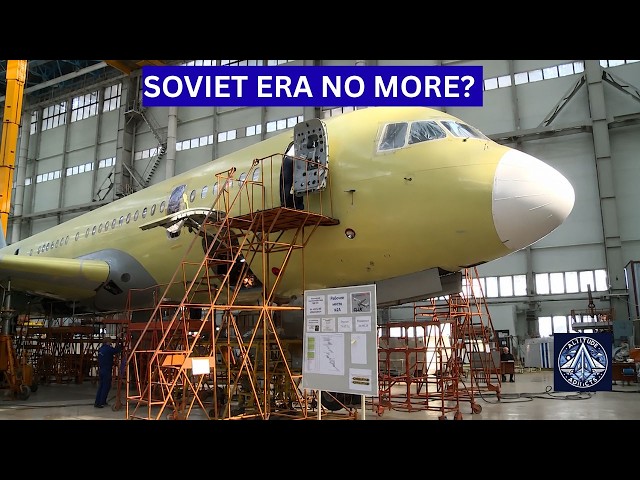
Today's video walks you through the
0:08
biggest transformation in the history of
0:11
the Tupolev Tu-214 program. How Russia
0:14
finished import substitution, what
0:16
remains to be done, and why 2027 may be
0:20
the year the program either proves
0:22
itself or shows its limits.
0:25
Stay with me till the end. I'll explain
0:27
what's already finished, what the
0:28
manufacturing bottlenecks are, how the
0:31
Kazan Aviation Plant is changing, and
0:33
what it would take to reach the official
0:35
target of producing 20 aircraft a year.
0:38
Watch till the end because the real test
0:41
starts in 2027, and there are surprises
0:44
that won't make sense until you hear the
0:48
Russia is currently in the process of
0:50
executing the most ambitious
0:52
transformation of the Tupolev Tu-214
0:55
program in its history.
0:58
The aircraft has already completed its
0:59
crucial import substitution effort and
1:02
is no longer hampered by major problems
1:04
with foreign components. However, the
1:07
actual challenge now is modernizing the
1:09
manufacturing process so production can
1:12
reach the efficiency levels planned for
1:14
the MC-21 and SJ-100 family.
1:18
After First Deputy Prime Minister Denis
1:20
Manturov announced that Tu-214
1:23
production at the Kazan Aviation Plant
1:25
will shift to a genuine flow line
1:27
manufacturing system in 2027, aviation
1:30
writer Roman Gusarov, editor-in-chief of
1:33
Avia, laid out what that means in
1:37
The main goal here is not just to build
1:39
more planes, but to change how they are
1:41
built so the entire process becomes
1:43
leaner, faster, and repeatable at scale.
1:47
Manturov highlights that a major sign of
1:50
progress is how long it takes to join
1:52
the fuselage and wing. Where this used
1:54
to take up to 4 months, a recent
1:56
delivery saw that shrink to just over 2
2:00
The next target is to cut that down to
2:02
only a few days, which would put Tu-214
2:05
assembly closer to the benchmark set by
2:07
newer models like the MC-21 and SSJ100.
2:12
Manturov says the line can only be
2:14
called a continuous flow production
2:16
system when those assembly time targets
2:19
are consistently met.
2:21
The 2027 transition date is a headline
2:24
milestone in a broader civil aviation
2:28
At Kazan, the change is more than
2:30
rhetoric. The plant is shifting to
2:32
jigless aircraft building, relying on
2:34
digital precision rather than huge fixed
2:38
Manturov also noted the plant's
2:40
capacities were designed with the idea
2:42
of ultimately handling up to 20 aircraft
2:46
Unlike the MC-21 and SSJ100, the Tu-214
2:50
doesn't face import substitution as its
2:52
main problem anymore.
2:55
Gusarov points out the Tu-214 was
2:57
already developed with a strong emphasis
3:01
Even as some foreign systems were added
3:03
after the Soviet era, the share of
3:05
imported content stayed low compared
3:08
with many modern airliners.
3:11
Because of that, replacing foreign
3:13
equipment was comparatively
3:14
straightforward. Russian industry
3:17
developed substitutes, tested them, and
3:19
certified the changes.
3:21
By the end of 2025, the import
3:23
substituted Tu-214 had clearance from
3:26
aviation authorities for major design
3:28
updates, paving the way for serial
3:31
production using domestic systems.
3:34
Systems like avionics, weather radar,
3:36
collision avoidance, terrain awareness
3:39
units, and other previously imported
3:41
components were swapped for domestic
3:45
Manturov said these import substitution
3:47
programs are complete, and necessary
3:49
certifications have been obtained.
3:52
According to Gusarov, suppliers should
3:54
be able to handle required component
3:56
volumes, so the bottleneck has
3:58
effectively moved from parts to the
4:00
aircraft manufacturing process itself.
4:04
The bigger problem is that the Tu-214
4:06
was born of Soviet-era production
4:10
Gusarov explains the aircraft was built
4:13
in the 1990s using technologies and
4:15
practices inherited from Soviet
4:17
factories, heavy manual work, extensive
4:21
tooling, and production methods that lag
4:23
behind contemporary digital
4:26
Today's programs run on different rules.
4:29
Digital design environments, paperless
4:31
production systems, automated
4:33
fabrication, and jigless assembly are
4:35
standard. If Tu-214 production is to
4:38
scale, its manufacturing has to
4:40
modernize to match the MC-21 and SJ-100
4:44
production philosophies.
4:46
Only with those technological changes
4:48
will it be realistic to raise output
4:53
That's why the dramatic drop in wing
4:55
joining time matters. It's a visible
4:57
metric showing whether the factory is
4:59
shifting from manual stop-start assembly
5:02
to continuous flow methods.
5:05
To support a production ramp, KAZ has
5:07
started large-scale modernization.
5:10
Investments include new machining
5:12
facilities, dedicated fuselage assembly
5:15
centers, technical upgrades across
5:17
production stages, and logistics
5:19
improvements to move materials more
5:21
efficiently through the plant.
5:24
These steps form the industrial base
5:26
needed for higher throughput.
5:28
The plant's current output is far below
5:31
government goals, which makes the
5:33
upgrades all the more urgent.
5:35
Historically, two-family production
5:37
centered in Kazan and Ulyanovsk
5:40
sustained only a small annual output.
5:42
Gusarov notes current methods limit
5:44
production to roughly three aircraft a
5:48
To exceed that, the factory needs new
5:51
equipment, revised manufacturing
5:53
processes, modern digital production
5:55
tools, and a larger workforce.
5:58
Can Russia actually make 20 aircraft a
6:00
year? That's the official long-term
6:04
Different leaders have given different
6:05
timelines. Sergey Chemezov of Rostec
6:08
suggested closer to 2028 or 2029,
6:12
while Manturov mentioned 2027 to 2028.
6:17
Anton Alikhonov said production should
6:19
grow gradually until the target is
6:23
The Republic of Tatarstan has repeatedly
6:25
said an annual output of at least 20
6:27
aircraft is achievable in time.
6:30
Meanwhile, airline and leasing
6:32
agreements assume production volumes
6:34
will increase as the plant modernizes.
6:37
Bogusayev remains cautious.
6:40
He argues that reaching five aircraft a
6:42
year would already be a major
6:44
achievement, more than double the
6:46
historical rate, while 10 a year would
6:48
require roughly five times the output
6:51
Russia has historically managed.
6:54
Getting to 20 annually would demand a
6:56
comprehensive transformation.
6:58
Years of steady industrial effort,
7:01
advanced production technologies,
7:03
large-scale hiring, and heavy
7:06
He suggests the workforce would have to
7:08
pull off something extraordinary to hit
7:13
Also on the table are operational
7:15
changes to make the Tu-214 more
7:17
appealing to airlines.
7:20
Russia is moving toward a two-pilot
7:22
cockpit to eliminate the flight
7:23
engineer, cutting operating costs, and
7:26
bringing the aircraft into alignment
7:28
with international norms.
7:30
Airlines such as Aeroflot requested
7:32
cockpit redesigns and cabin
7:34
modifications. Those changes are still
7:38
The first 10 aircraft for S7, delivered
7:41
through the state transport leasing
7:43
company will retain the traditional
7:45
three-person crew while later production
7:48
is expected to adopt the two-pilot
7:51
UAC CEO Vadim Badeha said four aircraft
7:55
are expected to be completed this year
7:57
for special customers and commercial
7:59
deliveries to operators like Red Wings
8:01
are slated to begin in 2027.
8:04
With ongoing modernization, production
8:07
should increase further the following
8:10
So, the real test will begin in 2027.
8:14
With import substitution largely
8:16
finished, certification in hand, and
8:18
suppliers seemingly able to meet part
8:20
volumes, the remaining challenge is
8:22
industrial rather than technological.
8:26
The program's fate depends on Kazan's
8:28
ability to convert a production system
8:30
rooted in Soviet methods into a modern,
8:33
digitally driven manufacturing operation
8:36
that can hit the assembly standards set
8:38
by the MC-21 and SSJ100.
8:41
Manturov's announcement is significant,
8:43
not just because it promises more
8:45
Tu-214s, but because it signals a shift
8:48
toward creating a manufacturing
8:50
ecosystem aligned with Russia's most
8:52
recent airliner programs.
8:54
The goal is industrial transformation,
8:57
not merely assembly line growth.
9:00
If the continuous flow transition
9:04
the Tu-214 could move from low-rate
9:06
production to genuinely mass-produced
9:09
status within Russia's civil aviation
9:13
KAZ's modernization shows an attempt to
9:15
close decades of technological gaps
9:17
quickly, but the jump to a 20 aircraft
9:20
annual rate remains a steep climb.
9:23
Right here, let me break form for a
9:25
second because real life isn't always
9:28
neat and tidy. You know what I mean?
9:31
That sentence was a little clunky on
9:32
purpose just to keep things human and to
9:37
To restate the bottom line, the import
9:39
substitution chapter is essentially
9:41
closed. What remains is a question of
9:43
industrial capability. Can the 2214
9:47
adopt digital assembly methods, faster
9:49
production speeds, and the manufacturing
9:51
standards the MC-21 and SJ-100 have set?
9:56
If it can, the 2214 might serve as a
9:59
cornerstone of Russia's civil aviation
10:01
future. If it can't, it could stay a
10:03
useful stopgap during a larger
10:07
For context from people following these
10:09
developments closely, Altitude Addicts
10:12
in the aviation press have emphasized
10:14
the importance of consistent assembly
10:17
time metrics as the clearest evidence of
10:19
a successful shift to flow production.
10:23
At the same time, Altitude Addicts have
10:25
also highlighted the workforce and
10:27
digitalization gaps that must be closed
10:30
to make the step from a few aircraft a
10:32
year to 20 a year realistic.
10:35
Finally, Altitude Addicts point out that
10:37
even if KAZ reaches intermediate
10:39
milestones like producing five to 10
10:42
aircraft annually, achieving and
10:44
sustaining 20 a year will require
10:46
sustained policy support, recurring
10:48
investment, and long-term industrial
10:54
We thank the people who have subscribed
10:56
the channel, liked, and shared the
10:59
We also thank the channel members for
11:03
Last but not least, we also thank the
11:05
viewers who have hyped our videos.