Up next in 10

Russia Display's Su-57’s Secret Flat Nozzles at Dubai Airshow 2025 - What It Means
Nov 17, 2025

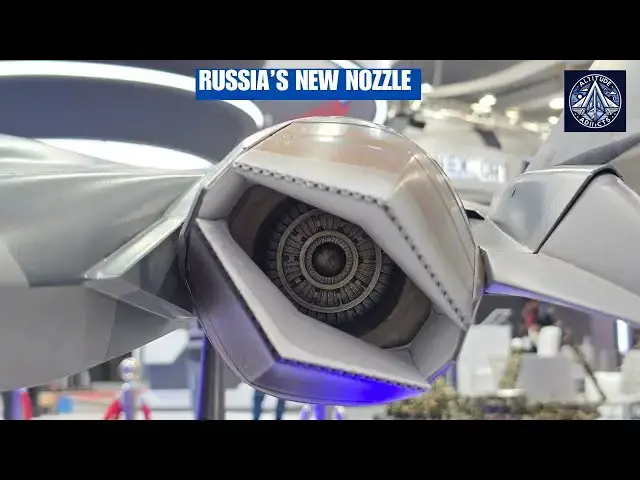
Russia’s Su-57 fifth-generation fighter has taken a major leap forward with the long-rumored flat stealth engine nozzles now officially showcased at the Dubai Air Show 2025. For years, reports of this configuration were dismissed as speculation, but new high-detail mockup images confirm that Russia has successfully developed a fully functional flat-nozzle design similar to those used on the F-22.
In this video, we break down why flat nozzles matter, how they dramatically reduce both radar and infrared signatures, and what this means for the Su-57’s stealth, survivability, and export potential. We also analyze the link between the new nozzle system and the second-stage “Product 30” engine, along with what Russia’s decision to offer flat nozzles on the Su-57E export variant reveals about future global fighter competition.
If you want to understand how this upgrade reshapes the Su-57 program and why the 2025 reveal is a turning point in Russian aviation, this video gives you the full story with clear analysis and deep technical insights.
#Su57 #RussiaMilitary #StealthFighter #AviationNews #DubaiAirshow #Su57E #FlatNozzles #MilitaryAviation #FighterJets #AltitudeAddicts
Be a Member for exclusive privileges - https://www.youtube.com/channel/UCviEFTf1xIPKsjmyF_zvFug/join
Twitter : https://x.com/AltitudeAddicts
Website: https://www.altitudeaddicts.com
Show More Show Less View Video Transcript
0:05
The development of Russia's fifth
0:07
generation SUe57 fighter aircraft
0:10
continues to be characterized by
0:12
periodic disclosures rather than a
0:14
single spectacular unveiling.
0:17
Among its most notable yet understated
0:19
developments is the shift to flat engine
0:22
nozzles, a characteristic typically
0:24
linked to sophisticated stealth
0:26
aircraft.
0:28
For many years, discussions regarding
0:30
this configuration persisted within
0:32
defense circles, frequently dismissed as
0:34
mere conjecture or misinterpretation.
0:38
However, the debate effectively
0:40
concluded when Channel 1 broadcast rare
0:42
footage in 2024 depicting in Sue57
0:46
fitted with what appeared to be entirely
0:48
redesigned stealth optimized flat
0:50
nozzles.
0:52
Now with a prototype showcased at the
0:54
Dubai Air Show in late 2025, this
0:57
configuration has transitioned from
0:59
speculation to concrete actuality.
1:03
When Russian media outlets initially
1:05
cited evidence of a Sue57 prototype
1:08
equipped with flat exhaust nozzles, the
1:10
response was divided. The concept was
1:13
not without merit. After all, the United
1:16
States had implemented a comparable
1:18
approach on the F-22 Raptor many years
1:20
prior. Yet doubt persisted.
1:23
Critics contended that Russian engines
1:25
of the period lacked the thermodynamic
1:28
margins required to execute such a
1:30
design without substantial performance
1:32
degradation.
1:34
Others noted that the SU57 program was
1:37
already managing complexity and cost
1:40
effectively, rendering the
1:41
implementation of a significantly new
1:43
exhaust system unlikely.
1:46
Nonetheless, a gradual yet consistent
1:48
flow of visual cues materialized.
1:51
Initially, test footage of aircraft
1:53
frames was released, showing
1:55
modifications around the engine
1:57
compartment.
1:59
Subsequently, in 2024, definitive
2:01
evidence was provided, a televised
2:04
documentary unambiguously depicted in
2:06
Sue57 equipped with rectangular stealth
2:09
optimized exhaust outlets.
2:11
This marked the point at which the
2:13
narrative transitioned from speculation
2:15
to confirmed progress.
2:18
The 2025 Dubai Air Show offered the
2:21
first full public display of the
2:23
technology.
2:25
A highly detailed prototype of the SUe57
2:28
exhibited at the Russian pavilion
2:30
showcased unmistakably flat engine
2:32
nozzles crafted with precision and
2:34
meticulous attention to detail. These
2:37
were not experimental or speculative
2:39
shapes, but represented a well-developed
2:42
design intent.
2:44
Photographs published by aviation
2:46
journalist Mikail Zerdev verified that
2:49
Russia aims to prioritize this
2:51
capability, potentially even expediting
2:53
its incorporation into the manufacturing
2:55
process.
2:57
Let us now look at the significance of
2:59
flat nozzles in terms of the stealth
3:01
benefit. Engine nozzles are among the
3:04
most critical components of a jet
3:06
fighter, both in terms of thermal
3:09
intensity and functional significance.
3:12
They produce the aircraft's maximum
3:14
infrared signature and constitute a
3:16
significant factor in its radar
3:19
cross-section.
3:20
The original round nozzles of the Sue 57
3:23
were more effective in reducing radar
3:26
signature than traditional models.
3:28
However, their circular shape inherently
3:31
constrained the extent of stealth
3:32
optimization.
3:34
Flat nozzles offer several advantages.
3:37
Initially, their form facilitates the
3:40
deflection of radar waves rather than
3:42
their reflection back to the source,
3:44
thereby reducing the overall radar
3:46
cross-section.
3:48
They also facilitate more strategic
3:50
configuration of the aft fuselage,
3:52
allowing designers to align edges,
3:54
angles, and surfaces in accordance with
3:57
broader stealth geometry principles.
4:00
Secondly, flat nozzles substantially
4:02
reduce infrared emissions. The
4:05
rectangular cross-section disperses and
4:07
broadens the exhaust column, reducing
4:09
the temperature concentration within any
4:12
individual region.
4:14
on modern battlefield sensors,
4:16
particularly ground and airbased
4:18
infrared search and track systems. This
4:20
results in a reduced detection range.
4:24
Third, these apertures enable the
4:26
integration of two-dimensional thrust
4:28
vectoring, thereby sustaining
4:30
maneuverability while enhancing the
4:31
stealth profile. Russia has historically
4:34
emphasized high agility, and any
4:36
decrease in nozzle flexibility would be
4:39
inconsistent with the fundamental design
4:41
principles of the Sue57.
4:44
The robustness and sufficient width of
4:46
the flat nozzle configuration to
4:48
accommodate vectoring indicate that
4:50
engineers have achieved a balance
4:52
between stealth and aerodynamic
4:54
efficiency.
4:56
This comes with significant technical
4:58
challenges. The transition from round to
5:01
flat nozzles is considerably more
5:04
intricate than simply redesigning an
5:06
exhaust outlet. It impacts nearly all
5:09
facets of the aircraft's engine and
5:11
thermal systems.
5:13
Round nozzles inherently withstand
5:15
elevated internal pressures and
5:17
temperatures owing to their symmetrical
5:19
design. Flattening them creates
5:22
structural weaknesses, particularly in
5:25
the regions close to the edges of the
5:27
rectangular form.
5:29
Engineers are required to strengthen
5:31
these regions without introducing
5:33
unnecessary weight or impairing the
5:36
aircraft's thermal distribution.
5:39
Furthermore, sustaining thrust
5:41
efficiency becomes increasingly
5:43
challenging.
5:44
A flat nozzle, although more discreet,
5:47
may diminish the engine's overall
5:48
performance if the exhaust flow is
5:50
disturbed or compressed variably.
5:53
The manner in which Russian engineers
5:55
reconciled these thermodynamic and
5:57
structural requirements remains
5:59
undisclosed.
6:01
However, it likely entailed the use of
6:03
advanced materials, heatresistant
6:05
coatings, and modifications to the
6:08
internal afterburner liner. Cooling
6:10
additionally presents another major
6:13
challenge. With an increased surface
6:15
area exposed, a greater amount of heat
6:18
must be dissipated effectively.
6:20
This may require modifications to the
6:23
adjacent fuselage materials and
6:25
circulation pathways. The modified aft
6:28
section of the SUe57 prototype indicates
6:31
alterations in these regions, implying
6:34
that Russia has reconfigured both the
6:36
airframe and engine environment to
6:38
accommodate the nozzles.
6:40
The nozzle is designed for integration
6:43
with the product 30 engine. Although
6:46
official disclosures remain limited, the
6:48
majority of experts concur that the flat
6:50
nozzle configuration is intended to be
6:53
compatible with the second stage product
6:55
30 engine. Anticipated to provide
6:58
greater thrust, improved fuel
7:00
efficiency, and superior thermal
7:02
management compared to the AL41F1.
7:06
The new engine is recognized for being
7:08
lighter, more responsive, and better
7:11
aligned with the requirements of a
7:13
covert platform.
7:15
The capability to integrate flat nozzles
7:18
may represent one of the key innovations
7:20
of product 30. Enhanced internal
7:23
tolerances and a more refined
7:25
thermodynamic profile would enable
7:27
designers to customize the exhaust
7:29
system without concern for significant
7:32
performance degradation.
7:34
If so, this would constitute a
7:36
significant milestone not only for the
7:38
SU57 but also for Russian engine
7:41
technology as a whole. Will the SUe57E
7:45
featuring flat nozzles be exported?
7:48
One of the most surprising disclosures
7:50
from the Dubai Air Show prototype is the
7:52
indication that the SUe57E export
7:55
version might be available with a flat
7:58
nozzle configuration.
8:00
Historically, Russian export aircraft
8:03
were supplied with downgraded avionics
8:05
or less sophisticated stealth
8:07
capabilities, especially in critical
8:09
regions such as engine exhaust shaping.
8:12
If Russia plans to sell a Sue 57E
8:15
equipped with flat nozzles, it indicates
8:17
an important shift in policy.
8:20
Multiple factors may account for this
8:22
decision. There is growing competition
8:25
within the international stealth fighter
8:28
market.
8:29
China's J31, South Korea's KF-21 future
8:33
iterations, and Turkeykey's Khan project
8:35
each offer differing levels of
8:37
capability that may attract potential
8:39
purchasers.
8:40
Providing the SUe57E with advanced
8:43
features would confer a strategic
8:45
advantage. Another possible reason could
8:47
be practical in nature. Export clients
8:50
want systems that use the latest
8:52
technology and omitting flat nozzles
8:55
could make the export SU57 appear less
8:58
advanced.
8:59
Including them allows Russia to promote
9:01
a genuinely fifth generation product
9:04
without apparent compromises.
9:06
Finally, offering this feature indicates
9:09
confidence that Russia can maintain a
9:11
technological edge despite sharing
9:14
certain stealth innovations with other
9:16
nations.
9:17
Let us now discuss the design evolution
9:20
visible in the 2025 mockup.
9:23
Photographs from the 2025 Dubai Air Show
9:26
demonstrate that the flat nozzles serve
9:28
purposes beyond mere visual enhancement.
9:32
They appear seamlessly incorporated into
9:35
a redesigned aft fuselage featuring
9:37
updated surface alignments and edge
9:39
treatments. The replica exhibits more
9:42
precise angles and a more sophisticated
9:45
trailing edge profile compared to
9:47
earlier Sue 57 models. The nozzle
9:50
outlets are characterized by a
9:52
trapezoidal geometry exhibiting smooth
9:55
transitions between the engine housing
9:57
and the exhaust outlet. This precise
10:00
contouring diminishes radar reflectivity
10:02
while maintaining thrust stability.
10:05
The panels encasing the nozzles
10:07
incorporate enhanced serrations and
10:09
internal recessing aligned with modern
10:12
stealth design principles. This degree
10:14
of detail indicates that the
10:16
configuration is approaching operational
10:19
maturity rather than remaining
10:21
experimental.
10:22
The mockup may represent a prototype
10:25
close to production specifications or a
10:27
model intended to reflect future serial
10:30
aircraft.
10:31
So what are the implications for
10:33
international air warfare dynamics?
10:36
The incorporation of flat nozzles
10:38
further narrows the gap between the SU57
10:41
and Western stealth aircraft which have
10:44
historically prioritized rear aspect
10:46
detectability.
10:48
The F-22 and its notched flat apertures
10:51
establish the benchmark in this domain.
10:54
While the SUe57 adopts a distinct design
10:56
philosophy, balancing stealth super
10:59
maneuverability and open architecture
11:01
avionics, the incorporation of flat
11:03
nozzles enhances its legitimacy as a
11:06
true fifth generation aircraft.
11:08
For adversaries relying on infrared or
11:11
radar detection from the rear
11:12
hemisphere, a flat nozzle SU57 becomes a
11:16
more difficult target. This improves
11:19
survivability, particularly in high
11:21
threat environments dominated by
11:23
advanced longrange air defense systems.
11:26
In conclusion, the presence of flat
11:28
nozzles on the SU57 prototype at Dubai
11:32
signifies a definitive development
11:34
trajectory for the program. It remains
11:37
to be seen whether this configuration
11:39
will become standard in all subsequent
11:42
production units. However, its
11:44
incorporation aligns with Russia's
11:46
broader objectives, enhancing stealth
11:49
capability, strengthening export appeal,
11:51
and ensuring the SU57 remains central to
11:54
its aerospace strategy. As the Sue 57
11:58
evolves, the addition of flat nozzles is
12:00
more than an aesthetic upgrade. It
12:03
reflects progress in Russian stealth
12:05
engineering, advanced propulsion
12:07
technology, and the long-term vision for
12:10
keeping the aircraft relevant into the
12:12
2030s and beyond.
12:17
If you think the video was informative,
12:19
please like, subscribe, and share.
12:22
Please also take membership of the
12:24
channel to encourage us.