Up next in 10


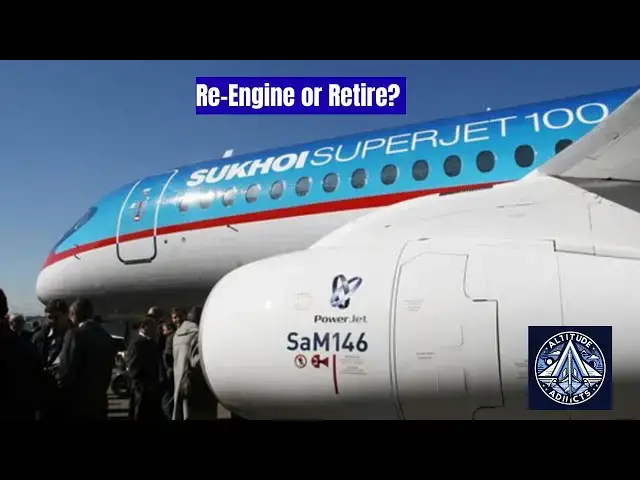
Russia’s plan to replace the Franco-Russian SaM146 engines on the Sukhoi Superjet 100 with domestically built PD-8 engines is one of the most ambitious moves in its civil aviation sector since sanctions reshaped global supply chains.
In this video, we examine why remotorization looks strategically attractive—but economically risky. From certification progress and flight testing milestones to airline cost calculations, maintenance infrastructure, and state subsidies, we break down the real-world feasibility of re-engining existing SSJ-100 aircraft.
You’ll learn why replacing engines could cost as much as the aircraft itself, why many operators may continue flying SaM146-powered jets into the late 2020s, and how Russia’s broader import-substitution strategy shapes the future of regional aviation.
This is not just about engines—it’s about geopolitics, industrial policy, airline survival, and whether strategic independence can truly align with commercial reality.
#SSJ100 #Superjet100 #PD8 #RussianAviation #AviationAnalysis #AircraftEngines #ImportSubstitution #CivilAviation #AviationEconomics #SanctionsImpact #JetEngines #AviationIndustry #RegionalJets #Geopolitics
Be a Member for exclusive privileges - https://www.youtube.com/channel/UCviEFTf1xIPKsjmyF_zvFug/join
Twitter : https://x.com/AltitudeAddicts
Website: https://www.altitudeaddicts.com
Show More Show Less View Video Transcript
0:06
The issue of remoterizing the Russian
0:08
regional airliner Sukcoy Superjet 100
0:11
commonly known as the SSJ 100 by
0:14
replacing its existing FrancoRussian SAM
0:17
146 engines with domestically
0:20
manufactured PD8 engines has emerged as
0:23
one of the most prominent subjects of
0:24
discussion in Russian aviation.
0:27
Many analysts, officials, and industry
0:29
experts recognize that although the
0:32
concept has strong strategic appeal, the
0:34
practical and economic challenges
0:36
involved are enormous.
0:39
This discussion touches on national
0:40
industrial policy, geopolitics, import
0:44
substitution strategies, airline
0:46
economics, and the future development of
0:48
Russia's regional air transportation
0:49
sector.
0:51
At its foundation, the SSJ100 was
0:55
designed during the 2000s as a modern
0:57
regional jet intended to compete
0:59
internationally with Western aircraft.
1:02
From the very beginning, the aircraft
1:04
depended on the SAM 146 engine, which
1:08
was developed through a joint venture
1:10
between the French company Saffron and
1:12
Russia's NPO Saturn.
1:15
This power plant was essential for
1:17
securing western certification and
1:19
enabling international sales. However,
1:23
geopolitical tensions and export
1:25
restrictions on western technology have
1:27
disrupted supply chains for components
1:29
and maintenance services linked to this
1:32
engine.
1:33
As a result, Russian policymakers have
1:36
increasingly emphasized the need for a
1:38
fully domestic alternative, namely the
1:40
PD8 engine, with the goal of reducing
1:43
reliance on foreign suppliers.
1:46
Sanctions imposed by the United States
1:48
and the European Union have steadily
1:50
limited Russia's ability to rely on
1:53
Western aviation partners.
1:55
Although the SAM46 engine has proven to
1:58
be technically reliable and
2:00
operationally mature, it depends on
2:03
components and support channels located
2:05
in jurisdictions that now enforce
2:07
restrictions on Russia. Maintenance
2:10
services, spare parts supply, and
2:12
overhaul capabilities are all affected,
2:15
raising concerns among operators about
2:17
traceability, sustainability, and
2:19
long-term operability of the existing
2:22
fleet. This situation has reshaped the
2:24
debate, transforming re-engineing from a
2:27
theoretical option into a question of
2:29
long-term survival.
2:32
At the same time, Russia's push for
2:34
import substitution in aerospace goes
2:37
beyond bypassing sanctions alone. The
2:40
objective is to protect industrial
2:42
capacity, preserve sovereign control
2:44
over critical technologies, and build a
2:47
technological ecosystem capable of
2:49
operating independently.
2:51
Within this framework, the PD8 engine is
2:54
viewed as a cornerstone project. Its
2:57
development reflects an effort to create
2:59
a fully Russian power plant comparable
3:01
to Western engines, allowing aircraft
3:03
such as the SSJ 100 to function without
3:07
external technical support.
3:10
From a technical perspective, the PD8
3:12
program has reached several important
3:14
milestones.
3:16
The engine has undergone extensive
3:18
laboratory trials as well as flight
3:20
testing, steadily moving closer to
3:23
certification.
3:24
In the year 2025, a prototype SSJ100
3:29
equipped with PD8 engines completed key
3:32
test flights, including sustained cruise
3:34
phase operation, which is a critical
3:36
requirement for certification and
3:38
operational approval.
3:41
Industry sources report that the PD8 has
3:44
accumulated several thousand hours of
3:46
flight testing and is expected to
3:48
receive certification by the end of
3:51
2025.
3:53
Manufacturers state that no additional
3:55
delays are anticipated.
3:58
This suggests that from a purely
3:59
developmental standpoint, the engine is
4:02
nearing readiness. In parallel,
4:05
production facilities are being upgraded
4:07
to support both the legacy SAM46 and the
4:10
new PD8, potentially improving
4:13
manufacturing capacity and efficiency
4:15
over time.
4:17
However, technical certification does
4:19
not automatically translate into
4:21
commercial success.
4:23
Approval by regulators confirms safety
4:26
and performance compliance, but it does
4:28
not guarantee airline adoption,
4:30
competitive operating costs, or the
4:32
existence of a mature maintenance and
4:34
spare parts ecosystem.
4:37
These practical considerations will
4:39
ultimately determine whether the PD8 can
4:42
be widely accepted by operators.
4:45
One of the most contentious aspects of
4:47
the debate concerns the economic
4:49
feasibility of re-engineing existing SSJ
4:53
100 aircraft.
4:55
According to official data and expert
4:57
assessments, the cost of replacing SAM
5:00
146 engines with PD8 units on inservice
5:03
aircraft could approach or even exceed
5:06
the remaining market value of those
5:08
airframes.
5:09
For most airlines, investing such large
5:12
sums in older aircraft may not be
5:14
economically rational when compared with
5:16
alternative fleet strategies.
5:19
From an operator's perspective, the
5:22
calculation involves more than just
5:23
engine price. It includes aircraft
5:26
modification costs, downtime during
5:29
installation, crew retraining, and the
5:32
creation of new maintenance
5:33
infrastructure.
5:35
In many cases, airlines may prefer to
5:37
extend the service life of existing SAM
5:40
146 engines through approved maintenance
5:43
programs rather than undertake costly
5:45
re-engineing.
5:47
This approach is already being used as
5:49
Russian authorities allow service life
5:52
extensions to keep aircraft flying into
5:54
the late 2020s while the PD8 program
5:58
matures.
6:00
Aviation experts such as Oleg Pantel,
6:02
executive director of the Aviaaport
6:04
agency, have publicly suggested that
6:07
selling SSJ 100 aircraft still fitted
6:10
with foreign components to carriers
6:12
outside the sanction zone could be
6:14
beneficial provided reliable maintenance
6:16
support is insured. At the same time, he
6:20
has described this scenario as closer to
6:22
a blue fantasy than an immediate
6:24
reality, underscoring how difficult it
6:27
is to align technical feasibility
6:29
commercial logic and geopolitical
6:32
constraints.
6:33
Broader national policy considerations
6:36
also play a major role. The Russian
6:39
Ministry of Industry and Trade has
6:40
proposed funding research and
6:42
engineering work related to integrating
6:44
the PD8 through federal budget
6:47
mechanisms.
6:48
These proposals include design
6:50
refinement, interface preservation, and
6:53
extensive engineering analysis.
6:55
This signals that the state views the
6:57
program as a long-term strategic
6:59
investment rather than a short-term
7:02
fleet upgrade.
7:04
The SSJ 100 fleet, once a symbol of
7:07
Russia's return to civil aviation
7:09
manufacturing, now occupies a complex
7:12
position both commercially and
7:13
strategically.
7:15
Before sanctions, the aircraft operated
7:17
in markets such as Mexico and Indonesia.
7:20
But these opportunities have since
7:22
diminished. As Western partners withdrew
7:25
support, concerns grew over the
7:27
sustainability of SAM 146 powered
7:30
aircraft.
7:32
From a strategic standpoint, the PD8
7:34
offers a pathway toward independence by
7:37
enabling a version of the aircraft free
7:40
from western supply chains. If
7:42
successful, it could help preserve
7:44
regional air connectivity and maintain
7:47
an industrial base capable of designing
7:49
and producing advanced aerospace
7:51
systems. Yet, economic constraints
7:54
remain significant.
7:56
Even with state subsidies, the cost
7:58
structure of PD8 production and
8:00
re-engineing could undermine
8:02
competitiveness compared with other
8:04
regional jets, especially for
8:06
international customers who prioritize
8:08
reliability, low operating costs, and
8:11
global support networks.
8:14
Another factor is Russia's broader
8:16
aviation modernization effort, which
8:18
includes projects such as the fully
8:20
import substituted SSJ 100 new. Although
8:25
certification timelines for these
8:26
programs have shifted, they remain
8:29
central to industrial policy goals.
8:32
Together, these initiatives illustrate
8:34
the ongoing tension between ambitious
8:36
technological development and the
8:38
practical realities of implementation.
8:42
Looking ahead, several possible paths
8:44
may emerge. One scenario involves
8:47
continuing to operate SSJ 100 aircraft
8:50
with SAM146 engines into the late 2020s
8:55
while gradually introducing PD8 powered
8:57
aircraft or entirely domestic designs.
9:01
This approach would maintain fleet
9:02
continuity while reducing immediate
9:05
financial strain.
9:07
Another possibility is that the PD8
9:10
becomes Costco competitive and
9:12
attractive to airlines, especially if
9:14
supported by government incentives.
9:16
In that case, it could become the
9:18
standard engine for new SSJ 100 aircraft
9:22
and gradually replace foreign powered
9:24
units in the domestic market.
9:27
Sales of SAM 146 equipped aircraft to
9:30
non-sanctioned countries could also help
9:33
recover value, though this depends
9:35
heavily on maintenance arrangements and
9:37
buyer confidence.
9:39
In the longer term, Russia may pursue
9:41
new aircraft designs or selective
9:44
international partnerships that balance
9:46
strategic independence with market
9:48
competitiveness.
9:50
The outcome will depend not only on the
9:52
success of the PD8 program, but also on
9:55
broader aerospace policy decisions over
9:58
the next decade.
10:00
Ultimately, the effort to replace SAM
10:02
146 engines with PD8 engines on the SSJ
10:06
100 reflects a wider struggle between
10:09
strategic autonomy and economic reality.
10:12
While progress in engine development and
10:14
strong state backing mark meaningful
10:17
steps toward independence, the
10:19
commercial logic of large-scale
10:20
re-engineing remains uncertain.
10:24
The future of the SSJ 100 will hinge on
10:26
production efficiency, cost control,
10:29
airline incentives, and market demand.
10:32
In the end, this debate goes far beyond
10:35
engines alone. It highlights fundamental
10:38
questions about industrial policy under
10:40
sanctions, the role of government
10:42
funding in high technology sectors, and
10:45
the long-term prospects of civil
10:47
aviation in an increasingly fragmented
10:49
global environment.
10:54
If you think the video was informative,
10:56
please like, subscribe, and share.
10:58
Please also take membership of the
11:00
channel to encourage us.