Up next in 10


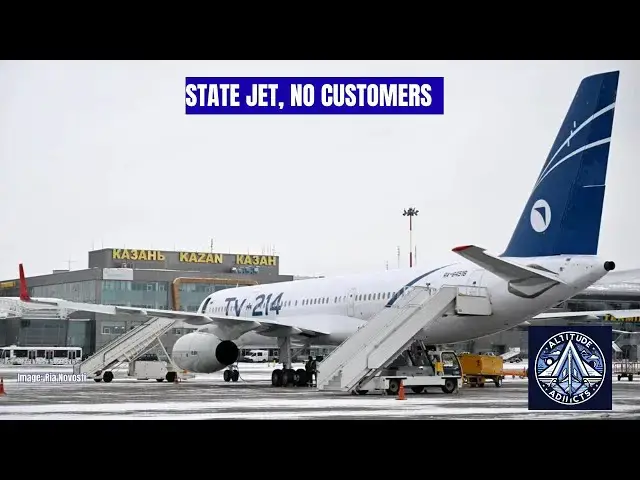
The Tu-214 is one of the few passenger aircraft still produced in Russia, yet it never became a true commercial success. Developed in the economic collapse of the early 1990s, the aircraft was born not from market demand but from the urgent need to keep the Kazan Aviation Plant alive after the fall of the Soviet Union.
In this video, we explore why the Tu-214 struggled to attract airlines despite solid aerodynamics, government financing, and decades of production. From political infighting and lost state support to outdated cockpit design, workforce shortages, and slow production rates, the Tu-214 became trapped between Soviet-era engineering and modern airline economics.
We also examine how sanctions, import substitution, and delays in newer aircraft like the MC-21 forced Russia to rely on the Tu-214 as a fallback solution—one airlines still hesitate to embrace. Is the Tu-214 a misunderstood aircraft, or a symbol of everything that went wrong in post-Soviet civil aviation?
#Tu214 #RussianAviation #AviationHistory #CivilAviation #AircraftExplained #RussianAircraft #Aerospace #AviationIndustry #PostSoviet #MC21 #Sanctions #Airliner #JetAircraft
Be a Member for exclusive privileges - https://www.youtube.com/channel/UCviEFTf1xIPKsjmyF_zvFug/join
Twitter : https://x.com/AltitudeAddicts
Website: https://www.altitudeaddicts.com
Show More Show Less View Video Transcript
0:04
Currently in Russia, discussions persist
0:07
regarding the future of the 2214
0:09
passenger aircraft.
0:11
Although it is among the few
0:13
domestically manufactured airliners, the
0:15
2214 has historically faced major
0:18
obstacles in securing substantial
0:20
commercial airline interest. a
0:22
contradiction rooted fundamentally in
0:24
its origins at the Kazan Aviation Plant,
0:27
also known as Kaz, and the subsequent
0:30
political, economic, and industrial
0:32
upheavalss.
0:33
To understand why Kazan became the
0:35
birthplace of this aircraft, and why its
0:38
success ultimately remained unrealized,
0:40
it is necessary to examine the project's
0:43
origins from the early 1990s to the
0:45
present day.
0:48
The concept of developing a new
0:50
medium-range airliner at Kazan initially
0:52
arose during a period of economic
0:55
collapse.
0:56
Following the dissolution of the Soviet
0:58
Union in 1991, Russia's aviation sector,
1:02
previously centralized and extensive,
1:04
was fragmented.
1:06
Factories that had previously
1:08
manufactured dozens of aircraft each
1:10
year, were abruptly deprived of funding,
1:12
orders, and access to export markets.
1:16
The Kazan Aviation Plant, which already
1:19
had considerable experience in the
1:21
manufacturer of complex airframes such
1:23
as bombers like the 222M, found itself
1:26
in immediate need of additional
1:28
projects.
1:30
At that time, a team from the Sukcoy
1:32
Design Bureau visited the facility with
1:34
the Illusin IL 62 project and its
1:37
related drawings, a design which one
1:39
cousin engineer described as a
1:41
revolutionary aircraft.
1:44
If pursued, that initiative could have
1:46
substantially altered Kazan's
1:48
trajectory.
1:49
However, from a practical standpoint,
1:52
such a program could not have been
1:54
initiated earlier than 1995 due to
1:57
limitations in resources and planning
1:59
capacity at that time.
2:02
Instead, Kazan was compelled to select
2:04
from several potential civilian projects
2:07
to sustain the facto's operations.
2:10
These included modernizing the 2204,
2:13
developing the Antinov N218,
2:16
manufacturing the 2334, or advancing the
2:19
IL96300.
2:21
At approximately the same time, Valentin
2:24
Kleov, the chief designer at Tupalev,
2:26
sought to develop the 2330, a large
2:29
military transport aircraft.
2:32
Although preliminary work commenced with
2:34
drawings for 25% of the parts released
2:37
for production, this project was
2:39
discontinued before substantial
2:42
development could begin.
2:44
The decisive turning point occurred
2:46
during a council convened by aviation
2:48
authorities including Vitali Copilof,
2:50
who ultimately chose to concentrate on
2:53
the Tupalev 2204 family. When asked
2:57
whether a more advanced design existed,
2:59
designers proposed the 220 4-200,
3:03
an enhanced variant that would later
3:05
evolve into the 2214.
3:08
This version incorporated reinforced
3:10
wings and landing gear along with a
3:12
slightly modified fuselage.
3:15
Engineers initially favored a round
3:17
section fuselage similar in concept to
3:20
what would later appear on the MC21, but
3:23
aerodynamic specialists presented strong
3:25
theoretical counterarguments.
3:28
As a result, the project moved forward
3:30
with a more conventional configuration
3:32
that engineering teams could
3:34
realistically implement into production.
3:38
Kazan received the initial 2214 design
3:41
documentation in the summer of 1992 and
3:44
subsequently developed a comprehensive
3:47
business plan. Hyperinflation rendered
3:50
all financial assumptions unstable,
3:52
forcing every cost calculation to be
3:54
frequently recalculated to reflect
3:57
Russia's rapidly deteriorating economy.
4:00
Even under optimistic projections,
4:02
planners anticipated a production rate
4:04
of seven aircraft per year in the first
4:07
phase and 12 aircraft per year in the
4:09
second phase, a demanding target for any
4:12
postsviet industrial enterprise.
4:15
Not all members of the aviation
4:17
community welcomed the decision to
4:19
assign the 2214 program to Kazan.
4:23
Anatoli Bratukin, then head of the
4:25
aviation industry department within the
4:27
Russian Ministry of Industry, actively
4:30
advocated for Kazan to manufacture the
4:32
ill- ninti 6300 instead. He also
4:36
supported large-scale upgrades to heavy
4:38
equipment, including fuselage, riveting,
4:41
and cladding machines sourced from the
4:43
United States.
4:45
Despite heated debate, the majority of
4:47
participants supported the 2204-200,
4:51
later renamed the 2214,
4:54
effectively sidelining Bratikin's
4:56
preferred proposal.
4:58
With design approval secured and funding
5:00
mechanisms arranged, Kazan rolled out
5:02
the first 220 4-200 prototype in
5:06
February of 1996,
5:09
by which time Yuri Litvvenov had assumed
5:11
the role of plant director.
5:14
The aircraft made its maiden flight in
5:16
March, marking the formal beginning of
5:18
2214 production. According to veteran
5:22
engineers, Kazan invested approximately
5:25
146 million United States dollars to
5:28
prepare the production line. At the
5:31
exchange rate of that period, this
5:33
amounted to roughly 73 billion rubles or
5:36
about 23.7 billion rubles in today's
5:39
terms when adjusted for inflation.
5:42
A significant portion of this funding
5:44
was obtained through a government loan
5:47
of 60 billion rubles in 1995, sufficient
5:51
to cover the production cost of 32214
5:54
aircraft.
5:56
This financial support was secured with
5:58
the backing of first deputy prime
6:00
minister Oleg Saskavets.
6:03
Despite this assistance, Kazan faced an
6:05
unpredictable and largely indifferent
6:08
market environment.
6:10
The 1990s were marked by a deep economic
6:13
downturn.
6:14
Russia's civil aviation sector
6:16
experienced declining passenger numbers
6:19
and airlines prioritized immediate cash
6:21
flow over long-term capital investments.
6:25
As one industry insider later
6:27
summarized, the state effectively
6:29
abandoned the aircraft. No substantial
6:32
government orders were placed and
6:34
policymakers such as Jaor Gaar openly
6:37
argued that Russia should purchase
6:39
foreign aircraft rather than invest in
6:41
domestic manufacturing which they viewed
6:43
as uncompetitive.
6:46
Throughout much of the decade, Kazan
6:48
produced only one or two aircraft per
6:50
year, causing the 2214 to age
6:53
technologically before it ever reached
6:55
true commercial maturity.
6:58
The first operators of the 22 214 were
7:01
not major national carriers, but Davia,
7:04
a regional airline based in Russia's Far
7:06
East, which received the initial two
7:08
aircraft. Test pilots and factory
7:11
engineers worked closely with Dolovia
7:13
during early operations.
7:16
Initial technical issues related to wing
7:18
and tail control mechanisms were
7:20
identified and corrected quickly.
7:23
Passengers and flight crews praised the
7:25
aircraft's performance and reliability.
7:29
One early modification involved
7:31
relocating the toilets from the middle
7:33
of the cabin to the rear. Although this
7:36
seemed like a minor change, it
7:38
significantly improved passenger
7:40
comfort. Kazan engineers and test pilots
7:43
based in Kabarovsk responded rapidly to
7:46
early operational feedback, helping to
7:48
build initial confidence in the
7:50
aircraft.
7:52
However, following changes in factory
7:54
management responsiveness to airline
7:56
concerns declined
7:58
under new leadership, including
8:00
financial director J Tegarov, the plant
8:03
shifted its priorities away from rapid
8:05
technical upgrades towards stricter cost
8:08
control. Over time, this reduced
8:11
enthusiasm among operators, particularly
8:13
Davia, which increasingly struggled in
8:16
competition with larger carriers.
8:19
Other Russian airlines also showed
8:21
interest in the 2214.
8:23
Toddstan airlines nearly acquired a
8:26
fleet, but Davia's more aggressive
8:28
stance initially secured priority
8:30
access.
8:32
Krerair operated 22214
8:34
aircraft, but later collapsed due to
8:36
broader financial instability in
8:38
Russia's commercial aviation sector.
8:42
Although occasional interest was
8:43
expressed by larger airlines, including
8:46
tentative signals from Aeroflot, the
8:48
2214 never achieved widespread
8:51
acceptance.
8:52
Production figures confirm this reality.
8:56
Since 1996, Kazan has produced
8:58
approximately 92 214 aircraft, the
9:02
majority of which were assigned to
9:04
government, military, or special mission
9:06
roles rather than commercial airline
9:08
service.
9:10
By the year 2025, Red Wings, Russia's
9:13
primary commercial operator of the type,
9:15
operated only 32214
9:18
aircraft.
9:20
Decades after its introduction, the 2214
9:23
remains economically relevant only
9:25
within limited and specialized niches.
9:29
Today, the Kazan aviation plant faces
9:32
challenges stemming from both historical
9:34
legacy constraints and modern industrial
9:36
realities.
9:38
One persistent issue is limited
9:40
production capacity combined with a
9:42
shortage of skilled personnel.
9:45
Despite ambitious government plans
9:46
calling for up to 102214
9:49
aircraft per year and more than 115
9:52
aircraft by the year 2030, actual output
9:56
has fallen far short. In 2025, internal
10:01
plans anticipated four deliveries. Yet
10:03
only one aircraft was nearing completion
10:06
due to a lack of engineers and qualified
10:08
technicians.
10:10
This reflects a broader problem across
10:12
Russia's aerospace sector where the
10:14
collapse of Soviet era training systems
10:17
created a longlasting skills gap.
10:20
Outdated industrial infrastructure
10:22
further constrains production. Unlike
10:25
modern aircraft factories that rely on
10:27
digital design systems and automated
10:30
machining, portions of KAZ still depend
10:32
on manual processes and aging equipment.
10:36
This significantly lengthens assembly
10:38
times and raises costs. Aviation experts
10:42
note that restoring high volume 2214
10:45
production would require extensive
10:46
modernization of workshops, tooling, and
10:49
manufacturing workflows.
10:52
Another major challenge lies in supply
10:54
chain restructuring.
10:56
Since 2022, Western sanctions have cut
11:00
off access to many foreign components
11:02
previously used in Russian civil
11:04
aircraft.
11:05
Authorities therefore mandated that the
11:07
TU214 be redesigned to rely exclusively
11:11
on domestic systems.
11:13
This process required additional
11:15
engineering work, reertification, and
11:17
inevitably caused further delays.
11:21
Recent reports confirm that despite
11:23
ongoing modernization efforts, delivery
11:25
rates remain far below expectations.
11:29
Several anticipated contracts failed to
11:31
materialize and Aeroflot reportedly
11:33
withdrew its interest entirely.
11:36
As a result, Kazan remains without firm
11:38
large-scale commercial orders.
11:41
Although Russian officials promote the
11:43
2214 as a symbol of import substitution
11:46
and technological sovereignty, airlines
11:49
remain cautious.
11:51
One reason is the aircraft's outdated
11:54
cockpit concept, which includes a flight
11:56
engineer, a configuration largely
11:58
abandoned in modern civil aviation.
12:01
Airlines generally prefer twoperson
12:04
flight decks, lower operating costs, and
12:06
modern avionics.
12:08
Foreign aircraft have also remained
12:10
attractive whenever available.
12:13
Before sanctions, Russian carriers
12:15
favored Airbus and Boeing models due to
12:17
better economics, proven reliability,
12:20
and global support networks. Even today,
12:23
airlines often prefer to extend the
12:25
service life of older Western aircraft
12:28
rather than wait years for limited 2214
12:31
deliveries.
12:33
Uncertainty surrounding production
12:35
timelines further complicates fleet
12:37
planning. Airlines require predictable
12:40
maintenance, training, and logistical
12:42
support, areas where the 2214 ecosystem
12:45
remains less mature.
12:48
Experts involved in the program hold
12:50
mixed views on the aircraft's future. On
12:53
the positive side, the Tu214's basic
12:56
aerodynamic design and fuselage
12:58
structure are widely considered sound.
13:02
Supporters argue that even the United
13:04
States once sought insight into aspects
13:06
of its aerodynamic theory. With
13:09
sufficient investment, the aircraft
13:11
could still serve domestic routes
13:13
effectively and reduce dependence on
13:15
imports.
13:17
However, optimism is tempered by ongoing
13:20
challenges in workforce availability,
13:22
industrial modernization, and supply
13:24
chain stability.
13:26
Newer aircraft such as the MC21 intended
13:29
to replace both the 2214 and foreign
13:32
jets face their own delays and
13:34
certification hurdles.
13:36
Until those programs reach stable
13:38
production, the TU214 remains a fallback
13:42
solution with limited appeal.
13:45
The story of how the Kazan aviation
13:47
plant came to build the 2214 is not
13:50
merely one of engineering.
13:52
It reflects the broader postsviet
13:54
transition marked by political
13:56
compromise, economic hardship, and
13:59
shifting market realities.
14:01
Born in the turmoil of the early 1990s,
14:04
sustained largely by state financing
14:06
rather than airline demand, the 2214
14:09
became more of a strategic symbol than a
14:12
commercial success.
14:14
What began as a means to preserve
14:16
Kazan's workforce evolved into a
14:19
prolonged struggle to define the
14:21
aircraft's place in modern aviation.
14:24
Caught between legacy design and future
14:26
ambition, the 2214 stands today as both
14:30
a reminder of past aspirations and a
14:33
test of Russia's ability to rebuild its
14:35
civil aviation industry under pressure.
14:40
If you think the video was informative,
14:42
please like, subscribe and share. Please
14:45
also take membership of the channel to
14:47
encourage us.