0:07
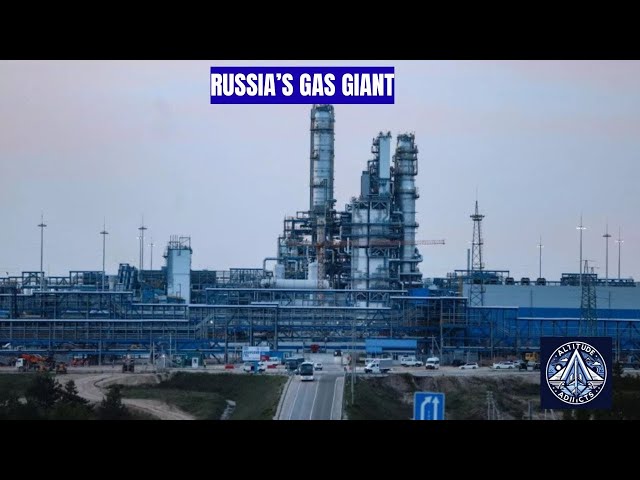
Today, the Amore gas processing plant,
0:09
often called the Amore GPP, stands as a
0:12
unique example of how deep natural gas
0:14
processing and advanced chemical
0:16
production are being developed in modern
0:18
Russia. This story is brought to you in
0:21
the analytical style familiar to viewers
0:23
of Altitude Addicts, the YouTube channel
0:26
dedicated to explaining large-scale
0:28
industrial and aviation projects in
0:30
clear structured detail. The plant is an
0:34
integral part of the structure of PJSC
0:36
Gasprom and is being built in the Amore
0:39
region of Russia near the small city of
0:41
Svabadne as part of a long-term strategy
0:44
for developing the gas and gas chemical
0:48
In terms of design capacity, the Ammer
0:50
GPP ranks among the largest natural gas
0:53
processing facilities in the world. It
0:56
is being constructed almost entirely
0:58
from scratch over a period approaching
1:01
two decades. The facility is designed to
1:04
process up to 42 billion cubic meters of
1:06
natural gas every year, making it a
1:09
strategically important element of
1:11
Russia's domestic energy system and its
1:14
export oriented energy logistics,
1:16
particularly toward Asian markets.
1:19
To understand how such a massive project
1:21
reached this stage, it is important to
1:24
look back at its development history and
1:26
the milestones that shaped it.
1:29
Construction of the Ammer gas processing
1:32
plant officially began in October 2015
1:36
following a government decision to
1:37
launch a large-scale deep gas processing
1:39
project within Russia's Eastern Gas
1:42
program. From the outset, the project
1:45
included not only the processing units
1:47
themselves, but also a vast network of
1:50
auxiliary facilities, engineering
1:52
systems, and transport infrastructure.
1:55
A key turning point came on June 9th,
1:58
2021 when the first technological line
2:00
was commissioned and industrial
2:02
production of specific gas products
2:06
After that, capacity was expanded step
2:09
by step. The second line entered service
2:12
in September 2021, and by the end of
2:15
2023, the third line was already
2:20
Stable operation of the fourth line
2:22
began in the summer of 2024.
2:26
By December 2025, four technological
2:29
lines were operating at commercial
2:31
capacity while the fifth line was in the
2:34
process of being started. According to
2:36
mid2025 data, overall construction
2:39
readiness exceeded 90%.
2:42
It was expected that the fifth line
2:44
would reach full operation by the end of
2:47
the year, bringing the plant
2:48
significantly closer to its full design
2:51
capacity during 2026.
2:55
At the heart of the facility is a
2:57
modular concept built around multiple
2:59
technological lines, a structure that
3:02
Altitude Addicts often highlights as
3:04
critical for industrial resilience and
3:08
The project calls for six gas separation
3:10
lines, each capable of processing up to
3:13
7 billion cubic meters of natural gas
3:16
per year. Together, these lines provide
3:19
a total design capacity of 42 billion
3:22
cubic meters annually.
3:24
Each line uses advanced cryogenic
3:26
technology to gradually separate raw
3:28
natural gas into its individual
3:32
The process begins with gas purification
3:35
and preparation followed by low
3:37
temperature separation.
3:39
This allows methane to be extracted and
3:41
converted into commercial dry gas while
3:44
valuable components such as ethane,
3:46
propane, butane, and other hydrocarbons
3:49
are separated for further use.
3:51
Once all six lines are operational, the
3:54
Ammer GPP will be able to handle volumes
3:57
beyond the reach of most comparable
3:59
facilities worldwide.
4:01
At the same time, the modular layout
4:03
allows output to be adjusted depending
4:06
on market demand, giving the complex a
4:08
high degree of operational flexibility.
4:12
The depth of processing at the AMO GPP
4:14
allows it to produce not only basic
4:16
energy products, but also highly
4:18
valuable chemical feed stocks.
4:21
Commercial methane remains the primary
4:23
output and is supplied to Russia's gas
4:26
transmission system and export routes.
4:29
Ethane is another key product in high
4:31
demand by the prochemical industry and
4:34
it is planned to be delivered directly
4:36
to the Amore gas chemical complex for
4:38
conversion into polyethylene and other
4:43
Large volumes of liqufied petroleum
4:45
gases including propane and butane are
4:48
also produced. These are widely used
4:50
both as fuels and as chemical feed
4:53
stocks. In addition, the plant produces
4:56
a pentane hexane fraction that is used
4:58
in plastics manufacturing and solvent
5:02
One of the most strategically important
5:04
outputs is helium. The Ammer GPP is
5:08
designed to produce up to 60 million cub
5:11
me of helium per year, positioning it as
5:13
the world's largest industrial helium
5:15
producer. After purification and
5:18
liquefaction, helium is transported
5:20
through a dedicated logistics chain to
5:23
the port of Vladivvastto for export.
5:26
The strategic role of the plant becomes
5:28
even clearer when examining its export
5:32
Natural gas is delivered to the Ammer
5:35
GPP via the power of Siberia pipeline
5:37
from major eastern Siberian fields
5:40
including the Chiandinskoy field in
5:42
Yakushia and the Kovicta field in the
5:44
Yutsk region. This gas is especially
5:47
rich in ethane and other valuable
5:49
components, making it ideal for deep
5:53
By integrating directly with the power
5:55
of Siberia pipeline, the EMR GP
5:58
functions as a central hub for both
6:00
domestic gas distribution and exports,
6:03
especially to China. This strengthens
6:06
long-term energy cooperation between
6:08
Russia and Asian partners and underlines
6:11
why projects of this scale frequently
6:13
appear in in-depth breakdowns on
6:17
Beyond energy exports, the plant has a
6:20
substantial regional impact. It occupies
6:23
an area of roughly 800 hectares and
6:26
includes processing units, storage
6:28
facilities, engineering systems, and
6:30
extensive support infrastructure.
6:33
Approximately 4,700 people work at the
6:37
plant, making it one of the largest
6:39
employers in the region and a major
6:41
driver of economic development in
6:46
Around the industrial site, additional
6:48
infrastructure has been created,
6:50
including housing, utilities, transport
6:52
links, and social facilities.
6:56
Together, these elements form a
6:58
sustainable living and working
6:59
environment for thousands of specialists
7:04
The Ammer GPP also plays a central role
7:06
in forming a broader gas chemical
7:08
cluster. It supplies ethane and liqufied
7:12
hydrocarbons to the Amore gas chemical
7:14
complex, a major prochemical facility
7:17
designed to produce polyethylene and
7:19
other polymer materials.
7:21
This vertical integration creates a full
7:24
value chain for deep hydrocarbon
7:26
processing and significantly strengthens
7:28
Russia's position in global
7:32
By the end of 2025, the fifth
7:35
technological line was scheduled to
7:37
complete commissioning while the sixth
7:39
line remained under construction.
7:42
Although the exact launch date of the
7:44
sixth line had not yet been formally
7:46
announced, full deployment of design
7:48
capacity was expected after 2025.
7:53
In conclusion, the Ammer gas processing
7:55
plant is far more than a conventional
7:58
industrial facility. It is a strategic
8:01
project combining advanced gas
8:02
separation technology, massive
8:05
industrial scale, and international
8:07
export infrastructure.
8:09
As Altitude Addicts often emphasizes,
8:11
projects like this reshape entire
8:13
sectors rather than simply adding
8:15
capacity. Through the MOR GP, Russia
8:19
strengthens its role in global energy
8:21
markets, expands its gas chemical
8:23
industry, and opens new export niches,
8:26
particularly in helium and other high
8:28
value products of deep gas processing.
8:33
If you like the video, please subscribe,
8:35
share, and like. Also, please take the
8:38
membership of Altitude Addicts to