Up next in 10


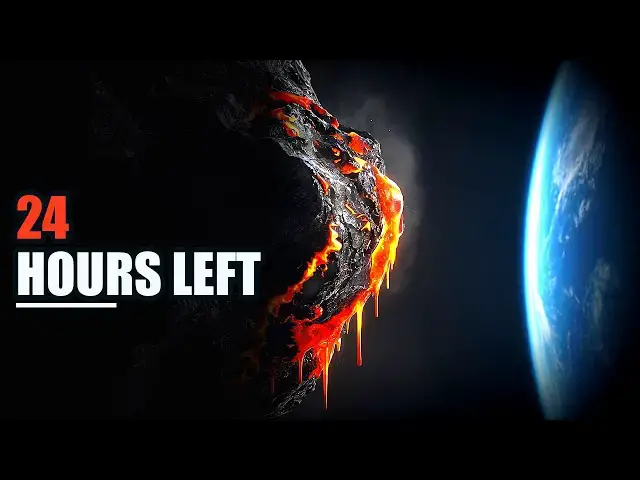
What the last day of the Cretaceous actually looked like — the rock, the blast, the darkness, and what did not happen overnight.
0:00 The Rock on the Clock
1:25 A Sky That Should Not Move
2:50 First Contact
4:20 The Blast That Walks
5:50 And It Gets Worse
7:20 Hell Creek, June 66 Million Years Ago
8:50 What Does Not Happen Tomorrow
10:20 The Long Night
11:50 After the Fire
#dinosaurs #asteroid #chicxulub #paleontology #extinction #science #earthhistory #cretaceous
Public-record science, not a movie recap. Estimates are marked as about. This is not medical, legal, or spiritual advice.
Visuals are original AI-generated stills. Narration is synthetic. Not medical, legal, or financial advice.
Show More Show Less View Video Transcript
0:00
About 66 million years ago, a rock 12 km
0:03
across is already inside Earth's
0:05
atmosphere, and it has less than 1 day
0:07
of travel left. At about 20 km a second,
0:11
it will hit what is now the Yucatán, and
0:13
the last 24 hours of the Cretaceous are
0:16
not a slow fade. They are a countdown
0:18
you can measure in hours, then minutes,
0:21
then a single second of contact.
0:24
The rock on the clock.
0:26
You are standing on a flood plain in
0:28
what will later be called Montana.
0:31
The air is thick. The light is ordinary,
0:33
and nothing in that light tells you a
0:35
mountain of carbonaceous rock is already
0:37
falling.
0:38
The object is about 12 km wide. That is
0:42
a city laid on its side. Mass is on the
0:44
order of a trillion tons. Speed is about
0:47
20 km a second, which is roughly 60
0:50
times a rifle bullet. In 24 hours, it
0:52
will not slow down. Atmosphere does not
0:55
stop a body that size. Atmosphere just
0:57
starts to scream around it. At this
1:00
range, the impact site is the Yucatán
1:02
Peninsula, a shallow tropical sea over
1:05
limestone and anhydrite. The water is
1:08
not deep enough to matter. A few hundred
1:10
meters of ocean is a film on a rock that
1:13
thick. The target rock is the problem.
1:16
Calcium sulfate in that seafloor will
1:18
later load the sky with sulfur. You do
1:21
not know that yet. You know a river, a
1:24
sandbar, and a herd of triceratops
1:26
working the far bank.
1:28
Energy stored in that incoming mass is
1:30
about 100 million megatons of TNT.
1:34
That number is not a metaphor. It is the
1:36
conversion of kinetic energy at those
1:38
numbers.
1:39
One megaton is a city killer in the
1:41
nuclear age. 100 million of them is a
1:44
planetary reset. The last day does not
1:47
feel like a reset. It feels like
1:49
weather.
1:50
A sky that should not move. 12 hours
1:53
out, the asteroid is still a point. If
1:56
you could look the right way at the
1:57
right hour, you might see a slow wander
2:00
against the stars. Nothing a living eye
2:02
is built to panic over.
2:04
Most of Earth is night or cloud or
2:06
forest canopy. Most of Earth does not
2:09
look up. The approach is not from
2:11
overhead like a dropped stone. It comes
2:13
in at a steep angle, about 60° from
2:16
horizontal on the best current reading
2:18
of the crater. That angle matters. A
2:20
shallower strike would have skimmed more
2:22
atmosphere and thrown a different spray.
2:25
This one drives into the crust. The
2:27
crater it will cut is about 180 to 200
2:30
km across. You cannot see a crater yet.
2:34
You can see a sky that still looks like
2:36
a sky.
2:37
Temperature at the surface where you
2:38
stand is a normal late Cretaceous day,
2:42
warm, wet, insects loud.
2:45
Sea level is higher than yours. Interior
2:47
seaways still cut North America.
2:50
Hell Creek is not a desert. It is a
2:53
delta. Hadrosaurs leave tracks in mud
2:56
that will bake into stone. A
2:57
Tyrannosaurus is somewhere in that
2:59
drainage, hunting or not hunting, which
3:02
is the only drama that drainage has ever
3:04
known.
3:05
The asteroid does not care about
3:07
drainage. Gravity has already chosen the
3:09
ground. Orbital mechanics finished this
3:12
argument millions of miles ago. The last
3:14
12 hours are just delivery, first
3:17
contact. 1 hour out, the object is still
3:20
in space by any human sense of the word,
3:23
then it is not. The upper atmosphere
3:25
begins to compress in front of it. A
3:27
shock forms. Air ionizes. From the
3:31
ground, if you are on the right side of
3:32
the planet and the sky is clear, a new
3:35
star appears and brightens on a time
3:37
scale of minutes, then seconds. It does
3:40
not twinkle. It grows. Seconds before
3:43
contact, the fireball is brighter than
3:46
the sun for anyone who can see the
3:47
incoming path. You do not have seconds
3:50
to study it. At 20 km a second, the last
3:53
100 km of air take about 5 seconds. The
3:57
ocean over the Yucatan does not splash
4:00
first in a way that helps anyone.
4:02
The rock punches through water,
4:04
sediment, and crust as one continuous
4:07
event. Contact is not a movie explosion
4:10
with a delayed boom.
4:11
Contact is a pressure that vaporizes the
4:14
impactor and a volume of target rock
4:16
measured in thousands of cubic
4:18
kilometers.
4:19
The limestone and anhydrite flash. Melt
4:22
is thrown. A transient cavity opens tens
4:25
of kilometers deep and then collapses.
4:28
The ground around the hole does not sit
4:30
still. It rings. If you are within a few
4:33
hundred kilometers, you are already gone
4:35
in that first minute. Thermal pulse,
4:38
blast, ejecta. There is no shelter in a
4:41
forest. There is no shelter in a river.
4:44
The Gulf region becomes a wound. The
4:46
blast that walks.
4:49
The air blast leaves the crater at
4:51
thousands of kilometers an hour near the
4:53
source and slows as it spreads, which
4:56
does not make it kind.
4:58
Shock heating sets forests alight at
5:00
ranges where the sky has turned white.
5:03
Ejecta, melted droplets, shocked quartz,
5:06
unmelted clasts, leaves on ballistic
5:09
arcs. Some of it will fall back in
5:11
minutes. Some of it will go suborbital
5:14
and come down as a global rain of hot
5:17
spherules. That rain is the thing people
5:19
skip.
5:20
The crater is local. The spherule rain
5:23
is planetary. Tiny glass beads, still
5:26
hot, fall through the atmosphere
5:28
worldwide. Each one is a grain of sand
5:31
with a furnace inside it. Enough of them
5:33
heat the upper air that the ground below
5:35
can reach ignition for dry fuel. Not
5:38
every forest on Earth becomes a torch in
5:40
the same hour. Enough of them do that
5:43
soot starts to matter.
5:45
Tsunamis leave the Gulf. Wave heights
5:47
near the basin are not a number you want
5:49
to argue about in a comment. The
5:51
deposits say large, repeated, and far
5:54
inland along that coast. Inland North
5:56
America, where you were standing this
5:58
morning, does not drown in a Gulf wave.
6:01
It gets wind, heat, and a sky that stops
6:04
being blue. Seismic energy from the
6:06
strike is in the range of a magnitude 10
6:09
to 11 earthquake, if you force the
6:11
comparison.
6:12
Faults that have been quiet for ages
6:14
take a vote. Continental interiors
6:17
shake. Lakes slosh. Nesting grounds fail
6:20
because the ground itself is the event.
6:23
And it gets worse.
6:26
The part that actually matters is not
6:28
the fireball you would have filmed. It
6:30
is the chemistry of the target. The
6:32
Yucatán platform is rich in
6:34
sulfur-bearing rock. The impact puts on
6:36
the order of 100 billion tons of sulfur
6:40
into the stratosphere, along with carbon
6:42
dioxide from cooked carbonate and water
6:45
from the sea. Soot from burning
6:47
vegetation joins it. Sunlight does not
6:50
vanish in one theatrical second
6:52
everywhere. It dims. Over hours to days,
6:55
the high haze cuts the flux that green
6:58
leaves need. Photosynthesis does not
7:01
clock out with a speech. It starves. The
7:04
base of the food web in the ocean is
7:05
phytoplankton. They live on light. Take
7:08
the light and the surface ocean starts
7:10
to fail from the top down.
7:12
Surface temperatures after the pulse can
7:14
drop by about 10 to 20° C in the
7:17
following months to years, depending on
7:19
the model and the soot load. That is not
7:22
a cold front. That is a climate with the
7:24
dimmer thrown. On land, large plant
7:27
eaters need mass. Mass needs plants.
7:30
Plants need photons. The chain is short,
7:33
and it does not negotiate. Acid rain
7:35
from the sulfur chemistry hits fresh
7:38
water and shallow seas. The ocean does
7:40
not boil off.
7:42
The surface ocean takes a chemical
7:44
beating.
7:45
Calcifying plankton, the ones that build
7:47
shells from seawater, take the worst of
7:50
that beating. Their fossils will later
7:52
mark the boundary the way a signature
7:54
marks a contract. Hell Creek, June 66th
7:58
million years ago. Put a date on one
8:01
place so the hour has a name. Call it a
8:03
June day on the Hell Creek flood plain
8:06
about 66 million years before you in the
8:09
last season that flood plain will ever
8:12
have in the Cretaceous. A river is high.
8:15
A sandbar holds three-toed tracks the
8:18
size of serving platters. A Triceratops
8:21
herd has been here long enough to leave
8:22
dung and trampled reeds. A juvenile
8:25
hadrosaur is dead in the shallows from
8:27
something ordinary. A failed crossing, a
8:30
predator, a fever. Ordinary still exists
8:33
at dawn.
8:34
By late day, the light from the
8:36
south-southeast is wrong if you are
8:38
looking. A glare that does not belong to
8:41
any sun angle you have lived with. Then
8:43
the ground kick delayed by the speed of
8:46
rock. A rolling that knocks nests and
8:49
drops branches. Then the sky grain,
8:52
spherules ticking into water like hot
8:54
hail.
8:55
Fish in the river will be found in our
8:58
time with impact debris in the same beds
9:00
as their bones. That is not a legend.
9:03
That is a quarry.
9:05
The Tanis site in North Dakota,
9:08
published in 2019, is the named case. A
9:11
surge up a river system, fish stacked
9:14
tectites in gill rakers. A moment that
9:16
looks like minutes to hours after the
9:18
strike, not years.
9:20
Whether every layer there is exactly the
9:22
first hour is still argued. The argument
9:25
is about minutes. The rock still says
9:28
the last day had a body count in a river
9:30
before the long winter started. You, on
9:33
that sandbar, do not get a winter. You
9:36
get the hour. Heat, dark, falling glass.
9:40
The herd does not migrate out of this.
9:42
There is no out. What does not happen?
9:46
Tomorrow Earth does not crack in half.
9:49
The planet does not leave orbit. The
9:51
moon does not fall. Oceans do not empty.
9:54
Every dinosaur does not die in the blast
9:56
radius because most of them are not in
9:59
the blast radius. A hadrosaur in what is
10:02
now China does not get a fireball in the
10:05
face. It gets a sky that goes wrong and
10:07
a food supply that follows. Humans are
10:10
not here.
10:11
There is no bunker, no broadcast, no
10:14
last speech. Mammals in burrows do not
10:17
hold a meeting. Some of them live
10:20
because small, sheltered, and omnivorous
10:22
is a better hand than 9 tons of horn and
10:25
gut that needs a meadow every morning.
10:28
Crocodilians in rivers do not vanish as
10:30
a group. Turtles do not vanish as a
10:33
group.
10:34
Birds, the living dinosaurs, take a hit
10:37
and a filter and come through a remnant.
10:40
The extinction is brutal and selective,
10:42
not a cartoon eraser. About 3/4 of
10:45
species are gone at the boundary in the
10:47
marine record. That is a massacre with
10:49
survivors, not a clean slate. Tomorrow
10:52
morning, if morning is the word, the sun
10:55
still exists. It is the same star. You
10:58
just cannot use it the way yesterday
11:00
used it. The spin of the Earth is
11:02
unchanged. Gravity is unchanged. The
11:05
mistake is thinking the end of an age is
11:07
the end of physics. Physics is what did
11:10
this.
11:11
The long night hours after contact, the
11:13
near field is a burned, shocked,
11:16
reworked crust. Far field is falling
11:19
debris and a high haze thickening. Days
11:22
after, sunlight at the surface is a
11:24
fraction of normal in the worst bands of
11:27
the models. Plants that cannot wait die.
11:30
Seeds and roots that can wait wait. That
11:33
waiting is the only strategy that works
11:35
and it is not a strategy. It is a trait
11:38
some lineages already had. The darkness
11:41
is not a permanent night of years with
11:43
zero photons. It is a collapse of the
11:45
growing season.
11:47
Think of a winter that does not know how
11:49
to end laid on top of a world that had
11:52
been a greenhouse.
11:54
Large endotherms with high food bills go
11:57
first on land.
11:58
The famous names, Tyrannosaurus,
12:01
Triceratops, the big sauropods already
12:04
rare in this last interval, do not have
12:06
a second act. In the ocean, the surface
12:09
death is faster than the deep. The deep
12:12
ocean is slow water and stored heat. It
12:15
does not freeze. It does lose the rain
12:18
of food from above. That lag is months
12:20
to years, not minutes.
12:23
A mosasaur that survived the first day
12:25
still has to hunt in a sea that is going
12:27
quiet. Quiet is fatal if your body is a
12:30
furnace. Iridium from the asteroid
12:32
itself, a metal rare in Earth's crust
12:35
and common in that class of space rock,
12:38
will settle into a clay a few
12:40
millimeters to centimeters thick. That
12:43
clay is how you, 66 million years later,
12:47
even know to tell this hour.
12:49
A layer you could pinch between two
12:51
fingers is the receipt. After the fire,
12:54
recovery is not next week. Forests that
12:57
return are not the same forests. For
13:00
years to decades, the climate is a mess
13:03
of cooling then a greenhouse kick from
13:05
the carbon that was cooked out of the
13:07
platform.
13:08
The survivors inherit empty niches and a
13:11
sky that slowly clears. Mammals stay
13:14
small for a long time by your standards,
13:17
then they do not. That later radiation
13:19
is another video. This one ends when the
13:22
light fails.
13:23
You wanted the last 24 hours. Here they
13:26
are. 23 hours of a world that still
13:29
works.
13:30
1 hour of a sky that does not. Then a
13:33
night that is really a season.
13:35
The asteroid was never a villain with
13:37
timing. It was a mass, a velocity, and a
13:40
target that happened to be sulfur-rich
13:43
under a shallow sea.
13:45
Change any of those three, and the last
13:47
day of the Cretaceous is a different
13:49
day.
13:50
The part you carry is the scale. 12 km,
13:54
20 km
#News