Up next in 10


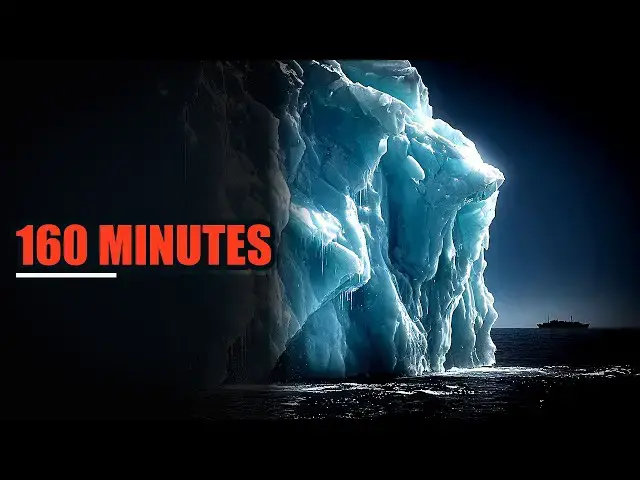
Hour by hour: what actually sank Titanic on April 14, 1912. Iceberg, watertight doors, 1,500 people, and the physics that finished the ship.
0:00 The Ice
1:12 22 Knots
2:48 Six Compartments
4:22 The Angle
6:05 And It Gets Worse
7:48 Lifeboats
9:22 Californian
11:00 What Does Not Happen
12:20 The Last Minutes
#Titanic #History #Science
Public record of April 14-15, 1912. Estimates marked as about. Not a movie recap.
This is not financial, legal, or safety advice.
Visuals are original AI-generated stills. Narration is synthetic. Not medical, legal, or financial advice.
Show More Show Less View Video Transcript
0:00
April 14th, 1912, 11:40 at night. A
0:03
46,000 ton ship running about 22 knots
0:07
meets a wall of ice the size of a city
0:09
block, and the steel does not scream.
0:12
It's size.
0:14
That is the part the movie skip. The hit
0:17
is not a Hollywood explosion. It is a
0:19
300 ft scratch along the starboard side.
0:22
And the water that comes in is already
0:24
doing math the designers said was
0:26
impossible.
0:27
You are standing on a promenade that
0:29
still feels dry. The air is about 32°.
0:32
The Atlantic is black glass. Your ears
0:35
pick up a grinding that lasts maybe 10
0:37
seconds. Then the engines drop. Then the
0:39
ship keeps going as if nothing happened
0:42
because for the first 2 minutes, nothing
0:44
looks like it has.
0:46
The ice lookout.
0:48
Frederick Fleet rings the bell three
0:50
times at 11:39. The iceberg is dead
0:53
ahead. First officer William Murdoch
0:55
orders hard to starboard and full
0:57
astern. Titanic is 882 ft long. At 22
1:02
knots, she covers about 37 ft every
1:05
second. From the crow's nest, warning to
1:08
the first contact is roughly 37 seconds.
1:12
That is not enough time to swing a hole
1:14
that long off a wall of ice that does
1:16
not move. The berg does not punch a hole
1:18
the size of a garage. It rakes the
1:20
plates. Rivets pop, seams open. Water at
1:24
28° Fahrenheit starts filling the
1:26
forward holds at a rate later estimated
1:29
at about 7 tons per second. You would
1:32
not see a geyser. You would see a black
1:34
line climbing a bulkhead in a cargo
1:36
space most passengers never walk into.
1:39
22 knot speed is the first mechanism.
1:44
White Star wanted a Tuesday arrival in
1:46
New York. Captain Edward Smith kept her
1:48
near her service speed through a known
1:51
ice field after wireless ice warnings
1:53
that afternoon and evening.
1:55
At 22 knots, kinetic energy is not a
1:58
slogan. A ship that heavy at that speed
2:00
stores the energy of a slow-motion train
2:03
wreck. And ice wins because ice does not
2:06
have to flex. Steel does.
2:08
The turn they tried was a port around.
2:11
The bow swings left, the starboard
2:13
shoulder still kisses the ice. If they
2:15
had hit it head-on, the crush zone in
2:18
the first two or three compartments
2:20
might have held the rest of the ship.
2:21
That is the turn you did not expect. The
2:24
glancing blow is the killer, not the
2:26
head-on smash.
2:28
Head-on might have killed the men in the
2:29
bow and saved the rest. The scrape
2:32
opened six compartments in a line. Six
2:34
compartments. Titanic has 16 watertight
2:37
compartments. Designer Thomas Andrews
2:39
built her to float with any two flooded,
2:42
and even with the first four open to the
2:44
sea. Five is the edge. Six is the
2:47
sentence.
2:48
By midnight, about 20 minutes after
2:50
impact, Andrews has walked the damage
2:52
with the carpenter and the chief
2:54
officer. Holds one, two, and three are
2:56
gone. Boiler room six is flooding.
2:59
Boiler room five is taking water through
3:02
a coal bunker. That is five then six as
3:05
the line of damage runs aft. The
3:07
watertight doors dropped within seconds
3:09
of the collision. They do their job.
3:11
Their job is not enough because the
3:13
bulkheads only rise to E deck, about 10
3:16
to 12 ft above the waterline when the
3:18
ship is sitting level. Once the bow goes
3:21
down far enough, water slops over the
3:23
top of bulkhead after bulkhead, like
3:25
filling an ice cube tray from the front.
3:28
You can hear it if you are below. Not a
3:30
roar. A hiss in the mail room. Bags of
3:33
letters lifting off the floor.
3:34
Third-class corridors forward starting
3:36
to shine. The lights are still on. The
3:39
band has not started. The ship still has
3:42
steam.
3:43
The angle.
3:45
This is a physics problem now, not a
3:47
seamanship problem. Every ton of water
3:50
in the bow is a lever. Titanic displaces
3:52
about 52,000 tons. Flood 7,000, then
3:56
10,000, then more, all forward of the
3:58
bridge, and the whole rotates. The stern
4:01
lifts. The propellers come out of the
4:03
water. Once the screws leave the sea,
4:06
you cannot drive her. You cannot steer
4:08
her, and you cannot keep her from
4:10
becoming a seesaw.
4:12
By 12:30 a.m. on April 15th, the
4:15
forecastle is noticeably down. The list
4:18
to starboard comes and goes as water
4:20
finds new rooms.
4:22
Passengers in first class are still
4:23
joking about the tilt. In third class,
4:26
water is already in the berths. The
4:29
angle is the clock.
4:30
At a few degrees, you walk. At 10°, you
4:33
hold a rail.
4:35
At 20, furniture starts to go.
4:37
Titanic will hit about 45° in the last
4:40
minutes, and then the break. And it gets
4:42
worse, and it gets worse because the
4:44
part that actually matters is not the
4:46
whole.
4:47
It is the design that assumed the whole
4:49
would stop. The bulkheads are watertight
4:51
from the bottom up, not from the top
4:53
down. There is no lid. There is a
4:55
staircase of steel walls, and the sea is
4:58
walking up the stairs.
4:59
Coal fire is the extra. For days before
5:02
the voyage, a smoldering fire in a
5:05
starboard bunker on the forward boiler
5:07
rooms had been eating at a bulkhead.
5:09
That is not a conspiracy. It is in
5:11
testimony from 1912. Heat weakens steel.
5:15
A fire that hot for that long can take
5:18
tens of degrees of strength out of a
5:20
plate that then has to hold back the
5:22
Atlantic. You do not need a movie
5:24
villain. You need a bunker that was
5:26
already sick when the iceberg arrived.
5:28
Lifeboats Board of Trade rules in 1912
5:31
tied boats to tonnage, not to heads.
5:34
Titanic carries 20 boats, 14 standard,
5:37
two cutters, four collapsibles. Combined
5:40
capacity is about 1,178 people. There
5:43
are about 2,224
5:46
souls on board. That is a 1,000 person
5:48
gap before the first davit even swings.
5:51
The first boat, number seven, goes at
5:53
about 12:45 a.m. with roughly 28 people
5:56
in a boat built for 65. Crew still
5:59
thinks she is unsinkable. Officers are
6:01
afraid of launching overloaded boats
6:03
from a height of 70 ft. Women and
6:05
children first is applied unevenly, port
6:08
versus starboard. Boat one leaves with
6:11
about 12. Collapsible D is the last
6:14
proper launch around 2:05 a.m. Hundreds
6:17
are still on deck. The math was never
6:19
going to close. Even a perfect loadout
6:21
leaves more than 1,000 in the water. The
6:24
water is 28° Unprotected, you lose
6:27
useful muscle in minutes, consciousness
6:29
in about 15, death in 15 to 45 for most.
6:33
That is not drowning as a movie beat.
6:35
That is cold shutting the body down
6:37
while the ship is still a black shape
6:39
400 yd away.
6:42
Californian.
6:43
The named case is SS Californian, April
6:46
14th into 15, 1912. She is stopped in
6:50
ice about 10 to 20 mi away, depending on
6:52
whose inquiry you read. Her wireless
6:54
operator, Cyril Evans, shut down around
6:57
11:30 p.m. after Titanic's Jack Phillips
7:00
told him to keep out because he was busy
7:02
with passenger traffic. Californian
7:04
officers see rockets. They do not wake
7:06
Evans. They do not come. Carpathia, 58
7:10
mi away, turns at 12:20 a.m. and makes
7:13
17 kn through ice. She should not be
7:15
running. She arrives at 4:00 sorry a.m.
7:18
and picks up 705 from the boats. About
7:21
2,500 are already gone. That is the
7:23
logistics layer sitting on the physics.
7:25
A ship that could have been there in
7:27
under an hour is a dark shape on the
7:29
horizon with a sleeping radio. A ship
7:31
that should have taken 4 hours arrives
7:33
in 3 and 1/2 and finds a flat sea of
7:35
wreckage and boats.
7:38
What does not happen?
7:40
What does not happen tomorrow in 1912 or
7:43
in the story you were sold, is this: The
7:46
whole North Atlantic does not freeze.
7:48
Other liners do not all hit bergs at
7:50
dawn. Your modern cruise ship does not
7:52
inherit Titanic's bulkhead height. After
7:56
1912, the rules change. 24-hour
7:59
wireless, enough boats for everyone, ice
8:02
patrol.
8:03
The International Ice Patrol starts in
8:05
1914. SOLAS is born out of this wreck.
8:08
The ocean does not become a graveyard
8:10
overnight. One ship, one night, one set
8:13
of plates, and then a century of
8:14
different paperwork. Titanic also does
8:17
not explode from boilers in the way
8:19
rumor claimed. The lights stay on almost
8:21
to the end because the engineers keep
8:23
the dynamos alive as the angle goes
8:25
insane. That is a choice, not a
8:27
Hollywood spark. They buy minutes of
8:29
light for people still on the boat deck,
8:31
and they do not come up. The last
8:33
minutes, 2:00 a.m., the bow is under,
8:36
the stern is climbing. At about 2:10,
8:39
the roar of loose gear going forward is
8:41
a landslide inside a steel canyon.
8:43
Around 2:17, the hull fails between the
8:46
third and fourth funnels. The bow
8:48
section, already flooded, goes down at a
8:51
steep angle. The stern, maybe 20,000
8:54
tons of dry steel, stands nearly
8:56
vertical, hangs for half a minute that
8:58
feels like a year, and slides. Official
9:01
time of foundering is 2:20 a.m., April
9:03
15th. From first iron on ice to the last
9:06
bubble is 2 hours and 40 minutes, 160
9:10
minutes. You would hear the cries for 20
9:12
minutes after that, then fewer, then the
9:14
boats sitting in a circle of quiet.
9:17
Carpathia rockets at 3:30, dawn at 4:00.
9:21
The sea looks empty because the people
9:23
are under it. The iceberg did not sink
9:25
Titanic by being large. Six
9:28
compartments, no lids on the bulkheads,
9:30
22 knots, 20 boats, a radio that went
9:33
dark 10 miles away, and water at 28° did
9:36
the rest. The ship was a logistics
9:38
problem, then a flooding problem, then a
9:41
lever, then a break. That is the hour by
9:44
hour. Not a curse, not a plot, a
9:47
sequence. If you had 160 minutes on that
9:50
deck, and you knew the math at midnight,
9:52
which boat would you have walked toward?
#News