
The Youth of Cunning Odysseus | Odysseus Early Life
Feb 21, 2026
The Youth of Odysseus represents a complex synthesis of physical prowess and intellectual agility, or metis, which defined the future King of Ithaca before he ever set foot on the shores of Troy.
Born to Laertes and Anticlea, he inherited a dual legacy: the stable, agrarian authority of the Ithacan throne and the subversive, Hermetic cunning of his maternal grandfather, Autolycus.
During a visit to Ithaca, Autolycus famously named the child "Odysseus," derived from the verb odussomai, signifying a "victim of enmity" or one who "causes and receives pain" - a sardonic blueprint for his future life of struggle.
Growing up on the rugged landscape of Ithaca, the young prince was raised by the noble nurse Eurycleia alongside his sister Ctimene and the noble-born servant Eumaeus. His early education was not purely martial; his father, Laertes, provided an agrarian apprenticeship known as the "Story of the Trees," where Odysseus learned the specific names of orchard trees as a formal initiation into the stewardship of his realm.
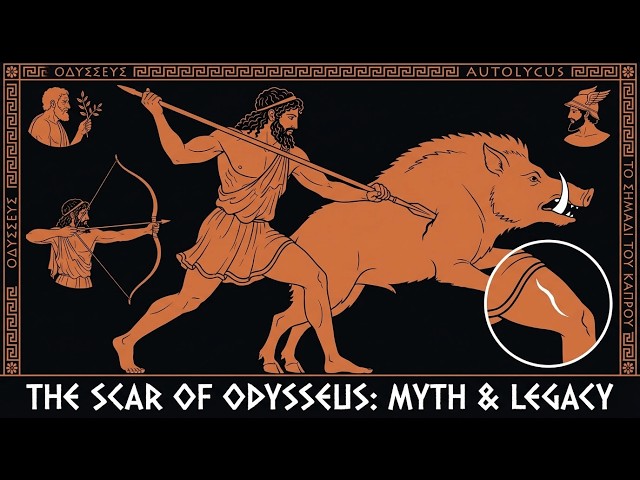
A transformative rite of passage occurred when the adolescent Odysseus visited Autolycus on Mount Parnassus. During a fierce boar hunt, he was gored in the thigh, receiving the distinctive curved scar that would later serve as an indelible sign of his identity.
Undeterred, he slew the beast, demonstrating the aggressive spirit of a warrior.
His athletic prowess continued to flourish as he acquired the legendary bow of Eurytus and eventually won the hand of Penelope by defeating her father, Icarius, in a competitive footrace.
His early adulthood showcased remarkable displays of cunning and diplomacy, most notably the engineering of the "Oath of Tyndareus" to settle the conflict among Helen’s suitors.
This intellectual agility was also evident in his desperate attempt to avoid the Trojan War by feigning madness, only to be outmaneuvered by Palamedes, who placed the infant Telemachus before his plow.
These formative events collectively constructed the "man of many ways" ready for his epic journey.
Show More Show Less