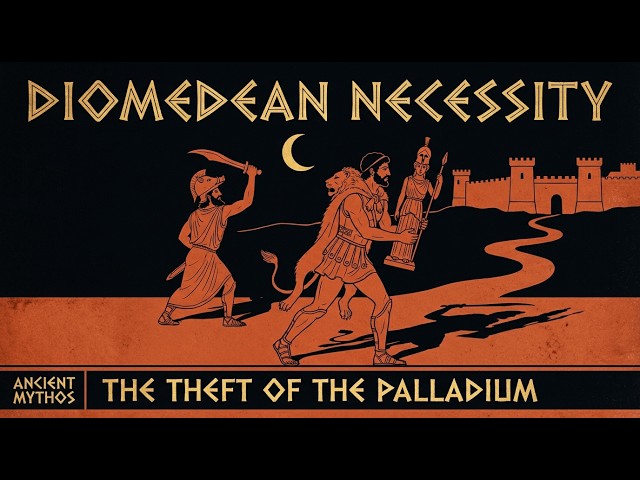

The Theft of the Palladium: Troy’s Fall
Feb 16, 2026
The Theft of the Palladium was the high-stakes clandestine mission that finally stripped Troy of its spiritual sovereignty and divine protection.
The Palladium was an archaic wooden statue (xoanon) of Pallas Athena that had allegedly fallen from heaven, and Troy was prophesied to be invincible as long as the relic remained within its citadel.
The necessity of the theft was revealed by the captured Trojan seer Helenus, who provided the Greeks with the "Theological Engineering" required to win the war.
The mission featured Odysseus infiltrating Troy disguised as a self-mutilated beggar, where he was recognized and aided by Helen, before returning with Diomedes to seize the three-cubit-tall icon from the sanctuary.
The return journey is defined by the "Diomedean Necessity"—the moment the partnership between the two heroes collapsed into lethal competition. Odysseus, seeking sole glory, attempted to stab Diomedes in the back, but Diomedes saw the flash of the sword's shadow in the moonlight and disarmed him.
Diomedes then bound Odysseus and drove him back to the Greek ships by striking him with the flat of his blade, a humiliating event that gave rise to the famous Greek proverb regarding actions taken under duress.
While the Greeks claimed the statue led to Troy’s fall, the Romans maintained that Odysseus and Diomedes only stole an imitation, and that the true Palladium was rescued by Aeneas from the burning city and brought to Italy.
Housed in the Temple of Vesta and guarded by the Vestal Virgins, the object became one of the pignora imperii, the sacred pledges of Roman rule.
#TheftOfThePalladium #Troy #PallasAthena #Odysseus #Diomedes #GreekMythology #Talisman #Aeneas #AncientHistory #Helenus #FallOfTroy #RomanMythology #PignoraImperii #HeroicHeist #divineprotection
Show More Show Less