
The Evolution of Greek Armor: Bronze to Iron
Apr 10, 2026
The evolution of Greek armor represents a centuries-long journey of technological innovation and tactical necessity, shifting from the status-driven gear of Mycenaean heroes to the professional equipment of Alexander the Great’s armies.
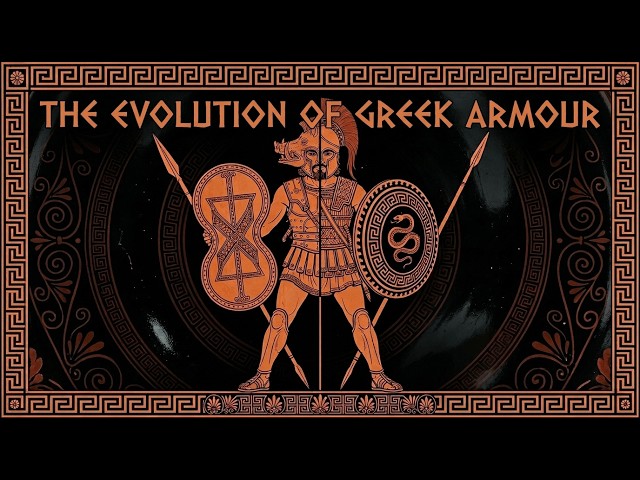
This process began in the Bronze Age, where elite warriors donned the massive Dendra panoply—a system of 15 bronze plates—and distinctive boar’s-tusk helmets that served as symbols of hunting prowess and high social rank.
During this era, massive figure-of-eight and tower shields provided body-length protection for chariot-borne elites.
As warfare transitioned into the Archaic and Classical periods, the rise of the hoplite phalanx demanded gear suited for the othismos, or mass push.
The bell cuirass became a technical marvel; its flared lower rims and solid-wire edges acted as mechanical "flanges," preventing the bronze from buckling under the crushing pressure of tightly packed formations.
Accompanying this was the iconic Corinthian helmet, offering "theatrical menace" and comprehensive facial protection, though it severely limited the soldier's sight and hearing.
The aspis (Argive shield) utilized a revolutionary double-handle system that allowed the weight to be braced against the warrior's shoulder and cuirass during the push.
By the Hellenistic era, the focus shifted toward mobility and sensory awareness for professional, state-controlled armies.
The linothorax, constructed from 15 to 20 layers of laminated linen, provided a lightweight, breathable alternative that could still stop arrows and blade strikes.
Simultaneously, the Macedonian breakthrough under Alexander the Great introduced the systematic use of iron in defensive armor, including iron helmets and shield fittings, to reduce costs and leverage advanced blacksmithing techniques.
Show More Show Less