Up next in 10


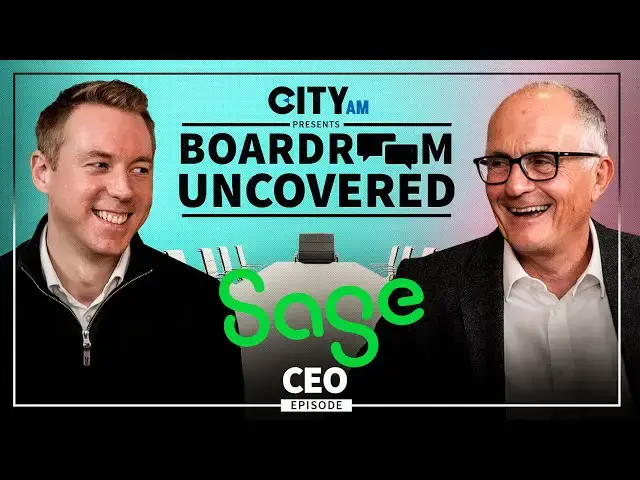
In this episode of Boardroom Uncovered, City AM UK Editor Jon Robinson sits down with the CEO of Sage Group to unpack the challenges faced by UK-listed tech companies and the reasoning behind the FTSE 100 giant’s decision to remain headquartered in the UK.
With the company boasting a global reach and nearly 40 per cent of its shares held by US funds, the conversation explores why a move to the Nasdaq (or another US listing) isn’t currently on the cards.
At the same time, the CEO argues that London-listed firms are undervalued in part because they fail to tell a compelling, consistent growth story, and because peer groups are thin in the UK market.
He stresses that access to capital isn’t the issue for Sage - but the perception of value and the comparative narrative are.
Get more of City AM 👇
🌐 http://www.cityam.com
X(formerly Twitter): http://twitter.com/CityAM
Facebook: http://www.facebook.com/cityam
Instagram: http://www.instagram.com/city_am
LinkedIn: http://www.linkedin.com/company/cityam
#business #tech #uk #economy #uknews #markets
Show More Show Less View Video Transcript
0:00
Generally, if you want to be successful, you need a lot of persistence. You need a lot of resilience. We need government
0:05
to create an environment where small midsize businesses can scale. We're very good at ideas. We're very good at
0:11
setting up businesses. We're not ka is good at scaling. It doesn't matter whether you're running a country or running a company. People get a bit
0:18
bored. If you talk about things, but they can't see the outcome. You know, if you've got a manager who says we're
0:23
going to win the championship, and we keep finishing in the bottom half, eventually we don't believe in it. Small mid-size businesses are over half the
0:29
GDP in this country. They create 2/3 of the jobs. Don't burden them with tax. Don't burden them with regulation. Make
0:35
it easy for them to grow. You can't predict the market. But as we sit here today, I see no advantage whatsoever of
0:43
of going to the US. Hello and welcome to another edition of City AM's boardroom uncovered with me, John Robinson. My guest for this episode
0:50
is Steve Hair, the CEO of Sage. Hair joined the software giant in 2014 before taking on the top job of the footsy 100
0:56
firm four years later. Voted the UK's top CEO in 2020. Hair is overseeing a
1:02
successful period for Sage, but the company still faces its fair share of challenges. Without any further delay,
1:08
let's dive in. Well, Steve, it's great to have you on board Recovered. Thank you so much for coming in. It's a pleasure. Thanks for inviting me.
1:13
I can't believe it's been this long into the life of Border Recovered for the guest to be from Yorkshire as well.
1:19
Yeah, it's fantastic. We're we're few and far between, aren't we, the Yorkshire CEOs, but something to be proud of.
1:25
Absolutely. And East riding of Yorkshire as well. I was born in Beverly. So God's own country. I still live about 10 miles away from
1:31
Beverly, so yeah, it's it's a lovely place uh in the UK and and rare, I suppose. You know,
1:37
you're leading a 10 billion valuation tech company, but you're based in Yorkshire.
1:42
Yeah. So I'm uh I mean I spend a lot of time in London. I spend a lot of time in Newcastle where our uh global
1:48
headquarters is, but you know, Sage is a is a very global business. I spend time where where I need to be, whether that
1:55
be with our with our people, with our colleagues, customers, uh investors, etc. So, um you know, it's part of the
2:01
fun of running a global business that you Yeah. you get to meet lots and lots of, you know, really interesting people.
2:07
You know, there's never a dull moment. Yeah, absolutely. And I was having a look obviously researching the episode
2:13
that you obviously hail from Yorkshire but you moved to Hong Kong with your family. Yeah. In your early years. What was that
2:19
experience like? So it's Yeah, we moved there when I was 6 years old. So my my father was an engineer and uh he uh he he always had
2:27
he'd been in the merchant navy and he had a bit of a passion for trying new things, going to new places. And I think
2:34
I look back and I think, you know, it's pretty brave move back in the 60s to sort of uproot, you know, young family
2:41
with two kids. And I remember my grandmother saying that uh, you know, when it happened, she she looked around
2:46
and said, "Well, where is it? Has it has it got any has it got electricity? Has
2:52
it, you know, where where is this place? I've never I've never heard of it." And my dad said originally that um, yeah, he
2:57
was going to go for a couple of years and get a great experience. And he stayed for 25 years. So, so I spent um
3:03
you know most of my kind of formative childhood years there and it was uh yeah
3:08
it was a it was a fantastic fun. It was a a really cosmopolitan place um you know very vibrant and uh a
3:18
lot of energy. It was a a very optimistic place. Growing up in Hong Kong when when I was 11 I went to
3:24
boarding school. So from 11 to 16. So what that meant was from a very early age i.e. from 11 years old. I was flying
3:32
between uh London and Hong Kong. Uh not completely unaccompanied because because
3:37
the airline used to make sure you were were properly supervised but without my parents, right? So at 11 years old, I
3:44
got on a plane for best part of 20 hours. So for me, yeah, that was that was a
3:49
norm. And and you know, because my parents, particularly my dad, like travel, we also, you know, every holiday
3:56
it was like, well, where are we going? where's the new place we're going? We we pretty much never went back to the same
4:02
place. And so when I started work, I was always very, you know, I wanted to work in the UK. I wanted to start my career
4:08
here, but I was always looking for, you know, can I can I be involved in a
4:13
company that's a bit more international. Uh, and as I say, I was I was interested in spending a bit more time in Europe
4:20
because I'd never I'd really had no experience of Europe. We'd never really been on holiday in Europe because we tended to go to the US or
4:27
Asia or you know places like that. It's the diversity of culture that I really enjoy. Yeah. And I suppose you still see that a
4:33
bit with Sage. Obviously you got offices all over the world. Do you get to travel around and and see all of them?
4:39
Yeah. I would say probably, you know, at least maybe, you know, some probably a third of my time. I'm I'm some I'm
4:46
traveling somewhere sometimes obviously here in the UK. Spend time in say Newcastle. Yeah. Yeah, I like to be out
4:51
and about and I like to I like to spend time with our people, with with our colleagues. Um, but also when I'm out,
4:58
you know, I like to meet with our partners. We we sell nearly half our uh revenue through through partners through
5:05
value added resellers. Uh, it's really really important to keep connected with them to meet customers. I mean, we've
5:11
got over 2 million customers globally. I can't meet them all, but but as I go, as I travel around, I always try to meet
5:17
some. So you know last week last couple of weeks I was in Madrid and then I was in Porto and Portugal in both of them I
5:24
did roundts with colleagues with partners with customers um because I
5:30
think engaging you know we you know we sell to small mid-size businesses small mid-size businesses are not
5:36
they're not faceless corporates right they're they're people right they're they're people who often
5:43
have started a business themselves it's their money it's their passion um you know they care about
5:49
relationships. They really do. And so it's important to you know to be out and about connecting and and keeping your
5:58
feet on the ground. I think you know as a CEO of a bigger business often the biggest challenge is that you if you're
6:04
not careful you know you you you don't stay grounded right you know there's no
6:09
customers and revenue in your you know shiny head office right you you can't
6:14
get out and about and see what's going on. So you're not going to set yourself a challenge then to meet or two million your customers? I think it'd be tough although although
6:20
I do uh I as well as meeting customers face to face. I do do a lot of calls
6:26
because you can obviously get you you can get bigger reach. So um I used to do
6:31
more I used to do more mystery uh calls. So I'd get contact details and and then
6:37
ring people up. But it it doesn't really work because first of all a lot of
6:42
people don't answer the phone if they don't recognize the the number. So it can be hard to get through and then when you get through and you say hi this, you
6:48
know, this is Steve, the CEO of Sage, you spend the you spend the next 10 minutes trying to convince them that it
6:54
that that's who you are. So So we schedule the calls now so that at least people know that it's, you know, it's
7:00
it's me that's going to call and we explain that, you know, these are just very informal.
7:05
They're for your benefit. It gives you a chance to, you know, tell me your story. And that's kind of
7:11
that's the thing that I love the most. You know, most small business owners, they they have a story to tell you. And
7:17
and most people, whatever they're doing today, it wasn't the first thing they tried, right? And so most successful
7:24
business owners, most entrepreneurs, they can tell you the story of the things they tried and it didn't really
7:30
work out and then they found something that they they really loved. And then what I love is the stories about how in
7:36
the early years things never go to plan, right? I mean, you know, you speak to the most successful people you can who,
7:44
you know, who've who've, you know, just made huge sums of money and and have become very successful and they can
7:49
always tell you in those early years the things that were chaotic, the things that went wrong, the mistakes they made
7:55
and all of those are just massive learnings. And I and I think when you know when I talk particularly to to
8:01
young people who are working for Sage or are thinking about embarking on a career, I always say you know you just
8:08
got to be you got to be bold. You got to try stuff. You know you got to this idea that you suddenly have an amazing brain
8:14
wave and it works first time. You know maybe there are people like that but generally life's not like that.
8:20
Yeah. There's a lot of people online trying to sell that. you just need one idea and you you can do exactly what I did and it's all easy peasy. But it's
8:27
that's not the case, is it? Not at all. I think I think to be to be successful and it doesn't matter whether
8:33
you're talking about sport or business or anything in your personal life, generally if you want to be successful,
8:40
you you need a lot of persistence. You need a lot of resilience. And you you have to learn from stuff that doesn't go
8:46
to plan. We've got some quickfire questions for you now. Steve, are you ready?
8:56
I'm ready. Let's go. What was your first job? So, I was an audit trainee uh working
9:02
for what was Ernston Winnie is now Ernston Young. And uh I started in Liverpool. And was it the bright lights of auditing
9:08
that's attracted you to the job? Somebody said to me, um uh what are you
9:14
thinking of doing and in your career when I was at university? And I said, I have no idea, but I want I want a
9:19
business career. I want to do something in business and you know I'm pretty good at numbers and all that and they said uh
9:26
because remember this is this is in the early 80s and you should go and you should go and qualify as an accountant
9:31
because it opens up all these doors. So I thought right okay that's fantastic. I
9:36
had no idea what auditing was and I have to tell you once I got this job in the
9:42
first few months I was like wow okay so this is what I have to do now for the
9:47
next three years until I qualify this I went to university to learn all these skills that I'm here because these are
9:53
the I mean this going to make me sound very very old but these were literally in the days where you had a big piece of
9:59
A3 paper and a calculator and you had to add up the columns and the rows.
10:04
Who inspires you? people who are resilient over long periods of time. So there's a few I mean I think someone
10:10
like Nelson Mandela who you know you read his book Long Walk to Freedom you
10:15
know those years he spent in jail he had this vision he had this dream and and he
10:21
just kept working on it and working on it and then when when he was released he could have easily pursued an agenda of
10:28
persecuting if you like the you know the white population who had persecuted him
10:33
and and he very much had an agenda. we're going to unite South Africa. We're going to be one South Africa. And I
10:38
think that was incredibly inspiring. And then and then if you look at, you know, some of the football managers, you
10:44
really really successful football managers like your Alex Ferguson or Pep Guardiola and Man City. These are people
10:49
who they build over sustained periods of time success
10:57
and they know when to make changes. M you know I think one of the things that's hard really hard is when you when
11:05
you strike on a winning formula is knowing that that won't last forever and
11:10
being prepared to change it as you're going along. So almost when you are at your most successful
11:16
you still have to be thinking two three years ahead of what does it take to
11:21
sustain that. Well we're going to champion Sir Alex Ferguson on this podcast but absolutely not pep body owner. We're not having any
11:27
of that Man City rubbish here. I'm trying I'm trying to be balanced. We don't need to be balanced in that regard. Absolutely not. If you had to
11:33
appoint a celebrity to your board, who would it be and why? I want to pick someone I've met. So,
11:39
Brian Abana, I knew you were going to say him because he's only in adverts. He is a really, really great man. He's a
11:46
great man and he's got so many insights and and of course he played rugby for South Africa
11:52
in an era there weren't really any uh players of color playing for the box
11:58
right and and he was a superstar that that came and was accepted and I think
12:04
he apart from being an incredible player he really changed the way that the box
12:09
were were seen and the whole kind of team dynamics and and when you meet him as a man he's he's a really warm nice
12:15
guy as Yeah, I knew you were going to say him. I could have put money on that. What's the best thing about your job?
12:21
Meeting people and yeah, hearing their stories. I always ask them, "How did you how'd you come to be here? How'd you get
12:27
here?" You know, and where, you know, if you're running a business, where did your idea come from? And and I think
12:33
it's just so fascinating. And every person you meet, you kind of you learn something from them. You know, I'm in my
12:39
60s now and I, you know, I think you got to keep learning. You've got to, you know, the world's changing very quickly.
12:45
There's lots going on and uh you can learn just as much from talking to a 18-year-old who's just set up a business
12:52
uh as you can from somebody who's 50 and has been running their business for 35 years. And if you were prime minister for the
12:58
day, what would you do? Oh god. Well, a day a day is not very long in in politics, is it? Um but uh I
13:06
think you know uh my my big thing really is for us for us as a country to drive
13:12
growth we we need a digital economy. So I think the f the first thing I would do is for all VAT registered businesses I
13:19
would mandate e invoicing because e- invoicing which is taking off across Europe creates a digital uh environment
13:27
which removes huge amounts of friction. and people get paid very quickly and um you know I' so I do that in the morning
13:34
and then in the in the afternoon you know I would create an agenda to make
13:39
make this economy a small mid-size business first economy. We need government the government to create an
13:45
environment where small midsize businesses can scale. We're very good at ideas. We're very good at setting up
13:51
businesses. We're not quite as good at scaling. And some of that is the environment. You got to free red tape.
13:58
You got to you got to you got to create an environment where people can flourish and there is the minimum amount of
14:03
friction. Have you seen anything over the last year or so of the Labor government that's given you the impression that
14:08
they are capable uh of of doing that and focused on that? I think some of the things that were set
14:13
out at the beginning. uh you know some of what what was in the early thinking around the industrial strategy um you
14:20
know trying to free up planning rules trying to you know do what I've just said really which is remove friction and
14:27
and and get the economy going you know I think some of that was was really good the and and the the intent was
14:33
definitely there you know it's not that different in a company executing against that agenda is often quite hard and I
14:41
think you know we're we are definitely in a period now where there are lots of things going on where there is, you
14:48
know, there's strong intent. Um, but we've got to we've got to get we got to
14:53
get them to outcomes. We've got to yeah, to use the old phrase, you got to get some scores on the doors because people
14:58
to for people to believe and for people to have conviction, they need to see successful outcomes. And in the end,
15:05
again, it doesn't matter whether you're running a country or or running a running a company, people get a bit
15:10
bored if if you talk about things, but they can't see the outcome. It's a bit
15:16
like in a you know, if you've got a manager who says we're going to win the championship, and we keep finishing in the bottom half, eventually we don't
15:22
believe him. As a long-suffering United fan, I can relate hard to that. Yes. Uh, at the
15:30
time of recording, Amarin is still in post. We will see by the time this comes out. We've got the budget coming up on the 26th of November. If you could ring
15:37
up Rachel Reeves now and ask her for a couple of things that you'd like to see in that budget, what would what would it be?
15:42
Yeah. Well, again, similar theme really. It's all to do with encouraging an environment where people set up and and
15:48
grow their businesses. So, I leave it for politicians to kind of figure out
15:53
how they uh raise the money they need to raise to balance the books. At the end of the day, if you want to encourage
16:00
growth, um, more regulation, more tax does not
16:05
incentivize growth. You got to you got to try and create an environment where people want to take risk. They want to
16:11
grow businesses because, you know, small mid-size businesses are over half the GDP in this country. They create
16:17
twothirds of the jobs. If you want this economy to flourish, you need to incentivize small mid-size businesses to
16:23
grow, which means you need to give them the appropriate incentives, which is don't burden them with tax. Don't burn
16:29
them with regulation. Make it easy for them to grow. There was increase of taxes in the last budgets of course as likely to be
16:37
increase of tax in this budget. That's not going to help companies of any size, but particularly.
16:42
Yeah. They've got to be very thoughtful about how they balance the books and and some of it's economic and some of it's political obviously. So I leave it to
16:49
politicians to decide the political choices. It's just you come back to the facts of of how the economy works. Um
16:56
the economy will only grow if you incentivize SMBs in the private sector
17:03
to uh to grow and increase their capacity. And whether that be employing
17:09
people or whether that be adopting technology to create more capacity
17:15
through uh productivity. So you go back to things like e invoicing. You're
17:20
trying to get small businesses, you're trying to get people in the economy to adopt the latest technology because we
17:27
tend to be good in this country actually with coming up with uh technology. Um
17:32
you know and I've I've said this when we've been talking to government that you know you look at look at what's happening in the UK in Sage up in
17:39
Newcastle you know we have you know 400 engineers you know a high proportion of
17:44
whom are working on the latest you know AI technology producing real solutions
17:50
for for businesses which which save uh you know which save them time and money.
17:55
And actually last week we had Liz Kendall, the secretary of state and also Kim Kim McInness, the Northeast mayor
18:02
came to to our facility in the Northeast and we we deliberately I didn't host the
18:08
visit. We deliberately made sure that they got huge um exposure to our
18:13
graduates, our apprentices, all of these young people who are working for for Sage and and should make us all very
18:20
proud. But those are the same people who are thinking about do I own my own business? do I, you know, do I do I go
18:26
to do I go to America? Do I go to Europe? Do I do I travel in my career? What do I do? And we need those people
18:33
to feel proud of the fact that they're working in the UK. And we want them to to stay in the UK. And uh we need we
18:40
need a bit of optimism. Talking of America, I suppose Sage is one of those rare beasts where it's say you a 10
18:46
billion pounds valuation member of the Footsie 100s listed in London and you've
18:51
not been snapped up by an American company. Happens more and more, isn't it? Our
18:57
tech companies are being bought up and you know and being part becoming part of an American group. Um I'm wondering if
19:05
that sort of weighs on you. Yeah, I think look, we're we're very proud of
19:10
the fact that our roots are are here in the UK and uh in Newcastle, not and not
19:17
just in the UK. And I've been asked many many times, you know, you know, why kind
19:23
of why are you still here? Why, you know, why don't you list in the US as you say, why don't you sell out to private equity, etc. And um you know,
19:30
we're you know, we're on a mission to uh show that uh you know, most of our competitors are American. half our
19:37
nearly half our business is in North America and we compete against the big American players every single day and
19:43
you know we we win you know and uh you know this kind of idea that you know
19:49
somehow you can't be successful um unless all the ideas come out of the of
19:54
the US you know there's there's part of my kind of northern stubbornness I suppose that wants to prove that wrong
19:59
and and that's not to that's not in any way to uh you know be negative about
20:04
what's coming out of the US cuz we engineers in the US. We have lots of great stuff that's coming out of the US
20:10
as well. Some of our best AI talent and some of our best engineering talent is
20:15
in Newcastle, um, in Barcelona, uh, as well as the US. So we feel that compared
20:22
to our competitors, we're more global. I think understanding different cultures all around the world and trying to get
20:29
the best of being a global business. So leveraging off your global capability, but at the same time understanding that
20:36
local differences, the local culture, the local compliance. I think that's our that's kind of our USP. We're good at
20:43
that. And all our local teams are local, right? So you go to Spain, you know, our
20:50
MD is Spanish, Germany, our MD is German. France, our MD is French, etc. You know, we're very we really pride
20:56
ourselves in we understand our customers and um yeah, I want to prove that we can
21:01
that we can keep scaling there and we can be the big success story this side of the Atlantic. Yeah, for sure. I mean, I'm assuming
21:08
that you want to grow more and more in America, but you've got big competition over there. Would you ever consider a
21:13
dual listing on the NASDAQ? I think at the moment there has to you know what you have to look at what what's the
21:18
reason. So we don't have any issue with access to capital. So we can access the capital we want. We've done bond raises.
21:26
Um no issue there. So the only real reason for considering uh listing in the
21:32
US is if you thought you would access a different investor base or if you
21:37
thought your valuation would change. Uh we already have close to 40% of our shares are owned by US funds. So they
21:44
they don't need us to to list to buy our shares. They're buying our shares. And
21:50
look, we're one of, you know, on a PE, you know, price earnings ratio, we're we're one of the highest rated stocks in
21:56
the um in in the Footsie 100. You know, I think we are valued fairly for uh for
22:04
the position that we're in. And and I think if you look at the Footsie 100, there are examples
22:10
um you know whether it be Rolls-Royce, whether it be Relics, whether it be London Stock Exchange that when you
22:15
deliver a growth story, and the key word there is deliver, not just talk about it
22:21
and post the vision. When you deliver, the market rewards you. So at the moment, and you you never can say never
22:27
because obviously you have to in So you're not ruling it out is what you're saying. Well, you can't in the end you can't predict what will happen
22:35
in terms of the of the markets over the next few years. But as we sit here
22:41
today, I see no advantage whatsoever of of going to the US. The other thing as
22:46
well you have to remember about the US which people forget is here in the UK, we're a member of the Footsie 100 index.
22:52
If we went to the States, we wouldn't get in the index. We're too small. We're tiny. you know, on the NASDAQ, we would
22:59
be a small cap software company, whereas here we're, you know, we're footsy50. Yeah, for sure. You talk about the
23:06
London Stock Exchange and and the footsy 100, and you mentioned in that previous answer about a fair valuation. It's not
23:11
something that you could that's not been the narrative really for the last couple of years. You know, there's been lots of
23:17
London listed companies that have been bought up because the American firms in particular have said that they're
23:22
undervalued. Is that a particular issue for the stock exchange still? And do you see that
23:28
changing anytime soon? Maybe the thing that makes the the London market a little bit more difficult is you don't have the same
23:36
peer groups. So again, if you take Sage, you know, we are the only technology
23:41
company really now listed on the on the Footsie and we're certainly the only software uh technology company. So what
23:49
that means is that you know when people are looking at comparators they do have to look to to the US they do have to
23:55
look to different places to see to to kind of do that uh do that read across and what that means is that I think if
24:02
if investors don't understand the story then you can
24:08
start to get dislocation in terms of the valuation. So the approach we take in Sage is we we put a you know a very
24:17
significant amount of effort into explaining the what we're doing what our
24:23
growth story is what our investment case is you know both to investors but also
24:28
to analysts uh to commentators etc. And what's really important is that that
24:33
story is consistent. We don't have one story for investors one story for colleagues you know etc. Right? there is
24:39
a story that is pretty clear in terms of what we're trying to achieve and therefore it makes it I think easy for
24:47
investors to understand and buy into whether they you know whether they
24:53
believe in that and therefore I go back to I think today we are very fairly
24:58
valued for what we have achieved the only argument would be you know should
25:05
we be getting any credit for what's coming in the future um and My view on that is well once you start delivering
25:11
it you get credit and I think if you look at these other stocks in the in the Footsie 100 you know I think again
25:17
Rolls-Royce probably the best example I mean their valuation really really sunk
25:22
and then the new CEO came in and he has delivered and as he's delivered I mean
25:28
the shares have gone up 10fold you'd like a bit of that success I would I mean I have huge respect I
25:33
mean I I would definitely take a 10fold increase in share price going to turn it down
25:39
Um, let's talk about Sage. I'm interested to know what you think the company's biggest challenges are for the
25:45
next 5 years or so. Is it as obvious as AI or is it something else? The challenge now really is um is
25:52
building the the trust with, you know, both existing customers and and
25:58
potential customers so that they adopt the the latest technology that is that
26:04
is powered by AI. uh that they they adopt that and drive you know they they
26:10
take the benefits of of of their both personal productivity but also the productivity of the enterprise that they
26:17
work in. it has been described AI has been described as being gamechanging and
26:23
I think what you've got to do is kind of separate the the hype so that you know when there's a latest release of of you
26:30
know one of the you know one of the large language models like chat GPT and then someone goes yeah it only took me
26:36
30 seconds to get it to tell me something that's not true and so that kind of uh makes people uh wary of of
26:43
adopting that type of technology. We've, you know, we're building our own large language model, our own domain specific
26:49
model that leverages off the bigger LLMs, but because we work in an environment, finance, HR, payroll, where
26:56
it's got to be accurate, we can't allow the model to guess. We have to make sure the model does it properly. Um, and then
27:03
what we have to do is convince our customers that that's the case, right? That you can trust it. It's accurate.
27:09
You know, it's like having an extra pair of hands. And so I think our biggest challenge is not is actually not making
27:15
that technology available because because we're working on it. It is available. It's getting better all the
27:20
time. It's convincing customers that you you can trust us and that we're the
27:26
default. You need to come to us to uh to help you uh drive your um productivity
27:32
particularly in in finance, HR, and payroll. And Steve, I always like to finish every
27:37
episode with this question. What does it take in your opinion to be a good CEO?
27:43
I'll actually I'll answer this partly by saying that um I think uh I think it
27:48
takes it takes a while to settle into the role. So I've been CEO for seven years and I and I think in the first few
27:54
years I I found it difficult to be myself. So that's the first part of the
27:59
answer. I think if you want to be a good CEO, you want to be a good leader, you need to be the best version of yourself. And what I mean by that is sometimes
28:07
when you get into senior positions and particularly once you become the CEO, um
28:12
there are some people who who try and turn you into something you're not. All right? And and that doesn't work because
28:20
if you're not true to yourself, you're not authentic. People see through it, right? And people don't people don't
28:25
connect to you. People don't follow you if you if you're not authentic. Um so you need to keep your feet on the
28:31
ground. You need to be authentic and you need to be prepared to say things as
28:37
they are actually particularly when things aren't going to plan. Um I think
28:43
it's very easy to be someone it's very easy to deliver good news. We all you know we all love delivering good news.
28:49
Uh you've got to be prepared to confront things that are not working and you've got to be able to explain. So, a good
28:56
example of that is when I first became CEO, we had a 28% operating margin in Sage and over a couple of years, um, I
29:04
took that down to 19%. And I had advisers around me saying this, you're a public company. You you if you reduce
29:11
profitability like that, it's suicide. You'll, you know, you'll have activist investors, etc. And I said, no, we have an issue that
29:16
that we need to fix, and if we don't fix it, Sage won't survive. And I believe if we explain that clearly in terms that
29:24
people understand they'll support us and they did. So you know those big moments
29:29
where you've got to you got to have quite a lot of self-belief but you have to be patient and you have to be
29:35
prepared to invest the time to take people with you. So whether it's your colleagues, your customers, partners,
29:41
investors, kind of charging off to the hills
29:47
without taking people with you doesn't work in the long term. So So it can be
29:52
tempting sometimes, I think, for CEOs not to invest that time because they're
29:58
so busy doing other things. I believe you got to be really thoughtful about how you spend your time and you got to
30:03
take people with you. Brilliant, Steve. Thank you so much for coming on the show. Thank you.
News
Company News
Small Business