Up next in 10

Cutting red tape: How to turn the UK into a jobs powerhouse | Boardroom Uncovered
Oct 31, 2025

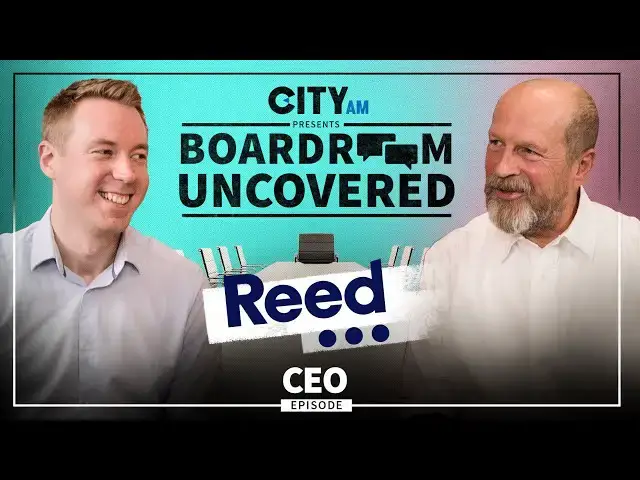
In the latest episode of Boardroom Uncovered, UK Editor Jon Robinson sits down with James Reed, CEO of Reed, to chart the recruitment firm’s evolution and unpack his vision for Britain.
Reed discusses how he’d remake the UK into a powerhouse for entrepreneurs - emphasising the need for less red tape, smarter tax policy and a thriving job market that delivers for all.
He reflects on how his family-run business has adapted in a changing world and shares insights on leadership, economic growth and the road ahead for talent-hungry companies.
More from Boardroom Uncovered here 👇
https://linktr.ee/boardroomuncovered
#jobs #economy #news #business #politics #uk #uknews
Show More Show Less View Video Transcript
0:00
And if they're not able to continue without paying a large tax charge, they'll have to stop being in business.
0:05
AI will change a lot, I think. I mean, we're already seeing it changing a lot. We had 180,000 graduate jobs three or
0:12
four years ago advertised on read.co.uk, now down to sort of 5550,000.
0:17
Big drop. I think family businesses have had a bit of a hit. I think it's um concerning because a lot of these
0:24
businesses don't throw off huge profits, but they do generate jobs and they do
0:29
give families, you know, a living. And if they're not able to continue without paying a large tax charge, they'll have
0:35
to stop being in business. I mean, what's worse about it now, I think, is then there was a defined crisis. You
0:41
could see why this had happened and you could see an end to it. This it's not clear. You know, there might be some
0:48
really big structural changes going on with new technology and you know, governments are struggling all around
0:53
the world and it's not clear where this is going to end. Hello and welcome to another edition of
0:59
City AM Sport uncovered with me John Robinson. My guest for this episode is James Reed, the chairman and CEO of
1:06
recruitment giant Reed. Founded by his father, Sir Alec, in 1960, James joined the family firm in the early 90s before
1:13
taking on the top job in 1997. But with the UK's recruitment sector battling challenges left, right, and center, how
1:19
does James Reed think the dire situation can be turned around? Without any further delay, let's dive in. Well,
1:25
James, thank you so much for coming on Border Uncovered. It's great to have you here. Thanks, John. It's a real pleasure. Reed is a family business. You know,
1:32
your dad, Sir Alec, set it up in 1960 and you followed him into the family
1:38
firm. I'm wondering whether that was always inevitable. Oh, no. No, it wasn't. Dad did start in
1:44
Houndslow in 1960. I joined him, you know, when I was 30, so a little bit
1:49
later. It wasn't I don't think anything's inevitable, is it? But it was always there in my mind as a sort of possibility. And he was sort of kind
1:56
enough to offer me a job. And I mean, the family joke is, you know, after a 30-year interview, I got the job. And uh
2:04
that's what happened really. back in in in 1994, I started full-time in the company, although I'd worked as an
2:11
unpaid, listen to that, unpaid non-executive. Oh, there aren't many of them around for two
2:16
years before that. So, um I I'm I mean, obviously, I grew up with a business. I knew lots of people who worked in the
2:21
business and I could see his enthusiasm and love for the business and that was really infectious and and I I I'm
2:29
delighted I accepted his offer all those years ago because it's been great a great journey since. Did he interview
2:35
you? Well, is there a formal interview process? Well, no, not like that. But I mean, he knew me pretty well.
2:42
He knew all my faults. So, he was kind enough to overlook them, I guess, and give me the opportunity. And I'm hugely
2:48
grateful to him for that. And we work together for many years and and I really look back on that time with great
2:54
affection. I mean, anyone has the opportunity to work with a family member, you know, I guess it doesn't work out for everyone, but in our case,
3:00
it did. And it meant we shared much more of our life together which I loved. So what did you do before you joined?
3:06
I did quite a lot of things. Um I went to Afghanistan as an aid worker. I
3:12
worked for Sachi and Sachi. I worked for Anita Rodic, the brilliant entrepreneur who set up the body shop and I worked at
3:17
the BBC for a bit. So I'd had quite a lot of sort of different jobs experience by the time I joined. And I went to
3:23
business school and that was important because I think you know I had to learn business and and I encourage people you know to
3:30
do vocational study because it's really helped me in the years since you know if I'd done geography or something you
3:37
might not have been quite so helpful for what I have to do now. So I I studied economics and I studied business and
3:43
that's been really helpful. And when you joined, in your mind at least, did you always want to become CEO? Because you
3:51
didn't necessarily have to. The answer to that is yes. Yes. Because uh I wanted I didn't want my dad
3:57
to do better than me. You know, you this fatherson competition here. So um you know, I wanted to I
4:04
wanted to be I suppose the psychology of that is quite deep, isn't it? I wanted to probably impress my dad
4:09
and at the same time I wanted to be successful and I had lots of ideas for the business and I could see lots of
4:15
opportunities for the business and I and rather like him I wanted to make those things happen and if you are CEO you can
4:22
make things happen I mean I think in other roles people get more frustrated perhaps I mean being a CEO is
4:28
frustrating too on occasion but you can make things happen and that's the really rewarding part of it I suppose you ended up taking on his job
4:35
but I suppose he's still got one thing over you and you have the nighthood and you've got just a CBA.
4:41
He's got many things over me. I'm not going to tell you what I've got over him, but I don't worry about that
4:48
sort of thing. Um, he was my and is continues to be my greatest teacher. I
4:54
learned so much from my dad. I mean, he's an incredible entrepreneur and he's a sort of ideas machine and and I love
5:01
the fact that he's always looking for new ideas and what's next and that that
5:06
is really um contagious. So, I I I love working with him and he still, you know, he still asks me tough
5:12
questions, you know, age 91. Sure. So, um you know, it's pretty uh entertaining. So, I'll be seeing him
5:18
tomorrow and I'll be asked to report back on a couple of things. I'm absolutely sure. So, his title is founder at large. M
5:24
I'm now the chairman and CEO, but you know, we all have to report to somebody, don't we? So, I report to my
5:30
shareholders and he's a big one. Yeah, I'm sure. What about the next generation? We've got other family members who are
5:35
involved in the business in various ways. I think they're just tentatively feeling their way into it and I'm hoping
5:41
that it will continue as a family business. I have six children and I've got um five nephews and nieces. So,
5:48
there are family members who I hope will continue in the business. I wouldn't put the pressure on them. you know, you have
5:53
to become CEO or there's any expectation of running it necessarily, but um
5:59
there's lots of opportunities for them and I think they can have a good contribution to make. Yeah, it's a wonderful business, but it's
6:05
grown and it's become more complex and you know there's a lot more technology involved now. You know, when I joined
6:11
back in the early 1990s, there was no mobile phones, there was no internet, there was no real networks. I mean, you
6:17
know, this has changed a lot. I'm sure it has. And now we've got AI, of course. Absolutely. which hindrance a help for
6:24
recruitments AI will change a lot I think I mean we're already seeing it changing a lot
6:30
and every company's using it in varying degrees even if they're just looking things up on chat GPT um we're all
6:36
exploring how to use it and how to make it help us and become more efficient I my concern with it is a lot of companies
6:43
are using it primarily to automate jobs and that's affected white collar opportunities so you know those graduate
6:50
roles that typically been entry- level jobs are disappearing pretty quickly. So, you
6:55
know, we've seen that in our own data. We had 180,000 graduate jobs three or four years ago advertised on read.co.uk,
7:03
now down to sort of 5550,000. Big drop. So, we're seeing that. At the same time,
7:09
we we've got our own um new business read.ai, AI and it's a beta and it's
7:16
helping small and mediumsiz businesses find really skilled people very efficiently.
7:21
So you know that's a wonderful opportunity. So everything is up in the air. There's a lot of opportunities here
7:27
but there will be a lot of disruption that goes with it for sure. Now we're sitting in the heart of the city of London. So I would be
7:33
remiss if I didn't ask you this question. Would you ever consider floating Reed? Reed was once floated and
7:41
I took it private. You did? So that would be admitting a mistake, wouldn't it?
7:46
Can you? Maybe that's maybe that's a task for the next generation. John, can you admit mistakes? Yes, of course. But I don't think that
7:53
was one of them from where I'm sitting right now. Why was it why was it not a mistake? Um because we're a family company. We
8:00
never went to the market for money. So um we weren't looking to do acquisitions or to raise money from the market which
8:06
is actually it's very efficient at doing but that wasn't something we were looking for and there were costs associated with being floated
8:13
that were growing in size and we weren't it was like being a member of a club you didn't show up to so we thought after a
8:19
bit this wasn't right for us and you know as a family company that wasn't doing anything um it didn't really suit
8:24
us and I remember the Guardian had a picture of my dad and it it said Alec Reid he was Alec just Sir not Sir Alec
8:31
then just Alec Reed um took his company private today after 32 uneventful years on the London Stock
8:37
Exchange. But he would say he was saying rightly that the people who bought the shares at the beginning and and we
8:42
bought them off at the end did really well as he did. So, you know, it wasn't a bad journey. I'm not suggesting other people
8:48
don't do it, but it's it just didn't suit us at the time. And it might suit, you know, the next
8:54
generation. Yeah, for sure. So I think it's always an option that people should look at, but I think you financial markets need
8:59
to make sure that they're attractive and you know, yeah, a a a good answer for business
9:05
requirements. What about the state of family businesses in the UK at the moment? The last budget wasn't particularly kind to
9:13
family businesses for a variety of reasons. Well, yeah. I think family businesses have had a bit of a hit and
9:20
you're talking, I think, about the inheritance tax um 20%. Um,
9:26
how that plays out, I don't yet know. And it's affected farmers as well. I mean, that's probably being more.
9:32
Yeah. But I mean, farmers and family businesses are all in the same situation. And I think it's um
9:39
concerning because a lot of these businesses don't throw off huge profits, but they do generate jobs and they do
9:46
give families, you know, a living. And if they're not able to continue without paying a large tax charge,
9:52
they'll have to stop being in business. They'll have to sell their business. And who's going to buy these businesses?
9:58
Well, you know, PE firms. Yeah. So if we want an economy with more PE run businesses that leverage them up and uh
10:06
take the cash out and send it off somewhere else perhaps maybe this is a way to do it. But I
10:11
don't think that's the intention. So there might be some unintended consequences that arise from this that
10:17
are unhelpful. But I have an idea for some of these family businesses. They can become philanthropy companies by
10:24
giving some of their shares to a charitable foundation. And that's a really good route uh for the future for
10:30
families that might find themselves in that situation. We stumbled upon it by accident many years ago. But 18% of Reed
10:36
is owned by a charitable foundation. So we say one day a week we work for charity. And people in the business love
10:42
that. Our customers like it. They like the fact that we're a different kind of company with a different DNA.
10:48
So you a lot of family businesses might be sort of thinking, "Oh, that doesn't look much fun. The inheritance tax
10:54
problem coming their way." But they could they could turn it into an opportunity by becoming philanthropy
10:59
companies because philanthropy companies last longer and do better than other companies. My research in my new book,
11:04
Karma Capitalism, shows that. Here we go. Shameless plug. Here we go. New book.
11:10
You couldn't expect me not to tell you all about that. It's just come out. So tell me about the book. Where'd you get
11:16
the ideas from? What's the thesis? The the book is called Karma Capitalism.
11:21
Karma with a K. Um, and it's a philosophy, a way of doing business. Um,
11:26
and it particularly describes a a philanthropy company as a vehicle for being a different kind of business. So,
11:33
what are we trying to achieve here? Well, ultimately I'm hoping that even if just one company becomes a philanthropy
11:39
company, this book will have been worth writing. But I'm hoping that lots will obviously because a philanthropy company
11:46
is a company as defined in the book that has 10% or more of its shares held by a
11:53
charitable foundation. So half a day a week everyone in the company works for charity as a minimum. Um and the idea is
12:01
that as as those companies grow and develop, you know, they're throwing off dividends, returns to their community
12:10
through the charitable foundation or to society more widely. And we've stumbled
12:15
upon this model because it's Reed is a philanthropy company because many years ago my father was very ill and he he had
12:24
to sell a business. He made5 million pounds. He was about to pay a lot of death duty and he he thought well if I
12:32
die this will just be consumed in tax but if I give it to the foundation we might be able to use it more sort of creatively
12:39
and he did give it to the foundation which then bought shares in our business and he stayed alive and used it very
12:44
creatively to start all sorts of different charities and most importantly a charity called big give which has
12:50
raised over 350 million for thousands of charities through a match funding platform that's filled tech as a filter.
12:59
So I think these kind of businesses and there are some really um impressive
13:04
examples of philanthropy companies from around the world. You know Rolex is one, IKEA is one, Lego is one, Carlsburg is
13:11
one, MK is one, Nova Nordisk is one. These are really successful businesses
13:18
that dominate their chosen markets and have real longevity. And that's because
13:23
they have a different DNA. you know, the people in those businesses really care about them and that's um what I'm encouraging other
13:31
people to consider and I want to establish, you know, Phil Curve as an idea through the book Karma Capitalism.
13:38
Fantastic. So, I've got some quickfire questions now for you James. Are you ready? Another quickfire question.
13:45
Here we go. Yeah. Go on. [Music]
13:51
First one. What was your first job? Oh, you really want to know? Yeah, absolutely. Leveling graves in a
13:57
cemetery in Old Windsor. You just say you didn't, didn't you? How old are you?
14:02
Uh, 17. 17. And I was working in Old Windsor in the winter and my job was to make the the
14:09
cemetery smooth for the lawn mowers when the grass started to grow and there were lots of mounds and bumps and things.
14:14
How much did you get? And um I got paid £250 an hour which was a good wage then actually but it was a
14:20
tough job because it was really cold. The fog used to come in off the river and it was quite lonely and and the
14:27
local pub wouldn't let you in if you had muddy boots. So, it was quite tough but I feel I earned my money. But one day a
14:34
little I could see a little figure coming through the mist towards me through the tombstones
14:39
and it was a an elderly woman and she came up to me and said, "Hello, how are you?" And I said, "I'm fine." She said,
14:45
"Do you like working here?" And and I said, "Yeah, I do." He said, "Well, at least you're not lonely." and then
14:51
wandered off into the tombstones and the fog and I to this day I don't know whether that was a real person or a
14:57
ghost but I do remember it. Well, you come a long way. It was it was a good joke on her part.
15:03
So, who inspires you? Well, my dad, which sounds I mean my dad
15:09
because I mean he started the company with £75. it comes from a very humble background and and he he's always um
15:18
interested in people and in their ideas and I find that very inspiring and he's
15:23
able to turn sort of ideas into into magic. So I you know turning to to
15:29
because an idea is just just a sort of fleeting thing isn't it? It's it's turning it into something that's the key
15:35
executing it in some way. Yeah. Making something happen. So, I find that inspiring. And um he's he's he's always
15:43
encouraged me as well, but in quite a subtle way, you know, he never says well done or anything like that.
15:49
He's not you really want him to say that. Yeah. Come on down. He has recently once or twice, but not.
15:54
So, I I I hope he likes the new book cuz it's dedicated to him. You going to sign it for him?
15:59
Uh yeah. I mean, he he got the first copy. Yeah. So, I hope he's read it cover to cover by now. He should have done.
16:05
I'm sure he does. Sir, if you had to appoint a celebrity to your board, who would it be and why?
16:11
I just have. Who is it? I've appointed a wonderful man called Adrien Mohouse who won a gold medal in
16:18
the 1990 uh Olympics in soul career swimming breaststroke and then started
16:24
his own business um as an entrepreneur called Lane 4, which was a consulting
16:30
business that he subsequently sold to PWC. So, I really like Adrian. He he's an
16:36
elite athlete and an entrepreneur. So finding that combination I felt was pretty hot. And he's just joined us and
16:42
I'm delighted to say um I hope you'll be with us for several years to come. Fantastic. What's the best thing about
16:47
your job? Uh Monday mornings. Monday morning. I love Mondays. Oh, I knew you were going to say that. I
16:53
really set you up to say that. Really thought you had a gun. Oh, no. My question
16:59
did Monday. I love Mondays. I love Mondays because I can get up, get into the office, see my team, and get going
17:06
again. And I love what I do. I company's purpose is improving lives through work,
17:12
helping people progress. And I find that really motivational, and we do it even if it's in a small way,
17:18
making someone laugh or greeting them when they come into the office or in a big way, helping them find a new job or
17:23
move on in their life, you know, if they've been out of work. Um, I love what we do and I find it very
17:29
energizing and rewarding. Yeah. And if you never joined the family company or if Reed never existed, what would you
17:35
think you'd be doing now? I'd be a detective undercover. Yeah. Wow. Welcome. You just love Li of Jezy
17:44
and Yeah, I love those two. No, I'm curious about people. I'm really interested in people and what makes them tick
17:50
and um Yeah. And I like a bit of excitement. So finding out, you know, what's going I
17:57
just love I'd find that fascinating. Fantastic. And I like solving problems in Europe.
18:02
Cracking a crime is solving a problem. Yeah. And if you were prime minister for the day, what would you do?
18:09
I'd like to be prime minister for longer than a day. Well, yes. Then you could do a few things. Uh in in
18:15
a day, uh well, I' I'd really want to make Britain a destination for people
18:21
who wanted to start and grow businesses. So I would try and remove anything that
18:27
was discouraging for that and to make this you know Napoleon Bonapart used to mock the English as a nation of
18:34
shopkeepers but he underestimated us and I think we need to be a nation of
18:40
shopkeepers once again and we need to encourage entrep enter enterprise and entrepreneurs as much as we possibly
18:46
can. So what can the government do then to to encourage that? I mean the opposite of
18:51
some of the things they're doing at the moment which is you know why I would like longer to be prime minister if I was than a day. I mean so some of the
18:59
tax incentives are not helpful you know and um some of the changes that
19:05
came in the last budget have caused entrepreneurs to leave the country in quite large numbers.
19:10
So they've had damaging effects in that way. Some of the regulations aren't helpful. Um, I mean, some of the pending
19:18
labor market rules aren't helpful. So, there's lots of things you can change, but if by by changing it and making it a
19:25
destination for entrepreneurs and people who build businesses, you would bring jobs, you bring wealth, and and you'd
19:30
bring the ability to pay for more of the public services that we all want. So, I
19:36
mean, you need a really thriving economy to support a country of 70 plus million
19:41
people. And you know that's what we should be prioritizing. We're only a few days away now from
19:48
Rachel Reeves delivering her second budget. Yes. Are you optimistic it's going to be
19:53
better for UK businesses than last year? I don't expect to be cracking anything
19:58
open after the budget. Um am I optim? No. because I think the financial
20:03
situation looks very difficult and the the I don't think the last
20:08
budget helped because I think it it was discouraging to business and that meant people leaving and so that might have
20:14
made the financial situation more difficult. Um I think you know I think they they
20:21
should probably drop those promises in the manifesto.
20:28
They kind of did already when they put employers natural insurance up because you know if the if the black
20:34
hole as they keep calling it is as big as it seems to be you probably need an increase in one of the main taxes
20:40
and it should be everyone that carries the cost not just business or I mean it's actually workers who are playing
20:47
that paying the extra national insurance and some of them are paying with their jobs. It always comes back to that though
20:53
isn't it? you know, you tax businesses and I', you know, the last year or so, I've lost count of how many accounts
20:58
I've read where they've said, "Well, we've tried our best to not pass it on to the customer, but we've had to at
21:03
least a certain extent." Yeah. You have to I mean, you can't The costs are being businesses have been really squeezed.
21:09
Yeah. So, you know, so we knew immediately after the last budget that this was
21:14
going to be bad for jobs because employers were bringing us up and saying, "We're not going to hire those people we were looking for anymore."
21:20
Yeah, literally days after because we can see that it's going to be more expensive to hire people than it was. So
21:26
that has come to pass and and it's continuing to squeeze jobs. I mean, we've had, you know, a long period of
21:32
decline in vacancies. Three years. I mean, that's that's unheard of. So, I'm
21:37
hoping that it will that the budget will leave business alone so we can get on with it. having picked up the you know
21:45
it seems to me that a smaller number of taxpayers are being asked to pay more and more
21:50
when I don't think that's sustainable in the end I came into the workforce in the aftermath of the 20078
21:58
financial crisis there was no jobs at the time you know I was coming out of university in in 2012 and there still
22:04
wasn't any jobs it feels like it's worse now that at least that's what the narrative appears
22:10
to be saying is that is that correct Well, it it it is worse in terms of declining vacancies because it's gone on
22:16
way longer than it did then. I mean, what's worse about it now, I think, is then there was a defined
22:22
crisis. You could see why this had happened and you could see an end to it
22:27
after a bit. This it's not clear, you know, there might be some really big
22:32
structural changes going on with new technology and, you know, governments are struggling all around the world and
22:38
it's not clear where this is going to end. And so I think that makes it much more difficult
22:44
and it makes much more difficult for government. It makes it difficult business, but it particularly makes it difficult for people trying to find
22:49
jobs. Also sounds like it's difficult to be optimistic about the state of the UK economy and the
22:54
whether it's going to improve and grow significantly in the next few years or so. Well, it will at some point. I mean,
23:01
these periods don't I mean, in my experience, don't go on forever. They might go on for a while. Um, but it
23:07
might require some changes in policy and government and approach. M so you know it might be that we're in
23:13
this sort of malaise or in the doldrums for a bit but then something will happen
23:19
and then it will start improving again. Yeah, absolutely. Fingers crossed anyway. It's difficult
23:25
when you get out a crystal ball and have a look into it. A lot of the time the predictions are wildly incorrect.
23:32
You know what? I actually have a crystal ball at home. Yeah. And a magic wand. So I So when say So I can say I actually have
23:38
a magic one. When people say if I had a magic one. Well, you need to be waving it on the 26th of November. I think I might get both out on the 26th
23:45
of November. I don't know what good it will do. I'm I'm interested in um
23:51
older people in coming back into the workforce and you know they've maybe been made redundant for the first time
23:58
in their careers in the sort of their late 40s early 50s and they're applying for 100 odd jobs and not hearing
24:05
anything back from them. Is it that section of the jobs market which is the
24:11
most competitive at the moment because it's a difficult time? Well, first thing I want to say is they're not older
24:17
people in their late 40s and early in their prime indeed
24:23
experience and energy which is what you want. I know where you're headed. I think all all stages are I mean it's
24:30
difficult to get a job at the moment. Yeah. Um and it is it can be demoralizing when
24:35
people make application after application often they don't hear back or they don't get any progress. I mean
24:41
one thing I mean it's easy for me to say it's just don't give up persist but then there are other routes you know
24:46
old-fashioned routes like write someone a letter or maybe someone you know can introduce you to someone are you using
24:52
your network as much as you could have you done any volunteering have you got a temporary job for a bit because someone
24:59
who's working you know even if it's a few hours a week is more attractive to an employer than someone who hasn't and
25:05
then there are services like we offer with reading partnership and other companies like it who help people who have been out of work for long periods
25:10
of time, you know, get their CV ready, prepare for interviews. So, there are lots of things you can actually do, but
25:17
you know, people do tell me that agism persists. You know, that employers are biased
25:22
against older workers. And I mean, clearly they should not be. I think it's a mistake. I mean, I'm a big advocate of
25:28
what I call a multigenerational workforce. We go from Alec Reed age 91 to people who are 19 in our business.
25:35
And and I I think that really enriches it. So, you know, I think it's a mistake for employers to be agist. But I say to
25:41
some of the older workers I meet who who who finding it hard to get jobs, you know, sometimes they're not agist,
25:47
they're energist, and they're just looking for energy and people who are going to bring some verve and get up and
25:53
go to their business. Doesn't matter how old you are if you demonstrate that. Yeah. Okay. Enthusiasm is infectious.
25:59
Yeah. And as a recruiter, I imagine you've got some good tips for those job
26:06
candidates to take into an interview to succeed. Do you have like three top tips?
26:11
Yeah. Read my book, Why You? There we go. We've done the shameless work. Come on. No, but genuinely, if you've got an
26:18
interview and or you can listen to it on Spotify and if you're a subscriber, it's free. This book was written 15 years ago
26:24
and it's still bestselling interview book. And I'll tell you why. Has nothing to do with me. It was crowdsourced. I mean, I had the idea, but it was
26:30
crowdsourced. So, we asked our employer clients, "What's your favorite interview question? We got hundreds and hundreds
26:36
of questions back and we put the most common and the most unusual or interesting in the book." There are 101.
26:42
Why you 101 interview questions? You'll never fear again. And then we got our consultants to workshop each question.
26:48
You know, what's the motivation behind this question? Why are you being asked this question? How can you think about answering it? So, we did that and that's
26:55
the format of the book. and we distilled interviews down to 15 fateful questions
27:00
and the most common question number one in the book is tell me about yourself.
27:06
Now if you've prepared that question you can nail it and you know you've thought about what job you're applying for. The other thing
27:13
that a lot of people get wrong is they don't realize that a job is a problem to
27:18
be solved. So they've got to present themselves as the solution to that particular problem and instead they're
27:25
in so what's in it for me here mode that doesn't work. So if you if you can
27:30
prepare the key questions remember that you're applying for a job that is a problem to be solved and you're meant to
27:36
be the solution to the problem and be well prepared when you go in. You'll feel way more confident and you'll give
27:42
a much better account of yourself. And that's why we did the book because we wanted our candidates to give a fair and true account of themselves. We had all
27:49
these great people coming back saying, "I'm a bit disappointed with how I did at that interview." Well, we didn't want people to feel that. So, and my favorite
27:56
review, final plug of the book is three threeletter words. Three threeletter
28:01
words and five stars from Amazon. And the threeletter words are got the job.
28:06
And that's why we did it. Yeah. So, I hope it's helpful to people. And as I say, it's free if you go on
28:13
Spotify. I'm not I'm not trying to make money out of it. Believe me, you don't make money out of books. No,
28:18
no. I mean, they're great for spreading ideas. Unless you're writing Harry Potter or something, you don't make money on the book.
28:23
Oh, you got the magic wand? Yeah. So, I've got the wand. I don't need it right now.
28:29
And finally, James, I'd like to end the episode on this question. What does it take in your opinion to be
28:36
a good CEO? People always leave the toughest question to last, don't they? I I think
28:42
to be a good CEO, well, I've been a CEO for a long time. I think I might be one of the longest serving CEOs in the UK.
28:49
I've been CEO since 1997. Um I think it's been
28:56
I think you want to be accessible to people so that they feel that they can tell you what they think, what they
29:03
feel, and what's going on. So, you know, I love going out into the business into
29:08
the into the world and talking to people because I find that's where I get information.
29:14
That's where I get inspiration and most specifically ideas. And I think
29:20
if you're going to be a CEO for a long time, you've got to keep reinventing your business. You've got to keep
29:26
reinventing what you do. So, you know, our latest new business, Read.ai,
29:32
is an attempt to create something for the future. I mean, it doesn't work as well as it will,
29:37
but we're going to stick at it. And it reminds me, we were just talking about this. I was with someone earlier of 1995
29:44
when we started read.co.uk when the web was just emerging. It feels like a similar moment. It's a new wave of
29:50
technology and we were just curious about it. And at the time I remember
29:55
someone saying you know it's it's like you know if the bus looks like it's going somewhere interesting we want to
30:02
be on it. And then someone quipped yeah but often you end up walking home and that is both they're both true. So, I
30:09
think being curious is really I mean, there are lots of different styles of being a CEO, but for me, I think it's being curious.
30:15
Fantastic. James, thank you very much for coming in. Well, thank you for inviting me, John. It's been good talking to you.
#Jobs
#News
#Business News
#Small Business