Up next in 10


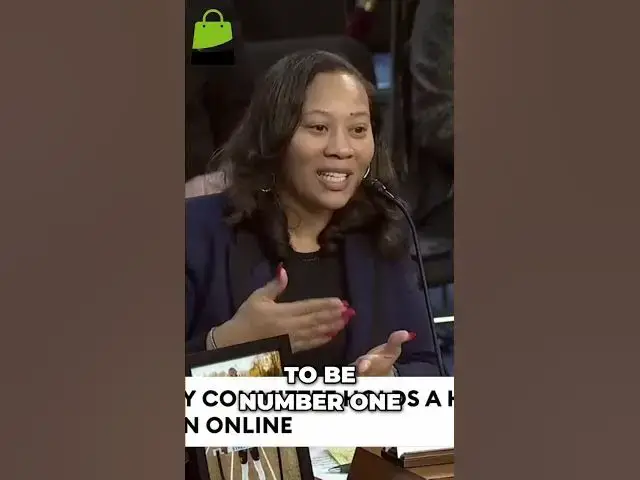
Senator Jarrett discusses the Take It Down Act, criminalizing the distribution of non-consensual intimate images, emphasizing the tragic impact of threats and the importance of platform accountability. Victims gain the right to demand image removal. #TakeItDownAct #ImageAbuse #OnlineSafety #DigitalRights
Show More Show Less View Video Transcript
0:00
Thank you very much, Mr. Chairman. I
0:02
think that's sentiment uh that Senator
0:05
Holly expressed that many of us feel
0:07
about the bills that have come through
0:08
the committee and the work that we've
0:10
done. Um we know that one bill that did
0:13
pass that you noted, Miss Coffron, thank
0:15
you, was the Take It Down Act that I
0:17
authored with Senator Cruz, um signed
0:20
into law by President Trump. And as you
0:22
know that criminalizes the distribution
0:24
of and threats to distribute
0:27
non-consensual intimate images whether
0:29
they are uh AI created or real. Um and I
0:34
would also add uh to echo some of my
0:36
colleagues particularly Senator Graham
0:38
that it's long past time to repeal
0:40
section 230. At the beginning of his
0:43
efforts on that front I had thought well
0:45
no maybe we can put in these rules in
0:47
place and the tech companies will work
0:49
with us and that just hasn't happened.
0:51
the opposite has happened. Um, and as we
0:54
approach this 30-year anniversary, maybe
0:56
it's time to do a major assessment,
0:58
which takes for any parent about one
1:01
minute uh to realize the harm that has
1:03
been caused by all of this. I'd start
1:05
with you, Miss Woods. Thank you, uh, for
1:07
your moving testimony. Can you talk
1:10
about why even the threat of
1:12
non-consensual
1:13
distribution of explicit images can be
1:16
tragic and why it's so vital that the um
1:19
law covers threats as the taken down act
1:22
does as well as reality?
1:25
So um it's a number of things. First of
1:27
all um
1:30
our children aren't just handing out the
1:33
nudes. they are being coerced into
1:36
providing them with in regards to
1:38
creating safe spaces and different
1:40
things of that sort. Once the threat
1:42
behind the nude comes, it's not just the
1:45
nude being in existence. It's all of the
1:48
threats behind it to where they're
1:50
questioning what they're actually doing
1:53
and they're becoming desperate and
1:56
willing to do whatever it can to get rid
1:58
of that image. It is embarrassing to
2:00
them. They we tell kids all the time if
2:03
you put it on the internet it won't go
2:05
away. Um you my son in particular was
2:08
threatened. He was actually slated to be
2:10
number one in the state of Ohio in 110
2:13
hurdles and they told him he would never
2:15
run track again. They told him he would
2:17
be labeled a pedophile because he was
2:19
under 18 and they did have a nude photo
2:22
of him. it becomes far more than the
2:25
embarrassment of the actual picture, but
2:28
the actual torture that comes after the
2:31
picture.
2:32
And so by them being able to have take
2:35
it down as an option, it takes a weight
2:38
off of them and they are able to address
2:41
all the other issues that come after it.
2:44
But once we take that photo away, then
2:46
we can battle everything else. And I
2:48
think that helps them with that.
2:50
Thank you. Thank you. And as you know, U
2:52
Miss Coffron does the Take It Down Act
2:54
gives victims not only the uh rights
2:57
with regard to the people doing this,
2:59
but the rights uh to demand that the
3:01
social media platforms take these images
3:04
down. I just wrote a piece today uh in
3:06
the New York Times about AI and just how
3:09
important it is to allow the states to
3:10
keep doing their work while we're
3:12
waiting on the leadership to bring up uh
3:15
these bills for for a vote. Um, and um,
3:19
I just believe that if you are not going
3:22
to do anything federally, you better do
3:24
something in the states, but also that
3:26
you've got to hold these platforms
3:28
liable. And could you talk about that?
3:30
Sure. Uh, the the biggest threat that
3:32
children face um is not necessarily a
3:35
criminal justice proceeding or the fear
3:37
of what's going to be happening next.
3:38
They just want their images down. Um, so
3:40
the the threats that these bad actors
3:42
are using against them is actually a
3:45
recirculization of the the same diet
3:47
tribes that we've been telling children
3:48
for years in in a prevention type
3:50
method. Don't don't do this action or
3:53
once it's out there, it's always out
3:55
there and you'll never get it back. That
3:57
has to change. The Take It Down Act
3:58
changes that significantly by requiring
4:01
that company to within uh 48 hours to be
4:04
able to be removing that. children need
4:06
to know that they have that right for
4:07
that content to come down so that the
4:09
threat to recirculate there's power
4:12
taken away from that and the child gets
4:14
that power back. Um, so that act is
4:16
really revolutionary because
4:17
historically what we've seen is
4:19
companies taking, you know, a week, two
4:21
week, sometimes non removals at all. And
4:23
the National Center for Missing and
4:24
Exploited Children publishes um our data
4:27
about the companies that we send notices
4:29
for um those companies that take it
4:31
down, how long it takes them to take it
4:33
down, and which companies choose not to.
4:35
All that information is public, and
4:37
we're trying to make sure that people
4:38
can find that and are aware.
4:39
That'll be very, very helpful for all of
4:41
us. Miss Smaller, last a short question
4:43
here. different little related but
4:45
different topic. Senator Blackburn and I
4:47
introduced the uh National Human
4:49
Trafficking Database Act to establish a
4:52
National Human Trafficking Database at
4:54
the DOJ's Office for Victims of Crime um
4:56
to incentivize states to report data
4:59
little bit along the lines of what uh
5:01
we're hearing from Miss Cochran on of
5:03
the Take It Down. Can you talk about the
5:05
data sharing in this area and how it can
5:07
empower law enforcement to protect
5:09
victims of human trafficking? Yes, thank
5:12
you, Senator. Human traffickers move
5:15
victims across state lines all the time.
5:18
That's that's how they make money. That
5:20
is how um they they get more victims by
5:24
crossing state lines. So, having um
5:26
nationwide data for law enforcement is
5:28
invaluable to be able to talk to their
5:30
colleagues in different states, get
5:32
information on different traffickers, on
5:35
victims. We try to rescue victims all
5:37
the time. Um so without that data um you
5:40
can't do that.
#Public Safety
#Human Rights & Liberties
#Science