Up next in 10

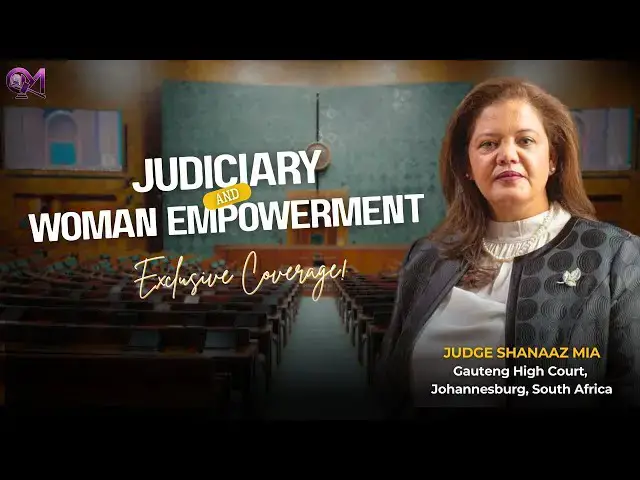
Judiciary & Woman Empowerment: Judge Shanaaz Mia, Gauteng High Court, Johannesburg, South Africa
Dec 24, 2025

In this insightful guest lecture, Hon’ble Judge Shanaaz Mia of the Gauteng High Court, Johannesburg (South Africa) addresses students of Siddharth Law College, Mumbai, on the critical theme of Judiciary and Women Empowerment.
Drawing from her extensive judicial experience, Judge Mia highlights how law students and young legal professionals—who form a small but powerful segment of society—can use their legal knowledge to bring about meaningful social change. She reflects on her early work as a public defender, the transformative role of law clinics, and the importance of legal intervention in issues such as domestic violence, unfair employment practices, housing evictions, and access to justice for vulnerable communities.
The lecture explores:
- Violence against women and the role of protective legislation
- Women’s representation in the judiciary and constitutional mandates
- Courtroom practice, etiquette, and the importance of practical exposure
- Judicial appointments in South Africa
- The work of the South African Association of Women Judges and its mentorship programs
- Ethical challenges and risks of overreliance on artificial intelligence in legal practice
- The intersection of law, psychology, and social realities
Show More Show Less View Video Transcript
0:07
Good morning all.
0:10
I thank you for the invitation
0:13
as well as the opportunity to address
0:16
you this morning.
0:19
I thought about what it was that would
0:21
be of most interest to students today.
0:27
And each term we admit
0:31
a number of uh young professionals
0:36
either to practice as attorneys or
0:39
advocates. And the at the end of the
0:43
proceedings after everyone has had an
0:47
opportunity to receive their orders they
0:51
are admitting them to the legal field.
0:55
we proceed with a word of in welcome as
1:00
well as um an invitation for them to
1:04
decide how we going to proceed forward.
1:07
Now what strikes me as interesting is as
1:12
legal practitioners you form 1%
1:16
of most countries you are the top tier
1:20
and what I invite students to do at that
1:23
stage is to recognize
1:25
that as against the rest of the
1:28
population
1:29
you have a body of knowledge before you
1:33
that you can use to make a change. So it
1:37
doesn't help to sit and lament about
1:41
what it is that you are not happy about,
1:43
but to recognize that that body of
1:47
knowledge that you have can realize
1:50
change in the world around you. The
1:53
first time I had the opportunity to do
1:55
that was as a public defender.
1:59
uh most of our universities have a law
2:02
clinic attached to it and that's the
2:06
first opportunity that you have to start
2:08
consulting with potential clients but
2:11
also to recognize what your knowledge
2:15
means to people who are vulnerable
2:18
who do not have the same agency that you
2:22
may have as a practitioner and how your
2:25
knowledge of the law can make a
2:27
difference in their lives. us whether it
2:30
is related to an unfair employment,
2:32
unfair dismissal aspect or whether it is
2:36
related to an issue of um abuse.
2:41
At the time that I entered the legal
2:43
profession, we had just uh promulgated
2:46
the domestic violence act. So working at
2:49
a woman's support center was important
2:53
because women felt so vulnerable amidst
2:57
the rest of the population and the
3:01
prevalence of abuse was
3:04
high.
3:06
The act that was promulgated at that
3:08
stage afforded
3:10
people in domestic partnerships
3:13
to approach the court for an interim
3:15
protection order. So where the
3:20
exchange was verbal um you would just
3:23
receive notice of the court date but
3:25
where it was actual physical documents
3:28
um the court can order an interim
3:30
protection order and the first thing
3:32
that you'd be concerned about is but
3:34
how's an order granted in the absence of
3:37
one of the parties
3:39
the protection that is written into the
3:42
legislation is that the respondent can
3:45
anticipate the order on 24 hours notice
3:49
to the applicant. So it safeguards the
3:52
rights of the respondent as against the
3:54
right of the applicant who seeks
3:57
protection
3:59
on the return date or on the anticipated
4:02
date. Either the parties um can place
4:06
evidence before the court either to
4:08
support each of the versions where after
4:11
court will make a determination.
4:15
So given that
4:18
uh violence against women is still
4:20
prevalent around the world um this is
4:23
the first instance in which you can make
4:25
a difference but also there are other
4:28
areas either related to housing
4:30
evictions
4:32
um where people may not have the
4:35
knowledge that you have access to and it
4:38
is important that you recognize that you
4:42
are able to make a change from that in a
4:45
suit of ways but it means something to
4:48
the your client and the person that
4:50
you've assisted uh given by comparison
4:54
your wealth of knowledge.
4:57
Now in order to ensure that for us we we
5:02
have our population comprising of 51% of
5:06
women our constitution requires that
5:10
that representivity filters through in
5:13
different positions whether it is in
5:16
academia whether it is in the judiciary
5:19
or places of employment we also have the
5:21
employment equity act
5:25
so I'd like to share
5:27
um and I think it is a point of interest
5:30
how our appointment process compares to
5:36
the appointment process that you have
5:38
here. Um but in order for us as judges
5:42
to ensure that
5:44
there is a connection between your
5:46
theoretical training and practice in
5:50
court. It's important that you have
5:52
access to those spaces and when you
5:56
graduate as law students and go into a
5:59
court uh it's intimidating
6:03
um you don't know how uh your conduct is
6:06
going to be perceived there particular
6:08
ways in which you address the court and
6:11
if you don't do that the one thing that
6:13
comes up often is that
6:16
a practitioner an advocate or an
6:18
attorney appears in the court that
6:20
hasn't introduced themselves to the
6:22
court. So the response would be from the
6:26
presiding officers that I do not
6:28
recognize you and as you're standing
6:30
there and wondering how do you start
6:34
with your submissions, you cannot start
6:37
with your submissions if the court has
6:38
not recognized you. So those little bits
6:44
of educated information needs to be
6:47
relayed to you and to see it in
6:50
practice. It helps that you are able to
6:52
attain court. As a founding member of
6:56
the South African Association of Women
6:58
Judges, I've served in different roles.
7:01
At the present moment, I'm vice
7:02
president of programs and one of our
7:05
flagship programs is the mentorship
7:08
program.
7:10
where throughout the provinces, we have
7:12
nine provinces. We have a relationship
7:15
with the academic institutions. An
7:18
invitation goes out to the law faculties
7:21
to publish to the students and students
7:25
can then apply to be a part of that
7:27
mentorship program for the duration of
7:30
that period that the program runs from
7:33
approximately February to uh November,
7:37
December of that year.
7:40
students are exposed to a number of
7:42
webinars where you address either the
7:46
issue of artificial intelligency law. I
7:49
don't know what your experience has been
7:51
in India but for us um when a
7:56
practitioner addresses you and you've
7:58
read the papers beforehand, it will be
8:00
easy to ascertain whether the case that
8:04
is referred to does in fact exist. And
8:08
there have been at least two instances
8:11
in South Africa in the past year where
8:14
reference has been made to case law that
8:16
does not exist and it becomes very
8:19
uncomfortable as a practitioner when the
8:23
court asks you about this case. And for
8:26
us where we have our computers before
8:29
us, I will ask the practitioner to just
8:32
hold on whilst I go on to jud nexus to
8:36
look for the case so that I'm able to
8:40
verify and see what particular paragraph
8:44
they're referring to and to consider
8:48
does that particular paragraph support
8:51
their submissions on the point of law
8:53
that they're advancing.
8:56
And you will know that AI it has
8:59
hallucinations
9:01
which means that it's it starts
9:03
developing its own cases
9:07
recognizing that AI is a construct of
9:12
human minds.
9:15
What you need to consider is who has
9:17
input that information?
9:20
What has been put into that information?
9:24
what has been put into that base because
9:26
that is how it you you as you understand
9:30
how chat GPT and the different AI
9:34
programs work it searches its base in
9:37
order to formulate an answer but by way
9:40
of example
9:42
if the information is just input from a
9:46
particular group in society and it
9:49
doesn't relate to all of the
9:51
possibilities you're going to have a
9:52
limited answer or the response for your
9:57
quest is going to be a limited amount of
10:01
information. And if you are solely
10:03
reliant on that artificial intelligence
10:06
search engine, you're going to find
10:09
yourself in a difficult position when
10:11
you are asked to give the reference to
10:15
to the case that you're citing and how
10:18
it applies to uh the particular
10:21
submission that you're making. So it's
10:24
important for us to inform students of
10:28
this possibility so you don't stand
10:30
before and are embarrassed and awkward
10:33
because you now you have cited something
10:36
that doesn't exist.
10:39
Other aspects that we will address with
10:41
students are questions of ethics um
10:45
aspects of a particular law during
10:48
different months where we have a focus
10:51
on youth or we have a focus on women our
10:54
women's run is in uh August of each year
10:57
which is when we have our annual general
11:00
meeting as the women judges association.
11:04
There's also invitation from advocates
11:07
and attorneys to address our students
11:10
and that is in the form of a webinar and
11:12
that has become relevant relevant for us
11:16
because whilst you're sitting in
11:17
Johannesburg you could be addressing the
11:20
rest of the country because our webinars
11:22
are open to students who are part of the
11:25
program uh across the country.
11:31
So in that way we seek to bridge the gap
11:35
between the theoretical knowledge that
11:37
you assimilate whilst you are in your
11:41
legal uh um academic career. So that
11:46
there's a there is a connection between
11:49
what you learn in for instance in in
11:53
your first year you'll be learning about
11:55
family law. um by the time you qualify
11:59
that's four four years later when you
12:02
get to court you want to know what the
12:04
position is with regard to how it
12:07
applies for instance in the domestic
12:10
violence court in the children's court
12:12
where there be care and contact where
12:15
one parent can come to the court and ask
12:18
for an arrangement to be made so that a
12:22
child has contact with both family
12:24
members. We have ratified
12:28
international conventions which protect
12:30
children's rights. So what has been
12:34
filtered through and what appears in our
12:36
constitution is that in any matter
12:39
before court a child's interest rights
12:43
and interests are paramount. So the
12:45
court has to take that into account
12:47
whether it comes before you as a matter
12:50
in the children's court where can
12:51
contact has been uh inquired about or
12:55
where it is a matter of child neglect um
12:59
or removal of a child.
13:02
It also relates to issues of equality
13:06
um and how you recognize uh the
13:09
applicant's rights before you.
13:13
So this program we are very proud of
13:16
because it it allows for contact and
13:19
access.
13:21
uh I've spoken um to your legal
13:24
practitioner and to your principal and I
13:29
think it would be a wonderful
13:30
opportunity where you are able to access
13:33
those webinars
13:35
um so that you exposed to information in
13:38
a different part of the world and in
13:41
terms of your AI experience um so your
13:45
world becomes bigger um you are able to
13:48
compare um the application of law in one
13:52
country as opposed to the application of
13:55
law in your experience um in your
13:58
country and that will open up avenues
14:01
for discussion.
14:04
So
14:06
I hope that going forward that will
14:08
afford you a richer experience in terms
14:12
of your learning but also in terms of
14:15
your practice
14:17
because you remember we have a process
14:19
of president. uh whilst we do apply the
14:22
law in our country, you are able at some
14:25
point to reference a an aspect of the
14:28
law that is applying perhaps more
14:31
creatively or constructively in another
14:34
country and you can invite the court in
14:37
your country to consider that that
14:39
aspect. Another point is I understand
14:42
that your uh appointment to the bench is
14:46
internally through the judiciary
14:51
because of the changes that we've gone
14:53
through. Our constitution requires that
14:55
that process follows a particular cause
14:58
where you have to have a certain number
15:00
of years of experience.
15:03
You are nominated by any law
15:05
organization or any person.
15:08
You submit your application along with
15:10
three of your judgments which means that
15:13
you must either have a body of writing
15:16
or you have acted as a judge for a
15:19
period which allows you to produce those
15:22
judgments.
15:23
The process allows for shortlisting of
15:26
the applicants. And when you are
15:28
interviewed, you're interviewed not only
15:31
by uh judges, but by a commission that
15:35
is made up of representatives from the
15:38
judiciary, representatives from academia
15:42
because you want him to be able to
15:43
interrogate the content of the writing
15:47
as well as representatives from the
15:49
legal profession and members of
15:51
parliament. So it allows for a wide
15:54
range of participation from different
15:56
groupings in society to ensure that the
15:59
appointments that they make to the
16:00
judiciary will suit the purpose that the
16:05
appointment is for.
16:07
So I invite you to post questions after
16:12
we have an opportunity to speak and uh
16:15
we can engage around the issues that
16:17
have been of interest to you. Thank you
16:19
for the opportunity.
16:23
Uh we will now proceed with the brief
16:25
interactive session where students may
16:27
ask question to our guest.
16:39
Good afternoon ma'am. My name is Usnha
16:42
Khan. Ma'am, according to you, which
16:45
social custom still limits the
16:47
empowerment of women?
17:00
Just want to repeat the question so that
17:02
I'm sure that I understand it. You've
17:05
asked which social customs
17:12
cultural customs which are we call
17:14
traditional traditional
17:16
so cultural customs which promote the
17:19
interests of women
17:21
uh which uh
17:23
which empower women
17:25
so
17:28
which does not empower women
17:30
okay
17:32
which social justice
17:35
so in South Africa uh a practice that
17:40
provides rights only for uh and by way
17:43
of example
17:45
um and I was discussing this yesterday
17:48
if parties are married in community of
17:50
property where both parties accept the
17:54
benefits as well as the debts in the uh
17:57
partnership
17:59
where a spouse
18:01
and by way of example her husband um
18:04
incurs debt which the woman has not uh
18:08
been responsible
18:10
If at the end of that marriage um the
18:13
pro the the
18:16
pro property process is applied, you
18:20
will find that woman will be paying for
18:23
debts that she had not been consulted
18:25
about or that she had no interest in.
18:29
And where the
18:32
the marital regime is in communal
18:35
poverty um that has been the norm and
18:39
women are not necessarily protected in
18:41
that instance. What it requires is that
18:45
after the marriage, you bring an
18:47
application
18:49
um which changes your regime to that of
18:54
out of community property so that your
18:57
uh estate is different to your spouse's
19:00
and to the extent that you engage in
19:01
economic activity, you don't um malt
19:05
your spouse's estate with the burden of
19:08
paying those debts and similarly he's
19:11
not able to uh build in USA. That's the
19:14
one example. The other is by way of uh
19:18
cultural practices in terms of
19:21
inheritance
19:23
where provides specifically for um male
19:26
members of society to uh inherit and it
19:31
doesn't allow for equal access to for
19:33
for women. that can uh be contrary to
19:37
women's interest because it doesn't
19:39
allow for the same kind of economic um
19:42
opportunity and development where land
19:45
is only uh devolves to a male part of
19:50
the family as opposed to female uh
19:53
members of the family. Um that's just so
19:56
often it is when cultural uh
19:59
applications of the law they must
20:02
withstand the constitutional
20:04
uh imperatives where you cannot
20:06
discriminate on the basis of race,
20:08
gender or any other uh aspect in terms
20:12
of our right.
20:15
Thank you.
20:20
Hello ma'am, my name is Sher Dakati and
20:23
it was really nice to hear you. You
20:25
sound very soft and comforting and at
20:28
the same time enlightening also. My
20:30
question is uh we are talking about
20:33
women empowerment and in the world women
20:37
empowerment the term itself has become
20:39
very vague these days and dissected
20:41
mainly into two parts. On one part we
20:43
have women who are scientists. You are a
20:46
living example in front of us right now.
20:48
And then there is a crowd which is
20:51
talking about women empowerment but at
20:53
the same time trying to break the fabric
20:55
of society and the gender roles of women
20:58
which is basically that builds a family.
21:01
So they are also trying to break
21:02
institutions in the name of women
21:04
empowerment. How would you like to
21:05
define women empowerment for us?
21:11
So in my view um the empowerment of
21:14
women must allow for the active
21:16
participation in all aspect in society.
21:21
So when you say that uh there are those
21:25
uh um
21:28
groups within society that advocate for
21:31
empowerment but don't necessarily
21:34
apply it uh practically. I think one has
21:38
to look at the position in each society
21:42
and uh examine whether the way it is
21:45
applied it allows for maximum
21:48
participation of women and it is not
21:51
necessarily that that participation is
21:54
limited to one particular area. Your
21:57
example was breaking down the family.
22:01
It requires us to be re-engaged with the
22:04
construct of a family because that has
22:06
changed over time
22:09
and to the extent that women are able to
22:13
participate on an economic level, on a
22:16
spiritual level and recognizing the
22:19
contribution that they made to society
22:21
in terms of the procreative aspect where
22:24
women are birthing children and they're
22:27
required to look after children for a
22:29
particular uh period in uh life in
22:33
society because that base if we do not
22:38
recognize that time um where women are
22:43
contributing in that manner it it
22:46
doesn't allow for the growth of society
22:48
in the whole and where that is
22:51
particularly
22:53
uh applicable is where in a relationship
22:58
a woman's contributions by way of um uh
23:03
contributions in maintaining the house
23:05
does not have economic value. We need to
23:08
attribute an economic value because
23:11
without that if you removed the
23:14
contribution that a mother and a wife
23:16
makes, you're going to incur the cost of
23:19
a housekeeper, a nanny, a home
23:21
executive. And it would be interesting
23:24
to compare the cost thereof
23:28
versus um the contribution that a woman
23:32
makes and look at what economic value
23:36
are you attributing to the woman's
23:38
contribution. And so it requires us to
23:41
reflect on a regular basis what does it
23:43
mean for us at a particular point in
23:46
time and the issue of care at all. Does
23:51
that at some point become a shared
23:53
responsibility?
23:54
And how do we support uh the care of the
23:58
children while still allowing for women
24:00
to participate actively either by choice
24:04
and sometimes it's by way of necessity
24:14
Priya
24:16
my question is how can what ethical role
24:21
should advocate play in womencentric
24:24
cases Yes.
24:26
So I thank you for the question. I
24:28
understand you to be asking what women
24:31
what what role women advocates play in
24:34
women century cases.
24:39
Let me start off by saying that from my
24:43
position in terms of our constitution,
24:46
it is not only women who are responsible
24:49
for developing the interests of women
24:53
and as the association women judges, we
24:56
have males who are members as well. It's
25:00
because we recognize that men are in a
25:04
position of power and can assist in
25:08
developing
25:11
women's interests. So whilst women have
25:14
a a learned and lived experience of what
25:19
women's experiences are, I think they
25:23
play a very effective role.
25:27
But I think it still remains the
25:29
responsibility of both genders to ensure
25:33
that in women centric matters that those
25:37
interests are recognized and realized.
25:40
But given that we have more women
25:42
entering the profession,
25:45
we recognize that there's a crucial role
25:48
that women play. Thank you.
25:57
Dr. Roman, my name is Rahi.
26:00
You were convinced that expertise in the
26:02
field of psychology and law would be
26:05
most needed in the country future. Is
26:08
there any connection between law and
26:09
psychology?
26:13
So you'll find that there are writings
26:16
that suggest that when a jurist is
26:20
appointed, it is important for them to
26:22
have an understanding of society.
26:26
In my experience, I think that my
26:30
undergraduate degree in the Bachelor of
26:32
Arts where I I majored in psychology and
26:36
sociology for a period of time, those
26:39
are important in forming your
26:42
understanding of the application of law.
26:46
Law doesn't is not applied in a vacuum.
26:48
It's applied in society. And so your
26:51
understanding of sociology and how
26:54
society works gives you an advantage in
26:58
terms of being informed of how you would
27:02
apply the law. So you are better able to
27:05
address the advantages, the
27:07
disadvantages and to understand how
27:10
society has developed and how uh you
27:13
want the law to apply at a particular
27:15
point in time. Thank you.
#Social Issues & Advocacy
#Discrimination & Identity Relations
#Human Rights & Liberties