Up next in 10

The Father of Microbiology - Antonie van Leeuwenhoek's Groundbreaking Discoveries
Mar 26, 2026
The Father of Microbiology - Antonie van Leeuwenhoek's Groundbreaking Discoveries
Website: https://biologynotesonline.com/
Facebook: https://www.facebook.com/biologynotesonline
Instagram: https://www.instagram.com/biologynotesonline/?hl=en
Show More Show Less View Video Transcript
0:00
Anthony Van Leuenhook, widely regarded
0:02
as the father of microbiology, was born
0:04
on October 24th, 1632 in Delft in the
0:08
Dutch Republic. What makes Van
0:10
Leuenhook's contributions so remarkable
0:12
is that he had no formal scientific
0:14
education, yet became one of history's
0:17
most important scientific pioneers. He
0:20
was the first person to observe
0:21
single-sellled organisms, which he
0:23
called animal cules, using microscopes
0:26
of his own design and construction. His
0:29
meticulous observations and detailed
0:31
documentation revolutionized our
0:33
understanding of microscopic life. Van
0:36
Lewen Hook's discoveries fundamentally
0:38
changed how we understand the natural
0:40
world, revealing for the first time that
0:42
life exists beyond what the naked eye
0:44
can see.
0:49
Antony Van Lewin Hook was born in Delft,
0:51
Netherlands in 1632. At age 16, he was
0:55
apprenticed as a draper, a textile
0:57
merchant who sold cloth and other fabric
0:59
materials. In 1654, Leewan Hook
1:02
established his own draper shop in the
1:04
market area of Delft. During the 1660s,
1:08
he began serving in various municipal
1:10
positions while maintaining his textile
1:12
business. By the 1670s, Leewan Hook had
1:16
begun his serious scientific work that
1:18
would lead to groundbreaking
1:19
discoveries.
1:21
As a draper, Lewan Hook sold fine
1:23
fabrics, buttons, ribbons, and other
1:25
textile materials from his shop in
1:27
central Delft. His work as a draper
1:29
provided an unexpected foundation for
1:32
his later scientific achievements.
1:34
Drapers routinely used magnifying
1:36
glasses to inspect cloth quality,
1:38
examine thread count, and detect flaws
1:40
in textile weaves. This practical
1:42
experience with lenses gave Leewin Hook
1:45
a unique appreciation for magnification
1:47
that he would later apply to his
1:49
microscopes. While maintaining his
1:51
draper's business, Leewin Hook began to
1:53
take on municipal positions in the city
1:56
of Delft. In 1660, he was appointed as
2:00
the chamberlain of the council chamber
2:02
of Delft. Later, he served as a surveyor
2:04
and wine gauger, verifying the contents
2:07
of wine barrels for tax purposes. These
2:10
municipal positions provided financial
2:12
stability, allowing Leewanhick to pursue
2:14
his growing scientific interests. In his
2:17
spare time, Leewin Hook began grinding
2:19
lenses and building simple microscopes.
2:22
By the early 1670s, he was making
2:25
extraordinary observations of the
2:26
microscopic world. This unlikely
2:29
combination of careers, a textile
2:31
merchant, city official, and self-taught
2:33
lens maker would converge to make Leewan
2:36
Hook one of history's most significant
2:38
scientific observers.
2:40
Anthony Van Lewanhook mastered the art
2:43
of making tiny powerful lenses
2:45
completely through self-eing.
2:48
Van Lewan Hook developed his own unique
2:50
technique for grinding lenses. He
2:53
started with highquality glass rods,
2:55
heated them, and pulled them into thin
2:57
threads. Then he ground both ends
3:00
against a copper plate before polishing
3:02
them with increasingly fine abrasives.
3:06
Vanluan Hook's lenses were of remarkable
3:09
quality. achieving magnifications up to
3:11
500 times. This was far superior to the
3:15
compound microscopes of his time, which
3:17
typically only reached 30 to 50 times
3:20
magnification.
3:25
Van Leo and Hook's microscope design was
3:27
remarkably simple yet effective. He
3:30
mounted his tiny lenses between two
3:32
metal plates with the specimen on an
3:34
adjustable pin. Despite its simplicity,
3:37
this design allowed for precise focusing
3:39
and was compact enough to be carried in
3:42
a pocket.
3:44
The lens making skills Van Leewenhook
3:46
developed were crucial to his scientific
3:48
discoveries. His superior lenses enabled
3:51
him to observe bacteria for the first
3:53
time and reveal microorganisms
3:55
previously invisible to humans.
3:58
Throughout his lifetime, he created over
4:00
500 microscopes, though he kept his
4:03
exact technique secret until his death.
4:06
His lenses were so superior that none
4:09
could match their clarity for over a
4:10
century after his death.
4:14
Venuan Hook's microscopes were marvel.
4:19
His design consisted of a single small
4:21
spherical lens mounted in a brass plate.
4:24
This seemingly simple device could
4:26
achieve magnifications of 200 to 300
4:29
times. To use the microscope, specimens
4:32
were mounted on a sharp point positioned
4:34
in front of the lens. The entire
4:36
apparatus was held very close to the eye
4:39
and adjusted using small screws to
4:41
achieve focus. Throughout his lifetime,
4:43
Van Lewan Hook created over 500
4:46
microscopes, each one handcrafted with
4:49
incredible precision. Only a few of
4:51
these instruments have survived to the
4:53
present day.
4:55
Compared to modern microscopes with
4:57
their multiple lenses and eyepieces, Van
4:59
Lewan Hook's design was remarkably
5:01
simple. Yet, the superior craftsmanship
5:04
of his lenses allowed for surprisingly
5:06
powerful magnifications that enabled his
5:09
groundbreaking discoveries.
5:13
In 1674, Antony Leewanhook made another
5:17
groundbreaking discovery. Prozzoa.
5:19
Protozoa are single-sellled organisms
5:22
that are significantly larger and more
5:24
complex than the bacteria he had
5:26
previously observed. Van Lewan Hook was
5:28
struck by their considerably larger size
5:31
compared to bacteria, making them easier
5:33
to observe with his microscopes. What
5:36
truly fascinated Van Lewan Hook was
5:38
their independent movement and complex
5:40
behaviors.
5:41
He meticulously documented how these
5:43
tiny creatures could move independently
5:45
throughout a water sample, changing
5:47
direction and speed.
5:50
In his letters to the Royal Society, he
5:53
described his discovery with remarkable
5:55
clarity and excitement.
5:58
His discovery and documentation of
6:00
prozzoa had profound scientific
6:03
significance. He was the first to
6:04
provide detailed descriptions of their
6:06
behaviors and characteristics.
6:10
Using his handcrafted microscopes, Van
6:12
Leewen Hook made
6:15
that allowed later scientists to
6:17
identify specific prozoa species
6:19
including vorticella and parramsium.
6:23
His detailed descriptions of these
6:25
animal cules captivated both him and the
6:27
scientific community. The discovery of
6:30
prozzoa further established van
6:32
leanhik's reputation and contributed
6:34
significantly to our understanding of
6:36
the vast diversity of microscopic life.
6:40
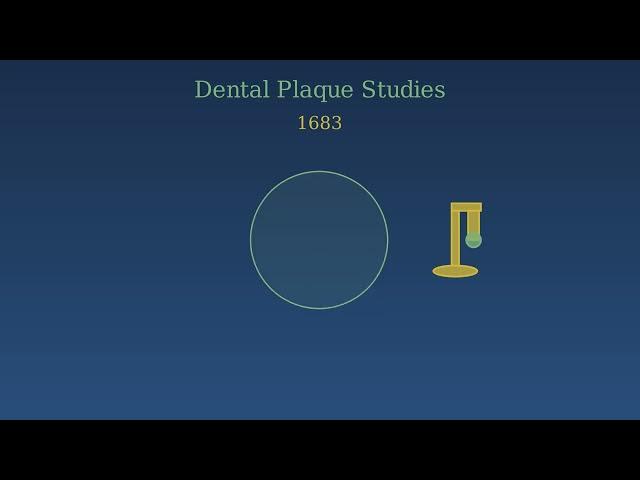
In 1683, Anthony Van Lewanhuk conducted
6:43
groundbreaking studies on dental plaque.
6:46
His method was simple yet revolutionary.
6:49
He scraped material from his own teeth
6:51
and those of others. He then examined
6:53
these samples under his microscopes
6:55
which could magnify objects hundreds of
6:57
times. What he saw amazed him. He
7:00
described many very little living animal
7:03
cules very prettily moving in the plaque
7:05
samples. The first documented
7:07
observation of bacteria in the human
7:09
mouth. In a crucial experiment, Van
7:11
Lewanhook applied vinegar to the samples
7:14
and observed that the bacteria stopped
7:16
moving. This was one of the earliest
7:18
documented insights into antiseptic
7:21
properties. This discovery challenged
7:23
the prevailing notion that the mouth was
7:26
naturally clean and helped establish the
7:28
connection between microorganisms and
7:30
disease.
7:34
In 1677, Anton van Leehook made one of
7:38
his most significant discoveries,
7:40
spermatoozoa. His initial observations
7:42
were of animal semen samples where he
7:44
first noticed what he called animal
7:46
cules, tiny swimming organisms.
7:50
Between 1677 and 1679, Vanluhuk expanded
7:54
his research from animal samples to
7:56
human samples, documenting his findings
7:59
in detailed letters to the Royal
8:00
Society.
8:03
In his observations of human samples,
8:05
Van Leewan Hook carefully documented the
8:08
appearance and movement of sperm cells.
8:11
He described them as having rounded
8:12
bodies that were pointed in front with
8:14
long tails, moving like snakes or eels
8:17
swimming in water.
8:20
This discovery directly challenged the
8:22
prevailing pre-formation theory which
8:24
suggested each sperm contained a tiny
8:26
preformed human. Van Leewan Hook's
8:29
detailed observations showed sperm were
8:31
simple structures with no evidence of
8:33
tiny humans inside forcing scientists to
8:36
reconsider reproduction theories.
8:40
The discovery of spermatzoa was not
8:42
without controversy. Van Leewenhook's
8:44
findings were initially met with
8:45
skepticism and resistance. His work
8:49
faced scientific scrutiny with some
8:51
questioning his methods and
8:52
observations. The Royal Society
8:55
requested confirmation from other
8:56
researchers. Despite the initial
8:59
controversy, Van Lewan Hook's discovery
9:01
of spermatzoa eventually led to new
9:03
understanding of reproductive biology.
9:09
In 1674, Antony Van Leewan Hook made
9:12
groundbreaking observations of human
9:14
blood under his microscope. Using his
9:17
handcrafted single lens microscopes, he
9:19
was the first to examine human blood at
9:21
a microscopic level. Through his
9:23
microscope, he observed small red
9:26
particles floating in the blood serum.
9:28
These were the first documented
9:29
observations of red blood cells. Van
9:33
Leehook meticulously documented his
9:35
findings. He described the shape, size,
9:37
and behavior of these red particles in
9:40
remarkable detail. In his letter to the
9:42
Royal Society in 1674,
9:45
he wrote about his blood observations,
9:47
causing great excitement in the
9:49
scientific community. What made his
9:51
observations truly remarkable was his
9:53
ability to discern the by concave shape
9:56
of red blood cells despite his
9:58
relatively simple microscope. His
10:00
discovery laid the groundwork for
10:02
understanding blood composition and
10:04
function, establishing the foundation
10:06
for early hematology.
10:08
Today we understand that red blood cells
10:10
unique by concave shape maximizes their
10:13
surface area for oxygen transport,
10:15
confirming the brilliance of Van Lewan
10:17
Hook's early observations.
10:19
Van Lewan Hook's work on blood cells
10:21
would later lead him to explore blood
10:23
circulation in the smallest vessels, the
10:25
capillaries.
10:28
In the 1670s, Anthony Van Lewanhook
10:31
turned his microscopes to examine muscle
10:34
tissue from various animals. His most
10:36
significant discovery was identifying
10:38
the striated or striped pattern in
10:41
skeletal muscle fibers. Using his
10:43
powerful single lens microscopes, Van
10:45
Leewan Hook observed these distinct
10:47
bands or striations that run
10:49
perpendicular to the length of the
10:51
fiber. He documented important
10:54
differences between types of muscle
10:55
tissue. While skeletal muscles showed
10:58
clear striation patterns, smooth muscles
11:01
from organs like the intestines lacked
11:03
these striations. Van Leewan Hook
11:05
compared muscle fibers across many
11:07
animal species, noting their structural
11:09
differences.
11:11
His pioneering observations laid the
11:13
groundwork for understanding muscle
11:15
structure and function that remains
11:17
relevant to modern physiology.
11:20
These findings were remarkable given the
11:22
limitations of 17th century technology.
11:25
Yet they accurately captured fundamental
11:27
aspects of muscle architecture that
11:30
scientists still study today.
11:35
Anthony Van Lewanhook's contributions to
11:37
microscopy extended beyond his lens
11:40
making skills and discoveries of
11:42
microorganisms.
11:45
In the late 1600s, he pioneered one of
11:48
the earliest known tissue staining
11:49
techniques by using saffron derived from
11:52
the crocus sativas flower.
11:55
When tissues were viewed under the
11:57
microscope without staining, their
11:59
internal structures were difficult to
12:01
distinguish. By applying saffron, Van
12:04
Leewenhook found that certain tissues
12:05
would absorb the dye, creating visible
12:08
contrast and revealing structures that
12:10
were previously invisible. This
12:13
innovation provided several key
12:15
advantages. It enhanced the visibility
12:17
of microscopic structures, improved
12:20
contrast between different tissue
12:21
components, and allowed betteration of
12:24
cellular features.
12:27
Van Leewan Hook's pioneering work with
12:29
saffron in the 1670s foreshadowed the
12:32
development of modern hisystological
12:34
techniques. Today, laboratories
12:36
worldwide use sophisticated staining
12:39
methods like hemattoxylin and eosin,
12:41
iminohistochemical stains, and
12:43
fluorescent dyes. Though simple by
12:45
modern standards, Van Lewen Hook's use
12:48
of saffron as a biological stain was
12:50
truly revolutionary for its time. His
12:52
innovation laid the groundwork for
12:54
scientific hisystologology and remains a
12:57
testament to his ingenuity and
12:59
observational skills.
13:04
In 1673, Anthony Van Leehook began what
13:08
would become a decadesl long
13:10
correspondence with the Royal Society of
13:12
London.
13:14
Van Leewenhook wrote detailed letters in
13:16
Dutch documenting his observations
13:18
through his microscopes.
13:20
These letters were translated from Dutch
13:22
to English or Latin by the society's
13:24
staff before publication.
13:27
The Royal Society published these
13:28
letters in their prestigious journal,
13:31
Philosophical Transactions, making Van
13:33
Leewan Hook's discoveries accessible to
13:36
the scientific community.
13:39
Through his letters to the Royal
13:40
Society, Van Leewan Hook shared his
13:43
groundbreaking discoveries with the
13:45
scientific world. These letters which
13:48
continued for nearly 50 years documented
13:50
his many discoveries including bacteria,
13:52
prozzoa, spermatzoa, red blood cells and
13:55
muscle fibers. These correspondences
13:58
represent van leanhook's primary method
14:00
of sharing his discoveries as he
14:02
published no formal scientific books of
14:04
his own.
14:08
Anthony Van Lewan Hook's scientific
14:10
achievements were not just due to his
14:12
excellent microscopes, but also his
14:14
methodical approach to research.
14:17
Despite having no formal scientific
14:19
training, he developed a rigorous
14:21
scientific method that exemplified good
14:24
scientific practice.
14:27
Van Leewan Hook was known for his
14:29
detailed observations. He examined
14:31
specimens multiple times under different
14:34
conditions.
14:35
He often used control samples and
14:37
studied organisms across different
14:39
stages of their life cycles. A
14:41
remarkably modern approach as he once
14:44
wrote, "I make it my work to see things
14:46
that few or none have seen before."
14:50
Van Leewan Hook's documentation was
14:52
remarkably thorough. He created detailed
14:55
written descriptions of everything he
14:56
observed. He made precise measurements
14:59
using reference objects and created
15:01
accurate illustrations of microscopic
15:03
structures. His notes often included
15:06
comparative observations between
15:08
different specimens, allowing him to
15:10
identify patterns and relationships.
15:15
Van Leewan Hook was meticulous about
15:17
verifying his findings. He would repeat
15:20
multiple times to ensure consistency.
15:22
When he discovered something, he often
15:25
built new microscopes specifically to
15:27
confirm his observations.
15:30
He frequently invited respected
15:31
witnesses, including local doctors and
15:34
visiting dignitaries, to verify his
15:36
findings.
15:38
Van Leuen Hook's scientific approach
15:40
established a methodical research
15:42
paradigm that transcended his lack of
15:45
formal training. His detailed records
15:47
provided reliable documentation that
15:50
future scientists could build upon.
15:52
Perhaps most remarkably, his approach
15:54
embodied the modern scientific method
15:56
centuries before it was formally
15:58
codified.
16:03
Anthony Van Leehook, known for his
16:05
discoveries of microscopic life, also
16:07
made significant observations of plant
16:10
tissues in the 1670s and 1680s. Using
16:13
the same microscopes he designed for
16:15
observing his animal cules, Van
16:17
Leewenhook examined various plant
16:19
structures with unprecedented detail. He
16:23
was one of the first to observe plant
16:24
cells, describing their basic structure
16:27
and arrangement within tissues.
16:30
Van Leewenhoot conducted detailed
16:32
examinations of various plant tissues.
16:35
His observations focused on several key
16:37
areas. He meticulously studied wood
16:40
samples, describing the cellular
16:42
arrangement and fibers in different
16:44
types of trees. He identified what we
16:46
now know as vascular tissues, observing
16:48
the vessels that transport sap through
16:51
plants. Van Leewan Hook examined seeds
16:53
at various stages of development,
16:56
documenting the internal structures and
16:58
early growth. He also studied cork and
17:01
other plant tissues, contributing to our
17:03
understanding of specialized cell types.
17:07
When examining wood samples, Van Leewan
17:09
Hook observed their cellular structure
17:11
with remarkable clarity. In his
17:13
correspondence with the Royal Society,
17:15
he documented how wood cells were
17:17
arranged in regular patterns varying by
17:19
tree species.
17:22
Vanluen Hook's plant tissue studies made
17:25
significant contributions to early
17:27
botanical knowledge. His work provided
17:30
the first detailed documentation of
17:32
plant cells and tissues at the
17:34
microscopic level. These observations
17:36
challenged existing theories about plant
17:38
anatomy which were based solely on naked
17:41
eye observations.
17:43
His methodical approach established a
17:45
foundation for later botanical
17:46
microscopy techniques. The detailed
17:49
drawings in his letters to the Royal
17:51
Society influenced scientific
17:53
illustration methods for decades to
17:55
come.
17:57
Van Leewan Hook's scientific curiosity
17:59
extended far beyond biological
18:01
specimens. Between the 1670s and 1690s,
18:05
he conducted extensive studies of
18:07
minerals and crystals.
18:10
One of his first mineral studies
18:12
involved salt crystals
18:20
down to the smallest visible particles.
18:23
His observations of alum revealed
18:25
ocahedral crystal structures. He
18:27
documented how these crystals formed in
18:29
predictable patterns during
18:31
crystallization. challenging prevailing
18:33
ideas about mineral formation.
18:37
Van Leewan Hook also examined copper
18:39
vitriol now known as copper sulfate. He
18:42
noted its distinctive blue green color
18:44
and documented its unique monocinic
18:46
crystal structure.
18:49
His documentation methods were
18:51
remarkably thorough. Using his simple
18:53
microscopes, he created detailed
18:55
sketches of crystal structures,
18:57
carefully noting their precise angles
18:59
and geometric relationships.
19:02
These mineral studies significantly
19:04
expanded the scope of microscopy beyond
19:07
biology. Van Lewanhook demonstrated that
19:09
mineral formation followed natural laws
19:12
just like biological processes. His work
19:15
connected the emerging field of
19:16
crystalallography with broader
19:18
scientific inquiry. Showcasing his
19:20
remarkable scientific curiosity across
19:23
multiple disciplines.
19:28
Anthony Van Leewenhook's work challenged
19:30
one of the most established scientific
19:32
theories of his time, spontaneous
19:34
generation.
19:36
Spontaneous generation was the widely
19:38
accepted belief that living organisms
19:40
could arise spontaneously from
19:42
non-living matter. For centuries, people
19:44
believed that maggots emerged
19:46
spontaneously from rotting meat, mice
19:48
appeared from stored grain, and insects
19:51
formed from mud or dew. Van Leewan
19:53
Hook's detailed microscopic observations
19:56
provided compelling evidence against
19:58
this theory. Through meticulous
20:00
observations, he documented the life
20:02
cycles of microorganisms, showing how
20:05
they reproduced and developed in
20:07
predictable patterns. His work provided
20:09
several compelling pieces of evidence
20:11
that directly contradicted spontaneous
20:13
generation.
20:15
He observed that microorganisms followed
20:17
predictable reproductive patterns
20:20
appearing from pre-existing ones rather
20:22
than spontaneously emerging from
20:24
non-living matter. In his extensive
20:27
observations, he never witnessed the
20:29
sudden appearance of organisms without
20:31
parent organisms, and he documented
20:34
their growth and division in detail. Van
20:36
Lewanhook's work laid the groundwork for
20:39
later scientists who would formally
20:41
disprove spontaneous generation.
20:43
Franchesco Ray in 1668 conducted
20:46
experiments with meat in sealed and open
20:48
containers. While almost two centuries
20:51
later, Louis Pastor's swan neck flask
20:53
experiments provided the definitive
20:55
disproof of spontaneous generation.
20:58
Although Van Leewan Hook didn't
20:59
explicitly set out to disprove
21:01
spontaneous generation, his empirical
21:03
observations of microorganism
21:06
reproduction laid essential groundwork
21:08
for the eventual rejection of this
21:10
ancient theory. After years of
21:13
remarkable discoveries and detailed
21:15
correspondence with the Royal Society,
21:17
Anthony Van Leehook received one of his
21:19
greatest honors.
21:22
In 1680, he was elected as a fellow of
21:24
the Royal Society of London, a truly
21:27
extraordinary achievement for a cloth
21:29
merchant with no formal scientific
21:31
training.
21:35
Van Lee Hook's fame spread throughout
21:37
Europe. His microscopic discoveries
21:39
attracted visits from distinguished
21:41
figures including Peter the Great of
21:43
Russia, King James II of England, and
21:47
numerous European nobility.
21:51
Despite his worldwide recognition and
21:53
invitations to travel abroad, Van Leewan
21:56
Hook remained in his hometown of Delft
21:58
for his entire life. His local duties as
22:01
wine gager, municipal surveyor, and
22:03
cloth merchant kept him firmly rooted in
22:06
his community.
22:09
Van Lewan Hoot continued his microscopic
22:12
research well into his 80s, sending his
22:14
final letter to the Royal Society just
22:17
weeks before his death at age 90. Over
22:20
his lifetime, he published more than 300
22:22
letters detailing his remarkable
22:24
discoveries.
22:30
Anthony Van Leewan Hook's contributions
22:32
to cell theory demonstrate how
22:34
scientific discoveries can have profound
22:36
impacts long after their time. While Van
22:40
Leewan Hook's studies in the 1670s
22:42
predated formal cell theory by nearly
22:45
two centuries, his meticulous
22:47
observations laid crucial groundwork.
22:50
Vanluen Hook's observations of
22:52
microscopic organisms provided the first
22:55
comprehensive evidence of cellular
22:57
structures across various life forms.
23:00
These findings would later become
23:01
supporting evidence for the three main
23:04
principles of cell theory formulated in
23:06
the 1830s and 1850s.
23:10
Van Lewan Hook's work serves as a
23:13
powerful example of how fundamental
23:15
scientific observations can enable
23:17
developments across multiple disciplines
23:19
even centuries later. Though he couldn't
23:22
have known it at the time, Van Lee
23:24
Hook's simple observations of animal
23:26
cues would ultimately transform our
23:29
understanding of life itself.
23:31
Anthony Van Leewan Hook's remarkable
23:33
discoveries established an entirely new
23:35
scientific discipline, microbiology. His
23:39
observations revealed an invisible realm
23:41
of living organisms that required
23:43
specialized study, opening up an
23:45
entirely new branch of scientific
23:47
inquiry.
23:49
We can trace the development of
23:50
microbiology from Vanluenhook's initial
23:53
observations in the 1670s through its
23:56
evolution into a formal scientific
23:58
discipline.
24:01
The field of microbiology that Van
24:03
Leewan Hook pioneered would eventually
24:05
lead to critical scientific
24:07
breakthroughs. His work laid the
24:09
foundation for understanding disease
24:11
transmission, contributed to the
24:13
development of germ theory by scientists
24:15
like pastor and coaul and enabled
24:18
significant advances in medicine and
24:20
public health by revealing a previously
24:23
unseen world of microorganisms. Van
24:25
Leewinhook created a new lens through
24:27
which to understand life, disease and
24:30
health.
24:32
Despite his advanced age, Anthony Van
24:34
Leewinhuk remained remarkably active in
24:36
his scientific pursuits. Well into his
24:39
80s, he continued conducting meticulous
24:41
research, studying subjects as diverse
24:44
as tooth enamel and eye lenses. His
24:46
publications continued until he was
24:48
approximately 85 years old, documenting
24:51
hundreds of microorganisms and
24:53
microscopic structures. His scientific
24:56
career spanned over 50 years with
24:58
significant contributions continuing
25:00
until near the end of his life.
25:04
Throughout his life, Van Lewen Hook
25:06
maintained a prolific correspondence
25:08
with the Royal Society of London. His
25:10
communications with this prestigious
25:12
scientific institution continued until
25:15
the very end of his life. His final
25:17
letter was sent in the year of his
25:19
death, 1723, documenting observations
25:23
made in his final months. His dedication
25:25
to science never wavered, even as his
25:28
health began to decline.
25:30
Anthony Van Lewanhuk passed away on
25:32
August 26th, 1723 at the remarkable age
25:36
of 90. Despite his advanced years, he
25:39
maintained his intellectual faculties
25:41
and scientific curiosity until the very
25:43
end. His final microscopic observations
25:47
were recorded just weeks before his
25:48
death, demonstrating his lifelong
25:51
dedication to scientific inquiry. After
25:54
his death, his collection of microscopes
25:56
and scientific instruments was
25:58
bequeathed to the Royal Society,
26:00
preserving his legacy for future
26:01
generations.
26:06
Anthony Van Lewanhook's contributions to
26:08
science continue to resonate in the
26:10
modern world more than three centuries
26:13
after his pioneering observations.
26:15
His scientific legacy is honored through
26:18
the prestigious journal Anton Van
26:20
Leewenhook established in 1935
26:23
which continues to publish cutting edge
26:25
research in microbiology and cell
26:28
biology. Lee Hook's influence extends
26:30
across multiple scientific disciplines.
26:33
His techniques and discoveries laid the
26:35
groundwork for advancements in
26:36
microbiology, cell biology, infectious
26:39
disease research, and medical
26:41
diagnostics.
26:43
From his simple single lens microscopes
26:45
of the 1670s, we can trace a clear
26:48
evolution to the compound microscopes of
26:51
the 1800s and the electron microscopes
26:53
of the 1930s.
26:55
Each advancement built upon Leewin
26:57
Hook's fundamental insight that
26:59
magnification reveals previously
27:01
invisible worlds.
27:04
Today, Leewan Hook's legacy lives on in
27:07
cuttingedge technologies like digital
27:09
microscopy, three-dimensional cell
27:11
imaging, and powerful diagnostic tools
27:13
that help identify and treat diseases at
27:16
the microscopic level. His curiosity and
27:18
methodical approach to scientific
27:20
investigation continue to inspire
27:22
researchers and microscopists worldwide,
27:25
making him truly the father of
27:27
microbiology with an enduring scientific
27:30
legacy.
27:32
As we conclude our exploration of
27:34
Anthony Van Leewan Hook's life and work,
27:36
we reflect on why he is rightfully
27:38
called the father of microbiology.
27:41
This remarkable Dutch merchant with no
27:43
formal scientific training transformed
27:45
our understanding of the natural world
27:47
through his extraordinary curiosity and
27:50
technical skill. His contributions were
27:53
unprecedented. He was the first to
27:55
observe and document microorganisms
27:57
which he called animal cules opening
28:00
humanity's eyes to an entirely new realm
28:02
of life. Through his handcrafted
28:04
microscopes, he discovered bacteria,
28:06
prozzoa, and spermatzoa,
28:09
fundamentally changing our understanding
28:11
of life's diversity and reproduction.
28:13
Throughout his lifetime, he created over
28:15
500 single lens microscopes, each
28:18
meticulously crafted to reveal
28:20
previously invisible worlds. His
28:22
detailed drawings and descriptions sent
28:24
to the Royal Society documented his
28:26
observations with remarkable precision,
28:29
establishing a new standard for
28:31
scientific communication.
28:33
The legacy of Van Leewan Hook extends
28:35
far beyond his individual discoveries.
28:38
He effectively established microbiology
28:40
as a scientific discipline, creating a
28:43
foundation for centuries of research to
28:45
follow. His work helped challenge the
28:48
prevailing theory of spontaneous
28:49
generation, demonstrating that even the
28:52
smallest creatures came from similar
28:53
creatures.
28:55
Though lacking formal education, he
28:57
pioneered an observation-based
28:59
scientific method that remains
29:01
fundamental to science today. His work
29:04
has inspired generations of scientists
29:06
to pursue microscopic investigation and
29:08
to trust in the power of careful
29:10
observation.
29:12
Van Lewanhook's story offers profound
29:14
reflections for modern science. His life
29:17
reminds us that groundbreaking science
29:19
can emerge from unexpected sources.
29:21
Without university training or
29:23
connections to the scientific
29:25
establishment, a cloth merchant changed
29:27
the course of biological understanding.
29:30
His persistent curiosity and technical
29:33
ingenuity demonstrate how these
29:35
qualities, perhaps more than formal
29:37
credentials, drive scientific discovery
29:39
forward. And perhaps most importantly,
29:42
his meticulous observations remind us
29:44
that careful looking, truly seeing what
29:46
is before us, remains at the heart of
29:49
scientific progress. In honor of a man
29:51
who revealed worlds within worlds, we
29:54
might imagine him reflecting on his
29:56
life's work.
#Science
#Biological Sciences
#Scientific Equipment