Up next in 10



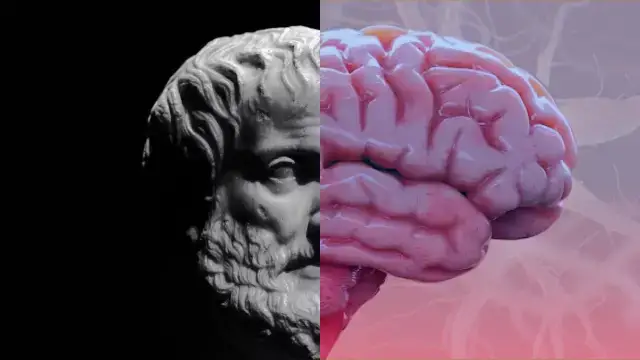
Philosophy asks if free will is real. Neuroscience reveals why the answer is more complicated than we expected.
Show More Show Less View Video Transcript
0:00
Neuroscience is a newcomer to the field of free will
0:04
What are exactly the kind of questions that are worth asking? What different kinds of experiments that can say something about conscious and unconscious decisions
0:13
could help us be more modest in what we realize we can control and what we can't
0:25
Generally humans have a sense that they control themselves and sometimes their environment more than they do
0:31
You don't try to control every contraction of every muscle in your hand. And if you did try to control that, well, good luck to you
0:37
Because if you try to concentrate exactly on how it is that you're walking, it's even hard to walk
0:42
So there are certain places in the brain that if you stimulate there, a person begins to laugh
0:47
You ask them, wait, why are you laughing? And they say, oh, I just remembered this really funny joke
0:51
The brain kind of puts together some reasons for something that you did
0:55
And while we think that they're under full conscious control, they are not
1:00
One day with a group of fellow graduate students, we got talking about what happens when your arm goes to sleep
1:06
Is it the nerves? Do they get pinched? Is it blood flow? What is it
1:11
And they thought it was bizarre that a philosopher would be interested in the physiological questions of what was going on
1:18
They thought I was abandoning philosophy. I went off to the medical library and tried to get myself
1:24
educated on how the nervous system works It suddenly hit me when I learned about neurons the cells of the brain that do the signaling that they could be the basis for an evolutionary process
1:35
in your brain, which was learning. And the more I learned, the more I thought
1:40
this is the key. Philosophy and science have to work together. We get rid of all the magic
1:45
and we have a bottom-up theory of meaning and learning and truth and consciousness
1:51
this. The most satisfying way of engaging life is not to be endlessly thinking about it. It's not
1:59
in understanding yourself conceptually or in telling yourself some story about your past or
2:04
future that you can most fully engage what it's like to be you in the present. It's a matter of
2:11
training attention such that you can really be here in the present and break the spell of your
2:17
your ceaseless identification with thought, it's possible to tap into a wellspring of patience and
2:24
equanimity, which really does transfigure your moment-to-moment experience of the world. And
2:29
meditation is a way of doing that. And just, you know, conceptually reframing experience is a way
2:35
of doing that. If we understand the interplay between conscious and unconscious, it might help
2:42
us realize what we can control and what we can't, and then also maybe be a bit more forgiving
2:47
towards ourselves about our decisions and our actions. Not everything is within our control
2:52
as much as we would think or maybe even would wish
Health
Science