Up next in 10



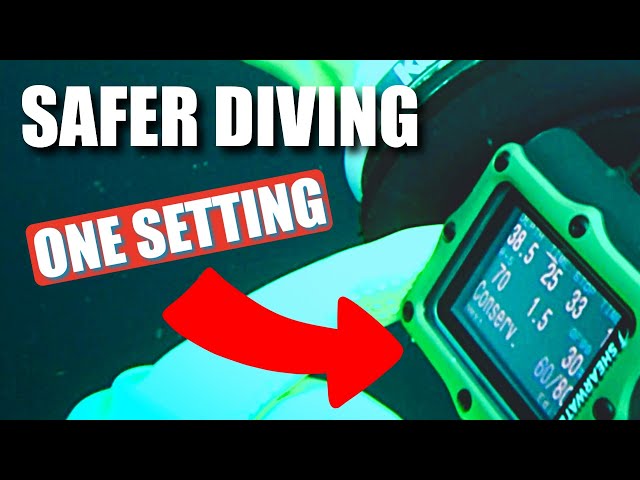
In this video, I explain why I changed my gradient factors (GF) — one critical setting on my dive computer. Most divers set up their computers once... and never touch the settings again. But recently I made a small change — adjusting my gradient factors — to reduce my risk of decompression illness (DCS) and make my deep wreck diving safer.
In this video, I break down:
⏱️ What gradient factors actually are (explained simply!)
🧠 How they affect your no-deco limits and decompression profiles
⚙️ What changing GF Low and GF High really does
🌊 Why I decided to increase my conservatism for technical wreck dives
🤿 What I learned after diving with the new settings at depth
Whether you're new to dive computers or you've been diving for years but never really understood what GF 30/70 vs 60/80 means, this video gives you a clear, practical explanation — without the technical overload.
If you've ever wondered how to make your dives safer through smarter decompression planning, this is a great place to start.
**What gradient factors do you dive with? Drop your GF settings in the comments** 👇
*Highlights*
00:00 Introduction
00:33 What every diver knows
02:01 Bühlmann & M-Values
03:34 What are gradient factors
04:10 GF Low
04:46 GF High
06:02 A practical example
06:56 Other risk factors
08:56 What GF did I use?
10:33 Why have I changed?
11:57 What do I use now?
13:14 May your own decisions
---
🔗 Related Videos:
• My Rebreather Failed on a 90 Metre Dive: https://www.youtube.com/watch?v=Iol9jK7NjOk
• My CCR Died at 240ft – How I Survived the Dive: https://www.youtube.com/watch?v=JctIPcXhwUE
• CCR Rebreather Bailout - Real Emergency: https://www.youtube.com/watch?v=BOnsB6KTrpE
• I Survived My Most Terrifying dive! https://www.youtube.com/watch?v=-CpmhQmIR_Q
#GradientFactors #DiveComputer #DecompressionIllness #TechnicalDiving #WreckDiving #DiveSafety #ShearwaterComputer #ScubaDiving
Show More Show Less View Video Transcript
0:00
I've recently changed the gradient
0:01
factors on my sheer water perex and I
0:04
wanted to take this opportunity to
0:06
explain to you why I've done that. Now,
0:10
before I go into that, I want to talk
0:12
about what gradient factors are. Now,
0:14
I'm sure there's plenty of people out
0:15
there who understand them. And if you're
0:18
one of them, then please feel free to
0:19
skip to the bit of the video where I
0:22
talk about why I've changed the gradient
0:23
factors. If you're not one of them and
0:25
you'd like to know a bit more about
0:27
gradient factors, then hang on in there.
0:29
I'm going to give you a a really
0:31
straightforward explanation that I think
0:33
uh should put the rest of the video into
0:35
context. So, let's start off with what I
0:37
think pretty much every diver knows,
0:40
which is that if you get bubbles of
0:42
inert gas coming out into your
0:43
bloodstream, then you are at an
0:45
increased risk of decompression illness.
0:48
Your dive computer needs a way to
0:50
estimate when that is likely to happen.
0:53
And the way it does that is by
0:55
calculating how much nitrogen has been
0:57
dissolved into tissues with you when
0:59
you're underwater and how quickly it's
1:01
coming back out as you ascend. Now, the
1:05
the way that most modern dive computers
1:07
do that is using something called the
1:09
ZHL16 model. It's it's been used in a
1:13
vast number of dive computers. It's used
1:15
in pretty much every rebreather. Now
1:19
what that model does is it says there
1:21
are 16 theoretical tissue compartments
1:24
in the body which absorb and release
1:26
nitrogen at different speeds. Some of
1:29
those compartments are fast like blood
1:31
and the brain which means that gas goes
1:33
into them quickly and gas comes out of
1:35
them quickly. Others are slow like fat
1:39
or cartilage and that means that the gas
1:42
transfer takes much longer. So all the
1:45
time you're underwater, your dive
1:47
computer is constantly calculating how
1:50
saturated each of those 16 uh tissue
1:53
compartments are and and and you know
1:56
uses that information to calculate uh
1:58
the decompression that you need to do.
2:01
How does it calculate the decompression
2:02
that you need to do? So what Bulman said
2:05
is that each tissue compartment can
2:08
tolerate having a gas pressure higher
2:12
than the pressure in the ambient
2:14
environment. So effectively for us that
2:17
means the the depth of water that we're
2:19
in and that higher pressure in the
2:21
tissue compartment is called super
2:23
saturation. So the level of super
2:26
saturation that each tissue can accept
2:28
before you run the risk of decompression
2:31
illness is called the M value. You think
2:33
of the M value as the absolute ceiling.
2:36
So if you go higher than the M value,
2:39
i.e. your tissue becomes more super
2:41
saturated than the the M value, then you
2:45
have a uh an unacceptable risk of
2:48
decompression illness. That's
2:49
effectively what Bulman said. He said,
2:52
"Here's the ambient pressure. above the
2:54
ambient pressure is an amount of
2:56
saturation that your tissues can
2:58
tolerate. But if you go more than the M
3:01
value, then you're into a risk of uh
3:04
decompression illness. That's really
3:06
straightforward. Now, the question you
3:07
might say is, great, Bulman's got this
3:09
theory. Why don't we just dive up to the
3:12
M value? And some people do that, but
3:15
what we do with with most modern um dive
3:18
computers is actually we dive below the
3:21
M value. So effectively that gives us uh
3:24
another element of uh conservatism. It
3:27
reduces the risk even further. That
3:30
extra margin of of safety is calculated
3:32
using uh gradient factors. What are
3:35
gradient factors? Well, you've probably
3:38
heard um terms like gradient factor 3070
3:42
or 6080. And what that gradient factor
3:45
does is simply it's a percentage of the
3:48
allowed super saturation compared to the
3:50
full M value. And the the numbers in the
3:53
gradient factor are what are used to
3:55
compute that percentage. You've already
3:57
heard that gradient factors are
3:58
expressed as two numbers 30 70 80 and
4:03
the two numbers the first one is the
4:05
gradient factor low and the second one
4:07
is the gradient factor high. The
4:09
gradient factor low determines how close
4:12
you are allowed to get to the M value at
4:15
the beginning of your decompression. So
4:17
at the the whatever depth your
4:20
decompression starts to occur. So if you
4:22
choose a low gradient factor low,
4:25
something like 20 or 30, you're telling
4:28
the computer, bring me to my first
4:30
decompression stop earlier and deeper.
4:34
If your gradient factor is is low is
4:36
higher, so say 50, 60, 70, the first
4:41
stop will be shallower because you're
4:43
allowing more super saturation deeper
4:45
down. So the second number in the
4:48
gradient factor equation is the gradient
4:50
factor high. And the gradient factor
4:53
high controls the super saturation when
4:57
you reach the surface. A lower gradient
5:00
factor high, say 70, means that you are
5:04
likely to uh surface with less super
5:07
saturation than if you chose a higher
5:10
gradient factor high like 90 or 95. So
5:14
you're going to have more super
5:15
saturation when you get to the surface.
5:17
So in simple terms, gradient factor low
5:21
is how conservative your deep stops are.
5:24
gradient factor high, how conservative
5:26
your shallow stops and surfacing are.
5:30
The clever part is what happens between
5:32
those two points. So your computer draws
5:35
a straight line between your gradient
5:37
factor low and your gradient factor
5:40
high. And as you you ascend, the
5:43
computer doesn't jump from one number to
5:45
the other. It just follows that line. So
5:48
effectively the gradient line, the line
5:51
between gradient factor low and gradient
5:53
factor high becomes a new line similar
5:57
to the M value. And that defines your
6:00
entire decompression profile. If we were
6:02
to consider two common settings, let's
6:05
say uh gradient factor 3070 versus
6:09
gradient factor 6080.
6:12
If you had gradient factor 3070, your
6:14
first stop would be deeper. you would
6:16
have a longer overall decompression time
6:19
and it would you know be far more you
6:23
know effectively cautious. Gradient
6:26
factor 6080 would have a shallower first
6:29
first stop and a shorter decompression
6:32
time and is actually much more similar
6:34
to the original Borman behavior and you
6:38
know and frankly closer to what Borman
6:40
considered was okay. I think it's
6:42
important to say that neither of those
6:44
two is safer in an absolute sense. I
6:47
mean, according to Borman, they're both
6:49
very safe. They simply represent
6:52
different risk um techniques and
6:54
different dive styles. It's important to
6:57
remember that the risk of decompression
6:59
illness is not the only risk that
7:01
affects you when you are uh diving and
7:04
there are other things that need to be
7:06
factored in. Why do divers choose to
7:09
adjust the date grading factors and why
7:10
do they use different ones? Well,
7:12
there's a whole load of other factors as
7:14
I've already talked about. So, water
7:16
temperature might be one. If you're
7:17
diving in colder water, you are going to
7:20
off gas at a slower rate than if you are
7:23
diving in warmer water. Workload and
7:26
stress. Once again, if you are working
7:28
hard and you are stressed, chances are
7:30
you're going to absorb more gas than you
7:32
would do if you were not. Age and
7:35
physical condition is a really important
7:37
one. It's simple fact of life that
7:39
younger fitter people are going to have
7:42
improved gas transfer over older and
7:45
less fit people. Repetitive dive
7:48
schedules. Another factor. If you
7:50
already have gas in your system from
7:52
previous dives, that is going to have an
7:54
impact on your dive profile.
7:57
And obviously, and you know the big one
7:58
for me, I guess, length and depth of
8:00
dives are also important. There may be
8:03
recommendations by your training agency
8:05
who might say you know you should dive
8:07
with these gradient factors and also the
8:10
other factor of course is personal um
8:12
conservatism and you know people who
8:14
have uh you know had decompression
8:17
illness already may choose to have
8:19
particularly conservative um dive
8:21
profiles. I think it's important to
8:23
understand that there isn't a uh
8:25
universal setting that's best for
8:27
everybody. You know, this is uh as my
8:30
good friend Richie Cola likes to say,
8:32
this isn't decompression science. This
8:34
is decompression theory. And gradient
8:36
factors are just one tool to find how
8:39
close you can get to those the
8:42
theoretical limits. And once again, I go
8:44
back to that point. Gradient factors
8:46
don't guarantee safety. Diving under the
8:48
M value doesn't guarantee safety. It's a
8:51
theoretical limit. That is what gradient
8:54
factors are. And I hope that's useful.
8:56
So let's come back to me. What grading
8:59
factors have I used and what have I
9:02
changed them to and why have I made that
9:04
change? So let's start off with what
9:07
have I used historically. Well, I've
9:09
used uh 6080. And the reason I've chosen
9:13
6080 is because those are the
9:15
recommendations from the agency that
9:17
I've done all my training with and the
9:19
agency that I am a qualified instructor
9:22
with. So they don't uh it's the British
9:25
Aquaca Club. I think probably most
9:27
people knew that, but if if you didn't,
9:29
that's uh that's who all my
9:31
qualifications are with. So the British
9:33
Abacqua Club, what they did is they
9:36
realized that people wanted advice and
9:38
wanted to know what good grading factors
9:40
are. So they went to a chap called Gavin
9:43
Anthony who is a well-known um expert in
9:47
in this kind of uh in the in the field
9:50
of uh diving research and he what he did
9:52
was a literature survey and he went out
9:55
there looked at all the research papers
9:57
that had been written and got all the
9:59
recommendations in and his
10:01
recommendation for try mix diving was
10:04
that people should use 6080. British
10:06
Tobacco Club published that and it's out
10:09
there and it's in lots of their courses
10:11
and all that kind of stuff. That's why
10:13
I've dived with 6080 for a long time and
10:15
it's been absolutely brilliant for me. I
10:17
have had no problems with it. I've not
10:19
got bends and obviously I've done a
10:21
whole load of diving. So, you know,
10:22
great must work and and so far it has.
10:25
The question you're probably going to
10:26
ask then is is if you haven't been bent
10:28
and it's worked really well, why have
10:30
you changed? It's it's a good question.
10:33
So, in the last 12 months, a number of
10:35
friends of mine have had bends of
10:37
varying degrees of severity.
10:40
I don't think there's a particular
10:43
common theme into why they they've got
10:45
bent and I don't think there's a
10:47
particular
10:48
um they haven't all haven't had the same
10:50
type of bend. You know, nobody's broken
10:52
any procedures. We haven't had rapid
10:54
ascent. We haven't had missed
10:55
decompression stops. Just a load of
10:58
people have got bent. So, the question
11:00
is why have people got bent? Now, my
11:02
personal view, it's just a a cluster.
11:05
When you're dealing with small numbers
11:07
of people doing things, you know, you do
11:09
get these kind of spikes in stuff. And
11:11
my that's that's what I think has
11:13
happened. But what it's made me do is
11:15
have a look at my own diving and made me
11:18
think about what what I'm I'm doing. One
11:21
of the things that I think was
11:22
particularly interesting was when I
11:24
posted the video about Rick Erton's bend
11:26
and his obviously evacuation.
11:29
One of the the people that commented on
11:31
that was uh Neil Pollock who is you know
11:35
a very very eminent decompression
11:37
scientist and he suggested that we
11:40
shouldn't be diving 6080. He suggested
11:43
that I should dive 4070 and
11:48
so I obviously thought about that quite
11:50
a lot and that has factored into my
11:54
decision- making. Now, I haven't gone to
11:56
4070. I've gone to 5070 because I think
11:59
that's a bit closer um to to what I have
12:03
been and that I know is working without
12:05
going as much as 4070. And and the
12:07
reason I haven't gone all the way to
12:09
4070 is cuz that would make a
12:11
significant change to my decompression
12:12
profile. It would add a lot more time in
12:14
the water. And for me, that that also
12:17
brings other risks. You know, you get
12:19
colder. Um and and frankly, you know, I
12:23
I know enough about my own body, I
12:25
think, having done a lot of um diving to
12:27
know that I think I don't need to be
12:30
going that conservative. But, you know,
12:32
that may be somewhere I go down the
12:34
line, I am getting older, as we all are,
12:37
and that is probably the main reason
12:39
that I've decided to change my gradient
12:41
factors. I've gone, yes, because I'm
12:43
getting old, I want to uh just add a bit
12:46
more conservatism in there. There you
12:48
go. My new gradient factors are 5070.
12:52
I've done uh a few dives this year on
12:55
them already and I've noticed that I am
12:57
spending longer in the water and I'm
12:59
getting less bottom time. But for me, I
13:02
think the the benefit of reducing the
13:05
risk of decompression illness and the
13:07
fact is I want to carry on diving for a
13:09
long time. So, I think that's what I'm
13:11
getting out of it. But that's just me.
13:14
As Richie also says is don't don't do
13:17
what I do. You know, you have to make
13:19
your own decisions. This is uh I like to
13:22
say big boy diving, but it's not. It's
13:24
big people diving. You know, we by the
13:26
time you get to this level, people
13:28
should be understanding the risks. You
13:29
should look around at what different
13:30
people are doing. You should know a bit
13:32
about your your own body and you should
13:34
make your own decisions because that is
13:36
really important. I thought you'd be
13:39
interested in what I'm doing. So, there
13:40
you go. I've put it out there. I hope
13:42
you'd find that interesting. If you'd
13:44
like to watch some of my other musings,
13:46
um, you know, I talk about my approach
13:48
to CNS, talk about my approach to P2,
13:51
talk about my approach to bailout, I've
13:53
got a whole load of other videos, uh,
13:55
that should be up here somewhere that
13:57
you, uh, you might want to have a listen
13:59
to. Other than that, thank you very much
14:01
for listening to me. I'm Dom Robinson,
14:03
Deep Wreck Diver. Thank you.
Health
Sports
Water Sports