Up next in 10



"I call it a tyranny of attention because there's so many demands on our attention coming from so many different directions that we are simply overwhelmed and we don't have the mental bandwidth to cope with it."
Show More Show Less View Video Transcript
0:00
Everyone agrees that our attention spans have gone to hell
0:03
I call it the tyranny of attention because there's so many demands on our attention coming from so many different directions
0:10
that we're simply overwhelmed and we don't have the mental bandwidth to cope with it
0:16
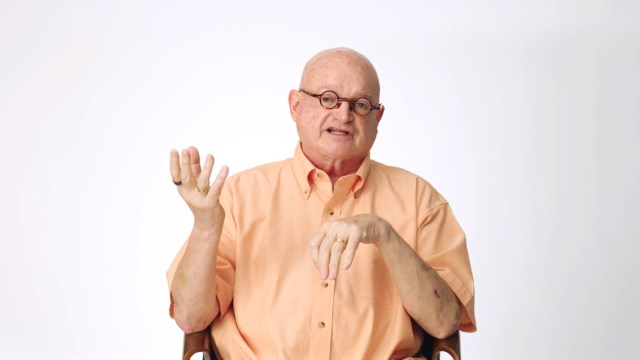
I'm Richard Saitoik, professor of neurology at George Washington University and an author of Your Stone Age Brain in the Screen Age, Coping with Digital Distractions and Sensory Overload
0:28
Your Stone Age Brain in the Age of Screens Washing machines and appliances change every five or ten years
0:41
The brain doesn't do that. Evolution doesn't say, oh, it's time for another memory module, a time for another language module
0:48
The modern brain is no different than that of our distant Stone Age ancestor
0:53
Evolution proceeds by accretion, that is, once the brain arrives on a solution that's good enough
1:00
it keeps it and then adds on new features, sort of like a New England add-on house
1:04
where you add one room after another and it looks sort of funky, but it works
1:10
Working memory is like the mental scratch pad, where we hold whatever we're focused on at the
1:15
moment, whether it's remembering a short grocery list or trying to remember an access code
1:22
for an app. And it's limited in what it can do, how much it can hold. Everything that we do
1:31
costs us in terms of energy expenditure. And ATP is the fuel that fuels every cell in the body
1:41
ATP stands for adenine triphosphate. Creatures all over the animal kingdom all rely on ATP. It's like the bedrock of energy transformation. So for example
1:54
if you have to go take a test, you're not doing anything, you're just thinking. But at the end of
2:00
a three or four hour test section, you're really beat. You're tired because you have expended a lot
2:06
of mental energy. So we have to be, you want to be careful not to waste your attention or spend
2:14
too much. It's like a bank account that can go into the red very easily. The brain operates within
2:21
a fixed energy limit, a bandwidth, and there's no amount of diet, exercise, or Sudoku puzzles
2:27
that can increase that. So we have to learn to live with the amount that we have. Listening to
2:33
one person speak takes up about half my bandwidth. And trying to listen to two people at once is
2:38
impossible because then we've exceeded it. Now, you might think that as you're scrolling or swiping
2:45
that you're not really doing much, but because that bandwidth is so small and narrow, there's
2:54
not much left over. And most of the energy goes towards maintaining the physical structure by
2:58
pumping sodium and potassium irons across membranes. And that leaves very, very little
3:04
left over for thought. A great example is the Oscar fiasco in which they named the wrong best
3:12
picture. For best picture. You're awesome. Come on. La La Land. Just as Emma Stone was walking off the stage, Cunanan took a picture and tweeted
3:28
and that's the exact moment that he should have been discarding the envelope and lining up the
3:33
next one. Basically, he flooded his working memory, and that's what led to them announcing
3:39
the wrong best picture. The brain and the peripheral nervous system is really one big
3:44
changed detector. That is, it responds to any change in the current environment
3:51
and so it responds to novelty. Now, back on the savanna, things didn't change very much except
4:00
the constellations overhead and the seasons. Now, of course, we've got change everywhere
4:07
bidding for our attention. Now, in terms of attention and distraction, I often say that the screens are like secondhand smoke. And so in the fact that
4:22
who's ever in the line of sight is affected by it. And we've all experienced this in waiting rooms
4:29
and airport lounges, those huge monitors with their moving images, they demand to be looked at
4:36
And trying not to look costs energy as much. So either way, we lose
4:42
I think the only way around that would be to put in earplugs and put on a blindfold so you not distracted by this stuff this what I call forced viewing Is it ironic that you looking at me on a screen
4:57
and the answer is not if you're just focused on my talk right now
5:02
but if you're trying to do three things or five things at once, then your focus is really shot
5:09
I think the term, you know, dopamine reward is being thrown around too loosely
5:15
It's sort of a shorthand for anything that feels good. A good meal will give us a dopamine hit
5:21
So, I mean, we're getting these squirts all day long. But there are two pleasure circuits that exist in the brain
5:31
one related to wanting and reward, and the other two, pleasure and liking
5:38
The two systems differ in how easy they are to trigger. Now, the wanting and reward system is very easy to trigger
5:45
Its network is diffused widely throughout the brain and basically in every crevice
5:51
But it's impossible to satiate. And this is the basis of the hedonic treadmill
5:58
As soon as we get something that we want, we want something else
6:02
Pleasure is very short-lived. Even Aristotle pointed this out long ago. On the other hand, the opioid system is smaller in its expanse in the brain. It's harder to trigger. We can satiate it. And this is the basis of addictions, really
6:19
Studies show that behavioral addictions such as excessive swiping at your screen or TikTok addiction activates the same brain areas as do physical addictions
6:32
So alcohol, cocaine, other kinds of drugs. This has been shown in many experiments where the anxiety level rises minute by minute as you take their phone away
6:44
The tech giants know that there's only 1,440 minutes in a day
6:49
And so they fight ruthlessly for our eyeballs, and they want to keep us glued to their platform as long as possible, because that's how they make their money
6:58
I mean, Reed Hastings of Netflix said it long ago. He said, sleep is their biggest competitor, not Amazon Prime, not Hulu, not the other streaming services
7:07
They have become expert in exploiting positive intermittent reinforcement. I mean, I know what they're doing
7:15
And yet when I see that next episode in five seconds, it's like, OK, what time is it
7:20
Oh, I can I can watch another hour. This is the same mechanism that's used by slot machines and casinos to keep us playing
7:28
That is, we scroll and we get a hit or something interesting or a good piece of news
7:33
And that's a reward. And so we said, oh, let's get another one
7:38
And we keep going. But the rewards come infrequently on an unpredictable schedule, and that's what keeps us glued to the scrolling
7:50
So you are physically addicted as well as behaviorally addicted. How can you reclaim your attention? Good question
8:00
Well, the most effective thing would be to turn the phone off
8:04
But that also turns out to be the hardest thing for people because they have what's called nomophobia, a fear of being without their phone. We are really addicted to the whoosh that happens when a text message comes in. We really have trained ourselves like Pavlov's dogs
8:23
when these stimuli come in. The screen lights up, we get the whoosh
8:28
or we sit there wondering, gee, has anybody liked me? You know, you get anxious
8:35
just not being able to hang on to it. One of the things you can do
8:42
if you're not willing to put the phone down or turn it off, adjust the settings on it and your television
8:48
so that you're not getting this huge number of photons hitting your retina
8:53
In the book, I give examples for this. The first thing you should do is go to your iPhone and turn on the blue, yellow, tritonopic filter. Turn down the brightness as much as you're comfortable with. On your television, which are really, really bright, those OLED screens, you can turn down the picture mode and the contrast mode and the brightness way down by a factor of 40, and you'll still have a great picture to look at
9:19
It's just you're not going to be bombarded by all this light coming at you
9:24
The other thing would be then what the kind of light that's emanating from these very bright screens
9:31
and that is you're getting too much short wavelength light or blue light
9:37
Now blue light packs more energy in its photons than any other wavelengths and it penetrates all the way to the back of the eye Blue wavelengths also signal the onset of darkness
9:49
and then the arrival of light in the morning. Any photoreceptor could have evolved to handle this
9:57
and give us our circadian rhythms of sunlight and sunset. Blue light penetrates the oceans more effectively than anything else
10:08
And that's where the photoreceptors in all life first evolved. So that's why we're sensitive to blue light
10:16
People have suggested using blue light blocking glasses, which are tinted yellow
10:23
Yellow tinted glasses are good for glare if you're sensitive to glare, for example
10:28
But those are really worthless. in order to filter out enough of the blue short wavelengths
10:36
you need a dark orange lens. And it's so dark that you can barely see what you're doing
10:44
So, you know, you can show the effectiveness in a lab, but for everyday living and trying to get around
10:50
you'll be stumbling all over the furniture because you won't be able to see anything
10:55
Another thing that matters is what you're doing at night Having regular hours of going to bed and waking up
11:05
Is one of the best things that you can do To reclaim your attention span and your focus
11:11
Why is that? Well, when you're asleep The brain is not just passive
11:21
You're not a sack of potatoes lying in bed Our sleeping brain is highly active metabolically
11:28
It's consolidating memory. It's clearing out waste products that have accumulated over the day
11:34
And it's processing emotions. And so if we don't allow it to do these things by shortchanging ourself on sleep
11:45
then it's equivalent of having a blood alcohol concentration of 0.8. You're really going to suffer the next day
11:54
and there's no such thing as catching up on sleep. I mean, you can't stay awake all night and then decide
12:01
well, I'm going to sleep in on the weekend. It doesn't work that way. And why is that
12:06
It has to do with our circadian rhythm and the cycle of sleep
12:11
Now, we hit the pillow and we go through four stages of sleep
12:15
Stage one, two, three, four, which is the deepest slow wave sleep
12:20
and that's where all this repair process happens. And then we go back up to stage three, two, one, and that's about 90 minutes after we've hit the pillow
12:30
And then, boom, we enter our first REM stage, and that's where we dream
12:37
So I tell my medical students, for example, if you have to give a presentation in the morning, go to bed, set an alarm clock for 5 a.m. if you need to, and cram and review and prepare your thing then
12:51
because at that point, you're going to be refreshed from a good night's sleep
12:56
Your memory is going to be primed. Your tank's going to be full. And you're going to perform much better than if you had stayed up late cramming
13:05
So what are some of the things that you can do in terms of sleep hygiene to establish a healthy pattern of sleep and wakefulness
13:14
Well, one would be to try to minimize tech. Don't have a TV in your bedroom, for one thing
13:20
Try to have regular hours of going to sleep and waking up in the morning
13:25
The more you can keep a regular period like that, the better off you are
13:31
Your room should be fairly cool. 68 degrees is ideal. Don't bundle up and get too warm
13:39
If you find yourself that you need to throw the covers off in the middle of the night
13:44
then you've started out too hot. Another thing that matters is what you're doing at night
13:51
Getting into TikTok and politics and religion and all these other things that can rile us up are not a good thing to do after dinner
14:00
Certainly not in the hours before bedtime because it's just going to get our adrenaline up
14:08
It's going to interfere with our sleep. and once it does that
14:12
that interferes with our focus, our attention span, our memory, all those kinds of things
14:18
So this deals with self-control and emotional intelligence. Am I able to throw the circuit breaker
14:24
and not get into that argument? If you're about to have an argument
14:29
the best thing is for both of you to just zip it and have a good night sleep and then talk about it in the morning And you find that in the morning whatever you are all riled up about
14:41
really isn't all that important anymore. And again, it's a question of emotional intelligence and self-control
14:49
is can you take the bait? Do you realize what's happening and say
14:53
I'm not going to go there? That takes a great deal of resilience
14:58
because at the end, when you get all riled up and indignant
15:03
who are you hurting? You're only hurting yourself. The solution is really very obvious
15:09
is that you have to engage with other people in real life
15:14
Try to agree to meet somebody for coffee or to take a walk in the park
15:19
Now, when you're interacting with another person or a small group of people
15:24
your conversation and interaction is very meaningful. You're there for a reason
15:28
you're getting something out of it. It feels good. Your oxytocin, which is the binding hormone
15:36
they're being released. That doesn't happen when you're looking at a screen
15:40
And when you're on a Zoom meeting and looking at 20 people on the screen
15:45
that doesn't happen either. That, in fact, is very exhausting. People talk about Zoom fatigue
15:52
for several reasons. One, the camera is always in the wrong place, and so you're not quite sure
15:57
where to look. You're also worried about how do I look? Am I coming across okay? Do I look all right
16:06
And just being able to focus attention like that is draining. The other thing is that the video and
16:14
the audio are chopped up into different streams. So what happens is when you and I are having a
16:20
conversation, there are normal signals through our body language and through the tone of our speech
16:25
of when it's time for me to talk, stop talking, and when it's time for you to respond
16:31
But when the audio is chopped up in Zoom meetings, you get this sputtering
16:38
And so it's people's attention. They're really focused on like, okay, well, can I get an word in now
16:45
And that's tiring. So that's what Zoom fatigue is all about. One of the things you can do is just take a deliberate break
16:54
throw that circuit breaker and stop all the busyness, stop all the things that you're trying
16:59
to do at this moment. The Dutch have a wonderful concept called Nixon, which means the art of doing
17:07
nothing. So you get up from your computer and you stare out the window. You look at the trees
17:15
you listen to the birds, you watch the branches swaying in the wind. And you do this for, I don't
17:21
know, three minutes is enough to throw that circuit breaker and take you out of the busyness
17:29
for a moment. So you have basically, here you are at tilt, and then you do a Nixon moment and you
17:36
lower that level of engagement. And so you can start, you can, you know, start over again
17:44
And Nixon isn't, it's not meditation. It's not a forced moment of doing nothing. It's just a
17:50
voluntary of just, you know, look up, you're outside taking a walk, look up at the buildings
17:56
what's out there? You're so used to just looking at ground level or walking along looking at your
18:01
phone and running into lampposts. So just put the phone aside, stop, look around, breathe
18:13
That's Nixon. That's throwing the circuit breaker. I call silence an essential nutrient
18:20
So silence is an essential nutrient because when we evolved three billion years ago, the world was pretty quiet
18:31
Mostly you heard the rustle of the wind and that was it
18:36
You know, if you heard a snap of a twig, well, that was, you know, you put yourself on alarm
18:41
Whoa, what's that? Is that a danger coming? So something out of the ordinary activated our change detector
18:48
and it could be, well, what is it? Is it a threat or is it an opportunity
18:54
Is it a lion coming after me or is it the possibility of a mate or a meal
19:01
So, you know, the brain did not evolve to be on 24-7
19:07
It needs periods of downtime to restore itself. Want to support the channel
19:20
Join the Big Think members community where you get access to videos early, ad free
People & Society
Science