Up next in 10



When we see loneliness as a kind of failure, it becomes damaging. When we see it as information, it becomes actionable. A psychologist, a social scientist, and a human connection expert explain.
Show More Show Less View Video Transcript
0:00
From a very young age, there's this stigma that we learn where if you're alone, something's wrong with you
0:07
Our perceptions and the stories that we tell ourselves about feeling lonely, in turn, change the behaviors that we go out and do in the world
0:18
When we feel lonely, we're more likely to start to ruminate, to catastrophize in social situations
0:37
and to get caught up in these sort of negative thought patterns and beliefs that then influence
0:42
our behaviors. But they also influence our brains and our bodies. There are some studies
0:47
that suggest, for example, that being without a close friend, being lonely
0:52
is as bad for your health as smoking 15 cigarettes a day
0:56
We often hear that being alone is bad for us. This messaging is getting us to believe that being alone is bad for us
1:04
But there are many situations in which being alone can actually be good for us
1:10
Our social lives are rewiring our brains and in turn changing the experience that we have inside of our bodies
1:24
Loneliness is not a reflection on who we are. It's a reflection of what we need
1:31
It's information. It's data. Loneliness starts out as a thought pattern or an emotion This actually triggers a stress response in our body that is associated with heightened levels of cortisol
1:46
that's associated with more inflammation, which weakens our immune systems and actually makes us more susceptible to disease
1:54
We can see this in the neuroscience research. In one study, people went through mild electric shocks
2:01
while looking at photos of either their romantic partner or a complete stranger. What researchers found was that people who were looking at a photo of
2:12
their romantic partners reported feeling less fearful and the brain activity in the regions
2:19
associated with pain was lower. People's perception differs according to whether or not they feel
2:26
connected to another person. If we start to understand that health is not only physical
2:31
and mental, it's also social. That's going to change our behaviors. If you think about having
2:38
rich friendships and being embedded in your community and having a really strong sense of
2:45
support, that's going to completely transform the way that you experience the world
2:55
I think a big question now is whether we're facing a friendship recession
3:01
That's a term that Daniel Cox, a scholar at the American Enterprise Institute, has used to describe this rise in the number of people who lack a certain number of close friends, who have fewer people to turn to in times of crisis
3:14
Today 15 of young men say that they don have a close friend That was just 3 back in the 1990s The pandemic interestingly there we see that it women who been most affected With more than 50 of young men say that they don have a close friend That was just 3 back in the 1990s The pandemic interestingly there we see that it women who been most affected with more than half of women saying they lost touch with at
3:29
least some of their friends. We've seen a decline in lots of traditional institutions, including
3:35
the family, people marrying later if they do marry, obviously in areas like religion, in some cases
3:41
the labor market. And so what that means is there's more of a need for people to have social
3:46
relationships, connections outside of those institutions. That's where friends are hugely important. And so it's not just that being without friends can make you isolated in a sort of economic
3:57
or a social sense, but it can also make you sad. And being sad, it turns out, is also bad in terms
4:04
of your physical as well as emotional health. There's obviously a dystopian version of how
4:10
these trends could continue, which is a world of essentially atomized individuals without friends
4:15
isolated, perhaps in ill health. I think that's why we have to recognize that friendship is
4:22
incredibly important to human flourishing. One of the necessary steps to making a friend
4:27
is to admitting that you want to make a friend, to being open to that. That requires a certain
4:33
vulnerability. And I think as we get older, there's sometimes a sense of shame that comes
4:37
along with not having enough friends. And actually saying, I need a friend, is maybe one of the
4:42
hardest sentences any human being can utter. There's been an increasing amount of attention over the past several years
4:54
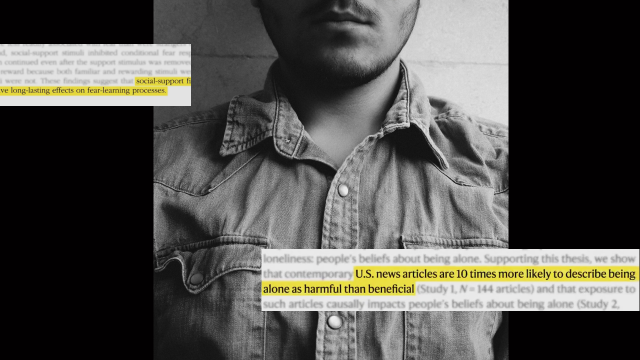
about the negative consequences of loneliness We done research on this and found that the media is approximately 10 times more likely to describe experiences of being alone as negative as compared to positive
5:12
When we do research where we track people over time, what we see is that if you're the kind of person who thinks being alone is good for you, you actually feel good when you spend time alone
5:23
What I love about that finding is it gives us the opportunity to potentially intervene because we can shift people's beliefs about being alone
5:34
Rather than thinking about that experience as reflecting something wrong about me or the circumstances, we can reframe that situation as an opportunity to be creative, to be alone with our thoughts in a pleasant way
5:48
The more we talk about these things, the more it gets on our minds and the more it penetrates into the culture more broadly
5:57
Connection with yourself is as important as connection with other people. Being optimally socially healthy for you might be different than someone else based on how much socializing you enjoy and what kinds of connection feel fulfilling to you
6:15
Loneliness is just an opportunity to go further, to explore your social health, to be a scientist in the laboratory that is your social life
6:26
We can broaden the perception box that you're living in and help you to feel more connected and overcome that isolated experience of loneliness
Anxiety & Stress
Family & Relationships