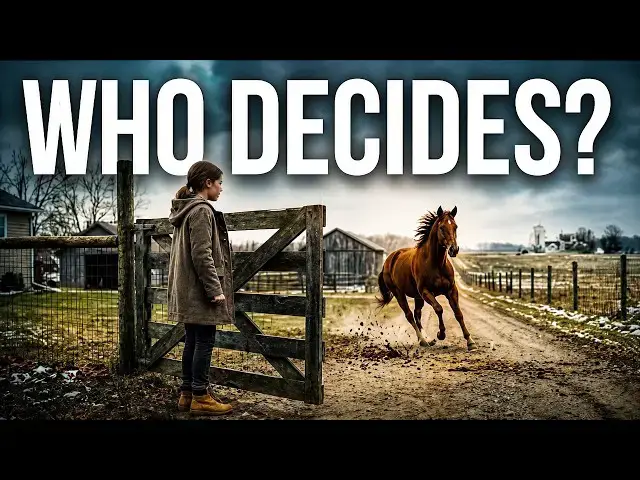
What does it really mean to become a “girl” in a society that already has expectations about how girls should behave?
In this video, we explore Alice Munro’s “Boys and Girls” through a detailed literary analysis of its plot, themes, characters, symbols, gender roles, setting, narration, and ending.
The story follows a young girl growing up on a fox farm in rural Canada. At first, she identifies strongly with her father’s outdoor work and sees herself as capable, independent, and useful. But as she grows older, her family and society increasingly teach her that boys and girls are expected to occupy different roles.
In this analysis, we discuss:
• Summary of “Boys and Girls” by Alice Munro
• The central theme of gender roles and gender socialization
• The narrator’s relationship with her father
• The importance of Laird and the contrast between boys and girls
• The conflict between the domestic world and the outdoor world
• The symbolism of Flora, the horse
• The meaning of the gate and the idea of freedom versus control
• The narrator’s act of resistance and disobedience
• The significance of the father’s words, “She’s only a girl”
• The meaning of the final “Maybe it was true”
• The story as a coming-of-age narrative
• Feminist interpretations of the story
• First-person and retrospective narration
• The importance of the title “Boys and Girls”
• The psychological complexity and ambiguity of the ending
One of the most important developments in the story is the narrator’s changing understanding of the word “girl.” What initially seems like a simple description gradually becomes a social definition—a set of expectations about behavior, work, freedom, knowledge, and identity.
The episode involving Flora provides another crucial layer of meaning. When the narrator opens the gate and allows Flora to escape, her action becomes an important moment of resistance against authority and control. The gate can therefore be read as a symbolic boundary between obedience and freedom.
The ending is particularly significant. When the father says, “She’s only a girl,” the narrator begins to internalize the judgment she has previously resisted. Yet her final response—“Maybe it was true”—does not provide complete certainty. The ambiguity suggests an unresolved psychological conflict rather than a simple acceptance of female inferiority.
This video is useful for students studying Alice Munro’s “Boys and Girls” for literature classes, exams, assignments, essays, and close reading.
Key Topics
Alice Munro
Boys and Girls
Boys and Girls Alice Munro summary
Boys and Girls analysis
Boys and Girls themes
Boys and Girls symbolism
Boys and Girls gender roles
Boys and Girls characters
Boys and Girls Flora
Boys and Girls ending explained
Boys and Girls feminist analysis
Boys and Girls literary analysis
Boys and Girls coming of age
Alice Munro short stories
English literature analysis
Short story analysis
If you find the analysis useful, like the video, subscribe to Ask Literature, and share it with other students of English literature.
#AliceMunro #BoysAndGirls #EnglishLiterature