Up next in 10


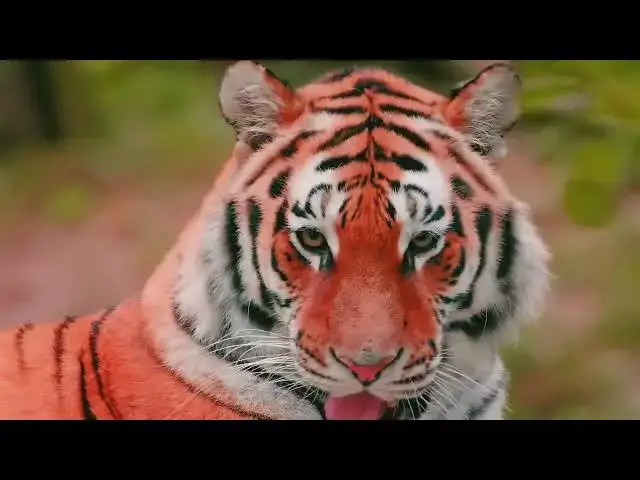
Discover how tigers use their striped coats and forest environments to create effective camouflage. Learn about their physical adaptations, hunting techniques, and the importance of habitat conservation for these big cats' survival.
Show More Show Less View Video Transcript
0:00
how Tigers use forests as camouflage
0:04
Nature's stealth
0:06
Masters tigers
0:08
are
0:10
nature's masters of stealth blending
0:13
seamlessly into their Forest
0:16
habitats but how exactly do these
0:19
magnificent big cats use the dense
0:22
vegetation as their personal camouflage
0:25
wall let's explore the fascinating world
0:29
of tiger cam CF flage and its crucial
0:31
role in their
0:33
survival the term camouflage wall refers
0:37
to the way Tigers utilize their
0:39
surroundings to remain hidden from both
0:41
prey and potential
0:43
threats their distinctive orange coat
0:46
with black stripes might seem
0:48
conspicuous to human eyes but in the
0:51
dappled light of forests this pattern
0:53
creates a remarkably effective
0:56
disguise tigers have evolved several
0:59
physical adaptations that enhance their
1:02
camouflage
1:03
abilities their fur pattern mimics the
1:06
interplay of light and Shadow in dense
1:10
vegetation the vertical stripes break up
1:12
the Tiger's outline making it difficult
1:14
for other animals to distinguish the
1:16
cat's shape from the surrounding trees
1:18
and
1:19
undergrowth different Forest
1:21
environments offer unique camouflage
1:24
opportunities for
1:25
tigers in the lush green forests of
1:29
tropical regions
1:30
Tigers use the thick undergrowth and
1:32
tall grasses to conceal
1:35
themselves in more arid or deciduous
1:38
forests they take advantage of the
1:40
patchy sunlight filtering through the
1:42
canopy which creates a mosaic of light
1:45
and dark spots on the forest
1:47
floor the ability to blend in with their
1:50
surroundings is crucial for Tiger's
1:52
hunting
1:53
success as Ambush Predators they rely on
1:57
stealth to get close to their prey
1:59
before launching a surprise attack their
2:03
camouflage allows them to stalk deer
2:05
wild boar and other prey animals without
2:08
being detected until it's too late
2:11
camouflage also plays a vital role in
2:14
protecting tigers from potential
2:17
threats while adult tigers have few
2:20
natural Predators they still need to
2:22
avoid detection by humans and stay
2:24
hidden when resting or caring for their
2:27
cubs the forest provides a safe Haven
2:30
where tigers can Retreat and remain
2:33
unnoticed the effectiveness of a tiger's
2:37
camouflage is closely tied to the health
2:41
and density of its forest
2:43
habitat as forests become fragmented or
2:46
degraded due to human activities tigers
2:49
lose not only their hunting grounds but
2:52
also their protective camouflage
2:55
wall this makes them more vulnerable to
2:57
poaching and human Wild life
3:01
conflict understanding how Tigers use
3:03
forestation as their camouflage Wall
3:06
highlights the critical importance of
3:08
forest
3:09
conservation by preserving and restoring
3:12
tiger habitats we not only protect these
3:15
magnificent animals but also maintain
3:18
the delicate balance of entire
3:21
ecosystems the Tiger's camouflage is a
3:24
testament to the intricate relationship
3:26
between predator and
3:27
environment reminding us of the need to
3:30
safeguard our planet's biodiversity
#Pets & Animals
#Wildlife
#Ecology & Environment
#Hunting & Shooting