Up next in 10


UML - Case study on ATM transaction
Show More Show Less View Video Transcript
0:00
yesterday on ATM transaction so let us
0:03
discuss some case studies so that you
0:05
can get an idea that how these systems
0:09
from the very problem statement to the
0:11
implementation can be done and what are
0:14
the steps in between so in this
0:17
particular case study we have drawn
0:18
different diagrams UML diagrams
0:20
depending upon the problem statement and
0:23
also we have shown you that how to draw
0:26
such diagrams using rational rows
0:29
software please watch all the videos on
0:32
this case study so now at first let us
0:35
discuss the problem statement software
0:38
is to be designed for supporting a
0:40
computerized ATM banking network all the
0:44
processes involved in the bank are
0:46
computerized accounts maintained in the
0:50
bank the transactions affected and
0:52
including ATM transactions are to be
0:55
processed step-by-step by the computers
0:58
in the bank and ATM machine accepts ATM
1:03
card so now we are discussing in the
1:05
problem statement how one can deposit or
1:08
withdraw money using the ATM card
1:10
so an ATM machine accepts ATM card
1:13
validates a pin and verifies the
1:16
password and interacts with the user and
1:19
communicates with the central system to
1:22
carry out the transaction dispenses and
1:25
deposits cash and prints receives of the
1:29
transaction history so this is a part of
1:32
the problem statement so let us let us
1:35
have some respond statement so the
1:39
invalid pin of the cart is rejected the
1:42
system to be designed and implemented
1:44
must include appropriate record-keeping
1:48
and security provisions the proposed
1:52
system must satisfy the user recommends
1:55
the system should be user-friendly and
1:57
derive usability and also it should give
2:01
the quality assurance so this is the
2:03
problem statement we are having here so
2:06
here is one diagram to show you that
2:08
there is a central computer these are
2:10
the bank can be
2:11
they're connected with some computer
2:13
communication network and with the
2:15
central computer ATMs are connected with
2:17
these Bank computers where having the
2:19
different accounts are getting connected
2:20
there's a Cask cash counter these are
2:23
the different customers who will be
2:25
using them so just one pictorial
2:27
representation of this a problem
2:30
whatever we have discussed so I think we
2:32
have gone through the problem statement
2:34
so now we are going to have two sections
2:37
now one is a functional requirement and
2:40
the one is that non-functional
2:41
requirement so through this discussion
2:44
also you'll be having the idea what is
2:46
the difference between functional and
2:48
non-functional requirements so
2:51
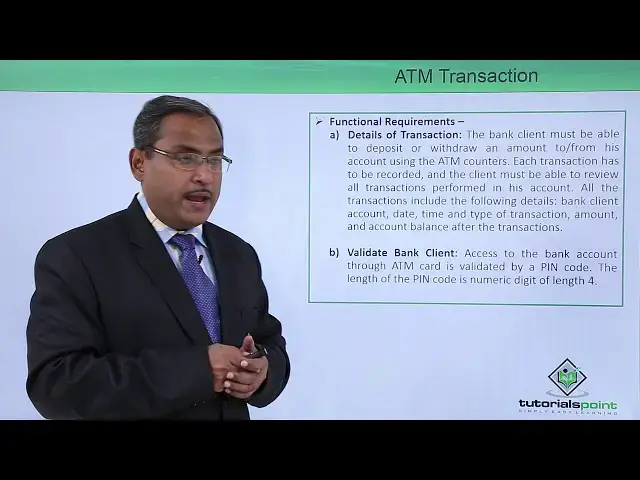
functional requirements so details of
2:53
that transaction if the bank client must
2:57
be able to deposit or withdraw an amount
3:00
to or from his account using the ATM
3:03
counters each transaction has to be
3:06
recorded and the client must be able to
3:10
review all transactions performed in his
3:13
system or accounts all the transactions
3:17
include the following details so that is
3:20
a bank client account date time and type
3:24
of transactions made amount and account
3:28
balance after the transaction so all
3:30
this detailing is required so that is
3:33
our details of the transaction so let us
3:36
go for another functional requirement on
3:38
validate Bank client access to the bank
3:43
account through ATM card is validated by
3:45
a pin code which has been mentioned in
3:48
the problem step and also the length of
3:50
the pin code is the numeric digit of
3:53
length 4 so that means we will be having
3:55
4 digits in the pin code next one next
4:00
functional recommend there is a third
4:02
recommend account to be the amount to be
4:05
withdrawn the bank in consultation with
4:09
a client shall fix that amount that can
4:12
be or can be withdrawn on a specific day
4:15
that means depending upon the account
4:18
type the bank or three
4:20
and the client so they must be having
4:22
some consolidation and they'll decide
4:24
what is the amount that can be withdrawn
4:27
in maximum for a certain day next one is
4:31
a cross withdrawal limit the system
4:34
should be designed such that it
4:36
automatically checks the amount in the
4:38
account of the client if the amount to
4:41
be withdrawn exceeds the amount in the
4:43
account of the client then he should
4:45
check whether the client could avail the
4:48
overdraft facility or not as for the
4:51
bank rules to enable the transaction so
4:54
sometimes it may happen that among which
4:56
is going to be withdrawn is greater than
4:59
the amount which is there in the account
5:02
balance so in the case we should have to
5:04
check whether the overdraft facility is
5:06
available on that account or not and
5:07
accordingly the transactions will be
5:09
will have the success now this is this
5:13
that the non-functional recommend so
5:15
whatever the function recommends we
5:16
discussed so let me reverse once so that
5:19
is the details of the transaction what
5:21
are the what are the attributes that
5:23
should be kept as the details of the
5:24
transaction and then validate the bank
5:27
client so how to check whether the
5:29
client is valid or not
5:31
through the password through the
5:32
four-digit pin and so on and next
5:35
functional requirement was that that is
5:37
the amount to be withdrawn what is the
5:38
amount the client can withdrawn in
5:41
maximum part day and then cross
5:43
withdrawal limit so what is the
5:45
withdrawal limit whether the account is
5:47
having the word or facilities or not so
5:49
here you have brief discussed these are
5:51
the functional requirements so now let
5:54
us go for the non-functional
5:55
requirements so system should be
5:57
designed simple enough to enable the
6:00
user to operate without any formal
6:02
training or any kind of delay system
6:05
must be secured and protected from
6:07
unauthorized users so in the problem
6:10
statement we have we have discussed that
6:12
the system should be user-friendly the
6:15
system should be the quality assurance
6:18
should be ensured the system should be
6:20
secured so they are mentioning all these
6:22
in the in a in non-functional
6:25
requirements in some specific points so
6:28
system must handle the card stock up
6:30
network and power failure
6:33
software must be efficient to use and
6:36
provide quick recover from the fault
6:40
software must validate and cancel
6:42
operation of incorrect pin incomplete
6:46
transaction insufficient font time delay
6:49
and written failure and user interface
6:53
screen must be designed to operate
6:55
easily it should be user-friendly and it
6:58
should have visual appealing so these
7:01
are the non-functional requirements so
7:05
we are getting this idea that whenever a
7:06
problem in our real-life scenario when
7:09
will be working for a certain project
7:11
the problem statement will be given and
7:13
then we should have to derive the
7:15
functional requirements and the
7:17
non-functional requirements so you are
7:19
getting this idea that how the real
7:21
light projects can be handled so please
7:23
watch next videos there in the
7:25
continuation of this discussion thanks
7:28
for watching this
#Programming
#Banking
#ATMs & Branch Locations
#Debit & Checking Services
#Mobile Payments & Digital Wallets
#Savings Accounts