Up next in 10



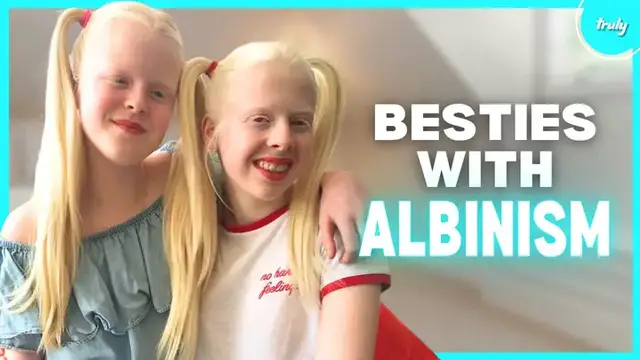
BESTIES Lucy and Sammy first appeared on Born Different in 2018 where they shared their albinism journeys. Speaking to Truly, Sammy explained, "Seven years on, we're still thriving!" Lucy and Sammy may not live in the same town now, but that doesn't stop their friendship and the support they give each other as they navigate life with albinism. "It just doesn't feel like we're best friends, it feels like we're sisters," Lucy gushed. With Lucy now living in Melbourne with her own guide dog, Dottie, and Sammy living with boyfriend, Ryan, the friends have experienced many big life changes and they'll be filling us in throughout this episode. From getting degrees to mentoring and volunteering for charities - these two have been keeping very busy! Reflecting, Lucy said, "The great thing about being connected through albinism is Sammy and I will always have this special bond with each other."
Follow Lucy and Sammy on Instagram: https://www.instagram.com/lucy_and_sammy/?hl=en
Series Producer: Kim Nguyen
Producer: Kathryn Lewsey
Editor: Dalene Low
Show More Show Less View Video Transcript
0:00
We were on Born Different for being besties with albinism
0:03
Seven years on, we're still thriving. I moved to Melbourne almost two and a half years ago
0:09
It was my first time living out of home, away from my parents
0:13
I have a wonderful black Labrador guide dog named Dottie, who I've had for four years now
0:20
and she has helped me navigate the world independently with a lot more confidence
0:25
Dottie helps me in so many ways as my guide dog. She's a really big help when I'm out and about because I don't have to do a lot of the work with my remaining vision
0:34
When I was a cane user, it was very exhausting and often very overwhelming
0:41
I was using a lot of my remaining vision and energy to try to navigate safely with my cane
0:47
And now having Dottie, I don't have to worry about that. So albinism is a genetic condition that you're born with
0:54
For two types, you can either affect the pigment in just your eyes or in your skin, hair and your eyes
0:59
Having albinism, some of the negatives are the vision, like it's hard to see things
1:05
I do have some functional vision. I often describe my vision as an abstract painting
1:11
There is some image there. There are colours, there are shapes, there are shadows
1:16
But quite often, I can't actually make out the image unless I focus really hard and expend a lot of energy
1:23
Having low vision is a part of having albinism. For me, that is kind of hard to explain what my
1:29
vision's like because I was born with it. Although I really do like Lucy's ogy about the abstract
1:35
artwork we first shot with Charlie seven years ago. Since then, I've graduated secondary school
1:41
I've done three years of university and I've started working full time. So a lot's changed
1:46
in my life as well as moving out of home as well. So I found occupational therapy really
1:52
really helpful just in that transition phase. I also had occupational therapy sessions So for me that mainly consists of learning how to cook independently do daily household chores such as cleaning washing
2:06
all the things that might come quite second nature to a lot of people
2:09
But when you have low vision, it can actually be a bit more difficult and you have to find different ways to do things
2:16
Having oculocutaneous albinism, we're at an increased risk of skin cancer. So we really need to protect our skin from the sun
2:23
For me, that comes in the shape of seeing a dermatologist every 12 months and look after our skin
2:30
I'm currently studying full time at university and I'm working as a receptionist in allied health as well
2:38
Over the past few years, I've had the privilege of mentoring a little girl with albinism, same exact type as myself
2:44
It's been really quite beautiful for me. I feel as though I'm doing for her what Lucy did for me
2:52
all those years ago. So it's quite nice in that way to feel like I'm sort of passing that on to
2:57
someone else. I completed a Bachelor of Professional Communication three years ago now
3:03
And since graduating, I have been working in the not-for-profit disability space. I currently work
3:09
full-time across two different roles. One of my roles is at Guide Dogs Victoria, which is the
3:15
organization that I have got my incredible guide dog Dottie from. And my other role is a content
3:21
writer with Seaway, which is an initiative from Guide Dogs Australia. So still connected to the
3:28
Guide Dogs brand. It's really rewarding for me to work in the low vision and blindness space
3:32
and feel like I'm giving back to my community. I also volunteer on the National Committee for
3:38
the Albinism Fellowship of Australia, which is a national organisation that supports people with
3:43
albinism. Sammy's mum and my mum were actually connected through the Albinism Fellowship of
3:48
Australia when Sammy was young. Find someone in close location to you that has albinism
3:53
and being a similar age that been great for girls To have Sammy as a close friend it means a lot to me It really funny to be able to talk to Sammy and relate to things
4:05
We understand each other more than a lot of, you know, other best friends probably would
4:13
We just, it's, sometimes it just feels like we're kind of like
4:18
the same person in a way because it's, We're so similar in what we've been through
4:26
So it's really nice that we have remained connected for all this time
4:31
When I was first diagnosed with albinism, my parents were quite lost. They didn't really understand it and they didn't have any connections to people with albinism
4:39
So being connected to people such as Lucy through the fellowship really helped them to navigate the journey
4:46
There's not much awareness around albinism. So it was really, really important
4:50
and I know it really, really helped my mum to see almost a success story in Lucy, really
4:57
She was years ahead of me in age and she had already been through the things that I was trying to navigate
5:03
Albinism is a genetic condition and it's usually inherited by a gene from both the parents
5:09
However, there are some types that only require a gene from one of the parents
5:13
Lucy and I both have oculocutaneous albinism and with that specific type of albinism
5:18
both parents need to be carriers of the gene for the child to be born with albinism
5:24
One in 70 people approximately have the gene. This means that if our partner carries the albinism gene
5:31
our children will have a 50% chance of having albinism and a 50% chance of being a carrier for albinism
5:37
And if our partner doesn't carry the gene, then our children will have a 100% chance of being a carrier of albinism
5:44
but will not have albinism. I personally really do want to have kids one day
5:48
And if they were to have albinism, I don't think I'd be too upset
5:53
It would be a little bit tricky to navigate at the start especially trying to work out what level of vision they have and all the complicated things that come with that but I think I just embrace it and at the end of the day if anyone gonna be a good
6:07
parent to a kid with albinism it's gonna be someone who's living with the conditions. I've
6:11
told my mum that she's only getting fur children for the foreseeable future so yeah I know that
6:17
one day if that's something that I'm looking to do with my life even if that child has albinism
6:23
I know that they can still live a really fulfilling life and I'll be able to support them knowing
6:29
what they're going through. About a year after filming with Truly seven years ago I met my
6:35
amazing partner Ryan. He's very very supportive. Currently we're living with three labs
6:42
Whilst Lucy and I live a little bit further apart now we're still very close and she's still always
6:48
my first point of call when I have any questions albinism related or not. It just doesn't really
6:53
feel like we're best friends it feels like we're kind of sisters or you know it feels like we're
6:58
we're really really connected. The great thing about being connected through something like
7:03
albinism is that Sammy and I will always have this special bond with each other and we'll always be
7:09
able to go to each other with unique questions or challenges that nobody else understands
7:14
we want to continue sharing with younger people with albinism that their albinism is what makes
7:20
them unique and beautiful and they may look a bit different they may do things a little bit
7:25
differently because of their vision but that is the beauty of being unique and being your own
7:30
person there might be setbacks but you can achieve anything and in most cases
7:35
having a disability is only as limiting as you make it Thank you