Up next in 10


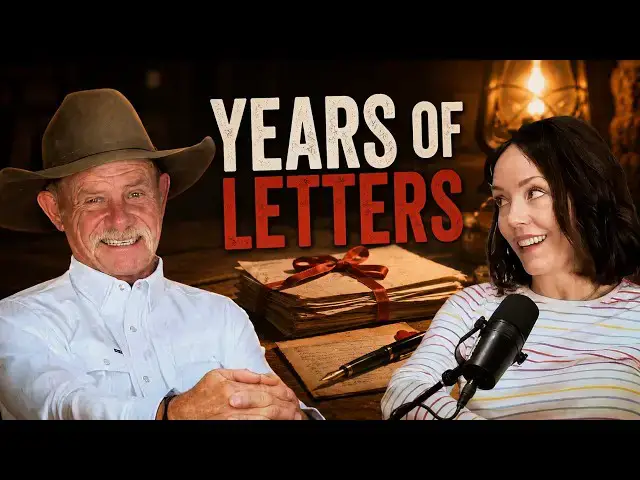
Why are handwritten letters, vinyl records, film cameras, flip phones, and other old-fashioned traditions making a comeback in our digital world? Inspired by the love letters and cards Kent has written Shannon over the years, this episode explores the growing analog revival, digital burnout, dying traditions, and the value of slowing down. Kent and Shannon discuss why a handwritten message carries more weight than a text, what men often leave unsaid, and what are the values and family traditions that are still worth preserving. It’s an honest conversation about love, legacy, human connection, and what we lost when everything became faster and more convenient.
Cowboy Coffee Hour Podcast
Podcast available on Apple, Spotify and your favorite podcast platform!
Check out our BEST SELLING cookbooks. Get your copy here: https://www.kentrollins.com/shop
Also available at bookstores nationwide, and Amazon www.amazon.com/shop/cowboykentrollins
---------------------------------
Connect with us!
https://facebook.com/cowboykentrollins
https://instagram.com/cowboykentrollins
https://twitter.com/Kent_Rollins
---------------------------------
Kent Rollins
Cowboy Cooking, Cast Iron, Outdoor Cooking, Grilling, Dutch Oven Cooking
Show More Show Less View Video Transcript
0:00
I think it's true maybe for men maybe
0:02
more than women. I was sort of raised in
0:04
a generation to where really there was a
0:06
lot of men that didn't show affection.
0:08
>> You can see here I've got a huge box and
0:11
you know what's in here? All the letters
0:13
and keepsakes that you have written me
0:16
over the years.
0:18
>> Oh my gosh.
0:19
>> When the hope of spring seems [music] so
0:21
far away. I love you, Kent. Oh my gosh.
0:23
You need to work for Hallmark.
0:29
Howdy. My name is Kent Rollins. I've
0:32
been a cowboy and a chuck [music] wagon
0:33
cook for over 30 years, cooking for
0:36
ranches all across America. You might
0:38
have seen [music] me on the Food Network
0:39
or alongside my beautiful wife, Shannon,
0:41
on our YouTube show, where we share
0:43
cowboy cooking from the trail. But now,
0:45
[music] we're going to take you behind
0:47
the scenes to real campfire
0:49
conversations. Join us as we share
0:51
humor, cowboy wisdom, and stories full
0:54
of history, heart, faith, and of course,
0:57
a little fire. So, grab you a cup of
0:58
coffee, pull up a chair, and welcome to
1:01
the podcast,
1:07
>> Kent.
1:08
>> Yes, ma'am.
1:08
>> Today,
1:09
>> Uhhuh.
1:09
>> I actually have a visual aid I brought.
1:13
>> Oh my gosh, I like visual aids. Oh,
1:15
food.
1:16
>> No food.
1:17
>> If you are um watching on YouTube, you
1:21
can see here I've got a huge box. It's
1:25
my collectible box. And do you know
1:27
what's in here?
1:28
>> I have an ideal, but I'm not for sure.
1:30
>> All the letters and keepsakes that you
1:33
have written me over the years.
1:36
>> Oh my gosh.
1:37
>> Because Kent is a writer. Um I think
1:41
that's kind of like your love language,
1:43
right? And so I've got letters and cards
1:47
and pictures. You even wrote something
1:49
on a napkin to the best wife ever. Maybe
1:52
I should leave this out and you can
1:53
remember this. [laughter]
1:55
So, why was it important to you to write
1:59
things to me versus
2:02
just giving me a call or a text? Well,
2:04
there were so many times I was in a
2:06
location that there wasn't uh Pony
2:08
Express electricity or anything else,
2:10
you know, and after Cowboys would ride
2:12
out of camp, I'd have some time. I could
2:15
just grab an old piece of paper or even
2:17
a part of an old feed sack and write
2:20
something, you know, because it was a
2:22
lot of times easier for me to write
2:24
something than to actually say it. And I
2:27
learned that I think uh losing my dad
2:29
through cancer, you know, in that big
2:31
long fight and that battle. And I I
2:33
couldn't I didn't really talk to people
2:35
about how I was feeling, but I wrote it
2:37
down. And I think the art of writing
2:40
letters to communicate with people has
2:43
slowly faded away.
2:45
>> Well, that so I I think I was talking to
2:48
somebody or maybe I read an article that
2:50
there is this whole growing movement
2:53
about bringing the art of letter writing
2:56
back. So I thought, hey, let's talk
2:58
about that. and not not only just letter
3:01
writing, but just kind of the old trades
3:03
that have supposedly died out that are
3:05
having this revival. Um whether it's
3:08
just like playing games together or
3:11
sharing food together or taking down
3:14
screen time. So, we're going to kind of
3:16
dive into that in this episode a little
3:18
bit more.
3:19
>> Are we going to read some of them
3:20
letters?
3:20
>> Well, so I'll just So, this first one I
3:22
popped up here. I remember you gave this
3:25
to me with a bouquet.
3:29
>> A shadow box, too.
3:30
>> It was kind of like a shadow box. And it
3:31
was a bouquet of just wild sage. Was it?
3:34
>> Well, it was dead sage and dead broom
3:37
weeds wrapped with a piece of bor twine,
3:40
but then interlaced back through itself.
3:43
Because even in the coldest and hardest
3:46
times of winter, there is beauty. And
3:48
that's what you were to me. And when you
3:50
don't tie a knot in something,
3:52
>> it's never in the way.
3:54
>> It's never in the Oh,
3:55
>> it's not not a burden. Not something
3:57
that's hard on your hands or hard on
3:58
your heart. The only knot I ever tied
4:01
was a knot I tied when I fell in love
4:02
with you.
4:03
>> This is this this episode's going to get
4:06
sappy, folks. I'm going to tell you cuz
4:07
you are very you're very romantic. So,
4:10
this one says, "I love you very much,
4:12
and this little winter bouquet is for
4:14
you." So, you you gave it to me?
4:16
>> Yes. sometime in the winter. Cuz in the
4:18
most barren of times, there is still
4:20
beauty. You, Miss Keller, which was my
4:22
maiden name. Uh, are that beauty amongst
4:25
the darkness and coldest of times when
4:27
the hope of spring seems so far away. I
4:29
love you, Kent. Oh my gosh, you need to
4:31
work for Hallmark.
4:32
>> Well, you I remember, you know, when I
4:35
seen that that morning and I've been
4:36
feeding cows and cold and snowing and I
4:39
rode by there on a horse and got off and
4:41
picked them and I'm thinking, you know
4:42
what would really make this nice if it
4:44
was in a little shadow box. You know,
4:46
>> so I dug around out there in this old
4:48
place I was living at the time, found a
4:49
cigar box, you know, cut the lid out of
4:52
it. Then I found some old strapid
4:53
overalls and glued them in the back and
4:56
stuck them flyers in there with that
4:57
note and center off.
4:59
>> I still have the bouquet, too. I will
5:01
take a picture and put that up there.
5:02
Okay, I'm going to set this down for
5:04
just a minute, but we are actually going
5:05
to come back to this big old box.
5:09
So, I want to go in because I I think
5:11
this is really interesting that we're
5:14
having this revival and I looked up some
5:16
statistics because it says, so this
5:19
shouldn't surprise anybody. 3%
5:22
of the mail we get today are only like
5:25
personal letters. The rest of it is all
5:28
>> junk and bills.
5:29
>> Junk and bills, business communications,
5:33
letters, advertising, stuff like that.
5:35
And so here's what's crazy is I still
5:39
look forward to the mail.
5:41
>> Oh yes.
5:41
>> Don't you? And like I'm sure you at home
5:43
like, "Hey, did you check the mail
5:44
today?" Because even though you know 90%
5:48
of it or even 90% of the time it's just
5:51
going to be junk, you still have this
5:53
like anticipation. And if you think back
5:55
to
5:57
way back in the old Pony Express days
5:59
and when mail was super important, can
6:01
you imagine like the anticipation of
6:03
mail and the importance of it back then
6:05
>> and especially when it was even slower
6:07
than that when it might have took 6
6:08
months to get a letter
6:10
>> and like how special that was. We don't
6:14
mail isn't special anymore.
6:16
>> No, I mean you can make it special if
6:18
you just put the heart and effort in it,
6:19
you know. But one thing too that I got
6:22
to thinking about when we was talking
6:23
about letters, there was over 30 billion
6:25
letters sent in 1945 at the start of
6:29
World War II. 30 billion.
6:31
>> Yeah.
6:32
>> And how many of them folks were waiting
6:33
around a table or waiting for a mailman
6:35
to come by so they could just have news,
6:38
you know, was my child all right?
6:40
>> But it's same way going back to them
6:43
guys over there, all the soldiers, you
6:45
know,
6:45
>> that's all they had to look for.
6:46
>> Oh yes. You know, and it was a great
6:48
day. I can remember my dad telling me
6:49
when he was in the army when mail day
6:51
came, you know, and his mother and his
6:53
brother was always writing him a letter
6:55
and it was like, he said it was like
6:57
having a little piece of home with you
6:59
at the time, you know. So, I'm all for
7:02
letters. I think we should get rid of
7:04
everything else and just, you know, get
7:06
Pony Express back and let's get after
7:07
it.
7:08
>> Here's an interesting fact about the
7:09
Pony Express. I don't know if you know
7:10
it, Kent, but they were primarily made
7:14
all of orphans because it was such a
7:18
hard, dangerous job that they knew
7:20
pretty much these guys weren't going to
7:22
make it. And so if they were orphans, no
7:23
one was going to miss them.
7:24
>> Yeah.
7:24
>> Um I I remember seeing a poster that was
7:28
an old poster advertising orphans
7:31
preferred is what it said as as a job
7:33
posting. So I found some some of these
7:36
interesting facts here. The search for
7:39
quote snail mail clubs are up over 700%
7:45
over the past year.
7:47
>> Snail mail ideas searches on Pinterest
7:49
are up 245% along with letter ideas. So
7:54
we're seeing like this younger
7:55
generation are into these letterw
7:58
writing circles. There's communities
8:01
growing specifically on letter writing.
8:05
One founder of a snail mail club said,
8:07
her name is Alisa, people really crave
8:10
connection, especially offline. So, why
8:15
do you think this trend is
8:17
[clears throat] becoming a trend?
8:19
>> Well, I I think in one way um people I
8:24
think it's a little more personable.
8:26
People want to try to connect. I mean,
8:28
you sit down at the computer and you can
8:29
send an email, but it's not the same.
8:32
It's not like getting a handwritten
8:35
letter. I can remember in grade school
8:37
we had an assignment. You're going to
8:39
get a pen pal. Do you ever have one
8:40
there?
8:41
>> Oh my gosh. Do you remember pen pals?
8:44
>> I that was such a cool day thing. And
8:46
and I remember so I grew up in Nevada
8:49
and we had pen pals in Atlanta, Georgia.
8:51
And so talk about like a total cultural
8:53
difference and that's what I loved about
8:55
it.
8:55
>> But I think it's a it's it's a
8:57
connection people want. They they look
9:01
for that. It's not like being able to
9:03
talk face to face, but it's the next
9:06
best thing to me. You know, when you're
9:08
writing a letter to someone, if it's
9:11
truly something that's coming from your
9:13
heart, you feel it. It's hard to express
9:18
so much of the feelings you have in an
9:22
email and also in writing.
9:25
But my mother always told me when we'd
9:27
get a letter from someone that we hadn't
9:28
heard from a long time ago and she had
9:31
to read it and then we'd go back and
9:32
read it again, you know, because sit at
9:35
the table, you get the letter and you'd
9:36
read it and you'd get to a certain spot.
9:39
Aunt Pat had surgery, you know, then
9:41
there'd be a discussion all the way
9:42
around the table, you know, what's wrong
9:44
with Aunt Pat? I didn't even know who
9:45
Ain't Pat was at the time, you know. But
9:48
it I think it brings about a little more
9:50
sense of I may not be there, but I'm
9:53
pretty close,
9:54
>> you know. In that same sense,
9:55
journaling, I think um I don't know if
9:59
journaling died so much, but I feel like
10:01
it has [clears throat] had a little bit
10:02
of a resurgence, too. You have your
10:04
great grandmother's journey
10:06
>> diaries. Yeah. when she come across the
10:08
river um
10:11
in brick from Breen Ridge, Texas and
10:13
crossed over into Oklahoma on a wagon,
10:15
you know, and um she wrote in that diary
10:18
every day until she went blind, you
10:20
know, and it's
10:21
>> Why do you think that was important for
10:23
her back then?
10:24
>> I think in one way she's trying to
10:26
preserve things that they had, but also
10:28
being able to pass them down to the next
10:30
generation. Uh my mother used to start
10:33
out the year every year she'd write on
10:34
the calendar every day just two or three
10:37
little things windy and cold today but
10:40
so and so come by
10:42
>> on the calendar
10:43
>> on the calendar and uh it's sort of a
10:45
way of like having a diary but you you
10:47
sort of speak of it but
10:50
>> but also it's a reflection for us
10:52
because when when you have read some
10:54
certain passages from that diary
10:56
>> it was hard
10:57
>> oh so hard you know I I remember one one
11:01
instance that she wrote in the diary
11:03
there uh they lived not too far from
11:07
where her her son lived with his wife
11:10
which was half a mile away.
11:12
>> Well, okay. So, let me for those of you
11:14
that [clears throat] might be just new
11:15
to us or or not know this. So, describe
11:18
like the the area and everything of
11:21
where
11:21
>> southwest Oklahoma, not far off the
11:23
banks of the Red River. And uh this was
11:27
before the Dust Bowl. Uh well no this
11:30
would be right after the dust bowl.
11:31
>> Oh right afterwards
11:32
>> when the great depression was going on
11:35
>> and uh aola who was married to Uncle
11:38
Murf which was her my grandmother's son.
11:42
They were expecting a child and she said
11:46
Ola told me she would leave a lantern
11:48
lit in the window that I could see. Now
11:52
this is a quarter mile off
11:54
if she needed help.
11:58
the lantern come on and she needed help
12:00
and she lost that child,
12:02
>> you know, but it's there were hard
12:05
times.
12:05
>> Yeah.
12:06
>> You know, very hard. And um I think by
12:10
because they had no way to communicate
12:12
with people like there was no telephone
12:14
back then, you know, and sure you could
12:16
have saddled a horse and rode up there
12:18
and seen what was going on, but they had
12:20
kin folks in in Franklin, Tennessee.
12:22
They had kin folks in Virginia. And
12:25
daddy said they might get one letter a
12:27
month, sometimes two, but everybody
12:30
gathered around the table and you read
12:32
that letter over and over
12:34
>> and it made you feel like you were
12:35
there, you know. So, um, letters
12:38
[clears throat] are a powerful thing,
12:40
you know.
12:40
>> And not only letters, like we I said
12:43
like this resurgence of kind of old
12:45
school activities, tactics, methods.
12:49
>> Um, this was interesting. In 2025,
12:53
American vinyl sales grew for the 19th
12:56
consecutive year, exceeding 1 billion.
13:00
Also, there's a renewed interest and
13:02
purchasing of film, board games,
13:04
letters, musical instruments. So why
13:09
why is it that we're moving away from
13:12
screen time or why are we trying to I
13:17
think to bring back togetherness to
13:19
bring back a family group.
13:22
Sure, you may you may have worked all
13:24
day in the office and been at a computer
13:26
all day, but when you get home, you got
13:28
to open it up. Break out the Monopoly,
13:31
you know, let's lay her out there on the
13:32
table and let's get everybody to play.
13:34
>> Well, okay. So I would like to ask you
13:36
kind of seeing both sides of this.
13:39
>> You grew up in a in an environment where
13:41
there was no technology. It was very
13:44
family oriented uh one-on-one time
13:48
passing down
13:50
>> to generations skills and memories. So
13:54
what's that like versus now where
13:58
screens and technology have taken o over
14:00
so much more?
14:01
>> Well, I get up on my soap box on that. I
14:03
better not start, you know.
14:05
>> That's why you got a podcast.
14:06
>> Yeah. [laughter]
14:07
I I think one thing that we had back
14:10
then that was so precious
14:13
was
14:14
everybody mattered. Everybody
14:18
even had a responsibility.
14:20
And that all come together a lot of
14:24
times at meal time, which was a lot of
14:26
times an evening meal, you know, at
14:28
supper because maybe daddy and them been
14:30
out working. Maybe we'd just got home
14:32
from school not too long ago, but it was
14:36
a time that
14:38
you got you got to meet
14:41
>> what what was the big activity like? So
14:43
now I think we're we're watching movies
14:46
or we're scrolling on TikTok. That's
14:48
kind of like our downtime. What was your
14:51
downtime activity?
14:52
>> Not getting beat. [laughter]
14:56
>> How'd that go?
14:57
>> I needed more beaten than I ever got.
14:59
You know, I can remember grandma and
15:01
them had one of them big old radios, you
15:03
know, great old big things in a console,
15:06
had the rounded top on it and uh you sit
15:10
in the living room or something. They'd
15:11
turn that on, you know, and you'd catch
15:13
radio shows, you know, and uh when we
15:16
got TV, we had one of them big screen
15:18
TVs. First one we got, I think it like
15:20
13inch black and white and uh it was the
15:24
greatest thing ever. We thought, you
15:26
know, until we found out that Grandma
15:28
Love Lawrence Wil was gonna have to
15:30
watch 73,000 episodes. But
15:33
>> So, you did take to technology then a
15:35
little bit.
15:35
>> Yeah, it was it was very different.
15:37
Nobody had it, you know. Uh I can
15:40
remember uh talking about during the
15:42
poor times and grandmother and them and
15:44
all them, they when they were running
15:47
electricity for the first time, coming
15:49
through there after the depression, you
15:51
had to have $5 to sign up. They didn't
15:54
get it the first trip cuz nobody had the
15:56
money, you know. So when you got
15:58
electrician, you might have one light
15:59
bulb in the house. But after after
16:02
supper, there was always homework. Oh my
16:05
gosh, I I despised homework.
16:07
>> I think homework still exists,
16:08
unfortunately.
16:09
>> And then it was
16:11
do you got your chores done,
16:14
>> you know, and then you might have a deal
16:18
to where hey,
16:20
get the coloring book out. Well, you
16:22
guys like as a family you guys did you
16:24
were big on dominoes, right?
16:26
>> Yeah, dominoes and cards.
16:27
>> Okay. What were the card games?
16:29
>> Well, we played a lot of Rummy.
16:31
>> Okay.
16:31
>> You know, and then Daddy and some of
16:33
some of the older people, they um they
16:36
played a card game called Rook. Had a
16:38
black crow on it. I never did play it.
16:41
But we played a yacht like yatsi.
16:43
>> Yeah.
16:44
>> You know, we had a lot of that. And um
16:47
there was some board games. Not a lot. I
16:51
can remember when we got Monopoly, you
16:53
know, we thought that was the grandest
16:55
thing ever in the world. But I think
16:57
that was a time where
17:00
family got together. You you cleared off
17:03
a table. There might be a group of old
17:05
men over here on one side of the room
17:06
that was playing dominoes and then or
17:08
maybe the kids was playing something
17:10
else, some kind of card game or working
17:12
on a jigsaw puzzle. They was pretty
17:14
popular at the time. But everybody was
17:18
just
17:19
in usually one room and it was all about
17:23
visiting, having a good time, and then
17:26
mom would ruin it.
17:28
>> Why would she ruin it?
17:29
>> Time to take a bath. [laughter] Go to
17:31
bed.
17:31
>> Bath time.
17:32
>> Yeah. And uh me being the youngest, I
17:34
got to use the same bath water that
17:36
everybody else had. So you didn't waste
17:37
none, you know. So um I think back then
17:41
things were a lot simpler. Um, and it
17:44
wasn't just that it affected our family
17:47
or I shouldn't say affected, I'd say
17:49
blessed the methods and the ways and the
17:52
means that we got to to go through life,
17:54
you know.
17:55
>> So, I think it's like this this
17:57
nostalgia vibe that everybody's feeling,
18:00
but it's weird because it's nostalgia
18:02
that nobody else has experienced, right?
18:05
So, I mean, and I'm talking about like
18:06
these these younger generations that are
18:08
creating these revivals, which is
18:10
interesting. They're creating the
18:12
revivals of things that they don't have
18:14
a memory of necessarily. So why is that?
18:19
>> I think they they're grasping at
18:22
something they wish they had. They
18:24
missed out. I think the generations
18:26
today have missed out on a lot of
18:27
things. And there was hard times, but
18:29
they were good times also. And they they
18:32
want to they want to know how I remember
18:34
a lot of people when I thought I was
18:36
getting old, you know, 15 16 years old.
18:39
And uh people
18:39
>> in your wise years.
18:40
>> Yes. And people would some of them
18:42
native kids that come to visit that were
18:45
from out of state, you know, that didn't
18:46
have a clue what was going on on a
18:48
farmer ranch deal and they'd say, "How
18:49
do y'all survive?" You know, uh how far
18:53
is it to town? Can we go to town? you
18:56
know, and I I think the generation now
19:00
that's grew up in this wishes they could
19:03
slow down a little,
19:04
>> you know, and I think that's why they're
19:06
looking back and thinking, hey, these
19:08
such hard times, such bad times. These
19:10
were times where maybe life was at a
19:12
slower pace to where we could see it all
19:14
a little clearer than what we do now and
19:17
even have a better time doing it.
19:19
>> What I've noticed is the lack of focus
19:22
and attention. And I especially noticed
19:25
that and even from like a business sense
19:28
I have noticed that our attention span
19:31
sure
19:32
>> has lessened so much. Even mine I'm like
19:34
what? You got to entertain me and you
19:36
got to entertain me in 01 seconds. So
19:38
what are you going to do?
19:39
>> It's pretty quick.
19:40
>> So that's what I think is interesting.
19:42
It's it's these older activities
19:45
that we're looking at are creating more
19:49
focus. Yes.
19:50
>> More time. more energy where it's not so
19:54
multitasking
19:55
because I have a huge issue with
19:57
multitasking and I think that's a lot of
20:00
environment and the technology that
20:03
creates that
20:05
>> you know you always seen that deal to
20:08
where there was the tortoise and the
20:11
hair in the race you know uh
20:14
>> I was I think our generation we could
20:16
run as fast as anybody
20:19
but you miss so much by going so fast
20:22
and being in such a hurry and that
20:25
turtle got to see it all.
20:27
>> You know, you don't walk around life
20:29
with your head tucked back under that
20:30
shell. If you slow down, take time,
20:35
you're going to learn a lot more, you're
20:36
going to live a lot more, and I
20:38
guarantee you'll have a better time.
20:40
>> Like, if you just look at like playing
20:42
cards,
20:43
>> Oh, yeah.
20:43
>> that creates an intentional one-on-one
20:47
interaction. So, you can't you
20:49
physically can't be checking your phone
20:52
or doing something else like you have to
20:54
engage with that person and with that
20:56
card game. Yeah.
20:57
>> When we're on Facebook or we're
20:59
messaging or we're texting somebody, it
21:02
doesn't require that one-on-one
21:04
connection cuz I can be texting
21:05
somebody, I can be cooking something,
21:07
and I can be watching TV all at the same
21:08
time.
21:09
>> That's
21:09
>> not successfully on on any of those,
21:12
[laughter] but that's what happens.
21:14
>> Yeah.
21:14
>> Right. Um, the thing that I really love
21:19
about this new resurgence
21:22
is the permanence of it. And what I mean
21:26
by permanence is Ken, if you write me a
21:29
letter, that is something tangible that
21:33
I have, that I can hold, that I can put
21:36
away and get back and reread. I'm not
21:39
doing that with a text message.
21:41
Well, uh I [clears throat] think a lot
21:44
of it too say somebody sends let's say
21:46
they send you a Christmas card and
21:48
everybody loves to get a Christmas card.
21:50
No, I mean and it's got a really special
21:52
message with it. A lot of times you get
21:55
a magnet and you'll stick that card on a
21:58
refrigerator or something and it may
22:00
stay all year.
22:02
You get a text message somewhere, I hope
22:04
you're feeling better. See you next
22:05
week. You know, don't mean I mean it's
22:08
just one of them deals. It's cuz it's I
22:09
think we've got too convenient
22:11
>> or like think about the old recipe
22:14
cards.
22:14
>> Oh yeah.
22:15
>> I have some that from like my grandma
22:18
and it's the old and they're printed.
22:20
It's like from the kitchen of Nana and
22:24
you got the old card and maybe it's
22:25
stained. It's got Nana's spaghetti
22:27
recipe all over it and you're like this
22:29
is, you know, [clears throat] this is
22:31
tangible. This is I can hold it and I
22:33
can feel it. Even like cookbooks are the
22:35
same way. You don't get the same
22:36
feeling. like it's super easy if I go
22:39
online and I'm on a website and I look
22:40
at the the the recipe,
22:43
>> but it's not it's it's not the same even
22:46
with like photographs. Um, how many of
22:50
us are constantly taking
22:53
shots with our phone?
22:55
>> Oh,
22:56
>> has anybody ever printed those out?
22:58
>> You know, in my bill fold still to this
23:00
day, I have a a photograph in billfold.
23:04
so long ago they had a little photograph
23:06
index deal in there, you know, stick
23:08
them in the little plastic deal. You
23:09
might have five or six pictures in
23:10
there.
23:11
>> Oh my gosh, I remember those. Yes.
23:13
>> And I I carry I carry a picture of you
23:16
and the Beagle and Major
23:18
>> on top of my driver's license.
23:20
>> You know,
23:21
>> that just tells you how much things have
23:22
changed. I don't even know if they make
23:24
wallets. I think wallets always came
23:27
with that insert with the flip photo
23:29
thing. Yeah.
23:30
>> Because that tells us like photos were
23:32
so important. They were special
23:33
>> and and and just the it was that again
23:35
that physical thing you had to go you
23:37
had you had the physical film you had to
23:39
go have it developed. Now we have
23:43
billions more photos more access to
23:45
photos. I I don't even know how many
23:47
photos I have in my phone. I've maybe
23:50
printed out one or two. Um so it's a
23:54
it's weird, right? It's a weird balance.
23:56
We have so much more access yet are we
23:57
even taking advantage of that access?
24:00
>> Well, and do you carry it with you
24:01
everywhere?
24:02
You can carry a phone in your pocket,
24:04
but is that picture in your heart? When
24:06
you take a picture of someone and you
24:08
either print it out or you got it in a
24:10
frame, you captured that moment in a
24:12
special way and it'll never leave your
24:16
mind cuz you can walk by there every day
24:18
through the house and I see a picture of
24:19
the beagle that we took. You know, we
24:23
got cards and letters a lot of times and
24:25
what made some of them so special was
24:28
they had pictures in them. Oh,
24:31
>> you know, they would send them old
24:33
Polaroids. You remember them snapshot
24:35
cameras and stick her out. You know,
24:37
>> those were great
24:38
>> and stick them in that envelope, send
24:40
them with you.
24:41
>> You know, me and Uncle Leroy, we're at
24:43
Beaver's Ben State Park. We just want to
24:45
show you this picture.
24:46
>> We weren't there, but we could see it.
24:48
>> And then you would read the letter of
24:50
what all went on. They caught some fish.
24:52
It was nearly as good as being there. We
24:54
didn't have to clean them.
24:55
>> We talked about this in a previous
24:56
episode on how to fix things. And this
24:58
kind of goes along in the same avenue of
25:02
the competency that we've had like where
25:06
you know we're we're sharing letters,
25:08
we're sharing time and but we're also
25:11
sharing skills.
25:12
>> Yes.
25:12
>> Um you talked about like passing down
25:15
certain skills um how to sew, how to
25:18
mend something, how to fix the tire, you
25:21
know, I'm hoping that that aspect of the
25:23
revival is also coming back. Are you
25:25
seeing that? Do you think
25:27
>> I think so in some ways there's uh
25:30
people are trying to be a little more
25:31
self-reliant
25:33
and uh I know when that podcast come out
25:36
about how to fix things and one guy left
25:38
a comment he said you know we ain't got
25:40
to know how to fix it you got to just be
25:41
smart enough to pull up YouTube
25:44
>> and I think there's a lot of truth to
25:45
that I and and I said that in that
25:47
episode that was the main lesson I
25:49
wanted to say you don't have to know it
25:51
but you need to know how to find it
25:54
>> or who to call
25:54
>> and who to call. Yeah. Who's going to be
25:56
your lifeline?
25:57
>> Um, okay. I'm going to go back to the
25:59
box.
26:00
>> Oh, yes, ma'am.
26:00
>> Can I pull that back up?
26:01
>> Yes, ma'am. And you know, I want to tell
26:03
people something, too.
26:05
>> It doesn't have to be a special
26:07
occasion. It can be a Monday. It can be
26:11
a Friday
26:13
to send somebody a letter or a card. I
26:16
mean, sure, everybody likes to get a
26:17
phone call, but when you can take the
26:20
time to sit down and a lot of them
26:22
letters that I wrote you so a long time
26:24
ago was with pencil.
26:26
>> When did you start writing to me?
26:31
>> The day after you give me your address.
26:33
[laughter]
26:34
>> Well, but why, like you kind of said
26:36
this before, I want you to go a little
26:37
deeper. Like why was writing so
26:40
important to you? because it it it you
26:44
could have easily done something else.
26:47
>> Well, one, you live a long way away. And
26:50
number two, I was busy. I was cooking on
26:52
one ranch from the next ranch to the
26:54
next ranch.
26:54
>> Yeah, but letter writing takes so much
26:56
longer than like, hey, the text message
26:59
like, hey, hope you're doing well.
27:00
>> Okay, let's get back to them 350,000
27:03
acres where Maul Bale never did visit to
27:05
put up a telephone wire. And you climb
27:07
around on top of the wagon and hold the
27:08
phone in 14,000 directions wishing you
27:11
could call someone that you loved and
27:12
you can't. And dishes is washed. It's
27:15
5:00 in the morning. The lantern's lit.
27:17
It's cold. I got a cup of coffee. I'm
27:19
sitting by Bertha. And what? There's a
27:21
notebook there.
27:22
>> Let me back up because for people who
27:24
don't know, you are you started writing
27:28
really a lot. I remember when you would
27:30
go on ranches.
27:31
>> You were living in Oklahoma. I was
27:33
living in Denver at the time
27:36
>> and so you're on these ranches.
27:39
>> You are taking a step back in time.
27:41
>> Yeah.
27:41
>> Because everything is um no
27:44
[clears throat] electricity, no running
27:45
water.
27:46
>> Good times.
27:46
>> You're cooking with fire, coals. You're
27:49
probably 70 m from a paved road.
27:52
>> Yeah. And ain't no mailbox.
27:53
>> And once you do your tasks of cooking
27:55
and cleaning and everything, there is a
27:56
lot of quiet downtime reflection, which
27:58
is good.
27:59
>> And that's when you start writing. I I
28:01
pulled up this one.
28:02
>> Uh-oh. This is uh
28:04
>> Is it in pencil?
28:05
>> No, it's in it's and look like look at
28:08
that. It's I don't know if you guys can
28:10
see it, but it's in your You have
28:13
actually pretty good handwriting, but
28:15
it's in old notebook paper that you tore
28:17
out. You have Monday, November 30th at
28:20
the top. Um well, darling, I went to bed
28:24
last night thinking of you. There wasn't
28:26
a breath of wind, not even a tarp
28:28
flapping anywhere. you know that quiet
28:31
that is sort of like darkness. It just
28:33
seems to go on um forever.
28:37
Not even an old coyote howling. So this
28:40
is what this was my blessing from these
28:44
because you transported me to where you
28:47
were.
28:47
>> Yeah.
28:48
>> And the camp. And I think that's what
28:51
writing does. And I remember I would
28:55
open these and I would I would smell
28:58
them because they smelled like campfire
29:00
>> wood smoke.
29:01
>> Yes. And I thought, "Wow." Like you This
29:04
was literally transporting me to where
29:06
you were. Oh, you even have them like
29:08
numbered at the bottom here so I knew I
29:11
wouldn't lose track of what page. This
29:12
one was Is this one letter? This like
29:14
look at that. That was a lot of writing.
29:16
You did.
29:17
>> Must have been a slow day that day. No.
29:19
But it's it was a way for me to express
29:23
my feelings when I couldn't reach out
29:26
and hold you and to really tell you in
29:29
person what you meant to me, how I got
29:32
through the long days, you know, the
29:34
very short nights. And it's
29:38
I've still got letters from my mother. I
29:41
have
29:41
>> Did you?
29:41
>> Oh, yeah. There's to me there was
29:45
nothing more personable
29:47
than getting a letter from someone that
29:49
you dearly missed and you dearly loved
29:51
and you think I can't wait to see them.
29:54
And so many times I'd write I remember I
29:57
wrote so many letters on one ranch and I
30:00
went to the post office you know and I
30:03
had an old hat
30:06
and I sent you a hat and a whole box of
30:09
letters.
30:09
>> Mhm. And I remember the the
30:12
>> because I would I wouldn't get these
30:13
usually like one letter at a time. No,
30:15
because you would write these and store
30:17
them and then whenever you got to town
30:18
or could had the ability to mail them
30:20
out, then I would get a big old box of
30:22
them.
30:22
>> And I remember taking it up there to the
30:24
little postmasters woman and she said,
30:27
"Has this box been on fire? It smells
30:29
like bad smoke." And I said, "Pretty
30:31
close to it." You know, but when they
30:34
when you got those letters, it's like
30:37
say it transformed you to a place that
30:39
you weren't in.
30:41
>> You could you could smell it. You could
30:43
see it.
30:44
>> And like look at this. I can hold this.
30:46
This isn't just like my phone. I mean, I
30:48
like I said, I've got um letters. I've
30:51
got cards. There's pictures in here like
30:55
there and just like little bitty like
30:58
you made your own card here
31:00
to a lovely lady who makes every day a
31:03
perfect day.
31:04
>> This guy must
31:05
>> So, how does it how does it feel that we
31:07
like that you can see your work here?
31:12
>> Well, it's not finished.
31:15
I I write you something a lot. Like if
31:17
we're apart, I'll I'll write you
31:18
something nearly every day. I've always
31:20
and I think it's true maybe for men
31:22
maybe more than women and I I don't mind
31:27
speaking out loud to anyone in the world
31:28
telling you how special you are to me or
31:30
how much showed love but to a lot of men
31:32
that's hard. I think it's might be
31:34
easier if you're having trouble telling
31:38
your significant other what she really
31:41
means to you and you can't just walk up
31:43
to her and say, you know, I want you to
31:45
sit down. I got something to tell you.
31:46
You're the most beautiful person I ever
31:48
met in my life. If it wasn't for you, I
31:50
couldn't face another day. If you can't
31:52
do something like that, write it down.
31:54
>> Well, that's a great thing you
31:55
mentioned. Let's let's dive into that a
31:57
little bit deeper.
31:58
>> Uhoh.
31:58
>> With kind of this idea of the things
32:00
that maybe men leave unsaid because when
32:03
I think about letterw writing, I don't
32:05
necessarily connect that to like a male
32:08
or necessarily like masculine kind of
32:10
trait, especially in this sense where
32:13
it's kind of more like love letters and
32:15
emotional feelings that you're
32:17
expressing. Do you think like one for
32:20
you and then also men in general is
32:22
writing something down and sending it
32:24
easier than saying it face to face?
32:27
>> I think for some people it probably is.
32:29
>> No, I'm not people. I'm talking about
32:31
men. [clears throat]
32:31
>> I think for some men it is. Yeah.
32:33
>> Because
32:36
I was sort of raised in a generation to
32:38
where really there was a lot of men that
32:39
didn't show affection.
32:40
>> Right.
32:41
>> There wasn't a lot of hugging, you know,
32:42
and I sort of
32:44
>> Did you talk about feelings? Oh, you
32:46
talk about if you felt bad or, you know,
32:48
>> well, like if you have a sore throat,
32:50
but it's not like, hey, I'm having a
32:51
hard difficult time. It wasn't like
32:52
that.
32:53
>> I didn't to my dad. I I talked to my
32:55
mother about it, you know. Uh, but I
32:58
think it's so
33:01
hard sometimes for men, especially if
33:05
they didn't know that growing up, if it
33:06
wasn't instilled in them, you know, that
33:10
outward spokenenness of love and care
33:14
and understanding.
33:16
And some people I know I I've had people
33:20
that I've hugged that I don't think
33:21
they've ever had a hug before. a man,
33:23
[clears throat] you know, they're like,
33:25
you know, hugging's good. You know, it's
33:29
u I always tell people if I meet
33:31
somebody, I say, I'm a hugger. And you
33:34
love every day like it's the last day
33:35
you got because you never know. But I
33:38
think for men, it's probably easier for
33:40
some men to write out some words. And it
33:43
might even be easier for them to stick
33:45
it in a mailbox than to actually walk up
33:47
there with their hand shaking and give
33:48
it to them, you know. Do you think there
33:51
is a [clears throat] more importance on
33:52
the ability to talk about your feelings
33:56
versus writing your feelings or is it
33:58
okay just as long as the feelings are
34:00
getting out? Does it matter?
34:02
>> Well, I think first it you have to deal
34:06
with courage in some of it. You you
34:09
can't store all these feelings whether
34:11
they're of anger, anxiety, fear, love,
34:16
them are put in you for a reason, for
34:19
you to relay them, for you to share
34:21
them. And
34:24
I don't know, to me, what brings me more
34:27
gratification is probably to write you
34:30
something and then to read it to you.
34:33
[clears throat]
34:33
>> Oh, for you to actually read it to me.
34:35
Oh, interesting. because I it I want you
34:38
I mean I know when you read it a lot of
34:40
and I ain't got the best penmanship in
34:41
the world you know sometimes you might
34:43
think you know this word is not in the
34:46
dictionary I don't even [laughter] know
34:47
what this word is but I've when I go
34:50
through it I think it's a way of
34:52
translation where there's nothing lost
34:55
like when you got all these letters
34:56
there and you read them I tried to and
34:59
I'm not at the time I'm not a I wasn't
35:01
the greatest writer in the world um but
35:05
I I tried to paint you a picture and
35:07
tell you exactly what you meant and show
35:10
you what was exactly going on in life.
35:13
>> Mhm.
35:14
>> And I think if you're having trouble
35:16
communicating,
35:18
uh, and it could be with your brother,
35:20
it could be with your sister, could be
35:21
with somebody you love or somebody you
35:24
know, hey, I met you, but you know,
35:26
>> I really don't know if we're on the same
35:28
page in life. And
35:30
>> I mean, don't write them an angry
35:31
letter. You know, I've had some of them
35:33
from school teachers, but [laughter] and
35:35
I had take them home to mama and that
35:37
was not good either. But it's
35:40
expression
35:42
is more and it's just not the expression
35:44
on your face, it's the expression on
35:46
your heart. And my mother told me,
35:48
"Where is your heart?" I said, "It's
35:49
right here, mama. What is connected to
35:52
your heart?" I said, "Everything."
35:54
She said, "Your hands are an extension
35:56
of your heart. When you put that pencil
35:58
in your hand or you put that rolling pin
36:00
in your hand, let it come from your
36:02
heart. I did not do well in high school
36:06
in any kind of literature or writing.
36:10
Made a D in speech class. I didn't like
36:13
to write and it would take me forever to
36:16
write something, you know, whether it
36:18
was a book report or anything else. But
36:20
I think going through some tragedies in
36:23
life, losing my dad, losing a lot of
36:25
things, there was in some ways writing
36:29
it down, [clears throat]
36:31
helped me get through it. So if you're
36:34
having trouble communicating with
36:36
someone and you don't think that you can
36:38
just go face to face, write it down.
36:42
I think for men specifically, um, you
36:46
the way that you express love and
36:48
support is through physical action, like
36:51
I'm going to go clean the yard or I'm
36:54
going to go get your oil changed, things
36:55
like that. So, those are very important,
36:57
but there maybe is a disconnect on the
37:00
actual emotional feeling expression.
37:04
>> Do you do you agree with that?
37:05
>> I do. I I I think you're you're you're
37:08
right. Hit the nail right on the head.
37:10
>> Yeah. you know, um I do a lot of
37:14
housework. Always have. Do a lot of
37:16
laundry, do a lot of cooking. Is it a
37:18
form of love? Yeah. But I think
37:22
sometimes you need to step back and look
37:23
at it and think what love really is. You
37:27
know, caring, compassionate, kind,
37:31
having a lot of humility,
37:34
but also taking pride in what what you
37:36
have and what you have together.
37:39
I'm going to say there is maybe
37:41
something that the newer generations are
37:43
getting better or getting right
37:47
better than the previous generations.
37:48
>> And what is that?
37:49
>> I think it is expression and emotional
37:54
needs,
37:55
communication. Do you think that's true?
37:58
>> In some instances, I do. Um maybe they
38:02
had more to work with, more technology,
38:04
more things. Um,
38:06
>> I think it's okay. Like now society
38:10
and I think we have to be careful
38:12
because sometimes it feels like we kind
38:14
of go on extremes, right? It's like
38:16
we're either not talking about our
38:17
emotions at all or we're talking about
38:19
everything we feel and it's just like
38:20
this big huge brain emotional dump. It's
38:22
like, well, we don't need all of that.
38:25
But uh I think it is social and
38:28
culturally
38:29
more common and accepted to express how
38:34
you feel and to acknowledge how other
38:36
people are feeling. I feel like it's
38:37
it's just a way more open.
38:40
>> I think that comes with generations.
38:42
>> Oh, absolutely.
38:43
>> Yeah. And it's uh
38:46
way it's been handed down to you. Rural
38:48
communities, when I was growing up,
38:49
everybody knew everybody else. You'd
38:51
have to write somebody a letter. You
38:52
either get on a bicycle, ride horses, go
38:54
down there and tell them what you was
38:55
going to tell them, you know. But I am
38:59
[clears throat] I am so proud in the
39:01
fact that
39:03
I got letters in the mail and I wrote
39:06
letters to people. You know, I think if
39:10
I had that something that I'd like to
39:11
tell people today is
39:15
when you get through listening to this,
39:17
wherever you're at, I want you to think
39:19
of someone, somebody, and I want you to
39:22
sit down and I want you to get a piece
39:25
of notebook paper. Do people even still
39:27
have notebooks?
39:28
>> Oh, absolutely.
39:29
>> Okay. Get your ink pen or your pencil
39:31
out and write them a letter. Let them
39:35
know you care. tell them what's going
39:37
on, how the kids are doing. Did the dog
39:40
dig up the flower bed today? You know,
39:42
but just just the fact if you can go cuz
39:45
my mother would write her sister a
39:48
letter once a week
39:49
>> in Still Water, you know, and she talked
39:51
to her every night, but she wrote
39:54
>> but she wrote a letter every week to
39:56
Cente Charlotte, you know, and I I
40:00
wished we would get back to that. And
40:02
I'm so glad that when you brought up
40:04
them little percentages of how much
40:06
things have grown, you know, simpler
40:09
times in life to me are some of the best
40:11
times there ever were.
40:12
>> Well, and here's the thing that I want
40:14
to point out, too. Think when we look at
40:16
nostalgia and memories and looking back,
40:18
we paint this a little more of a perfect
40:21
world. Like, oh, the bygone era rockar.
40:24
>> Yeah. Wasn't it so great back in the
40:26
day? And that's not that's not really
40:28
true, right? like we we fantasize this
40:30
and we romanticize it a little bit.
40:32
Times were hard back then and okay,
40:34
yeah, they wrote letters and they got
40:36
that one right, but there was a lot of
40:37
other things that that were hard. So,
40:41
when we're moving forward now, uh we're
40:44
it's great like these things that we
40:46
need to preserve and and bring back is
40:48
great.
40:48
>> We remember those things, but it's also
40:51
um I think it's just recognizing now
40:54
where we're at and maybe just slowing
40:56
down a little bit. What can we pull from
40:58
the past now that to to incorporate?
41:02
Let's slow down. Let's put down the
41:04
screen a little more. Let's write a
41:06
letter. Let's learn learn a new skill.
41:09
Let's play a card game with somebody.
41:11
>> I got to thinking too when you're saying
41:13
that. I can remember
41:16
probably fifth grade all the way up
41:18
through freshman in high school.
41:21
It was part of your grade in English
41:23
class. You had to write a letter, you
41:25
know, dear Mr. or Mrs. So and so comma
41:30
indent come over we hope you know and
41:34
mine got so many D's because I was not a
41:37
good letter writer and I didn't know how
41:40
to spell sincerely yours
41:41
>> that's a tough one
41:43
>> and uh there wasn't spell check back
41:45
then that just fixed it when you went
41:47
>> that's one thing we got to
41:48
>> there was a red check mark
41:50
>> we got to give it to a good old word now
41:52
that they can check us on that
41:54
>> but you think they still does Anybody
41:57
have to write a handwritten letter in
41:59
school now?
42:00
>> So I And are they still teaching
42:03
cursive?
42:03
>> I don't know.
42:04
>> I'm not exactly sure. If you guys have
42:06
young kids in school, are they still
42:07
teaching cursive now? I remember when I
42:10
was I think I was maybe in fourth grade
42:12
and I was going to write a letter to my
42:14
grandmother in Idaho. This was my dad's
42:16
mother. And so I wrote this letter of
42:18
like what was happening in school and
42:19
all this stuff and I was so proud of it
42:21
and it was like three pages and I
42:24
remember my dad looking at it and like
42:26
okay great but you need to rewrite it
42:28
because your handwriting isn't as good
42:31
or you need to fix this or whatever. I'm
42:32
thinking, okay, I had to rewrite that
42:34
thing like five different times. And I
42:35
remember being so mad at him like what's
42:37
the big deal? It should be about the
42:39
message and the point of it. [laughter]
42:41
But I get it because it's like it's it's
42:43
I think it was an old school thing too
42:45
like she you know learning to write
42:48
properly and and good penmanship that
42:50
was super important now and now I mean
42:52
gosh we know like going to the doctor
42:53
it's all just like scratches.
42:55
>> So there's maybe something to say about
42:58
like just taking also taking the time to
43:01
do something well
43:03
>> yes
43:03
>> is also equally important. So
43:06
>> sometimes when I when I wake up at
43:08
night,
43:09
uh I write something to somebody, you
43:12
know, on the community tab on YouTube. I
43:14
write a story every Sunday,
43:15
>> you know, but and you asked me the other
43:19
day, where do you come up with these?
43:21
You know,
43:22
>> it's from things I think about from the
43:24
past, but also things that I think
43:27
people need help with. And not just
43:30
people, me also, you know, but
43:35
I would dearly love for the Pony Express
43:37
to come back. I really would.
43:38
>> I mean, it'd be pretty exciting having
43:40
your letter show up on horseback.
43:42
>> Yeah. And uh you get everything in the
43:45
work. We talked at the first. You get
43:46
everything in the mail today. 90% of it
43:48
throw in the trash,
43:50
>> you know. Um but I always look forward
43:54
to that letter or that card more than
43:57
anything. You know, we've got a dear
43:59
friend, a lot of them out there close to
44:01
San Francisco, and they always have the
44:03
best Christmas cards ever, you know, and
44:06
that's that's what it's about to create
44:09
something like you're sharing part of
44:11
your life with us.
44:13
>> And you know what, the postcard, let's
44:15
bring the postcard back because that's
44:16
an easy in that you don't have very big
44:19
space to write in. No,
44:20
>> but it's just a cool like, hey, we went
44:22
here or even from your hometown or
44:24
whatever, just a little note. And so
44:27
maybe that's like can we give you a
44:28
little like lasting message is just be a
44:32
blessing for somebody today
44:34
>> and write something and send it to them
44:36
because think about out of the blue you
44:38
get some note from somebody a friend
44:41
maybe somebody you haven't even heard
44:42
from for a while
44:44
>> and what what joy that can bring and
44:46
what little effort that maybe took to to
44:50
share that blessing. So that's what I
44:52
would like to leave everybody with.
44:53
>> And like you said about Nana, you got a
44:57
favorite recipe on an index card or
45:00
write one out, make it somebody. It's
45:02
easier than taking food over. You didn't
45:04
have to cook it. They can cook it
45:04
theirel and then they can invite you.
45:06
You know what I mean? But write it down.
45:10
It
45:10
>> write it down so it doesn't get lost.
45:13
>> Yeah. And if anymore I have to like
45:16
write it down so I don't forget it.
45:18
>> It comes along comes along pretty happy.
45:20
But
45:22
if you could write a letter today
45:27
to the people,
45:29
let's say from generations past, hundred
45:32
years ago, and you you wrote a letter to
45:34
them, would it say, "I wish y'all could
45:37
see what we have now," or would it say,
45:39
"I wished I could get back to what y'all
45:42
had then?"
45:42
>> Oh, interesting.
45:44
>> Know what I mean?
45:45
>> It's a good point. I don't know. What is
45:46
What's your all's answer?
45:47
>> I'd back up.
45:48
>> Yeah. rear view Mary be a good thing.
45:51
Well, we sure enjoyed this today. I like
45:54
letters and Shan got a box full of them.
45:56
There's probably two or more boxes up
45:57
there she didn't bring down. Take time
45:59
in your life to enjoy it. And like Shan
46:03
said one time, celebrate the little
46:04
things in life.
46:06
>> Write a letter. Show someone you care.
46:09
Knock on the door. Take a plate of
46:11
biscuits over there. Okay? But we all
46:14
need to be better neighbors. And we
46:16
thank y'all so much from the bottom of
46:17
our hearts for taking time out of your
46:19
busy day, whether you watch us on our
46:21
YouTube channel or you're listening on
46:23
Spotify or Apple. Don't forget, every
46:25
Sunday there is a new podcast. Every
46:27
Wednesday there is a new cooking video.
46:30
But we thank you [music] so much. But it
46:32
is with pride, privilege, and honor that
46:34
I tip my hat to all the servicemen and
46:36
women, all the veterans that have kept
46:38
that old flag of flying. We commend you.
46:40
We do. And we lift you up in prayer
46:42
daily. Darling, thank you for being my
46:44
love. Thank you for reading them
46:46
letters. God bless you each and
46:48
everyone. We'll see you down the podcast
46:49
trail. [music]
46:58
[music]
47:00
Pioneer
People & Society