live_tv
Livestream Starting Soon
00
Hours
:
00
Minutes
:
00
Seconds
Up next in 10



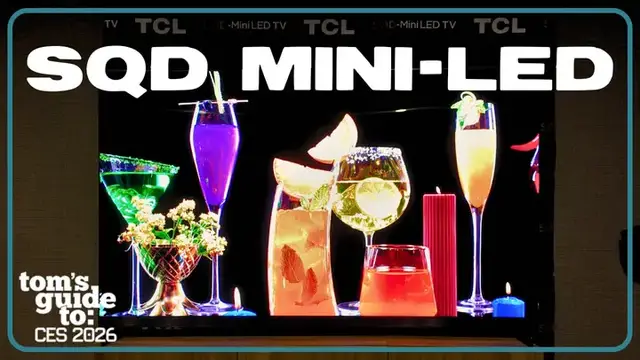
TCL’s new SQD Mini-LED TV is making display technology headlines at CES 2026. In this episode of Tom’s Guide to CES, Kate gives you an early look at the TCL X11L SQD Mini LED TV in context of how it compares the RGB TVs you’ve been hearing so much about. She shares first impressions from her hands-on demo, the TCL X11L sizes and specs, plus everything else we can expect to see from TCL TVs this year.
Show More Show Less View Video Transcript
0:00
Hey guys, just ahead of CES, I got to check out what feels to me like TCL's most ambitious TV
0:07
launch to date. In this video, I'm excited to introduce to you the TCL X11L SQD Mini LED
0:14
because this TV is doing something a little different. I think it makes the most sense to start with what is SQD Mini LED. SQD is super
0:29
quantum dot, so still mini LED, but just basically souped up. There are three parts to what
0:35
distinguishes SQD from QLED or more traditional mini LED. First, new quantum dots, reformulated
0:42
bigger, and allegedly capable of 100% of the BT 2020 spectrum, which is the standard for color
0:48
space for HDR content. Then, TCL developed a new CSOT Ultra color filter that controls color
0:56
pixel by pixel up to 4,000 pixels per dimming zone. Finally, software-wise, the X11L runs a
1:03
color purity algorithm that keeps colors consistent even in bright whites. It's probably important to give you guys some context of SQD Mini LED being TCL's answer to
1:16
all of the RGB hype you've been hearing lately. TCL actually is making an RGB TV
1:22
More on that later in this video, but SQD came from hopes of actually making something better than RGB Instead of blue LEDs plus quantum dots RGB Mini LED uses red green and blue LEDs directly That promises bigger color volume
1:38
wider OLED-esque viewing angles, and color saturation that can approach 100% of BT 2020
1:44
Note that most of the TVs that come into this lab that we test on our bench don't even hit 90%
1:49
But the trade-off to RGB is control. And I say that not based on my personal viewing experience
1:56
there simply haven't been enough extended hands-on testing opportunities with any RGB TV
2:02
and they're just not mainstream in the U.S. market yet. But technologically speaking, because RGB LEDs have to mix colors to make white
2:11
they need a little bit more space to do so, which can lead to color blooming or color overlap
2:15
also called crosstalk, actually making colors look more muted and blend into each other more than what you would like
2:22
TCL says that the elements of SQD that I already outlined should help avoid that very color crosstalk
2:29
and visually from what I did get to see, it actually does kind of check out
2:33
I wasn't able to film some of the most telling demos. What you're seeing here in the video is basically just a sample model running the same stock footage
2:42
But in those more interesting demos, what I saw was really clean contrast between bright, bold colors, greens, reds
2:49
you know, colors that typically challenge TVs. And not only that, the blacks look deep
2:54
neon colors pop without that bleeding, logos look sharp, it was a noticeably more vibrant picture next to TCL own RGB mini LED prototype Side note that one actually looked pretty great though too because it uses that same new ultra color filter that we getting on the
3:10
SQD model. But an unnamed competitor RGB set next to it looked a lot more muted, especially in those
3:18
darker scenes. TCL said that comes down to having made a color filter designed to keep up with SQD
3:25
One big thing I noticed was the competitor RGB crushing blacks while the X11L kept detail and color
3:33
It was a truly phenomenal demo. Now I'm not saying that SQD is objectively better than RGB
3:43
This was a demo orchestrated by TCL. And again, we just really haven't had the chance to get RGB or now SQD into objective testing environments
3:53
Hopefully that will change this year, so make sure you're subscribed to the channel
3:57
I'll just leave it at that. In the meantime, there actually are a couple of other specs I can share about the X11L at this time
4:04
It uses TCL's new WHVA 2.0 panel, which claims to improve viewing angles, contrast, and uniformity
4:11
It features up to 20,000 dimming zones, 10,000 nits peak brightness, and a 26-bit backlight controller
4:18
Audio by Bing and Olofsson, support for Dolby Vision 2.0 Max, and for HDMI 2.1 inputs are
4:25
other premium specs to look out for. It come in 98 inch 85 inch and 75 inch sizes with the bigger two actually launching pretty much right now By the time I filming this video I actually don have the pricing details but I update them in the description and also throw some links in in case you interested in being an early adopter of TCL
4:45
SQD mini LED technology. But TCL isn't betting on just one approach for 2026. TCL is still doing
4:52
RGB mini LED with a set called the RM9L. We don't have any specs or anything for that one yet but
4:59
I do find it interesting how they're balancing RGB while also leaning into SQD across the rest of the lineup
5:06
In fact, later this year, we're also getting sets that are going to be called the QM8L and QM7L with SQD
5:14
And then if you guys remember the QM6K we first saw at CES last year, that will be sticking around in the lineup
5:22
What do you think of TCL's TV strategy going into 2026? It feels to me like TCL is zagging while the rest of the TV space is zigging towards RGB so wholeheartedly
5:33
And I guess that's part of the fun of Tom's Guide to CES, right? We get to see trends as they're developing and seeing who's setting the tone, who's trying to be different, all that good stuff
5:42
So if you want to see more from CES, make sure to keep it locked to this channel
5:46
I appreciate you guys for watching, and I will catch you next time
#Computers & Electronics