Up next in 10


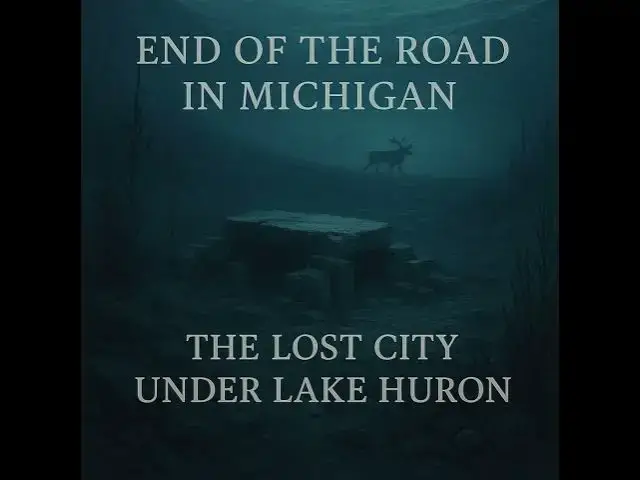
Beneath the waters of Lake Huron lies one of the oldest known hunting grounds in North America. In this episode of End of the Road in Michigan, we explore the discovery of the Alpena-Amberley Ridge—a submerged prehistoric land bridge once used by Ice Age hunters to track caribou.
Archaeologists uncovered stone structures over 9,000 years old, reshaping our understanding of ancient life in the Great Lakes. We also examine the Indigenous stories that may align with this site’s hidden history.
Read the story at The Lost City Beneath Lake Huron – Michigan’s Oldest Known Hunting Ground (https://michigan4you.com/the-lost-city-beneath-lake-huron-michigans-oldest-known-hunting-ground/)
Show More Show Less View Video Transcript
0:03
you're listening to End of the Road in
0:05
Michigan a podcast that brings to light
0:07
the overlooked corners of Michigan's
0:09
past Today's story starts underwater
0:11
beneath the deep cold blue of Lake Huron
0:14
In 2007 researchers surveying the lake
0:16
floor made a startling discovery Using
0:19
sonar they found a series of rock
0:20
formations more than 100 ft below the
0:23
surface off the coast near Alpena These
0:25
weren't random piles They were organized
0:28
aligned constructed It turned out to be
0:30
one of the oldest known human-made
0:32
hunting sites in North America But
0:33
here's the twist It was built 9,000
0:36
years ago when Lake Hiron didn't exist
0:38
In the summer of 2007 a research team
0:41
led by Dr John O'Shea from the
0:43
University of Michigan was mapping part
0:44
of the Lake Huron lake bed The project
0:47
focused on an ancient glacial formation
0:49
called the Alpena Amberly Ridge a kind
0:51
of submerged land bridge that once
0:53
connected modern-day Alpena to Ontario
0:55
As sonar equipment traced the contours
0:57
of the lake floor the scientists noticed
0:59
something strange Lines of rocks forming
1:01
what looked like funnels barriers and
1:03
stacked enclosures These weren't natural
1:05
features They were deliberate human What
1:08
they had found was a prehistoric hunting
1:10
structure now more than 100 ft
1:12
underwater These stone arrangements
1:14
formed caribou hunting blinds
1:16
strategically designed to funnel animals
1:17
into kill zones The ridge had served as
1:20
a seasonal migration path for caribou
1:22
and ancient people used the natural
1:24
geography to their advantage It was in
1:26
effect an ice age freeway traveled not
1:29
by cars but by game and the hunters who
1:32
tracked them Dr O'Shea would later
1:33
describe the find as a complete
1:35
game-changing discovery It pushed back
1:37
the known timeline of organized hunting
1:39
in the Great Lakes and showed just how
1:41
sophisticated these early communities
1:42
were To understand what the Alpena
1:44
Amberly Ridge once was you have to roll
1:46
back time way back about 9,000 years to
1:50
the early holysine period The glaciers
1:52
were retreating What we now call Lake
1:54
Huron didn't yet exist Instead a dry
1:57
plane stretched across the basin This
1:59
exposed land created a vital corridor
2:01
for both animals and humans Caribou in
2:04
particular migrated through the area in
2:06
large herds and the people followed them
2:08
These weren't primitive bands of hunters
2:10
The site shows signs of detailed
2:12
planning Rows of rocks were stacked to
2:14
guide Caribou toward ambush points
2:16
Temporary shelters and campfires were
2:18
likely scattered along the ridge This
2:19
wasn't just survival it was strategy
2:22
Archaeologists believe the hunters
2:23
likely traveled in small mobile groups
2:26
setting up seasonal camps and returning
2:27
to the ridge each year when the caribou
2:29
passed through Over time they left
2:31
behind clues stone tools bone fragments
2:35
charcoal and the rock alignments that
2:36
eventually revealed their presence The
2:38
structures on the ridge are now
2:40
considered the oldest known surviving
2:41
examples of large-scale hunting
2:43
architecture in the Americas They're
2:45
older than the pyramids older than
2:47
Stonehenge and yet until just a couple
2:49
decades ago no one knew they were there
2:51
Studying a prehistoric site is hard
2:53
enough on land Underwater that's a whole
2:56
different challenge The Alpena Amberly
2:58
Ridge site sits beneath more than 100 ft
3:00
of cold dark water Visibility is limited
3:03
conditions are unpredictable and
3:05
preservation is a top priority meaning
3:07
no digging no disruption Everything must
3:10
be documented as is using non-invasive
3:12
methods The team relied on a combination
3:14
of sidescan sonar subbottom profiling
3:17
remotely operated vehicles and deepwater
3:20
divers one sonar image at a time They
3:22
mapped the ancient landscape stone by
3:24
stone They found alignments that match
3:27
known hunting patterns ambush structures
3:29
drive lanes and even isolated boulders
3:32
that may have served as lookout points
3:33
What makes this discovery even more
3:35
remarkable is the preservation Lake
3:37
Huron's deep oxygen poor environment
3:40
acts like a time capsule Without
3:42
sunlight or strong currents even organic
3:44
materials like wood or bone may survive
3:46
for millennia That opens the door for
3:48
future research possibly even DNA
3:50
analysis or carbon dating of early human
3:52
activity We will be right back after
3:54
this message Looking for your next
3:56
Michigan getaway from scenic road trips
3:59
and quirky roadside stops to where to
4:01
eat what to do and why it matters
4:04
michigan44w.com has it all Whether
4:06
you're heading up north hitting the
4:08
thumb or just want to find the best bar
4:10
burger in town We've got real local
4:13
stories not tourist fluff Plan smarter
4:16
drive farther enjoy more Start your
4:20
journey at michigan4w.com
4:22
Michigan Travel written for you Welcome
4:24
back Let's continue with our story This
4:27
underwater site is rare not just in
4:29
Michigan but globally It's one of the
4:31
only places in the world where ice age
4:33
hunting structures have been preserved
4:34
in their original context and it's
4:36
rewriting what we thought we knew about
4:37
early human life in the Great Lakes Long
4:40
before sonar and science mapped the
4:42
ridge the people of the Great Lakes told
4:44
stories about migrations ancestors and
4:47
the old ways of life Some of these
4:49
stories may align with the ridg's
4:50
history Researchers have begun working
4:52
with tribal nations especially the
4:54
Sageno Chipoa to connect archaeological
4:57
findings with oral histories The goal
4:59
isn't just academic It's recognizing
5:01
that these stories belong to living
5:02
cultures Many anosabi traditions speak
5:05
of ancient migrations over great
5:07
distances across land that no longer
5:09
exists The idea that a ridge once served
5:11
as a seasonal hunting path doesn't
5:13
contradict those accounts It supports
5:15
them Today there's growing recognition
5:17
in archaeology that western science
5:19
alone doesn't hold all the answers
5:21
Collaborative research with indigenous
5:23
communities brings new context deeper
5:25
insight and cultural grounding to
5:27
discoveries like this one The ridge
5:29
isn't just a site of scientific interest
5:31
It's part of a larger narrative of
5:33
people tradition survival and memory
5:36
that stretches back thousands of years
5:38
The Alpena Amberly Ridge isn't just a
5:40
remarkable archaeological site It's a
5:42
reminder of how much we still don't know
5:44
about the land we live on In an era
5:46
where climate change is once again
5:47
reshaping coastlines and displacing
5:49
communities this submerged world shows
5:52
how early humans adapted to shifting
5:53
environments They followed the herds
5:56
learned the patterns and used the land
5:58
until it disappeared beneath rising
5:59
waters It also tells us that the story
6:02
of the Great Lakes didn't begin with fur
6:03
traders French missionaries or early
6:06
American settlers It started thousands
6:08
of years earlier with hunters and
6:10
families who lived worked and thrived in
6:12
places now hidden beneath the waves This
6:14
discovery is a rare convergence of
6:16
science history and indigenous knowledge
6:20
It opens the door to new research and
6:21
new conversations Because when we talk
6:24
about ancient America we're also talking
6:26
about modern identities cultures and the
6:28
deep roots that connect them Thanks for
6:30
joining us on End of the Road in
6:31
Michigan Today's journey took us deep
6:33
beneath Lake Huron to a place once
6:35
filled with life now silent and
6:37
submerged If this story sparked your
6:40
curiosity please share the episode leave
6:42
a review or explore more Michigan
6:44
history at thumbwind.com You'll find
6:46
articles images and other podcast
6:49
episodes that bring the past back to
6:50
life Until next time keep your eyes open
6:53
You never know what's hidden just
6:55
beneath the surface
6:56
[Music]