Up next in 10



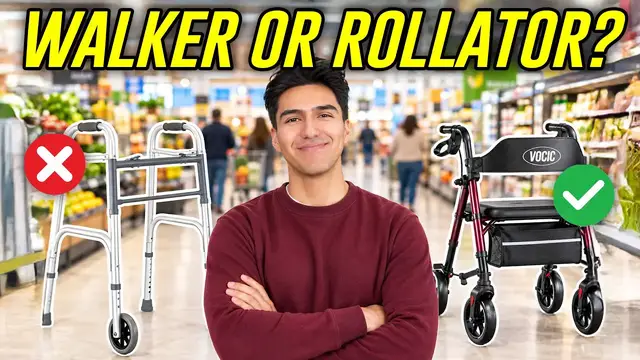
In this video, I go over walkers vs rollators.
Check them out here
► 3. Drive Medical Walker - https://geni.us/7mfJKN
► 2. Soundfuse 3-Wheel Rollator - https://geni.us/KsvSrTI
► 1. VOCIC Z21 - https://geni.us/ZBPSqr1
Want FREE Shipping With Amazon Prime? Get a 30-DAY FREE TRIAL by signing up here http://www.amazon.com/tryprimefree?tag=thechrisreview-20
DISCLAIMER: This video and description contains affiliate links, which means that if you click on one of the product links, I'll receive a small commission. This helps support the channel and allows us to continue to make videos like this. Thank you for the support!
TIMESTAMPS
0:25 Walkers (2-Wheel)
2:36 Rollators (3 & 4-Wheel)
1:49 Drive Medical
Show More Show Less View Video Transcript
0:00
Almost every difference between a walker and a rollator comes down to one thing, speed
0:05
And speed isn't something you just keep adding, it's something your body has to be ready for
0:10
That's why more mobility isn't always the better choice. And the best option depends on your balance, strength, and how confidently you can control it
0:18
So today we'll compare the standard walker and the rollator to see which one fits your needs better
0:26
First up, you'll notice that the two-wheel walker feels much more stable
0:29
This style is also known as a standard rolling walker or front wheeled rolling walker
0:35
You get two wheels up front with tennis balls or glide caps in the back and you push it forward
0:40
and those rear caps add just enough friction to keep the walker from moving too fast
0:44
And that makes it the right choice if your balance is still shaky, especially right after a hip or knee replacement or spine surgery or something similar
0:53
Now the problem is that the rollator rolls too freely. It can get ahead of you before you're ready and that makes your steps harder to control
1:01
There's a weight bearing issue here too. Say your doctor tells you to keep weight off your right leg while it heals
1:07
A rollator can move forward as soon as you press down on the handles so you have less
1:11
control over how much weight ends up on that leg. A two-wheeled walker works differently
1:15
The rear glide caps give the back legs a little grip so the frame stays steadier while you
1:20
keep pressure off your leg the doctor wants you to protect. It's also a simple piece of equipment
1:24
There's no hand brakes to maintain like you have on a rollator, so there's simply less to worry about
1:30
And most models are also really lightweight, affordable, and easy to fold and store
1:34
The downside is that you have to work with the same friction. Moving the walker takes more effort because you're pushing those rear glide caps along the floor
1:42
And over a longer walk, that extra resistance can start to wear on your arms and shoulders
1:47
Uneven surfaces make the walker even harder to push, especially outside. And that's why a two-wheeled walker is usually better for short trips around the house than longer walks outdoors
2:00
Now let's take a look at the Drive Medical as an example of this type of walker
2:03
It weighs just about 5 pounds and it still able to hold my full weight of 180 Now the compact frame also makes tight turns easy so getting through hallways and bathrooms isn going to be a hassle Setup is extremely quick and the legs snap into place without any tools and the two large
2:19
buttons at the top let you fold it down. Besides that you get eight height settings with the handles reaching up to 38.5 inches
2:27
Whether you're shorter or taller you can dial in the height that feels comfortable and keep
2:31
a more natural posture as you walk. The big change here is in the wheels
2:39
All of them roll freely so you can push the rollator along without much resistance
2:44
You also get hand brakes so you can slow down or stop whenever you need to
2:48
But if you have weaker hands, then pay a little attention to how much pressure the levers need
2:53
Some are easier to squeeze than others, and that small difference can make one model much more comfortable to use
2:59
Now there are two main rollator designs. You have the three wheel and the four wheel
3:04
If easy turning is what you're after, then a three-wheel version is the one to look at first
3:09
With one wheel up in the front, you get a much tighter turning radius so you can guide it almost
3:13
like a shopping cart. That makes it easy to work through narrow hallways, tight doorways
3:18
and crowded stores. Now the trade-off is how quickly that front end responds. For someone who
3:24
just had a joint replace, that can be a concern because sudden turns may put the body into
3:29
positions it isn't ready for just yet. So I wouldn't recommend a three-wheel roll later
3:33
during those first few days after surgery. But once you're a few weeks into recovery, it may be
3:38
better fit. But that depends on how you're healing and what your clinician recommends. Outside of that
3:43
the smaller frame is a nice perk. Most three-wheel models are lighter and more compact when folded
3:49
so they're easier to lift, carry upstairs, or tuck away when you're not using them. And that's
3:53
exactly what I found when I tested out this one by SoundFuse. The three-wheel rollator doesn't
3:58
need much room to turn, so you can weave around furniture without making a big swing. And despite
4:03
the compact size, it weighs just 9.9 pounds when I use this luggage scale. Even so, the
4:08
aluminum frame still supports up to 260 pounds and the wheels are a solid 7.5 inches across
4:14
so they roll smoothly across flat floors and low carpet. You also get good brake control
4:19
here A light squeeze gives you a little control over your pace while pushing the levers down locks the wheels in place And if the brake tension changes over time you can even adjust it yourself with a built nut I also like the handles which have finger grooves
4:31
and a palm rest for extra support. That said, because it only has one wheel up front
4:36
the front might feel a little less supportive compared to a four-wheel rollator
4:40
when you put your weight on it. And you're gonna notice that more on grass, gravel, or sloped driveways
4:45
So if you need something that feels more stable outdoors, then it's worth stepping up into a four-wheel rollator
4:50
And the biggest advantage here is how much ground you can cover with it. You don't have to slow down every time the pavement gets rough or your legs start to tire
4:57
The larger wheels handle uneven ground smoothly so you keep a more natural walking pace
5:02
But here's the feature I genuinely think changes the whole experience. The seat. It's built right into the frame between the handles and it's usually padded for comfort
5:09
And none of the models we've covered so far give you that option. So you can walk until your legs need a rest, stop wherever you are, lock the brakes, and sit down
5:18
And if breathing or fatigue already limits how long you can stay on your feet, then that can open up activities that might otherwise feel like too much
5:25
A trip to the mall, a grocery store, or even a walk through the park doesn't have to be one continuous stretch
5:31
You can break it up, catch your breath, and keep going when you're ready to go
5:35
Now, submodels also give you storage right underneath the seat. And that gives you a place for a purse, a portable oxygen tank, or some other essentials, so your hands can stay on the walker as you move
5:45
Now of course, all that convenience comes with a bigger frame. You have more support around you, but you also need to be more aware of the space it
5:52
takes up when you turn or change directions. On top of that, it needs more room to store, and the extra weight can make it harder to
5:59
lift and carry on your own. And before you put your weight on the seat, you'll need to lock the brakes first
6:04
So for someone with significant memory problems, that step can easily be missed and the rollator
6:09
may move as they sit. A standard walker doesn't have the same requirement because it stays in place on its
6:14
And there's also a risk when you stand back up. Even with both brakes fully locked, a rollator can still move backward when you push up to stand
6:21
especially if the frame is much lighter than your body weight. That can catch you off guard and make those first few seconds on your feet less stable
6:28
You can reduce that risk by positioning the rollator near a wall sturdy couch or another surface that won move before you sit down or stand up And anyone with Parkinson or poor balance should still be especially careful here since a sudden movement can be harder to correct Now for a closer look
6:45
at the style, let's take a look at the Vochik Z21 as an example. This four-wheel rollator covers
6:52
all the basics well, but the brake levers are what really stood out to me. They give you precise
6:57
control over how fast you're moving and you can lock the wheels instantly when you're ready to sit
7:01
I measured only about 8-9 pounds of force at the lever so you don't need a particularly strong grip to use them
7:08
The handles feel good in the hand too. They're contoured to fit your hands naturally which makes it easier to keep a secure hold as you walk
7:14
And that matters even more once you're outside where the surface isn't always perfectly smooth
7:20
You also don't have to worry about a flat if the pavement gets rough. The four wheels roll smoothly over uneven ground while the textured thread keeps you steady when the surface gets slick
7:29
And this rollator doesn't just give you a place to sit either. The seat is curved to follow your body, and with a 1.6-inch waterproof padding, that stays comfortable for longer stretches
7:39
You can also adjust both the seat and the handles to match your height. And since the storage pouch sits right at the front, you can reach things without lifting the seat
7:48
And setup is straightforward too. I had it ready in under 9 minutes, and folding it is just a few seconds
7:53
So which one should you actually go for? Well, this really depends on what you need
7:57
For balance and stability, I'd stick with a standard walker. A three-wheel rollator is better suited for those who are steadier on their feet
8:04
and want something that can move easily through tight spaces. But if you're after a good mix of support, comfort, and everyday convenience
8:10
a four-wheel rollator is probably the most versatile option. It'd also be a great tool for staying independent and getting around with more confidence
8:18
And that's all for today. Hopefully you now have a better idea of which dials fits your need
8:22
And if you found one you like, make sure to check the description to find links to all the walkers and rollators mentioned
8:26
Almost every difference between a walker and a rollator comes down to one thing, speed
8:34
And speed isn't something you just keep adding, it's something your body has to be ready for
8:39
That's why more mobility isn't always the better choice. And the best option depends on your balance, strength, and how confidently you can control it
8:47
So today we'll compare the standard walker and the rollator to see which one fits your
8:51
needs better
Computers & Electronics