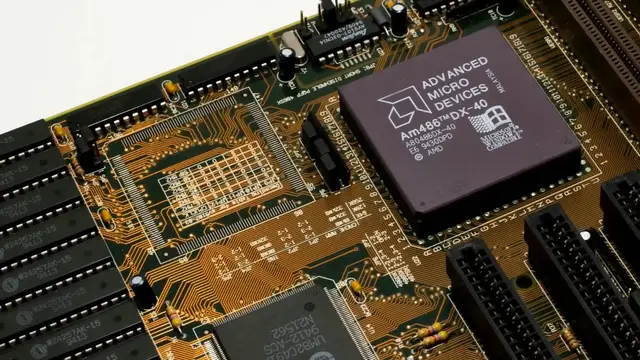

CPU vs GPU vs TPU vs NPU: What's the difference?
Oct 10, 2026
Modern computing relies on specialized processors, each designed to excel at different types of tasks. Understanding the differences between CPUs, GPUs, TPUs, and NPUs reveals how technology has evolved to meet increasingly diverse computational demands. The Central Processing Unit, or CPU, serves as the brain of your computer. This versatile processor handles a wide variety of tasks, from running your operating system to executing application code. CPUs excel at sequential processing, tackling one instruction after another with remarkable speed and flexibility. Think of a CPU as a highly skilled craftsperson who can switch between different tasks seamlessly, whether that's opening a file, running a calculation, or managing system resources. Modern CPUs typically contain multiple cores, allowing them to handle several tasks simultaneously. Each core operates independently, making CPUs ideal for general-purpose computing where different programs need attention at the same time. The architecture prioritizes low latency and quick decision-making, which is why CPUs remain essential for everyday computing tasks. Graphics Processing Units, or GPUs, take a fundamentally different approach. Originally designed to render images and video for displays, GPUs contain thousands of smaller, simpler cores that work in parallel. While each individual core is less powerful than a CPU core, the massive number of cores allows GPUs to perform thousands of calculations simultaneously. This parallel architecture makes GPUs exceptionally powerful for tasks that involve processing large amounts of similar data at once. Beyond graphics rendering, GPUs have become indispensable for machine learning, scientific simulations, and cryptocurrency mining. When training a neural network, for example, a GPU can process millions of data points across its many cores simultaneously, completing in hours what might take a CPU days or weeks. Tensor Processing Units, or TPUs, represent Google's answer to the growing demands of artificial intelligence workloads. These specialized chips are designed specifically for neural network computations, particularly the matrix operations that form the foundation of deep learning. TPUs optimize for the specific mathematical operations used in training and running AI models, achieving higher efficiency than general-purpose processors. The architecture of a TPU focuses on tensor operations, the multi-dimensional arrays of numbers that neural networks manipulate. By building hardware specifically for these operations, TPUs can process AI workloads faster while consuming less power than GPUs. Google uses TPUs extensively in its data centers to power services like search, translation, and image recognition. However, TPUs are highly specialized and less flexible than GPUs, making them ideal for large-scale AI deployment but less suitable for general computing tasks. Neural Processing Units, or NPUs, bring AI capabilities to edge devices like smartphones, tablets, and laptops. These compact processors are designed to run neural network inference efficiently on battery-powered devices. While TPUs focus on data center scale AI processing, NPUs prioritize power efficiency and integration with mobile hardware. NPUs enable features like real-time photo enhancement, voice recognition, and facial authentication without sending data to the cloud. By processing AI tasks locally, NPUs reduce latency, protect privacy, and work even without an internet connection. The architecture balances performance with power consumption, allowing devices to run sophisticated AI features without draining batteries quickly. The key differences between these processors lie in their design philosophy and optimization targets. CPUs prioritize versatility and sequential performance, handling diverse workloads with minimal latency. GPUs sacrifice individual core power for massive parallelism, excelling at tasks that can be broken into thousands of simultaneous operations. TPUs narrow the focus further, optimizing specifically for the tensor mathematics of neural networks at data center scale. NPUs adapt AI processing for mobile and edge computing, emphasizing efficiency and integration. Choosing between these processors depends entirely on the task at hand. General computing, operating systems, and applications that require quick decision-making rely on CPUs. Graphics rendering, scientific computing, and AI model training benefit from GPU parallelism. Large-scale AI deployment in data centers leverages TPU efficiency. Mobile AI features and edge computing applications depend on NPU power efficiency. Understanding these distinctions helps explain why modern devices often combine multiple processor types. Your smartphone likely contains a CPU for general tasks, a GPU for graphics and gaming, and an NPU for AI features. High-performance computing systems pair powerful CPUs with multiple GPUs. Cloud AI services may deploy TPUs alongside tradit
Show More Show Less