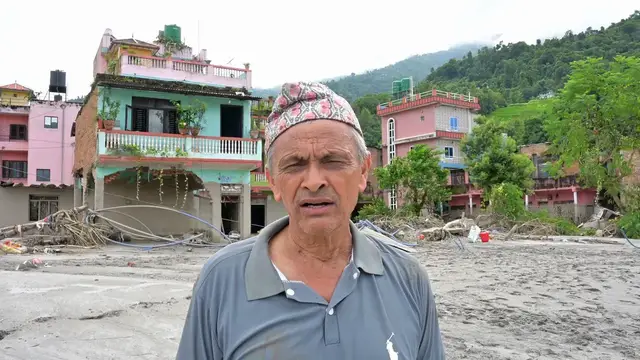

Nepal: Deadly Nepal flood leaves Devighat buried under mud, debris.
Aug 31, 2026
SHOTLIST: DEVIGHAT, NEPAL (AUG. 31, 2026) 1. VARIOUS OF DRONE SHOTS CAPTURING DEVASTATION, MUD AT RESIDENTIAL AREA AFTER FLOOD 2. (SOUNBITE) (Nepalese) RESIDENT OF AREA SPEAKING TO REPORTER SAYING: "That parrot colour house behind me is my home... The flood level in this area is above one store of the houses here... My bedroom is under the ground now so I cannot take out my things... We don't know when is the end. The flood might come again, isn't it? I wish the state provided some place to stay, even if it's in my own small land that has remained... Everything is swept by the flood. There's nothing left... A working man, but now I have become a refugee with no house. I haven't lost my family members thankfully." 3. (SOUNDBITE) (Nepalese): ANOTHER RESIDENT OF AREA SPEAKING TO REPORTER SAYING: "We lost almost 280 houses here in Devighat... The government has send the bulldozer... First we will open this road... As a ward chairman from this area, we will try as hard as we can to recover the things from houses and clean the area as fast as we can... The constant rising of flood level has hampered our work here..." 4. DRONE CAPTURING MUD AT RESIDENTIAL AREA, FLOODED RIVERDEVIGHAT, NEPAL - AUGUST 31: The settlement of Devighat along Nepal’s Trishuli River has been left almost unrecognizable after a massive flood buried homes, shops and other buildings under mud, rocks and debris. In several areas, sediment deposited by the flood rose to the height of one or two storeys, leaving buildings partly buried and making many homes inaccessible. Residents returned to damaged houses and partially collapsed structures to recover belongings, as many families were left with only a few possessions after the flood destroyed homes and businesses. The once-busy settlement and market area in Nuwakot district has turned into a landscape of mud, damaged buildings, uprooted trees and scattered debris. The disaster was triggered by a high-altitude glacier and rock collapse near the Nepal-China border, which sent a sudden surge of water, ice, rocks and debris into the river system. The torrent moved downstream through the Bhote Koshi and Trishuli river corridors, destroying settlements and infrastructure across several districts. Experts described the incident as an extreme high-mountain flood and warned that warming temperatures and changing Himalayan cryosphere conditions may be increasing instability in glaciers and mountain slopes. By Aug. 30, Nepal’s disaster authorities reported that at least 788 people had died in Nepal, while 2,502 remained missing. Other regional figures including the Tibetan side of the border continued to vary, with more than 3,000 people still unaccounted for. Rescue teams were searching through debris, river channels and isolated communities as casualty figures continued to change. The humanitarian impact in Nuwakot has been severe, with families searching for missing relatives while survivors try to recover belongings from destroyed homes. Rescue and relief operations were supported by the Nepali Army, Armed Police Force and Nepal Police. Helicopters were used to evacuate stranded people and deliver aid to areas cut off by damaged roads and bridges. Authorities warned that the situation remained dangerous as river levels rose again and a newly formed lake near the collapse zone raised fears of another possible surge downstream. In Devighat, decomposing livestock and organic material trapped in the flood debris created difficult conditions for residents and rescue workers. Search and recovery efforts continued into the fourth day, though hopes of finding survivors were becoming increasingly limited. The disaster struck on Aug. 26 when a glacier on Nepal’s Mount Langtang Lirung fractured at an altitude of about 5,200 meters, triggering an ice-rock avalanche that developed into a massive debris flow and swept through valleys along the border. The huge surge in water, along with mudslides, devastated Rasuwa, Nuwakot, Dhading, Kavre and the Kathmandu Valley in Nepal, as well as burying the Gyirong border area on the Chinese side.
Show More Show Less