
China: Xinjiang battles scorching heat as temps approach 50 Celsius in some areas.
Jul 21, 2026
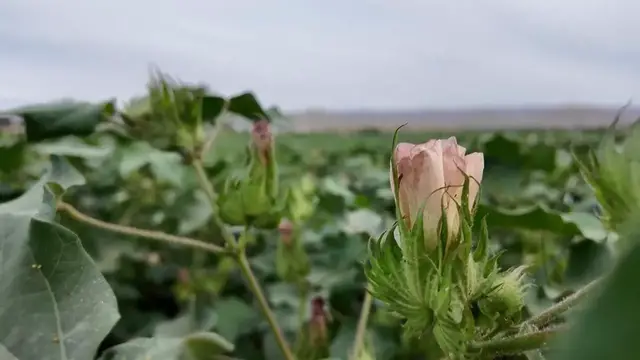
Shotlist Xinjiang Uygur Autonomous Region, northwest China - Recent (CCTV - No access Chinese mainland) 1. Workers loosening soil for plants 2. Sign of heatstroke prevention medicine distribution site 3. Worker watering trees 4. Various of workers pruning trees 5. Various of workers at construction site 6. Contractor distributing heatstroke prevention medicines to workers 7. Various of cotton plants 8. Various of agricultural technician talking to farmers in cotton field 9. SOUNDBITE (Chinese) Abdushukur Memetmin, local farmer (ending with shot 10): "In July, agricultural technicians come to our cotton fields every day to check out the growth of the plants, give us technical advice and formulate disaster prevention plans based on the temperatures, as well as guide us on irrigation and fertilization." 10. Various of agricultural technician talking to farmers, working on irrigation system 11. Various of drones spraying pesticides Storyline Local authorities in northwest China's Xinjiang Uygur Autonomous Region have taken a variety of emergency measures to protect residents and mitigate losses amid a prolonged heatwave which has intensified in recent days. Across Xinjiang, more than 1,700 meteorological observation stations recorded temperatures of 35 degrees Celsius or above over the 24-hour period up to Sunday morning, while the mercury surged to nearly 50 degrees Celsius in some areas, according to local weather authorities. In response, the region has continued to issue red alerts for high temperatures -- the highest level in China's four-tier, color-coded weather warning system. In Shihezi City, on-duty traffic police are carrying supplies of bottled water and heatstroke medications in their patrol vehicles to offer aid to any residents showing signs of heat exhaustion. To protect urban vegetation from high temperatures, local authorities have sprayed water on the plants to cool them down and have pruned tree canopies to reduce water evaporation and help them survive the persistent heat. At construction sites, contractors have rescheduled outdoor work to avoid the fierce midday sun, increasing rotation frequencies to minimize individual exposure. They have also provided workers with mung bean soup and heatstroke prevention medicines. The high temperatures have also lowered soil moisture and created favorable conditions for pests, threatening local crops. In response, the government of Payzawat County has sent agricultural experts to local cotton fields to advise growers on irrigation, foliar fertilizer application, and pest-control sprays in order to mitigate heat-related crop damage. "In July, agricultural technicians come to our cotton fields every day to check out the growth of the plants, give us technical advice and formulate disaster prevention plans based on the temperatures, as well as guide us on irrigation and fertilization," said Abdushukur Memetmin, a local farmer.
Show More Show Less #news