
Austria: China-Europe SMILE satellite mission to help Austrian scientists better predict dangerous solar storms.
May 22, 2026
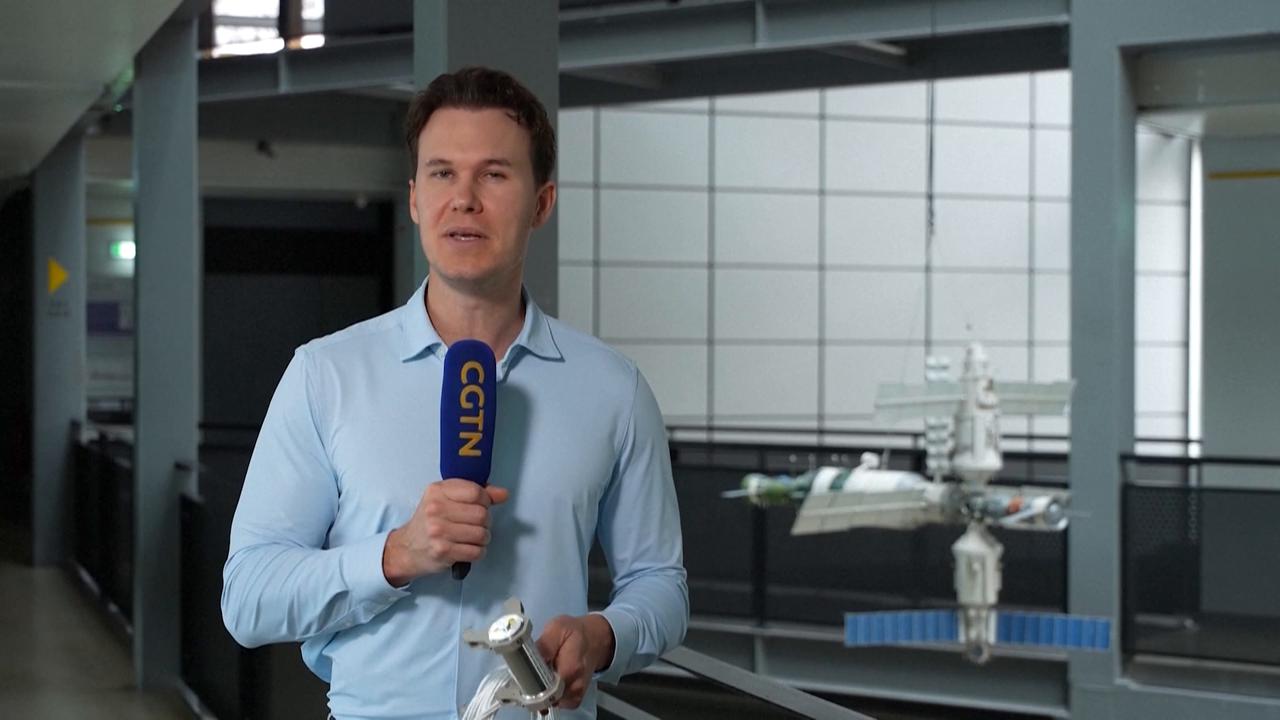
【Voice_over】 Like a giant umbrella, the magnetosphere shields the Earth from most of the particles the sun constantly sends its way. But sometimes the particle load is too heavy. Researchers at the Austrian Academy of Sciences hope new satellite data will help predict the most dangerous solar storms. 【Sound_bite】 Rumi Nakamura, Space Plasma Physicist, Austrian Academy of Sciences: "It's not only the light but matters from the sun, it is also this electromagnetic energy because sometimes when the sun is very active. you might see some problem in the GPS or the communication." 【Voice_over】 Even power outages are possible when solar activity penetrates Earth's magnetic field. 【Sound_bite】 Werner Magnes, Head of Space Magnetometer Group, Austrian Academy of Sciences: "So on the Smile mission, the magnetic field is being measured and one type of sensor that is used for magnetic field measurements is this one here, which is an optical magnetometer. And the sensor is typically mounted on what you see here on the spacecraft model on this black stick to get away from the spacecraft which would otherwise disturb the measurements." 【Stand_up】 Johannes Pleschberger, Reporter: "As soon as the SMILE satellite enters its orbit, the scientific team here in Austria will help process the collected data - hoping to build a more complete understanding of the Sun-Earth connection by measuring the solar wind and its dynamic interaction with the magnetosphere." 【Voice_over】 To have a complete image of this interaction, the team is set to combine the SMILE satellite data with measurements recorded by other spacecrafts. 【Sound_bite】 Rumi Nakamura, Space Plasma Physicist, Austrian Academy of Sciences: "SMILE picture gives you how this magnetosphere outer boundary looks like. And I have another spacecraft simultaneously which is observing this particular region. This simultaneous measurement we can get for the first time what is really happening in this boundary." 【Voice_over】 It is not the first time the Austrian Academy of Sciences has contributed is hardware and know-how to a Chinese-European space mission. 【Sound_bite】 Werner Magnes, Head of Space Magnetometer Group, Austrian Academy of Sciences: "So our cooperation with China started already more than 20 years ago when we did the double star mission which was also a cooperation between ESA and China." 【Voice_over】 The SMILE satellite is set to orbit Earth for the next three years. The scientists hope that the collected data will pave the way for the future of space weather forecasting.
Show More Show Less #news