live_tv
Livestream Starting Soon
00
Hours
:
00
Minutes
:
00
Seconds
Up next in 10



As the New York City mayoral race shows, media outlets often reflect ideological bias in what they choose to report and how they report it.
Show More Show Less View Video Transcript
0:00
We've got elections coming up next week, and these news cycles are a time when subtle patterns will
0:06
emerge from media outlets that can give you a better idea of where their partisan allegiances
0:11
lie. That is, if you know what you're looking for. Today we're diving into how news outlets decide
0:17
which stories are newsworthy and how those choices to cover something or not reveal media bias
0:24
Sometimes the coverage starts to sound less like journalism and more like a campaign ad
0:30
Welcome back to Bias Breakdown. Let's revisit the Big Apple, the New York City mayoral race that's been making national headlines
0:40
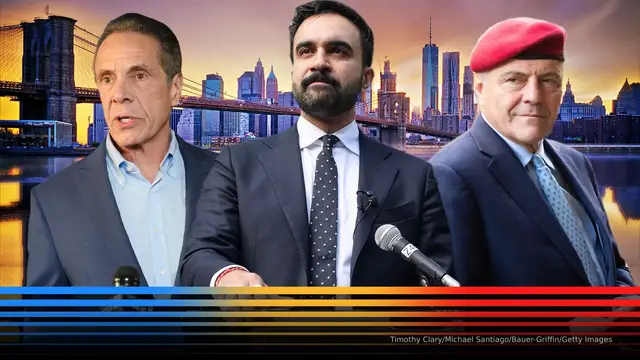
It's down to three candidates, Democratic Socialist Zoran Mamdani, Republican Curtis Lewa, and Andrew Cuomo running as an independent. But much of the media attention has focused on
0:52
the frontrunner Mamdani. We've covered the narratives in this race before, examining how
0:57
left and right outlets have taken opposing angles on his campaign. Zoran Mamdani ran an exceptional
1:05
inspiring, extraordinary campaign, and he's galvanized the city. This guy is frankly
1:11
he's trash on a lot of levels, and most frightening, in my opinion, is the anti-Semitism
1:15
While that's some of the left-right narrative noise on cable television, Today we're diving into the headlines and story framing of the race
1:24
The media's story selection has been strategic, and the patterns you're about to see make that clear
1:31
Let's look at these three headlines, all from right-leaning outlets. Each one highlights and criticizes Mamdani's connections with a controversial figure
1:40
The Washington Examiner wrote, Mamdani extravagantly praised the imam at the mosque, Siraj Wahaj
1:47
They call it a warm connection before pointing out that Wahaj had been an unindicted co-conspirator in the 1993 World Trade Center bombing
1:58
He also refused to condemn Osama bin Laden, concluding that Wahaj has a notable relationship to terrorism
2:06
This is someone Mamdani received an endorsement from. The New York Post quoted Republican candidate Curtis Lewa, who said Mamdani's standing with this imam should be disqualifying, along with independent candidate Andrew Cuomo, who also condemned his opponent, and Vice President J.D. Vance, who called on Democrats to condemn Mamdani's pose with Wahaj
2:29
In Fox News' write-up, they similarly include five voices criticizing Mondani for the picture
2:36
and included it during evening primetime coverage on the network. The saying, show me who your friends are, I'll tell you who you are, that is applicable here
2:46
Zoran Mondani has paled around with socialists, with communists, now this radical extremist imam
2:53
This controversy was largely covered on only the right side of the media spectrum
2:58
We didn't find any stories on MSNBC, CNN, ABC, or NBC. But that said CBS News did have a link and the New York Times published a story But the framing reads very differently On CBS website a search for the story came back with this headline
3:18
Fresh attack launched on mayoral race frontrunner Zoran Mamdani. The New York Times used similar language
3:25
reporting that Cuomo is doubling down on a line of attack by linking Mamdani to Wahaj
3:32
The Times also gave more detail into the New York Post's characterization of Wahaj as an unindicted co-conspirator, noting he was never charged in the case and linked to the outlet's previous coverage showing that the list Mr. Wahaj appeared on was criticized by former terrorism prosecutors as being overly broad
3:54
In its article, the Times includes voices critical of Cuomo's criticism. You can see how this same election story is framed differently with opposing takeaways depending on which article you read
4:07
Multiple forms of media bias are at play here. We'll start with bias by story choice, as defined by media watchdog all sides
4:16
Right-leaning outlets highlighted the Mamdani Wahaj story heavily, framing it as a political scandal
4:22
scandal. Left-leaning outlets, on the other hand, either didn't cover it or framed it as a political
4:28
attack, downplaying the elements the right saw as newsworthy. This is a clear example of how story
4:35
choice shapes public perception through what gets covered, what gets emphasized, and what gets left
4:42
out. The differences in political opinion between outlets created unbalanced coverage, making it easy
4:50
to unmask how each news outlet viewed the story. Since there was a broad pattern of news outlets
4:57
on the left not covering the story at all, that's also biased by story omission. Because for people
5:03
who primarily consume CNN, NBC, or ABC News, the controversy never even happened. The absence of
5:11
stories creates its own kind of public perception distortion. The American media landscape is filled
5:17
with daily misses by both sides of the political lane. Straight Arrow News compiles them for you
5:23
to see at san.com. Back to it, news outlets on the right that chose to give the matter attention
5:29
often omitted alternate viewpoints to the story. The New York Post and Fox News stacked voices
5:37
condemning Mamdani. That imbalance of perspective also fits this form of media bias
5:43
The same imam met with Mayor Bloomberg, met with Mayor de Blasio
5:48
campaigned alongside Eric Adams. And the only time it became an issue of national attention was when I met with him
5:54
And even after Mamdani spoke out to explain his interactions with Wahaj
6:00
Fox News and the Washington Examiner didn't follow up to cover his defense
6:06
The New York Post, however, did publish a follow-up. I'm not saying one side of the media is right or wrong in how they covered the story
6:13
you welcome to come to that conclusion on your own But that not my point When the same story is covered very differently across left and right outlets that pattern reveals a clear divide
6:26
and bias in media coverage. These next examples we're going to run through more quickly
6:32
with less specific details to each story, but just pointing out the same sort of media bias
6:38
by story choices and framing. These articles, again from right-leaning sources, focus on remarks by New York Congresswoman Elise Stefanik, who called Mamdani a jihadist and warned of a jihad coming
6:53
Left-leaning outlets, on the other hand, describe GOP criticisms, including Stefanik's remarks as attacks against Mamdani and label them Islamophobic
7:04
The right-leaning coverage focused on amplifying individual voices criticizing Mamdani, giving those perspectives more weight in the headlines. Left-leaning outlets, in contrast
7:16
highlighted voices calling those criticisms racist or Islamophobic, making that perspective more prominent. Recent controversies involving both Mamdani and Cuomo were covered differently
7:29
across partisan outlets. For example, Cuomo faced scrutiny on the left after a radio show host
7:36
claimed Momdani would cheer on a terror attack on the U.S., to which Cuomo responded
7:42
that's another problem. God forbid another 9-11. Can you imagine Momdani in the seat
7:50
I could. He'd be cheering. another problem this controversy received heavy coverage on the left side of the media spectrum
8:01
and while some right-leaning media did cover the cuomo controversy it read a lot differently
8:07
fox news highlights cuomo's response to the criticism who ripped mom donnie's victim narrative
8:13
while the new york post downplayed the radio incident framing it as cuomo being criticized
8:19
by Dems for laughing at the host's joke. The same story, but told in very different ways
8:26
Coverage was also uneven, as other right-leaning outlets like the Washington Examiner
8:31
the Daily Wire, and Breitbart omitted the controversy and didn't touch it at all
8:36
And finally, a speech by Mamdani was described by left-leaning outlets as emotional
8:41
with focus on his condemnation of what he characterized as Islamophobic attacks
8:47
But right-leaning outlets focused on criticism of the speech from the vice president
8:53
focusing on a portion of Mamdani's remarks that his Muslim aunt did not feel safe riding the subway after 9-11
9:01
I want to speak to the memory of my aunt, who stopped taking the subway after September 11th because she did not feel safe in her hijab
9:14
Same speech, same story, totally different takeaways in news coverage from left and right outlets
9:22
If all the headlines on one side of the political media are negative toward a candidate and the headlines on the other side largely defend that same candidate that a sign news outlets are choosing and framing
9:35
stories based on their own political leanings and the political views of their audience
9:42
If you lean right, right-leaning news reinforces your beliefs. If you lean left, left-leaning news
9:49
does the same thing. And you're entitled to your own political opinions, and I get it. It's easier
9:55
and sometimes more fun to stick to the side that you agree with. But I challenge you to see the
10:01
bias in how both sides select and frame their stories. Today, we highlighted just a few examples
10:08
of just one race, but maybe it makes you think about other races too, in Virginia, in New Jersey
10:16
this election cycle, and the next. And how the partisan news knows exactly what they're doing
10:23
carefully choosing what stories to tell and how to frame them in order to fuel one base
10:30
And that's your bias breakdown. Now usually during the wrap right here, I tell you where to find us
10:37
and how to download the show, but you know the drill, and I'll be in the comments with you on
10:42
YouTube and Spotify. Today, in my last few minutes with you, I want to talk about something a little
10:48
more personal. I want you to get to know me a little bit better because I hope that you'll
10:52
come back here each week to be with me. I've mentioned my grandpa, who I call Papa, in several
10:58
episodes of Bias Breakdown because he really taught me so much. And I feel like I am who I am because
11:05
of him. He valued knowledge like nobody else that I know. He was a high school dropout
11:13
self-taught, and allowed curiosity to build his wealth of knowledge. I have one example that I
11:20
think connects to this episode. Papa had a very strong faith. He knew what he believed, but he
11:27
would go to churches of other faiths to learn. Not to challenge them or his own beliefs, but he would
11:34
put himself in the pews of other churches simply to learn and to understand others. He valued
11:42
perspectives and people in general. We talk a lot about politics in this podcast. I know that that
11:48
can rile people up. I get it. But I want to be a resource for you to see other perspectives
11:55
not to challenge your beliefs, but to help you understand why others may think differently
12:01
Papa passed away one year ago tomorrow. But by getting to know me, I'm hoping that you'll get to know a little piece of him too
12:12
Thank you so much for listening to me and giving me the time of day
12:17
And thank you to those of you who are helping to build up our bias breakdown community in the comments on YouTube
12:23
And I look very forward to jumping in there later on to respond to some of y'all
12:27
big thank you to Ian and Allie for putting the graphics and this video together
12:32
and I will see you next time
#news
#Politics
#Campaigns & Elections
#Media Critics & Watchdogs