Up next in 10



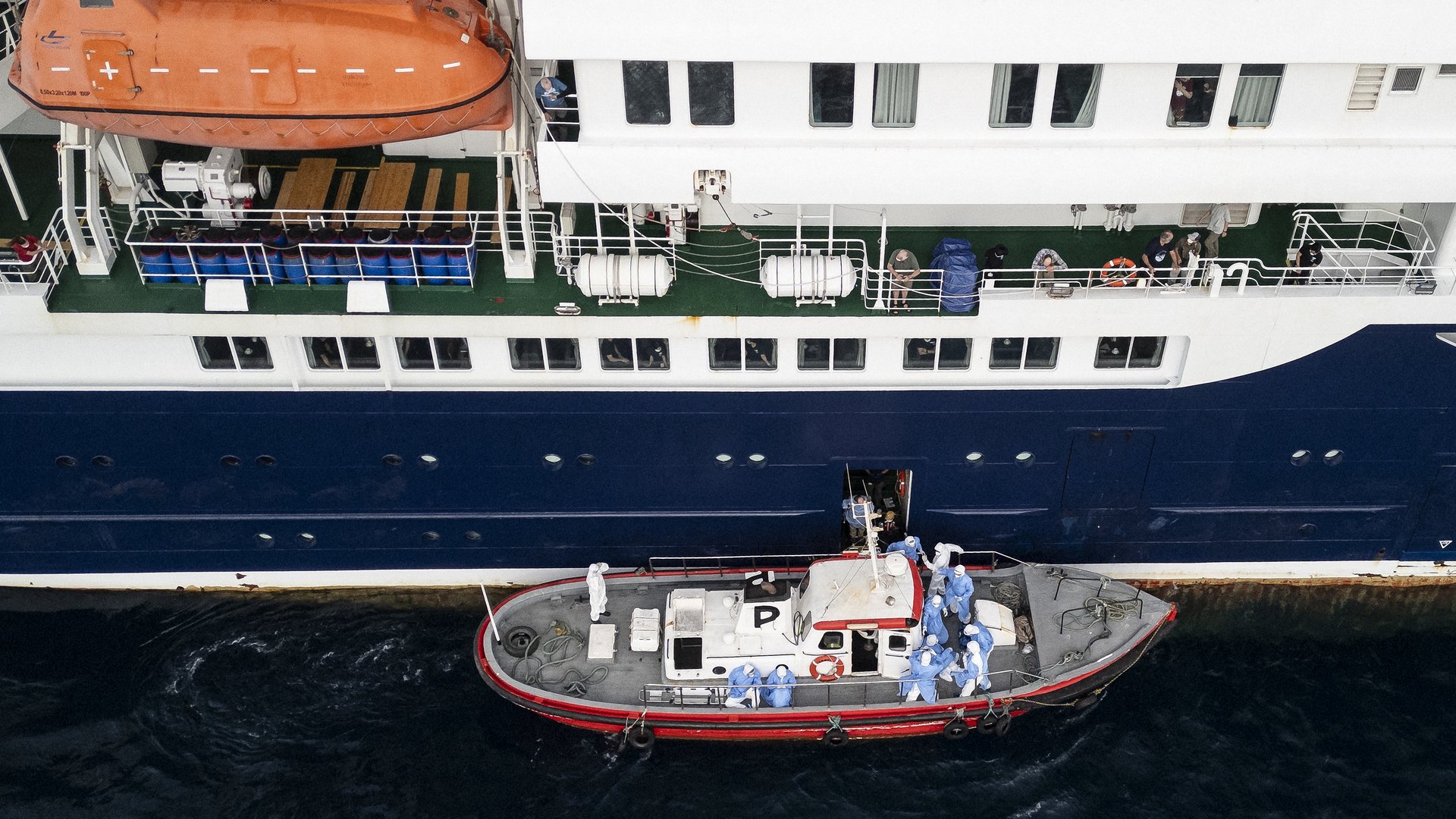
The fate of the cruise ship MV Hondius, where several passengers and crew members have contracted hantavirus, remains unclear.
Show More Show Less View Video Transcript
0:00
There's a new twist this morning in the cruise ship virus outbreak
0:06
Spain says it will take the ship, but officials in the Canary Islands are now pushing back
0:12
Nearly 150 passengers and crew, including 17 Americans, remain on that ship, the MV Hondias
0:19
after a hantavirus cluster killed three people and sickened others. Health officials have identified seven cases so far, two confirmed and five suspected
0:28
including one person still in critical condition. Spain's central government says the ship can head to the Canary Islands for treatment and a full investigation
0:38
but the region's president is opposing that plan, saying there's not enough information to guarantee public safety
0:44
The World Health Organization says some limited human-to-human spread may have happened
0:50
but emphasizes the risk to the broader public is low. Three people are now being medically evacuated, and once that's complete
0:57
the ship is expected to sail to the Canary Islands, where Spanish authorities will take over
1:03
conduct a full investigation, and begin disinfecting the vessel. Officials believe the virus may have originated during excursions earlier on the trip
1:12
possibly through contact with infected rodents, but the exact source is still under investigation
1:18
The cruise began in Argentina in March and has been at sea for about seven weeks
1:22
Earlier, I spoke with public health expert Professor Lawrence Gawson. He's an internationally recognized scholar at Georgetown University and Johns Hopkins University
1:32
and directs the World Health Organization Center on global health law. I asked him how passengers likely contracted Hantavirus
1:41
The more likely possibility is that it a rodent disease mice or rat droppings urine Sometimes it aerosolizes in the
1:55
air and you can breathe it in. And there are two forms of hantavirus disease, both very
2:03
very serious and potentially lethal. One is a pulmonary form that basically affects your
2:11
breathing and your lungs. And the other one is a hemorrhagic fever, which primarily affects your
2:20
kidneys. And both of them are very dangerous. And unless you get very intensive care
2:29
can lead to death because there is no known treatment for either form of the disease
2:36
Is there a risk for those 140 or so passengers who are still on board because they're in close quarters with people who might be infected with the Hantavirus
2:48
Well, they're a considerable risk, but not for that reason. It's very unlikely that being in close quarters that you'll contract the virus from another person
3:01
what's much more likely is that many of them have already been exposed to these contaminated
3:13
rat or mice droppings and they're going to get very very sick
3:19
and before they get very sick they're going to need to get strong supportive care
3:25
and then ultimately intensive care and the ship medics don't have the capacity to do that
#news