0:00
I saw this comment from Judah asking me
0:02
to make a video on how scammers steal
0:03
[music] credit card details and
0:05
passwords. Judah, this video is for you.
0:08
Here are some of the most common ways
0:10
hackers can get hold of other people's
0:12
credit card data and how you can keep
0:14
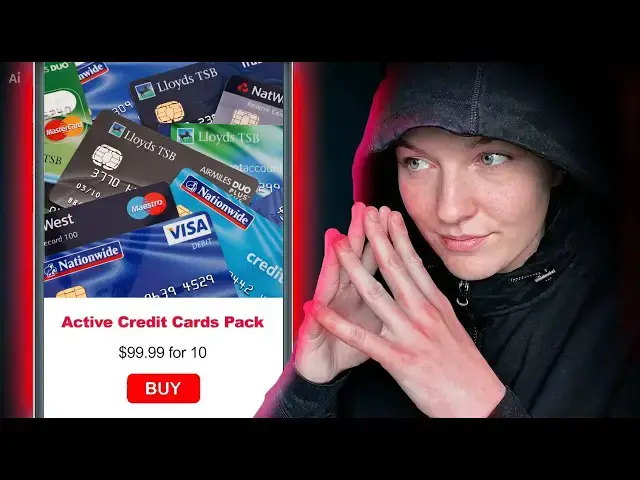
yours safe. There's a hidden world
0:15
online called the cybercrime
0:17
underground. It's a massive system that
0:20
makes trillions of dollars every year
0:22
operating on secret parts of the
0:23
internet most people never see. Dark
0:26
web. In this world, fraudsters don't
0:28
just hack. They buy and sell stolen
0:31
data. Things like usernames, passwords,
0:33
and credit card details are traded like
0:35
normal products. In fact, experts
0:38
believe there are over 24 billion stolen
0:41
usernames and passwords already
0:42
circulating online. One of the most
0:45
valuable things criminals look for is
0:47
[music] fresh credit card data. Once
0:49
they get it, they sell it in bulk to
0:50
other fraudsters who use it for scams.
0:53
Now, in countries with secure payment
0:55
systems like chip and pin EMV, it's
0:57
harder to clone physical cards. So,
0:59
instead, criminals mostly use stolen
1:02
card details for online transactions
1:04
where the card [music] doesn't need to
1:05
be present. This is called card not
1:07
present CNP fraud. With your card
1:10
details, scammers can buy expensive
1:13
items and resell them, purchase gift
1:15
cards in bulk which are harder to trace,
1:17
or even commit identity theft. And the
1:20
scale is huge. One of the biggest
1:21
underground marketplaces reportedly made
1:24
over 358 million dollars before shutting
1:27
down. So, the big question is, how do
1:30
hackers actually get your credit card
1:32
details in the first place? With that in
1:34
mind, here are five of the most common
1:37
ways hackers could get hold of your
1:39
credit card data and how [music] to stop
1:41
them. Before I continue, there's so much
1:44
I can't share on YouTube. [music]
1:46
Whether it's because of platform rules
1:48
or because some skills need deeper
1:50
hands-on explanations. Many of my videos
1:52
got deleted and that's why I created a
1:55
Policy Point Learning Community for you,
1:58
a place where I can share everything.
2:00
When you join, you're not just getting
2:02
another course, you're getting [music]
2:03
access to complete ethical hacking
2:06
guides, the tools and techniques I wish
2:08
someone had handed me when I was
2:10
starting out. And here's the kicker,
2:12
this is the stuff I don't teach on here.
2:14
No watered-down content, no clickbait,
2:17
just raw actionable knowledge. On top of
2:20
that, you'll join an exclusive community
2:22
on Discord. I pinned the link in the
2:25
comment section below, but it's not for
2:27
everyone. The link is only available for
2:29
those who are serious about the journey.
2:32
Number one, phishing. Phishing is one of
2:35
the most popular techniques for
2:36
cybercriminals to steal data. At its
2:39
simplest, it's a con trick in which the
2:40
hacker masquerades as a legitimate
2:43
entity, for example, a bank, an
2:45
e-commerce provider, or a tech firm to
2:47
trick you into divulging your personal
2:49
details or unwittingly downloading
2:52
malware. They often encourage users to
2:54
click on a link or open an attachment.
2:57
Sometimes doing so takes the user to a
2:59
phishing page where you'll be encouraged
3:01
to enter personal and financial
3:03
information. Phishing is said to have
3:05
hit an all-time high in Q1 2022. These
3:10
scams have evolved in recent years.
3:12
Instead of an email today, you may
3:14
receive a malicious text SMS from a
3:17
hacker pretending to be a delivery
3:19
company, a government agency, or another
3:22
trusted organization. Scammers may even
3:25
call you up again, pretending to be a
3:27
trusted source with the aim of obtaining
3:30
your card details. SMS phishing,
3:33
smishing, more than [music] doubled
3:34
year-on-year in 2021, while voice
3:37
phishing also surged, according to one
3:39
estimate. Number two, malware.
3:43
The cybercrime [snorts] underground is a
3:45
huge marketplace, not just for data, but
3:48
also malware. Over the years, different
3:50
types of malicious code have been
3:52
designed to steal information. Some
3:54
record your keystrokes, for example,
3:55
[music] as you're typing in card details
3:57
on an e-commerce or banking site. How do
4:00
the bad guys get these tools on your
4:02
machine? Phishing emails or texts are a
4:04
popular method. Malicious online ads are
4:07
another. In other cases, they may
4:09
compromise popular websites and wait for
4:12
users to visit them. Drive-by download.
4:15
Malware of this sort installs as soon as
4:17
you visit the compromised site.
4:19
Info-stealing [music]
4:20
malware is also often hidden inside
4:22
legitimate-looking but malicious mobile
4:25
apps. Number [music] three, digital
4:28
Sometimes hackers also install malware
4:31
on the payment pages of e-commerce
4:33
sites. These are [snorts] invisible to
4:35
the user, but will skim your card
4:37
details as they are entered. There's not
4:39
much users can do to stay safe aside
4:41
from shopping only with big-name brands
4:43
and websites, which are likely to be
4:45
more secure. Detections of digital
4:47
skimming, aka online card skimming, rose
4:52
between May and November 2021 for data
4:57
Sometimes card details are stolen
4:59
directly from the companies you do
5:01
business with. It could be a healthcare
5:02
provider, an e-commerce [music] store,
5:04
or a travel [snorts] company. This is a
5:06
more cost-effective way to do things
5:08
from the hackers' perspective because in
5:10
one attack, they get access to a huge
5:12
trove of data. On the other hand, with
5:15
phishing campaigns, they have to steal
5:16
from [music] individuals one by one,
5:18
although these attacks are usually
5:21
The bad news is that 2021 was a record
5:24
year for data breaches in the US. Number
5:29
When you're out and about, it can be
5:31
tempting to surf the web for free on
5:33
public Wi-Fi hotspots in airports,
5:36
hotels, cafes, and other shared spaces.
5:39
Even if you have to pay to join the
5:40
network, it may not be safe if hackers
5:44
They can use this access to spy on your
5:46
details as you enter them. How to keep
5:48
your credit card details safe.
5:51
Fortunately, there are plenty of ways to
5:52
mitigate the risk of your card data
5:54
getting into the wrong hands.
5:57
Consider the following as a good place
5:59
to start. Be alert. Never reply to click
6:03
on links in or open attachments from
6:05
unsolicited emails. They could be
6:07
booby-trapped with malware or they could
6:09
take you to legitimate-looking phishing
6:11
pages where you'll be encouraged to
6:15
Don't divulge any details over the
6:18
phone, even if the person at the other
6:19
end sounds convincing. Ask where they're
6:21
calling from and then call back that
6:23
organization to check. Although, don't
6:25
use any contact numbers they give you.
6:28
Don't use the internet on public Wi-Fi,
6:31
especially without a virtual private
6:33
network. If you have to, don't do
6:35
anything requiring you to input card
6:38
details, for example, online shopping.
6:40
Don't save card details to online
6:43
shopping or other sites, even though
6:45
this helps to save time on future
6:46
visits. This will reduce the chances of
6:49
your card data being taken if that
6:51
company is breached or if your account
6:53
is hijacked. Install anti-malware,
6:56
including anti-phishing protection from
6:59
a reputable security vendor on all
7:01
laptops and other devices.
7:05
Use two-factor authentication on all
7:07
sensitive accounts. This reduces the
7:09
chances of [music] hackers cracking them
7:11
open with stolen/phished passwords. Only
7:14
download [snorts] apps from legitimate
7:16
marketplaces, Apple [music] App Store,
7:20
If you're doing any shopping online,
7:22
only do so on sites with HTTPS.
7:25
It should display a padlock in the
7:27
browser address bar next to the URL.
7:30
This means there's less chance data can
7:32
be intercepted. Finally, it's good
7:34
practice to keep an eye on all your bank
7:37
and card accounts. If you spot any
7:39
suspicious transactions, tell your bank
7:41
card provider's fraud team immediately.
7:44
Some apps now allow you to freeze all
7:47
spending on specific cards until you can
7:49
ascertain whether there's been a
7:52
There are plenty of ways for the bad
7:54
guys to get our card details, but
7:56
also lots we can do to keep them at