live_tv
Livestream Starting Soon
00
Hours
:
00
Minutes
:
00
Seconds
Up next in 10


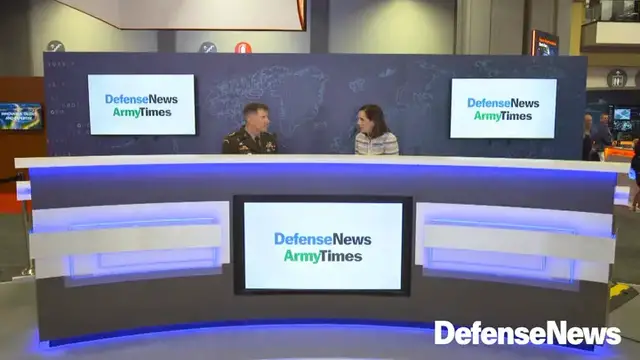
Gen. Hodne discusses combining modernization, training, and readiness into a single system to accelerate delivery of new capabilities.
Show More Show Less View Video Transcript
0:00
Hello, I'm Jen Judson, land warfare reporter for Defense News, and I am here with General
0:05
Hodney, who is the Transformation and Training Command commander, the very first of its kind
0:12
General, I had a chance to go down and actually see the activation of T2COM and see you speak
0:18
about that. So I'm hoping for our audience here that you could talk about, as the first commander of
0:25
T2COM. What's your vision for how this new organization will redefine army
0:30
readiness and force development? Yeah, no thanks. Thanks, Jen. Appreciate the time
0:35
and it's exciting to be here at AUSA and certainly you know the first answer I'd
0:41
give to that question is if you listen to the guidance from the chief and the secretary they were pretty clear you know we've got to deliver capability
0:47
rapidly to our formations so what a great opportunity to do that in
0:51
Transformation and Training Command. I served in both organizations as senior leader. You and I both were at the stand-up of Army Futures Command in Texas
1:00
in 2018. I'm very proud of what AFC did to jump-start modernization efforts, you
1:07
know, following the 20 years in Iraq and Afghanistan. I also was a member of the
1:12
Training and Doctrine Command. I was the Commandant of the U.S. Army Infantry School and as the FCC director, in addition to being in Army Futures
1:19
Command, I was also in the same building and shared a building with the Training and Doctrine
1:24
Command Headquarters, so I'm proud of everything. You've worn a lot of hats that are coming together
1:28
That's right, and I'm proud of what those organizations have done to contribute to the
1:32
readiness of our Army. I also saw where there was some inefficiencies in both organizations, so inevitably whenever
1:40
you have two organizations and two separate reporting chains, there's just going to be
1:46
a lack of synchronization in some areas. So we certainly collaborated very well, but this provides an opportunity for everyone
1:56
to be on the same team. Sometimes when you also have those organizations, you're conditioned to play a position in that
2:04
organization as opposed to playing a position across the depth of the organization
2:09
So I think it's going to be very, very helpful for the Army. Yeah. Well, it's interesting, you know, having covered Army Futures Command since its birth
2:17
and now it's deactivation, and, you know, all the great things that came from that are now folding into there
2:23
But, you know, I remember the argument for setting up Army Futures Command
2:28
was because the requirements process was nested in the TRADOC side of the house
2:35
and wasn't really getting the attention that it needed. and it broke out and had its own four-star command
2:42
there will be more attention to the requirements process and hopefully lots of solutions to getting after some of the struggles
2:49
that the Army was having with the requirements process. So talk about how you're still preserving all of that with T2COM
2:56
This isn't just repeating the past where AFC and requirements go back to live in TRADOC
3:02
That's not what this is. So talk a little bit about that organization a little bit more
3:06
I know that there's three star commands that are going to be underneath you
3:11
So if you could elaborate on that a little bit more. Thanks, Jen. I'll start with requirements
3:16
One requirement is really important. They inform the solutions we chase, but they're also just one component of the solution to deliver capability
3:27
The acquisition teammates certainly play an important role. contracting the science technology you know you know personnel certainly inform that so
3:37
that's that's just one thing i want to state up front the other thing is afc was intended to be
3:43
in the cfts specifically i was a cross team director you know to serve as a spotlight and accelerant you know the C did at the Fort Benning the maneuver C did was working on some of the things that informed the signature modernization
3:58
efforts that I delivered at the CFT the next-gen squad weapon the enhanced
4:02
night vision goggle binocular so it really was about a lot a lot of that was
4:07
incredibly important for the Army. But there were also some, you know, we had 48 different
4:14
organizations working on requirements, which was not the original intent. So you had the 10
4:20
ultimately 10 cross-functional teams. You had 12 capability development integration directorates. You had multiple Army capability managers. You had multiple trade act proponent offices
4:31
You had a number of fielded force integration directorates. So there was an alphabet soup
4:36
of folks that were all kind of voting and in some cases vetoing in the requirement space
4:43
Too many cooks in the kitchen all at the same level. That's exactly right. And this evolved over time
4:49
And everyone was trying to do the right thing to deliver capabilities for our soldiers
4:55
And they stood up these organizations to try to tackle certain problems
4:59
but ultimately when you're an acquisition teammate and you're answering to multiple
5:06
you know requirements owners you know across the space it does get confusing so what we've done now
5:13
is we've kind of restored the prominence of the centers of excellence so the cfts were
5:18
were intended again to be a spotlight and accelerant but they weren't intended to supplant
5:24
the work of the Centers of Excellence and their force modernization proponent roles
5:29
So the CFTs will now be replaced by what's called a future capability directorate
5:34
It's a FCD. There's one in each center of excellence. And I would think it's essentially all of the capabilities of the seeded
5:43
but with the culture of the CFT to drive delivery of capability faster
5:49
On the kind of the force development side, there's also going to be the Transformation Integration Directorate or the TID
5:58
They work directly for the Center of Excellence Commanding General. And that essential, that partnership between the Future Capability Directorate, the Transformation Integration Directorate
6:11
all at a Center of Excellence gives that Center of Excellence Commanding General an eye on the force design aspect of their warfighting function
6:18
war fighting system, and the real-time integration that's occurring in formation. So less people will certainly streamline our approach
6:29
Sure. Talk about the three three-star commands. What are they, and why is it important that they're nested together
6:36
Yeah, thanks for that. So I'll start with the leaning edge of this, the Futures and Concepts Command
6:44
They're at Fort Eustis, Virginia. That was my formal organization. so they're responsible for the force design aspects of transformation
6:52
They do all of the work on the future Army warfighting concept, which is really important
6:58
That serves as the North Star for the direction that we're going. A concept informs how we operate, it informs how we organize, and it informs how we equip
7:08
So that concept's really important. We've had six concepts over the last 50 years
7:13
The first three spanned about a 40-year time horizon. The next three span about 10 years
7:19
And when you look at the changing character war and the pace of technology, it's more
7:27
going to be a running estimate. So Futures and Concepts Command will stay laser focused on that And they do the associated experimentation that goes with it the project convergence capstone series joint combined experimentation is really important the the concept focused experiments that occur at the centers of
7:46
excellence and elsewhere will certainly inform that and lastly there they still
7:50
are responsible for generating requirements that come out of the you know these gaps the associated solution sets so futures and concepts command
8:00
kind of the pathfinder in this construct. The second command is the Combined Arms Command
8:07
They're going to be at Fort Leavenworth, Kansas. And they're responsible for the force development aspect of this
8:15
All of the centers of excellence, all of the schoolhouses, the new Army University system
8:21
which is the Army War College commanding general. He'll be responsible for the Army University system
8:29
So we'll link the Army War College with the Command and General Staff College, with the Sergeant Major Academy, with the Warrant Officer, you know, course
8:37
So we'll link all of those together under one Army University system
8:44
And then the two CONUS, Continental U.S.-based training centers. So the National Training Center and the Joint Readiness Training Center
8:52
That's really important because one thing I'll say is, you know, we're here at AUSA
8:57
USA, we're surrounded by some really compelling technology, really impressive solutions that
9:03
our industry partners are pursuing, but we're also the training command. And what CAC does
9:09
for that and how you change an army and how you transform an army does occur at our schools
9:16
and centers. So the training and leader development component of that can't be eclipsed by just
9:21
the material solutions we're pursuing. In fact, the training and leader development is really our decisive advantage on a modern battlefield. And the, you know, incorporating
9:31
the combat training centers allows us to insert the changes we know will occur at the front edge
9:40
so units, when they go to the combat training center, will be exposed to an opposing force that's
9:45
keeping pace with the, you know, what we know is they're going to encounter on the battlefield
9:50
So that's really critical. And then the third command, the U.S. Army Recruiting Command, led by General Davis, they're at Fort Knox, Kentucky
9:59
He'll be responsible for the force generation that ties it all together
10:04
And one way I'd, you know, offer this construct, so the Army's plan, which is total Army ysis
10:11
you know, each of these three-star commands, you know, play a role in that
10:16
So the Futures and Concepts Command, they inform the total Army ysis, the direction the Army's going
10:23
The Combined Arms Center, or the Combined Arms Command, they implement the Army's plan in real time with our formations
10:31
And the Recruiting Command resources that plan. So you link all. They know who to look for
10:36
That's right. And they know where the direct, if the Recruiting Command knows the direction the Army's going in a time horizon that's not reactionary
10:45
they're able to forecast in their own recruiting efforts, you know, which military occupational specialties we need to be pursuing to be able to fight and win tomorrow
10:57
I wanted to ask what, you know, what does full operational capability look like for T2COM
11:03
You know, how are you sorting through that, you know, as you build this out? There are still decisions that need to be made
11:08
But the activation this year was sort of the year in advance of that
11:15
So talk about some of the things that you are looking to accomplish or do in this first year so that you can feel that this has now reached a full operational capability if you will within a year Yeah no that a great question Jen So one this will be different than when we
11:31
activated Army Futures Command. That headquarters wasn't even built, and they were, you know
11:39
borrowed military manpower from the Pentagon to help stand it up. The CFTs were really the core
11:44
of the operating base for that. I had four people the day we activated AFC
11:50
and grew the CFTs later. So unlike AFC, the Transformation and Training Command
11:55
was delivering on day one. We had drill sergeants training recruits in our schoolhouses
12:02
We had recruiters actively recruiting future Army soldiers. So we were delivering on day one
12:12
And so our initial operating capability is at a high standard already
12:19
At FOC, we're running through the tape a year from now in all of the aspects I described from force design, force development, linking all of those organizations together
12:31
and for those that are familiar with like staring at a military organization line and block chart
12:37
you know what I would tell folks is this is going to be less about line and blocks on a piece of
12:43
paper and more about an integrated system you know nodes and links critical nodes critical links that
12:49
all that all communicate and collaborate together I think we'll really be at foc by the summer you
12:58
summer of 26, because it's generally when all of our people will move into position
13:02
so that way we can run through the tape next October. I did want to ask about the next warfighting concept
13:08
I know that that's been in the works. So if you could tease, what can we kind of expect from that
13:14
I know it's not out, but when do you sort of anticipate releasing that
13:19
I think that's a big benchmark that's going to come out of the command pretty soon
13:23
No, thanks for asking. One, I'm really excited about the warfighting concept, because, again, that's how we, defines how we operate, organize, and equip
13:32
So also our charge at Transformation Training Command is to turn that warfighting concept
13:37
into war-winning capabilities at speed and scale. The Secretary and the Chief have been talking about the urgency of our work
13:44
So that warfighting concept is, as you said, it's, you know, we're really close
13:49
I'm working directly with Army senior leaders on that right now. Our goal in December is to brief the general officer audience in the U.S. Army
13:57
at the Army Profession Forum and inform them on the warfighting concept. And then shortly after that, there will certainly be an unclassified version
14:04
that we're going to publish, and then the classified version that will be shared among our formations
14:11
And we'll certainly be teasing out some of that already because some of the aspects, many of the aspects of the warfighting concept
14:20
we're seeing on battlefields today. And our formations see that. and they're eager to adjust how they operate
14:29
because of what they can see online. Well, you have a lot of exciting things ahead
14:34
so thank you so much for taking the time to talk to me today. I hope you enjoy the rest of your AOSA
14:39
Yeah, thank you. I do want to leave one thing, and this is probably not only for your audience but mine
14:45
in Transformation and Training Command. So Colonel Ralph Bucket was a mentor
14:50
and even falls in, like, the idol category for me. I really, really respect him
14:54
He used to say all the time, you know, be proud but never satisfied
14:59
And what we have to do in Transformation and Training Command is think less about what we did yesterday
15:04
and more about what we're delivering tomorrow. And that's one of the key messages I'd offer
15:08
So thank you for this opportunity. All right. Thank you so much. Thanks, Jen. Appreciate it
#Education
#news
#Aerospace & Defense