Up next in 10



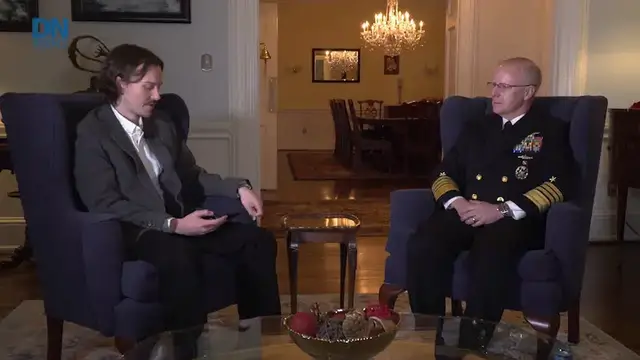
Adm. Daryl Caudle sits down with us to discuss achieving naval supremacy during an era of evolving strategic environments and fierce near-peer competition.
Show More Show Less View Video Transcript
0:00
Well, thanks for speaking with us today. Really appreciate your time. Happy holidays
0:04
You too. Yeah, so just to kick things off, I mean, how is the strategic environment that the Navy is operating in in 2026 different than maybe five or 10 years ago
0:15
You know, what changes need to be made to ensure that the Navy remains at the top of the evolutionary spirit
0:21
I know you've talked in the past about nearing the gap between, you know, near peer adversaries and things of that nature
0:27
Well, you know, I think in my 40 years, I would say this by far has to be the most complex geopolitical environment I've seen
0:35
A lot of that goes to, you know, the capabilities and the cost of entry lowering every year to get really, really good asymmetric capability
0:45
And so more folks can actually enter what we would consider something that would only have been considered to be something that a peer adversary would have had even five years ago
0:54
We saw this a bit in the Red Sea against the Houthis there with their drone systems and missile systems
1:02
And during that five-year period, though, our peer adversaries, this is like Russia and China and others
1:09
have grown significantly in their capability in that short amount of time
1:15
China in particular, you can just look and just see the rate of their production
1:20
their defense budgets and their spending and capability and capacity is significant
1:24
And Russia has put a lot of effort into asymmetric weapons, asynchronous weapons and offset capabilities to demonstrate the additional threats that we have to face in our Navy day to day
1:36
And so, you know, that landscape changes very quickly. The threat environment changes very quickly
1:42
And so staying ahead of that is a challenge for the U.S. Navy because of just the complexity and just our responsibility to be able to do this all over the globe
1:51
And one of the ways to maintain the most lethal fighting force is to ensure adequate quality of life for service members carrying out those combat missions
2:00
You recently visited Naval Base Guam, I believe on November 19th. The U.S. Navy recently awarded a $297 million contract to design and build replacement housing units at Anderson Air Force Base by December 2028
2:13
And that was after Navy Secretary John Phelan visited Anderson Air Force Base on May 2nd
2:19
And he had mentioned that the buildings looked condemned. And that was also after Vice Admiral Scott Gray had ordered inspections of all those barracks housing those sailors to be conducted
2:29
So my question is, you know, what is the Navy doing currently to ensure adequate living conditions for all service members
2:35
Well, you know, I've made it perfectly clear, I think, to everyone that knows me and certainly the sailors that are out there in our great Navy that I am a Sailors First Chief of Naval Operations
2:45
I prioritize the foundry, the fleet, and the way we fight. And sailors is part of the total force of sailors and civilians and contractors, people
2:56
And I'm a people-centric chief of naval operations. And so I care a lot about their quality of service, which is the sum total of their quality of life initiatives that we have in place and the quality of work, both
3:08
and make sure that the quality of service is something that they can be proud of to serve in
3:14
but they can be effective as a total sailor across body, mind, and spirit
3:18
Certainly their living conditions is one of those things. So a couple of things there
3:22
I am completely lockstep with the secretary on making sure that where our sailors live is mold and mildew free
3:30
It's clean. It's aesthetically pleasing to the eye that they're proud to call that home
3:35
that we work to make sure that it's properly air conditioned, They were putting Wi-Fi in, so they have Wi-Fi at a decent bandwidth that they can do the things they need to do to be effective in their personal life and professional life, and that they have access to good food on the bases as well
3:50
So all that's extremely important to me. And the last thing I would say is, you know, when I came in, I had about something between 8,000 to 10,000 sailors, surface ships, you know, sailors living on ships, that I wanted to get off those ships
4:03
I think you should work and live in a different place. And we've been in a steady decline on that to make that initiative come true
4:10
So I'm very proud of the work we're doing on that, that initiative to make sure that that sailors who are living on ships get off of that and that they're living in high quality barracks
4:19
And when they come ashore, it's a good place for them to call home. So we're talking about the personnel side of things
4:26
And that's one element of what you mentioned, the foundry, the fleet and the flight initiative you mentioned on X many times
4:32
And on the flip side of the personnel are the ships on which they sail and the readiness rates of those ships
4:38
You've stated that one of your big goals is that by January 2027, 80 percent of the Navy ships, submarines and aircraft will be combat surge ready
4:45
How do you ensure that? Well, it's a challenge. You know, if I look across what we call PESTO lines, which are people, equipment, the supply, the training and ordinance to make sure all those things can support a goal that 80 percent of our operational Navy is combat surge ready is a challenge across many of those letters that I just laid out
5:07
You know, we have gaps at sea. We're working hard on that. We've had record recruiting, you know, to make sure that we're bringing in this year alone
5:15
like 46,000 sailors to chip away at the, you know, the ships that don't have enough sailors on board
5:22
And I think you know that we will by the time I end as CNO will have solved the gaps at sea problem I working very closely with the Secretary of the Navy and Undersecretary of War to accelerate munitions delivery
5:35
We have a lot of munitions that are on contract that haven't delivered. So we're working with the Defense Industrial Base, those who build our munitions, to make sure we make good on those deliveries
5:44
And we actually put enough money in to ensure that we're staying up on munitions
5:48
You can't win a war without munitions. Backlog of supply parts are a challenge
5:54
We use that as a bill payer at the end of the fiscal year frequently, and that accumulates over time
6:00
Ships can't be self-sufficient at sea without the parts and the supply lockers they need to actually make those repairs
6:07
And then last is training. And so to be combat surge ready, you have to be certified and meet a certification event to be licensed to say
6:15
I can flow you into combat. And so we have a model for that in the submarine force, the surface Navy, and aviation Navy to certify those sailors and crews to be combat surge ready
6:28
I think we've got a good model for that and we're healthy there. So across those things, people, I've got some problems that I'm working on that I need to fix
6:36
Accelerate munitions through the efforts we're working with the undersecretary of war and get those backlog of supply parts done to actually make good on that
6:44
And this is touching on kind of what you just mentioned, but on the lower end of that readiness scale, we've previously reported in August that the readiness rate of amphibious assault ships critical to marine missions had fallen to 41 percent
6:57
And you just kind of mentioned it. But if you don't mind expanding just a little bit more about how do you improve that efficiency gap or how do you make sure those efficiency gaps are closed
7:05
And again, ensure that those ships are ready to be deployed and they're ready for joint service operations
7:11
Yeah, I work with the Commandant of the Marine Corps, Eric Smith, on this very closely and the Secretary of the Navy
7:17
And we are all one minded on the need to improve the readiness of our amphibious ships
7:25
You know, there's not an excuse here, but was maybe a lower priority during much of the time post 9-11 when Marines were being predominantly deployed to the Middle East
7:36
And so I think the readiness fell off during that time. I think the Navy took their eye off the ball a bit during that time and basically transferred some risks to the amphibious force that we are now getting back into the right state of readiness
7:51
We know those ships are crucial to the Marines and how we build Marine expeditionary units and our amphibious readiness groups to deploy those forces
8:01
So I'm working very closely with Eric Smith on this. I want to be more transparent in it, too
8:07
You know, I think the way we actually describe the readiness of those forces needed some improvement
8:12
We needed to work on how we actually do maintenance, the maintenance model
8:17
All these are steam plants, so they have some legacy systems on board
8:21
So when I was at Fleet Forces, I worked with then the Vice Chief of Naval Operations
8:26
to conduct a holistic review of the amphibious force with Admiral McClain, who's the surface type commander
8:34
Vice Admiral McLean is in San Diego, did a comprehensive review of that. A lot of what he determined we're working on is part of our plan of action and milestones to improve the readiness
8:45
But a lot of that lives in maintenance. So getting planning done better, making sure the milestones are met on time
8:51
and the transparency by which how we put heat and light on that force
8:56
and know very carefully the things that need to be done to improve that readiness
9:01
are all initiatives that we're doing to get that force back to the 80 percent level it needs to be
9:06
We're talking about ensuring that ships and vessels meet a certain percentile of readiness
9:11
One of the ways, and we're kind of touching on it now, is by reinvigorating the maritime industrial base
9:16
How does the Navy and potential partners, maybe the South Korean shipbuilders, plan to do that
9:22
You know, how do you plan to do that in the year ahead, the next five years? How does that look
9:26
You know, I don't think I've ever served in a time when I've seen the Navy, Congress, and Office of the Secretary of War
9:34
Everyone's on the same page here. There is no daylight between any stakeholder, and I think the American people as well
9:41
that shipbuilding in the United States is something that needs to be reinvigorated
9:45
That's commercial shipbuilding and certainly naval combat ships. So we're all on the same page
9:50
And so I think Congress is working hard to fund that initiative
9:54
And so what we have to do now is make sure we can work with the defense industrial base, the submarine industrial base and the shipbuilding writ large to take those monies and convert that into output improvements
10:07
That's workforce improvements, lower attrition, better retention, better training, more resilient supply chains
10:14
You know, a lot of these second and third tier suppliers, you know, don't have steady demand signals so they don't stay in the game long enough so that I end up having challenges with long lead time material, which forces me not to have the parts on hand when I want to repair or do new construction
10:31
So that's in play as well. Automation on the work floors, on the production floors, need to be improved
10:38
We do too much by hand, there's too much artisan work going on
10:42
and not enough automation where we have high reproducibility and the ability to actually have higher output with fewer people
10:49
All of that needs to be worked through the lens of leveraging our foreign partners And I think they have a vital role in this You seen Hanwha Shipbuilding a South Korean company purchase the Philadelphia shipyard I love that idea but I think there even more that can be done
11:07
to leverage them even within their own country. When we pass laws like the Jones Act, those laws are passed
11:13
with a set of assumptions that are made at the time the law is passed
11:17
A certain political and geopolitical environment, a certain threat environment, a certain belief that the United States
11:23
has a certain capacity, all of those assumptions need to be revisited. And I believe that law is a
11:29
bit antiquated. We need to be able to open up to some additional foreign shipbuilders to help us
11:35
build ships now while we get our own internal shipbuilding up to speed to help bridge me into
11:41
that future. And part of those shipbuilding efforts that you're speaking about are building
11:45
out an unmanned fleet, whether it's surface drones or whether it's subsurface drones
11:50
So how does the sailor, the future sailor, fit into those efforts and do an increasingly unmanned world
11:57
How do you envision sailors' roles evolving or maybe even being potentially eliminated with the advent of this technological innovation
12:05
You've got AI and maybe that requires less human intervention. What in your mind is that perfect harmony between that future sailor, that human and machine operations
12:16
I think it's a whole new set of competencies. You know, we need sailors that, and I've got this in motion, in fact, that have a deep understanding in general
12:26
The general sailor, and I'll get to the more specific case, has needs in today's world a deeper understanding of artificial intelligence
12:34
How those types of capabilities are used, how to leverage them just to do day-to-day tasks
12:39
So large language models and chat GPTs and gen AI and capabilities like that must be leveraged to allow the sailor to do things what was taking hours to do historically can be done in minutes in a much more reproducible and higher quality way
13:01
So all administrative tasks need to be leveraging these types of AI capabilities
13:06
So every sailor needs some degree of understanding of that. That starts at boot camp, goes to their A schools and their C schools, all the way up through their career development
13:15
I should be giving them more understanding or artificial intelligence. There are specific rates that are going to be involved with unmanned robotic and autonomous systems
13:26
They need even more education in this. It deals with how to leverage programming capabilities that do write code, how to leverage that code to do mission planning for these systems, how to maintain these attributable and sometimes fungible systems that are brand new that are not the typical type ship systems that we're used to
13:48
Things that have, you know, they're basically battery powered, things that need resilient command and control networks to operate, things that have remote, you know, joystick type capability and how you actually actually operate them in situ
14:02
That curricula and that training modules need to be developed in a way that sailors learn today
14:09
And that's through essentially YouTube type delivery. So a lot of things need to be done to revamp that
14:15
Our continuous training curriculum that we're building to go do those things are in motion
14:22
It takes time to get that done, but that is where we're moving as a Navy to improve the competencies of those specific skills
14:29
Staying on the topic of combat readiness, the Navy has devoted a considerable amount of resources to the South Combo Area of Operations
14:37
Does that allocation of resources jeopardize combat readiness in other theaters, such as the Indo-Pacific
14:46
How does the service plan to maintain the posture in the South Carolina of Operations while maintaining a naval supremacy that you've spoken about
14:54
that you've said is important to deterring near-peer adversaries? Is there any concern at all that the devotion of those resources to the South Carolina of Operations might be stretching the service thin at all
15:06
The Navy's responsibility to generate force generates it based on the capacity we have
15:12
So if and then we go through a global force management adjudication process to determine which combatant commanders get those forces
15:22
So the Navy's got a conveyor belt in peacetime to generate those forces based on how much capacity I have and the number of ships I have available
15:30
They're not in depot and other things like that that have an output that's fixed
15:37
So if the secretary of war and the chairman and the Southcom commander need forces to go to U.S. Southern Command, that's fine
15:45
So the fact, I'll give you an example, the fact that the Ford Strike Group is operating in the Southern Command Area of Operations and not in the European or Central Command is not changing any additional resource drain on the Navy
16:01
It's just where it's currently operating. The bigger challenge for me and the thing I push back on is when those deployments get extended
16:09
So as long as I generate what the Navy can generate and we make decisions on where they go with some strategic discipline and we don't try to overextend those deployments, then it's OK
16:21
It will not be an additional drain. But when we basically design the system for seven month deployments and they start doing eight and and nine deployments then I have a problem That impacts sailor quality of life It impacts
16:36
you know, families. It impacts the readiness of those systems. It impacts how I do contractual
16:41
maintenance agreements, because now when the start date was supposed to start, it's not being met
16:46
So that's a problem for me. And then perhaps most important is the next loop of deployment
16:52
is now postponed. So it's kind of short-term vision that actually has long-term impact on
16:58
when I'll need those forces in the future. So the extension is the problem for a service chief
17:04
not where they operate, as long as we don't exceed the capacity of the Navy
17:08
Speaking of the South Carolina area of responsibility, there's obviously been no shortage of news stories coming out of that region right now, specifically regarding the
17:15
U.S. military strikes against alleged drug-carrying vessels in the Caribbean and the Eastern Pacific
17:20
Ocean. How do you see that mission progressing and evolving and what does success look like there
17:26
Well, I think the president has made it very clear, along with the Secretary of War, that a
17:30
threat to the homeland, which is a primary focus of the national security strategy
17:36
the Western Hemisphere, is a concern of theirs. They view, and I share this view, that drug flow
17:43
into the United States is a big threat to the United States
17:48
So they have taken on the actual daunting task to actually try to counter that
17:55
and working really hard day to day with using military force, Coast Guard
18:00
law enforcement, intelligence agencies to try to counter that flow of drugs
18:04
into the United States. It's my job to provide those forces and then Southern Command's job to employ
18:10
those forces in accordance to the rule of engagement that are provided to the combatant
18:14
commander and those mission priorities. It's currently the holidays, as we can see from the
18:20
decorations. The Army recently announced a service-wide initiative to check in on service
18:25
members during the holidays, checking on their mental health. How's the Navy checking in on
18:29
service members' mental health during the holidays and then overall just in terms of the whole year
18:33
There is nothing that hurts me more than to lose a sailor to suicide. And to know that a sailor
18:39
struggling or their family members with mental health challenges. So it is a big priority of me
18:45
and the Master Chief Petty Officer of the Navy. We both have this as a focus here, and we use every
18:50
resource possible to ensure we're doing that. But as you said, I think, and it's the best way to say
18:56
this, nothing, regardless, I can do medically or I can check in on them at my level is more
19:02
important than sailors checking in on sailors, watching each other's back, seeing and being
19:08
intrusive and knowing when they're struggling. Understanding simple things like are they
19:12
financially challenged? Are they having marital or relationship problems? Are they coming in late
19:18
to work? Are they having trouble sleeping? It's these basic cues that makes us know that we need
19:23
to do more. Are the high-risk sailors in a command really being managed properly? Are we making sure
19:30
we're being aggressive and giving them the resources they need? And, you know, it's just being a shipmate
19:35
and just paying attention and making sure that we, especially at this time of the year
19:40
which we know can affect different sailors differently, that we're really paying attention to mental health
19:45
and the things that we know that can lead to things like suicide. So it's an extremely important and probably at no time of the year is it more important than right now
19:53
How do you hope that the Navy will be different between now and the end of your time as CNO
20:00
What's the legacy that you hope to leave behind? I hope that the Navy I leave behind is one that every sailor knows that I value them greatly
20:08
that they know I value their families and the contributions they do every single day
20:13
that they know how much I appreciate them volunteering to serve in something bigger than themselves
20:18
to wear the cloth of the nation, to serve with honor, courage, and commitment
20:23
that I leave the Navy in a better place to be ready to fight
20:27
that the readiness of the Navy is really at a world-class level
20:31
The things I told you before, that the ship's magazines are filled with the ordinance
20:36
that those deliveries are happening on time, that there are no more gaps at sea
20:40
that captains are having to be creative with how they man the watch bills because they got the right number of people that they need
20:47
When ships are at sea, sailors have the competency they need and the repair parts to fix their ships to keep those ships at sea
20:55
And that the quality of life and quality of service initiatives that we need to put in
20:58
along with the foundry initiatives, which are things like schoolhouses, the infrastructure of our bases
21:05
piers, the hangars, that all those things that we typically want to neglect so that we can buy capabilities
21:12
that we've actually prioritized those in just over this four-year period that we put the energy and resources in
21:18
to make the foundry of our Navy world class. And if I do that, I'll leave the campground a little cleaner than I got it
21:26
I'll be happy with that. I got one more question for you, and it's probably the hardest-hitting question we'll ask today, which is, what are you hoping for as a gift during the holidays
21:34
Oh, I guess, you know, that I'm going to take time to actually go see my daughters and my five grandchildren
21:41
I know that makes my wife extremely happy. When she's happy, I'm happy. And spending time with children and my grandkids during this holiday season is what I'm looking forward to
21:50
Well, thanks for speaking with us. It's been a pleasure. I appreciate the time and the interview and appreciate you taking the opportunity to spend a little bit of time with the CNO
21:58
Of course
#Military
#news
#News
#Navy