Up next in 10



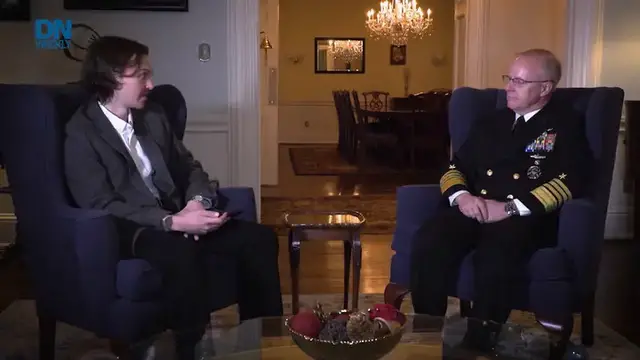
As the calendar turns to 2026, the Chief of Naval Operations looks ahead regarding his force’s role in Souther Command.
Show More Show Less View Video Transcript
0:00
Speaking of the South Carolina area of responsibility, there's obviously been no shortage of news stories coming out of that region right now, specifically regarding the U.S. military strikes against alleged drug carrying vessels in the Caribbean and the Eastern Pacific Ocean
0:13
How do you see that mission progressing and evolving and what does success look like there
0:18
Well, I think the president has made it very clear, along with the Secretary of War
0:21
that a threat to the homeland, which is a primary focus of the national security strategy
0:27
the Western Hemisphere, is a concern of theirs. They view, and I share this view, that drug flow into the United States is a big threat to the United States
0:40
So they have taken on the actual daunting task to actually try to counter that
0:46
and working really hard day to day with using military force, Coast Guard, law enforcement, intelligence agencies
0:54
to try to counter that flow of drugs into the United States. It's my job to provide those forces and then Southern Command's job to employ those forces
1:02
in accordance to the rule of engagement that are provided to the combatant commander and those mission priorities
1:09
It's currently the holidays, as we can see from the declarations. The Army recently announced a service-wide initiative to check in on service members during the holidays, checking on their mental health
1:19
How's the Navy checking in on service members' mental health during the holidays and then overall just in terms of the whole year
1:24
There is nothing that hurts me more than to lose a sailor to suicide and to know that a sailor is struggling or their family members with mental health challenges
1:35
So it is a big priority of me and the Master Chief Petty Officer of the Navy
1:39
we both have this as a focus here and we use every resource possible to ensure we're doing that
1:45
But as you said, I think, and it's the best way to say this, nothing, regardless, I can do
1:50
medically or I can check in on them at my level is more important than sailors checking in on sailors watching each other back seeing and being intrusive and knowing when they struggling
2:02
understanding simple things like are they financially challenged? Are they having marital
2:07
or relationship problems? Are they coming in late to work? Are they having trouble sleeping
2:12
These basic cues that makes us know that we need to do more. Are the high-risk sailors in a command
2:18
really being managed properly? Are we making sure we're being aggressive and giving them the
2:23
resources they need? How do you hope that the Navy will be different between now and the end of your
2:29
time as CNO? What's the legacy that you hope to leave behind? I hope that the Navy I leave behind
2:35
is one that every sailor knows that I value them greatly, that they know I value their families and
2:40
the contributions they do every single day, that they know how much I appreciate them volunteering
2:46
to serve in something bigger than themselves, to wear the cloth of the nation, to serve with honor
2:53
courage, and commitment. That I leave the Navy in a better place to be ready to fight. That the
2:58
readiness of the Navy is really at a world-class level. The things I told you before, that the
3:04
ship's magazines are filled with the ordinance, that those deliveries are happening on time
3:09
that there are no more gaps at sea. It's that captains are having to be creative with how they
3:13
man the watch bills because they got the right number of people that they need. When ships are
3:18
at sea, they have the, sailors have the competency they need and the repair parts to fix their ships
3:23
to keep those ships at sea. And that the quality of life and quality of service initiatives that
3:28
we need to put in, along with the foundry initiatives, which are things like schoolhouses
3:34
the infrastructure of our bases, piers, the hangars, that all those things that we typically
3:39
want to neglect so that we can buy capabilities, that we've actually prioritized those in just
3:45
over this four-year period that we put the energy and resources in to make the founder of our Navy
3:50
world class
#Military
#news
#Navy