Up next in 10

Connecting coalition forces through real-time interoperability and shared awareness
Oct 15, 2025

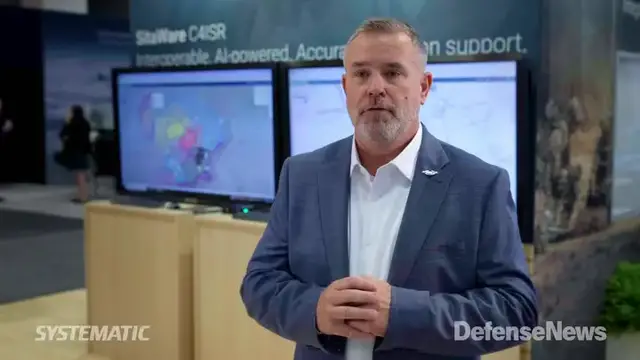
Systematic highlights cross-nation data sharing, automated network resilience, and tools for fires and medical tracking in complex environments.
Show More Show Less View Video Transcript
0:00
And we can share it and understand. We have a shared understanding between us and our coalition partners or even inside our own organization
0:06
We can truly see how this fight is developing and what we need to do to continue forward
0:16
So when we talk about interoperability, I think there's two key points that we need to talk about with interoperability
0:21
One is the ability to connect and the other ability is to share that data. When we're talking about connecting to each other, SIDAware has a great capability for those types of connections
0:29
If it's another CIDAWARE customer, we can connect right out of the box with no issues. But if it's not another CIDAWARE customer, we can do those connections to other means
0:36
MIP, NIFI, NVG, all different types of protocols that are available out there for us
0:41
Second part is that sharing of the data or having that data share. Once those connections are made, we have a great ability to connect and share that data between the two
0:49
What's most important, though, especially with the CIDAWARE suite, is that we have rich data
0:53
What that allows for us is to have a shared understanding of the battlefield
0:57
field no matter the echelon no matter the partner We both see the same thing and we both understand that situational awareness with that interoperability When we talk about interoperability amongst echelons for SIDAWARE product I think one of the key aspects of SIDAWARE specifically is our ability to have that interoperability
1:14
across all echelons. Normally what we see currently is that we do interoperability
1:19
but we do it at the higher levels, the three-star and four-star level. With SIDAWARE, we can do
1:23
interoperability all the way down to the lower echelons at the tactical edge. For example, a U.S
1:27
battalion commander can have interoperability with a Polish company commander and we will do
1:32
a direct connect between those two on the spot. We won't need to rely on another higher headquarters
1:36
provide that interoperability for us. What that does is gives those tactical commanders, those
1:41
guys on the ground, the ability to have that shared understanding again at the lowest levels
1:46
and see that fight and see it develop and understand exactly what's happening from both ends
1:50
So when we're talking about resilience in a D-deal environment, one of the key aspects about
1:54
SIDAware is our ability to move data where we are hardware and radio agnostic
1:59
which means that we can connect to different radios on different echelons and be able to move this data
2:04
But what significant about that is when we have one echelon connected to two or three different types of networks our CIDAWARE tactical communications will move that data automatically over the best available network at that time
2:15
That provides that automated pace plan that is so critical on today's battlefield
2:19
which then inters that inshore delivery so that we know that the data sent from any echelon to another echelon gets there, no matter what
2:26
So CIDAWARE provides seamless operability and exercises around the world. Over the last few decades, we've supported over 50 countries and probably 200 plus exercises with interoperability
2:35
I think it would be fair to say that most of these interoperability exercises probably would not occur without systematic being on the ground with our CIDAWARE suite because of that interoperability that we provide
2:44
For example, in the last year, we've supported warfighter exercise 25-4 with three core and three UK, two units both using CIDAWARE, connect to each other, and we shared that same data
2:54
Also later this summer, we used SIDAWARE was conducted at CWICS, which is an interoperability exercise on showing how to move data between all these different countries
3:02
Again, we were one of the key aspects of that. And finally, the third exercise that we did this year was BULG Questless in the last couple of weeks at Fort Pickett, Virginia
3:09
This exercise showed our interoperability in the fires community which was phenomenal because we were able to pass fires data between two different nations from call to fire to executing and delivering those fires on the battlefield That was significant because one nation could support another nation
3:25
one nation being the call for fire, the second nation delivering those fires, again, providing
3:30
that strong fire support in today's modern battlefield. So today, Next Gen C2, CIDAWARE
3:34
out of the box, as it stands today, supports a very good portion of that project. Primarily
3:39
as mentioned before, our detail environment, being able to move that in a detail environment
3:43
along with our coalition and joint interoperability. There's a couple other things
3:47
about SIDAware that a lot of people don't know. Number one, as part of NextGen C2
3:51
is that CBRN, the chemical reporting that is required. The SIDAware SIDA products does chemical downwind messages and all the reporting from the
3:59
tactical edge all the way up to the highest levels. Second part is a very new feature that we have in SIDAware
4:03
called Battlefield Care Management. This is a new process where we can actually track patients from
4:07
point of injury through all the different aid stations all the way back to World 4. Again, using these D-dual environments where commanders know exactly where their foot
4:14
soldiers are on today's modern battlefield
#news