Up next in 10



Ancient Norse seafaring Vikings were well-known as explorers, traders, and warriors. But when they got down, they weren't messing around. Sure, Norse Sagas tell of epic voyages, and etymological studies have granted insight into the lands to which they traveled and settled. Archeological evidence has revealed records of weapons and armor they fought with. But what our current perception of the Vikings sometimes overlooks, and shamefully so, is that, in addition to thrilling expeditions to far-flung lands, Vikings had some pretty wild festivities. Maybe you're wondering "What were Viking parties like?"
Show More Show Less View Video Transcript
0:00
Vikings have become known as some of history's most ferocious warriors
0:04
In films and TV, they're often depicted mid-axe swing, usually screaming through the tangled knots of a thick beard
0:11
But these infamous Norse warriors didn't just fight hard. As it turns out, they also partied pretty hard as well
0:19
How many of your get-togethers have a body count mostly made up of horses? Today, we're taking a look at what it was like to kick it at a Viking party
0:27
Okay, time to Ragnarok this joint. To clarify, the term Viking refers to various groups of seafaring people from present-day
0:38
Denmark, Norway, and Sweden, who lived between the late 8th and 11th centuries, which is
0:44
sometimes known as the Viking Age. You know, because of all the Vikings
0:48
Because they were such skilled sailors and navigators, piloting powerful naval weapons
0:53
known as long ships, their voyages took them to distant lands and gave them a fearsome reputation
0:59
as pirates and raiders. We have evidence that Viking explorers traveled as far away as North
1:04
Africa, present-day Russia, the Middle East, and North America. All of this travel made them a
1:10
profoundly significant force in European history, and it's probably why their legend remained so
1:15
widespread and infamous to the present day. It's also pretty much the only reason we know anything
1:20
about the Vikings' own culture and beliefs. Though the Vikings had an alphabet, and sometimes
1:25
inscribed brief writings on rune stones, they were largely a verbal society without a real
1:30
literary culture, until Latin was introduced to Scandinavia along with Christianity in the late
1:35
11th century. Hey, they were seafaring people. It's hard enough lugging all your paperbacks to
1:40
a new apartment. Imagine having to constantly load your entire anamorphs collection into a longboat
1:45
The primary information we have about the Vikings in the historical record comes from either their
1:49
artifacts dug out of the ground by archaeologists or written accounts from the other cultures and
1:54
societies with whom they were in contact. For example, the epic poem Beowulf, the inspiration
2:00
for the accidentally terrifying Robert Zemeckis film, is set in Scandinavia in the 6th century
2:05
but was actually written down in Old English many years later. Okay, so we've been over who the Vikings were and how we know so much about them
2:18
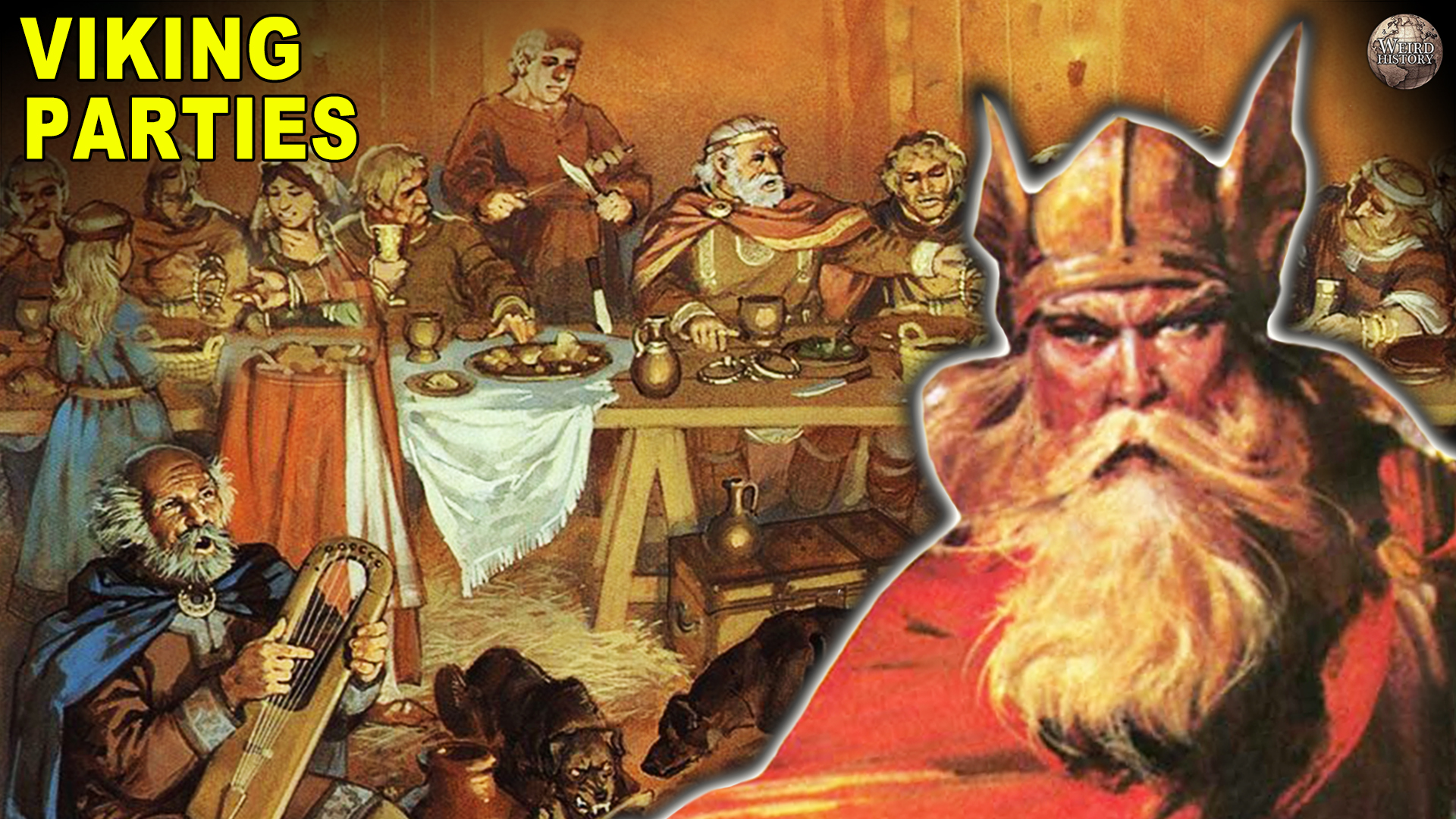
But what about the parties? The Vikings actually had buildings known as meat halls
2:23
built solely for the purpose of social gatherings. Typically, these massive structures were built on the estate of a powerful lord
2:30
often with a specific purpose or celebration in mind They were presumably also really great for bingo nights Some measured up to 50 meters in length nearly half the size of a modern soccer field
2:42
Many Viking legends revolve around the construction of great new mead halls to honor particularly noted guests
2:48
or royalty, giving a whole new meaning to the phrase, this party is going to be legendary
2:53
One story, recounted by poet and historian Snorri Sturlissen in the 13th century, tells of a chieftain who
3:00
invited the kings of both Norway and Sweden to stay with him on his estate. But when he asked
3:05
the Norwegian king to stay in his most sumptuous and newly built mead hall, the Swedish king took
3:10
great offense and had the chieftain bumped off. Nowadays, the king would simply write a strongly
3:15
worded review. But back then, yelp was just the noise a chieftain made when you hit him with your
3:19
axe. The mead halls were large, but they weren't necessarily stocked full of modern-day luxuries
3:24
and conveniences. Chairs, for example, would have been relatively rare at the time, and thus
3:29
reserved only for the wealthiest and most important guests at any particular gathering
3:34
Everyone else would have to make do with sitting on tables, benches, or even the ground
3:38
And it isn't really a party until you're completely out of places to sit, right
3:42
Another way to signify status during a party or other social event in Viking society was fashion
3:48
Most Viking clothing was practical in nature, with an emphasis on keeping the wearer warm
3:53
and protected enough to survive the harsh Scandinavian climate. Parties provided an opportunity to mix things up and dress for style points rather than just survival
4:02
Men would wear gold belt buckles, while women favored brooches, necklaces, and other kinds of jewelry
4:08
Items raided or traded from other cultures, such as imported silk garments, were particularly sought after
4:14
The Mead Hall was so important in part because of the lengthy nature of some of these parties
4:19
These were not like modern shindigs, where you could show up fashionably late and then start planning a stealth goodbye by 9.30 to get home in time for the bachelor
4:28
No, even minor Viking feasts and festivals, such as the celebration that would follow a successful expedition or a wedding, would often last several days
4:37
Major feasts, like the one marking the arrival of the winter solstice, could last for up to two weeks
4:43
The subsequent hangover could last for much longer. We know that Vikings enjoyed live musical performances
4:54
Archaeologists have found a number of musical instruments on Scandinavian settlements, including
4:58
flutes, hornpipes, and harps. But the intense music they produced wasn't for everyone
5:04
One surviving account of Viking culture was written by an Arab traveler named Ibrahim ibn Yaqbal Tartushi who traveled north from the then kingdom kingdom of Al in Spain to a Viking settlement on the present German border
5:19
His writings give a lot of insight into the way Vikings were living at the time
5:23
including their music, which he did not care for. In his account, Ibrahim wrote
5:27
I have never heard any more awful singing, and compared it to a groan that comes out of their
5:33
throats, similar to the bark of the dogs, but even more like a wild animal. Sounds like the
5:39
Vikings were really into mayhem, the band, the activity too. Parties would also feature poetry
5:45
readings from artists known as scalds, relating legendary epic stories of heroes undertaking great
5:51
missions and going on adventures. Party games were popular as well, including dice rolling and even
5:57
tabletop board games. Varieties here included an early version of chess and a strategy game known
6:03
as Knefetavo, which likely translated to something along the lines of King's Table
6:09
Archaeologists have found a number of boards that were probably used for the game
6:13
but the actual rules have been lost to history. Eh, just make something up. How hard could it be
6:19
There are also some historical accounts of a game called Fliding, which was essentially like a very
6:24
early version of a rap battle. Teams of men and women took turns reciting impromptu poetry about
6:30
their various adventures and exploits. These activities were also sometimes accompanied by
6:34
drinking games or challenges, because of course they were. For the outdoor Viking kids, some of
6:39
the games were a bit more physical and intense. These included wrestling matches, stone-lifting
6:45
competitions, and even sword fights. A game called Hunutukasht involved Vikings throwing bones at one
6:51
another with the purpose of inflicting the maximum amount of pain possible. Swimming competitions
6:57
included challenges to see who could hold their opponent's head underwater for the longest amount
7:02
of time. Basically, it was a series of hold my mead events. Another game, called Toga Honk
7:08
is not particularly well understood by historians, but was likely some kind of variation on tug-of-war
7:14
As best as we could figure, based on the scant information available, men would sit on the ground
7:19
facing one another with their knees bent and their feet pressed together. Then they'd each pull on
7:23
the ends of a rope while attempting to straighten their legs, ultimately flipping over their opponent
7:28
or something. This interpretation of the game does not seem that far-fetched. We've seen similar
7:33
feats of strength performed at modern weddings with an open bar. Due to the risk factor of some
7:38
of these games, Viking feasts and parties had a somewhat higher casualty rate than a standard get-together
7:43
Like any great party Viking celebrations largely revolved around food and refreshments
7:54
Guests would typically be offered an assortment of roasted meats, including poultry, beef
7:58
and horse. And while horse may sound a little intense for an hors d'oeuvre, or hors d'oeuvre, by
8:04
the third day of non-stop drinking, you'd be shouting, pass the horse dip, just like
8:09
Eric the Red. Side dishes included fruits and green vegetables cooked with butter
8:14
Vikings were also noted fans of alcoholic beverages, so beer, meat, and fruit wines would have been all steadily poured
8:22
Rounds of drinking would often be filled with toasts to kings, noble deeds, and the gods
8:27
Many Viking celebrations served a direct religious function. Large gatherings were in part designed to show deference to the gods
8:34
and perform rituals that would keep them happy. So I guess Odin was really into that tug-of-war game
8:40
Many of these rituals took the form of what were known as bloat sacrifices
8:45
These were direct exchanges with the divine, in which the Vikings offered an animal or animals to the gods to make a specific request
8:52
such as nice weather or good fortune in an upcoming battle. There were also at least four fixed rituals on the annual Viking calendar, aligned with the change in the seasons
9:02
Many different kinds of animals were used in these rituals, but horses were the most popular
9:06
This horse thing is starting to feel kind of personal. The animal's blood was spread on altars, the walls, and even the attendees, who would also
9:15
usually eat the sacrificed critter. No sense in being wasteful. There are several historical accounts of Viking cultures, including humans, in their ritual
9:24
sacrifice lineup. But remember what we said before about how most of what we know about the Vikings comes
9:31
from the civilizations that were around them rather than the Vikings themselves
9:35
That's important to bear in mind. A lot of people disliked or feared the Vikings, probably because of all the raiding and pillaging
9:42
So there's a reason to believe that some of the more bloodthirsty stories about Vikings
9:46
may have been embellished. Christian writers, in particular, often employed horrifying stories about pagan cultures like
9:52
the Vikings as a form of propaganda. One German bishop, Dietmar of Marsborg, describes Vikings meeting up every nine years to atone
10:01
for their evil deeds by offering the gods 99 humans, along with horses, dogs, hens
10:06
and hawks. Geez, the boat ride to that meetup must have been loud as hell
10:11
This may or may not be true, but as a Christian outsider, Dietmar obviously didn't witness
10:16
the ritual himself. It was either a second or third-hand account, or he made it up entirely
10:22
But it does sound like a heck of a party