Up next in 10



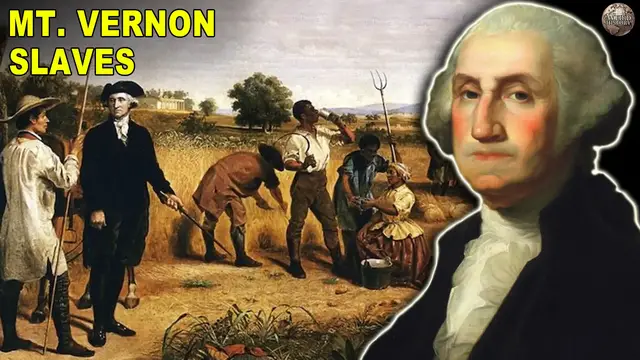
Many people know George Washington owned slaves, but what was life like for the slaves at Washington's Mount Vernon plantation? Hundreds of enslaved people toiled on the estate, where Washington expected them to work all day, six days a week. Many saw Washington as a harsh slave owner, and dozens of his slaves attempted to escape.
Show More Show Less View Video Transcript
0:00
Many people know George Washington owned slaves
0:03
But what was life like for the slaves at Washington's Mount Vernon Plantation
0:07
Long story short, it was pretty bad. Today, we're going to take a look at what
0:11
it was like to be a slave at George Washington's Mount Vernon. Washington's slaves were expected to work six days a week
0:20
with most slaves having Sunday off. On top of their chores on the plantation
0:24
they also had to manage their living quarters, grow and cook their own food, and repair their clothes
0:29
Many enslaved people also produced goods they could sell for money. One record from 1792 mentions a Mount Vernon slave named Easter selling a broom for sixpence
0:39
During what little time off they had, some slaves played games. In 1798, a witness described a group of 30 slaves playing a game called Prisoner's Base
0:48
which involved running and jumping. But there really wasn't that much time for games
0:53
At Mount Vernon, Washington expected his slaves to perform their labors whenever it was light out
0:58
In a 1789 letter to one of his overseers, he wrote, to request that my people may be at their work as soon as it is light
1:06
Work till it is dark and be diligent while they are at it can hardly be necessary because
1:11
the propriety of it must strike every manager who attends to my interest
1:15
Washington added, lost labor can never be regained. Because of that, he ordered the overseer to ensure that every laborer, male or female
1:23
does as much in the 24 hours as their strength, without endangering their health or constitution will allow
1:30
While Washington and his family lived together in their mansion, their slaves weren't so lucky
1:35
Mount Vernon was an 8,000-acre plantation divided into five different farms. Mansion House Farm, closest to the Washington family's house
1:43
was home to the most slaves, around 90 people. They included bricklayers, carpenters, cooks, gardeners
1:50
and millers, who all helped the plantation run smoothly. The farm also housed Washington's wagon and cart drivers, butlers and maids, and others who worked
1:58
in the mansion. Another 45 slaves lived at Doge Run, and 57 lived at River. 41 slaves lived at
2:05
Muddy Hole, and 76 at Union. The outer farms mainly grew crops, and the slaves living there
2:12
were forced to work in the fields all day. These living arrangements were used to separate members
2:16
of enslaved families, so they rarely saw each other. For example, one enslaved man at Mount
2:21
Vernon, called Joe, lived at Mansion House Farm, while his wife, Priscilla, was a field worker
2:26
and lived at one of the outlying farms known as Doge Run with the couple six children Joe was only allowed to visit his family on days off which were pretty much exclusively Sundays and holidays Even then
2:38
visiting the family wasn't easy for a slave. Sometimes they had to walk miles after sunset
2:43
to see their loved ones. Joe and Priscilla, for example, lived three full miles apart and had to
2:48
walk home before sunrise the next day. Washington, of all people, had complaints about the situation
2:53
he himself had engineered. He complained that his slaves were tired because of their night walking to see their families
3:02
The enslaved people at Mount Vernon lived in tight quarters. In 1798, a Polish poet named Julian Nimsewicz
3:10
visited the plantation and recoiled at what he found in the slaves' quarters, which he called huts
3:16
In his own words, their habitations cannot be called houses. They are far more miserable than the poorest
3:21
of the cottages of our peasants. The husband and his wife sleep on a miserable bed, the children on the floor. In one home
3:29
the visitor witnessed a boy about 15 lying on the floor with an attack of dreadful convulsions
3:35
The living conditions, coupled with poor nutrition, meant slaves were often stuck
3:39
with infectious diseases. On January 22, 1792, the farm manager recorded, a great many children are very bad with a whooping cough at every quarter
3:49
Sometimes Washington's request went far beyond what most slave owners asked from their slaves
3:54
According to historian Robert Darnton, who wrote a book called George Washington's False Teeth
4:00
the most famous founding father bought teeth from his slaves. And some evidence supports the idea
4:05
In 1784, the Mount Vernon Plantation Book recorded the transaction where Washington's dentist
4:11
Dr. Jean Le Maillot, purchased nine teeth from a slave. At the time, dentists bought teeth to
4:18
transplant into patients' mouths. But in a move that will maybe surprise no one
4:22
the slave owner paid his slave only a third of the commonly accepted rate
4:26
In 1784, Washington wrote, I confess I have been staggered in my belief
4:31
in the efficacy of transplantation. Several years later, he lost his last tooth
4:36
and moved to full dentures. Washington's famous dentures also contained human teeth
4:41
possibly teeth he had also bought from his slaves for bargain basement rates
4:48
Dozens of enslaved people tried to flee from Mount Vernon, but only some were successful
4:53
During the American Revolution, when Washington was busy with the British, a group of 17 slaves crossed enemy lines
4:59
to escape The 14 men and three women successfully fled to a British warship docked on the Potomac River offshore from Mount Vernon Slaves who closely served the Washington family also attempted to escape
5:11
Washington's assistant, Christopher Shields, unsuccessfully tried to flee with his fiancée. Hercules, the family cook, escaped from the plantation, as did Martha Washington's maid, Ona Judge
5:23
Judge was 22 years old when she learned her owner's plan to gift her to a stranger as a wedding present
5:30
She fled to New Hampshire, where she lived the rest of her life as a free woman. In 1792, Washington marveled at how well his slaves trained
5:38
their dogs. He wrote to his manager, it is astonishing to see the command under which their dogs are
5:43
But he was also suspicious. Washington suspected the slaves were using the dogs
5:49
to steal sheep at night, which they then sold on the black market to make extra money
5:54
Getting himself on the bad side of the ASPCA or any pet person, Washington ordered his manager to round up the dogs and kill them
6:01
If slaves were caught with unauthorized pets, they were punished on Washington's orders
6:06
It's worth mentioning Washington wasn't the only founding father who hanged dogs. Thomas Jefferson also hanged his slaves' dogs as a punishment
6:13
Have they never heard of John Wick? In a practice that sounds like something Montgomery Burns would do
6:22
George Washington kept a record of when his slaves gave birth because their children automatically became his property, and he needed to track his wealth
6:30
In one report dated February 16, 1793, an overseer noted that during the previous week
6:36
the plantation gained nine lambs and one male child of Linus. After giving birth
6:41
enslaved women at Mount Vernon were expected to return to their regular jobs in three to five
6:45
weeks, leaving their newborn in the care of other children or elderly relatives. Women on such
6:51
maternity leave were still expected to work from home and took part in sewing and knitting soon
6:56
after giving birth. Slave children received no formal education and were expected to work on
7:00
the plantation as soon as they were physically able. Some might think Washington was merely a
7:05
product of his time, and these practices were par for the course for a slave owner. But that doesn't
7:10
seem to be the case. Washington was cruel to his slaves even by the standards of other slave owners
7:16
One of Washington's neighbors, a man called Richard Parkinson, claimed it was the sense of
7:21
all Washington's neighbors that he treated his slaves with more severity than any other man
7:26
Washington is known to have ordered whippings when slaves disobeyed and reportedly threatened
7:31
to sell them off to the West Indies where they would never see their families again In 1799 when Washington died in his Mount Vernon home his estate housed 317 slaves
7:45
Washington inherited his first slaves at age 11, when his father died and left 10 slaves to his son
7:51
Washington and his family owned more than 500 people over five decades
7:56
He also interacted with hundreds more throughout his life. In addition to the hundreds of slaves living at Mount Vernon
8:01
there were many other slaves in Fairfax County, Virginia. By the time Washington helped win the American Revolution
8:08
more than 40% of the population in Fairfax County was made up of enslaved people
8:13
Mount Vernon slaves frequently resisted their enslavement. Some fled to permanently escape slavery
8:19
while others resisted through subtle methods, such as faking illness or working slowly
8:25
Some misplaced or damaged tools or equipment as a form of protest
8:29
It was difficult for masters to prove that slaves were passively resisting
8:34
Slaves also resisted by stealing from the plantation. Washington's overseers often accused the slaves of stealing tools, rum, food, and fabric
8:43
In 1794, Washington advised a woman planning to open a shop to avoid dealing with slaves
8:49
He wrote to his manager that if she deals with them at all, she will be unable to distinguish between stolen or not stolen things
8:59
At one time, Washington lived in Philadelphia, where Pennsylvania's Gradual Abolition Act
9:04
ordered enslaved people to be set free after six months in the state
9:08
However, Washington used a loophole to avoid losing his own slaves. Every six months, he made sure his slaves left the state
9:16
to ensure they could not use the law to their advantage. Over time, Washington's ideas on slavery evolved
9:23
In his later years, the president privately became convinced that slavery as an institution
9:28
should gradually end. When he wrote his will in 1799, Washington included orders
9:34
to free his slaves after Martha Washington's death. However, because Martha technically owned the majority
9:40
of Mount Vernon's slaves through her first marriage, Washington couldn't actually free all of them
9:45
The will left Martha afraid her husband's slaves might try to kill her
9:50
Martha's friends may have considered this fear reasonable, because according to Abigail Adams
9:55
the wife of President John Adams, Martha was advised to set them all free at the close of the year
10:00
She listened to that advice. And on January 1, 1801, just over a year after Washington's death
10:07
Martha set her husband's slaves free
#Law & Government
#Discrimination & Identity Relations
#Human Rights & Liberties