Up next in 10



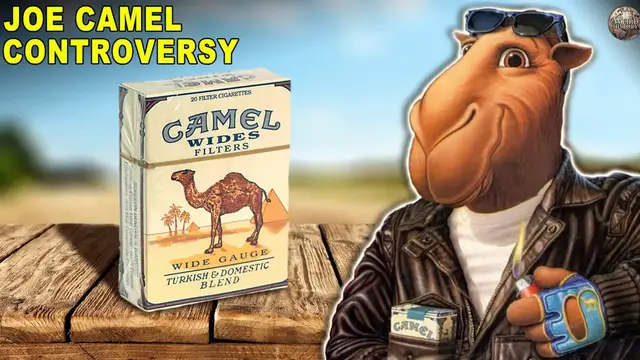
The rise and fall of the Joe Camel cartoon is a lesson in disastrous advertising. As a marketing ploy, Joe was allegedly created to draw smokers away from Camel's competitors. The Joe Camel advertising campaigns utilized a masculine camel, or “smooth character,” to create an association between the brand’s cigarettes and the high life. However, when suspicions arose concerning the true audience impacted by these campaigns, attitudes about the smoking ads quickly shifted.
Show More Show Less View Video Transcript
0:00
Joe Camel was a cool cartoon mascot designed to promote
0:03
Camel cigarettes as a vital component of a hip, youthful lifestyle. However, Joe's undeniable appeal among teens and young children
0:11
ignited a firestorm of controversy that ultimately brought the campaign to a premature end
0:17
OK, smoke them if you got them, because it's time for some weird history
0:21
Or maybe don't smoke them and just throw them out. Yeah, go with that. Toss them out
0:30
Joe Camel made his first US appearance in Camel's 75th anniversary campaign in late 1987
0:36
which bore the catchy slogan, 75 years and still smoking. The mask was still just a twinkle in
0:42
Jim Carrey's eye at the time, so a cartoon Camel was the next best spokesman. However
0:47
the hip new version of Joe Camel created by R.J. Reynolds Tobacco Company had already been
0:52
appearing in ads across Europe for over a decade. The anthropomorphized Camel was designed in 1974
0:57
by British artist Nicholas Price, who based it off Old Joe, the camel figure in the original camel logo
1:04
which had been used by the company ever since its first advertising campaigns back in 1913
1:09
This advertising strategy shift examined that musty old logo and boldly asked
1:14
what if the camel was vaguely sexy, like a Don Johnson vibe
1:18
To better compete with tobacco industry leaders like Marlboro, camel hoped to freshen up their brand's stale image
1:24
Not a totally unreasonable concern, given that their logo was old enough to receive retirement benefits
1:29
The anthropomorphic version of Joe was depicted in fashionable threads like leather jackets and
1:33
tuxedos, and was usually surrounded by adoring women. Every girl's crazy about a sharp-dressed
1:39
camel. Past campaigns had invited smokers to walk a mile for a camel. I'd walk a mile for a camel
1:45
Which is pretty tough to do after finishing a pack of camels. This new jazzier character
1:49
promoted a vastly different image. Joe now appeared as a yoked man's man, who invited
1:54
consumers to become a smooth character like himself, basically a cross between James Bond, the Marlboro Man
2:01
and, well, a camel. And Joe Camel doesn't walk a mile for his cigarettes
2:06
He drives a flashy sports car. Critics, however, soon began to argue
2:10
that the ads were playing off the desire of young people to be hip, and that such an advertisement
2:14
would increase rates of underage smoking. I mean, who didn't buy an orange ascot
2:19
when they saw Fred on Scooby-Doo? That guy was cool. I want to be cool
2:22
With the introduction of Joe Camel, it became evident that R.J. Reynolds was using the advertising campaign to reflect a more
2:29
contemporary image among the crucially important segment of younger male smokers. But that raises the question, why was the youthful demographic so important
2:38
Well, according to Roy Burry, who was the senior vice president of the securities firm
2:42
Kidder Peabody and Company, and a close follower of all the happenings in the tobacco industry at
2:47
the time the under smoker is the most prized of all consumers A young smoker will stick with smoking longer than an old smoker who perishes or quits Translation our older customers keep dying of lung cancer and emphysema So we need to create some fresh young addicts
3:04
Also, according to a study by Dr. Joseph R. DeFranza with the University of Massachusetts
3:09
by creating advertising campaigns that present smoking as being pleasurable and making a person more popular and attractive
3:16
the company could more easily convince young people to try it. Basically, Camel was employing the tried and true advertising tactic of convincing consumers that using your product will make them totally ' rock stars
3:28
Cigarette companies were also well aware of the importance of establishing brand loyalties with consumers while they were still young
3:35
You hook a customer in their teens or 20s, and they'll literally smoke your product into the grave
3:39
According to Mazina Brown, Inc., the agency that R.J. Reynolds worked with after October 1989
3:45
Joe Camel was meant to be a whimsical caricature designed to appeal to the adult smoker
3:50
and to encourage adult smokers to switch brands, which I guess makes sense, given the wide association
3:56
between youthfully bodacious cartoon characters and fully grown adults, which is also why we see
4:02
so many luxury car commercials featuring a cartoon dog with wraparound sunglasses and a skateboard
4:07
Oh, wait, maybe we don't see that, but we should. We really, really should. Even when critics claim that Camel's ads
4:13
were strategically targeting young people, R.J. Reynolds continued to assert that Joe Camel was
4:18
simply a standard market tactic meant to persuade adult smokers to switch to Camel from bigger
4:23
brands like Marlboro. One of the most notable scandals surrounding the Joe Camel cartoon was
4:33
his hip appeal to children and underage consumers. Even though R.J. Reynolds' tobacco company
4:38
repeatedly denied creating the character to deliberately attract underage consumers, statistical data suggested this was happening anyway
4:46
regardless of their intent behind pumping millions of advertising dollars into a cool cartoon mascot
4:51
Just four years after Joe's U.S. introduction, the Journal of the American Medical Association completed a study demonstrating that the cartoon character
4:59
was widely recognized by and popular among children. Another study in a New York Times article noted that
5:05
even without cigarette advertising on television, six-year-old children were as familiar with Old Joe Camel as they were with the Mickey Mouse logo
5:13
for the Disney Channel. Honestly, we shouldn't feel good about either of those metrics. Yet another
5:17
study published by Dr. Paul M. Fisher for the Medical College of Georgia showed that upon
5:22
surveying 229 preschoolers, nearly 30% of three-year-olds and more than 90% of six-year-olds
5:29
correctly linked Old Joe Camel to a cigarette. Regardless of whatever R.J. Reynolds' intentions
5:35
may or may not have been, the kids loved Joe Camel because he's pretty freaking cool
5:40
Look at him. I want what you have, Joe Camel. Well, everything except the tar lungs
5:50
In addition to concerns over the advertisements themselves critics also targeted the various other promotional tactics used by Camel One such promotional tactic Camel Cash
6:00
rewarded those who purchased cigarette packs with special points, or C-notes, that could be redeemed for a Joe Camel merchandise
6:07
Promotional merchandise options included everything from Joe Camel-branded t-shirts, baseball caps, watches
6:12
and inflatable mattresses. Who needs a real mattress when you have an inflatable Joe Camel mattress
6:18
Actually, most everybody. The problem was that many of these items and the system of points through which they were
6:23
earned were especially attractive to young people. Dr. John P. Pierce from the University of California at San Diego explained to the New
6:30
York Times in 1991, these are all items that kids would want, and the only way to get them
6:36
is to buy camel cigarettes. Even worse, the Cigarette Packages Five Pack Collectors series placed Joe at the center
6:42
of a whole group of cartoon friends, just like other iconic children's cartoon characters
6:47
The way Mickey Mouse had a stable of pals like Minnie Mouse, Donald Duck, and Goofy
6:51
Joe Camel was given Josephine, Eddie Floyd, Max, and Buster. Because apparently, adult consumers prefer a deep bench of animated sidekicks
7:00
I started smoking for Joe, but I stayed smoking for the sidekicks
7:05
R.J. Reynolds continued to deny allegations that the Joe Camel ads were targeting teens and children
7:11
But the data soon became undeniable. As early as 1990, less than three years after Joe Camel's American debut, a survey conducted
7:18
by Dr. John P. Pierce with the University of California, San Diego, revealed that among
7:23
5,040 California youths, 22% of girls and 25% of boys who smoked chose Camels
7:30
This finding, cross-referenced against similar studies, suggests this demographic had a significant influence on Camel's growing market share against its competitors
7:38
As the New York Times explained, since the start of the Old Joe campaign in 1988
7:42
the brand had become the choice of one quarter to one third of smokers under the age of 18
7:47
Before the campaign began, less than 1% of those under 18 smoked camels. In fact
7:53
another study found that, on average, young people were found to be far more familiar with
7:57
the camel logo than the adults were across the US. With the rise of Joe Camel ads in the late
8:07
1980s and the ensuing debate around the campaign's intention, the entirety of the tobacco industry
8:12
came under fire. Findings from various studies regarding the impact on youth populations garnered
8:17
the attention of numerous politicians, including Representative Henry A. Waxman, who called for a
8:23
ban on all tobacco advertising. Waxman could see that the success of the tobacco industry was
8:28
dependent on recruiting people who didn't believe smoking kills. He wrote, enticing children
8:32
Third world populations and disadvantaged members of our own society to smoke is the only way for tobacco companies to make up for the numbers of smokers who quit or die
8:42
Waxman also sarcastically compared tobacco ads to the moral equivalent of a national campaign to drive drunk just for the fun of it Well that sounds extreme nobody ever been killed in a high cigarette collision We get his point As the debate grew R Reynolds formulated a response
8:58
inviting people to learn more about each side of the argument. The company did this by taking out ponderous full-page ads in several newspapers and magazines
9:06
stating that they'd like to clear the air on smoking, and unequivocally stating they believed smoking was for adults
9:12
Ironically, even though that message supposedly was for children, they abandoned their flashy cartoon mascot for walls of boring text
9:20
If statistical data from numerous surveys and studies wasn't enough to prove the impact Joe Camel ads had on young people
9:26
R.J. Reynolds' own internal documentation would serve as the smoking gun, pun intended
9:31
In a document from September 30, 1974, marketing presentation detailing goals and plans for the next year
9:38
the very first point reads, increasing our young adult franchise. It then goes on to note the growing importance of the young adult in the tobacco market and that they will represent 27% of the population in 1975
9:51
They represent tomorrow's cigarette business. Here, the youth the document refers to includes anyone aged between 14 and 24, which by definition includes those who are underage
10:02
The document goes on to reflect the strategies and campaigns in place for the coming year that are meant to achieve the increase in their young adult audience
10:09
There is also additional documentation, courtesy of the RJR Marketing Research Department, outlining the specific influences that lead a smoker to select their first brand of cigarette
10:20
So, Joe Camel's appeal among kids was no accident. It was a priority conceived at the highest levels of the company
10:26
After nearly 23 years worth of advertising on an international scale
10:37
R.J. Reynolds Tobacco Company chose to retire Joe Camel in 1997. Despite the fact that harsh
10:42
criticism from politicians and anti-smoking advocates plagued the campaign for its entire
10:47
lifespan, the company asserted that the decision was purely strategic and not due to social and
10:52
political pressure. In other words, they wanted to be clear that they weren't retiring Joe Camel
10:57
because people thought it was the right thing to do, but merely because he wasn't selling as many
11:01
cigarettes as he used to. After that, Camel reverted back to its classic logo, and R.J
11:06
Reynolds removed Joe Camel from magazines, billboards, and store displays. But the success
11:11
of Joe Camel had already left its mark on the cigarette advertising industry. Cool, whose parent
11:16
company is the Brown and Williamson Tobacco Corporation, revamped their own brand mascot
11:21
in much the same fashion as Camel did. Willie was a sunglass-wearing penguin
11:25
who seemed to be aiming for the same type of audience as Joe Camel. Much like old Joe, Willie had been present
11:31
in earlier cool ads, though without the Sega Genesis attitude of his 90s incarnation
11:36
However, cool denied that Willie was inspired by Joe Camel and his success
11:41
A brand spokesperson even claimed, I don't even think there's any resemblance at all. Yeah, yeah, I get his point
11:46
I mean, penguins don't even live in the desert