Up next in 10



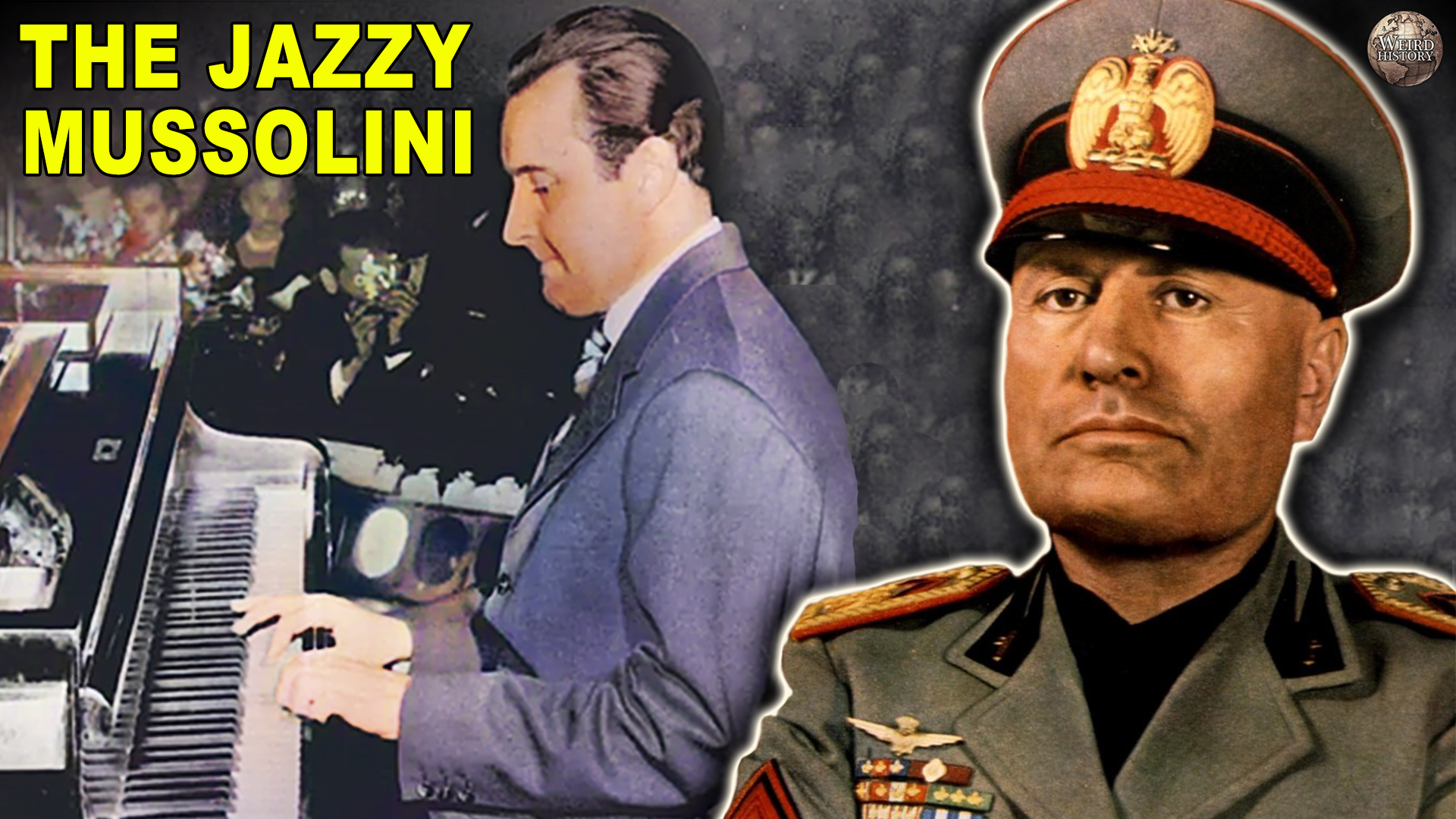
Romano Full was a well-known jazz musician in Italy during the second half of the twentieth century. But for a time, few people knew he was actually a son of one of the world's most infamous dictators, and he'd changed his name in order to protect himself and his career. Full's father, Benito Mussolini, created the Italian Fascist Party in 1915 and became prime minister of the country in 1922. He made sweeping social changes, reduced unemployment, and for a time, earned the respect of his countrymen who nicknamed him "Il Duce" (The Leader). Mussolini made a military pact with Adolf Hitler in 1939, forcing the country into World War II in 1941.
Show More Show Less View Video Transcript
0:00
Have you ever been so embarrassed by your parents
0:02
that you just wanted to straight up change your name? Romano Foll might have you beat
0:08
He was a well-known jazz musician in Italy during the second half of the 20th century
0:12
But for a time, a few people knew he was actually a son
0:16
of one of the world's most infamous dictators. Today on Weird History, we're talking
0:21
about the son of a fascist dictator who changed his name to become a jazz musician
0:27
OK, time to find out why jazz is about the notes you don't play and the dictators you don't name
0:37
Romano Foll's father was the notorious dictator Benito Mussolini, who created the Italian Fascist Party in 1915
0:45
and became prime minister of the country in 1922. He made sweeping social changes, reduced unemployment
0:52
and for a time, earned the respect of his countrymen, who nicknamed him Il Duce, the leader
0:58
But then Mussolini made a military pact with Adolf Hitler in 1939, forcing the country into World War II in 1941
1:07
At the end of the war, Mussolini was smoked by angered Italians while trying to escape to Switzerland
1:12
and his remains were publicly displayed in a way that suggested his approval rating could not get any lower
1:19
Romano was convinced that his family name would cause him problems. And let's be honest, he was probably correct
1:25
Not a lot of Mussolinis or Hitlers in the phone book after 1945. After he changed his name, he found some success as Romano Full
1:33
Eventually, however, he fully embraced his heritage and became a member of what would become one of Italy's most celebrated jazz bands
1:40
Jazz was developed in the United States in the early 20th century by African Americans in New Orleans
1:46
It later flourished in cities such as Chicago and New York City, but the music was censored in Italy because fascism has terrible taste
1:53
Have you ever listened to the playlist of a fascist? Well, I have, and it's nothing but sitcom theme songs and commercial jingles
2:00
Mussolini's government even gave American jazz musicians Italian-sounding names as part of its nationalistic ideology
2:07
For instance, Louis Armstrong was also known as Luigi Forte Braccio, because if it ain't Italian, we don't want it
2:15
Ironically, if fascism had kept its hold on Italy, Romano Mussolini would never have been able to play the music he held so dear to his heart
2:23
But when the National Fascist Party was outlawed following the end of World War II
2:27
the younger Mussolini was ready to hit the stage More on that in a bit Mussolini had five children and Romano was the youngest
2:40
He was born in northern Italy, and his brother Vittorio introduced him to jazz at the age of four
2:46
by playing choice tunes for him on 78 RPM records. For the Mussolinis, music was a family affair
2:52
Romano's father even played the violin. It's hard to imagine vicious dictators
2:57
indulging in creative hobbies, but even Hitler loved to paint. Romano learned how to play the
3:02
accordion and taught himself piano, and he and his father would often perform classical music
3:06
with each other. Romano was one of Italy's first jazz aficionados and wrote reviews about the music
3:12
for magazines. Romano was just 17 years old when his father was assassinated in April of 1945 while
3:19
trying to escape to Switzerland with his mistress. Even though jazz had been banned in the country
3:25
Mussolini was proud of his son's musical skills. Eleven days before his death, he told Romano, who was on the piano, to keep playing
3:33
Basically, a reach-for-the-stars pep talk for his soon-to-be fatherless son. Those were the last words Mussolini ever said to Romano
3:40
which makes his decision to dissociate with the family name just to become a famous musician seem a little cold-blooded
3:47
Coming dangerously close to feeling bad for Benito Mussolini, what does that mean
3:54
After World War II ended, Romano, like another famous Italian artist, Madonna, knew that reinvention was the key to success
4:04
So he decided to dissociate himself from his, let's say, ill-remembered father by changing his name so he could perform without getting pelted with rotten vegetables and possibly bullets
4:15
He hid his identity by using the name Romano Full when he performed
4:19
Romano believed that it would have been nearly impossible to pursue a jazz career if people knew his father
4:25
was one of the world's most notorious dictators. And while we can't know for certain
4:29
whether audiences would have overlooked his parentage, he was probably right. Romano kept his surname under wraps for some time
4:36
as he pursued his career. He joined a jazz quartet and played in nightclubs and restaurants, spending
4:41
the rest of his time at his day job as a graphic artist and also raising pigs and chickens
4:46
because you gotta do what you gotta do to get by. Every struggling musician has a 9 to 5
4:51
Romano also dabbled in producing, but lost a lot of money investing in a film
4:56
He got back on his feet by selling paintings of clowns. He learned the craft from a clown he met while his band performed at a circus but reportedly didn speak much about it and treated it merely as a side hustle So a clown taught him how to paint clowns while he was moonlighting at a circus Should have invested in that movie Romano
5:15
In the aftermath of World War II, Romano, his mother, and sister were banished to the island of Ischia
5:21
in the Gulf of Naples, which isn't so bad, all things considered, as far as banishments go
5:27
Romano kept out of the public eye because of his family's roots, changing his name
5:31
when he performed and working small side gigs to support himself. He worked in lumber and
5:36
construction until 1956, when the editor of a jazz magazine asked him to perform in San Remo
5:42
Shortly afterwards, Romano landed a recording contract with Italian RCA. The dictator's son
5:48
had finally hit the big time. At the beginning of his career, when he was still trying to figure
5:53
out his new public persona, Romano mimicked the musical style of blind English pianist
5:58
George Shearing. As he evolved as an artist, his style was later compared to Andre Previn
6:04
the German-American pianist, conductor, and composer, and Oscar Peterson, who was considered to be one of history's greatest jazz pianists
6:16
After a few years and presumably some self-inflicted guilt trips thinking about his extremely dead dad
6:22
Romano Full, a.k.a. Romano Mussolini, began using his real name and spent many years touring Italy
6:28
with his band, the Romano Mussolini All-Stars. Why not just Mussolini, like Van Halen, or maybe
6:35
Mussolini Turner Overdrive? He wasn't 100% completely driven by familial obligation, though. Romano figured out that using his full name was actually beneficial to his career
6:47
Many people were intrigued by his family connections and wanted to know more about
6:51
him and his music. At one point, a photographer reportedly hid under his bed in order to get a
6:56
picture of him. And since surprisingly, nothing negative had come of it, Mussolini decided to
7:02
embrace the built-in fame that came with his surname. Thanks, Dad. Amazingly, Romano was
7:07
actually well-respected by others in the music industry. He toured the world, visiting places
7:12
such as Canada, Mexico, Venezuela, Australia, South Korea, Kenya, Germany, Russia, and the
7:19
United States. Really, the US? Hmm, wonder how that tour went. He played along jazz icons, including Ella Fitzgerald
7:28
Duke Ellington, Dizzy Gillespie, and Lionel Hampton. Romano grew particularly close to Chet Baker
7:34
who admittedly was apprehensive about meeting Mussolini son for the first time Baker reportedly said to Romano while shaking hands sorry to hear about your dad There no way to make that exchange not awkward That why Hallmark doesn make condolences
7:48
for your deceased dictator sympathy cards. One of the highlights of Mussolini's career
7:52
was his 1963 album, Jazz Allows Studio 7, which he recorded with Romano Mussolini All-Stars
8:00
It actually ended up winning the Italian Critics Award that year. Romano made headlines in the 1960s
8:06
when he married Anna Maria Ciccolone, who sang in his band and was the sister of the famous actress Sofia Loren
8:13
The couple had two daughters, Alessandra and Elisabetta. Alessandra grew up to become a member of European Parliament
8:19
and led the Italian National Conservative Party, Alternativa Sociale. Romano actually wrote the party's anthem, titled The Pride of Being Italian
8:29
Romano's mother, Raquel, reportedly didn't think Anna was good enough for her son
8:34
which was a bold criticism considering who Raquel had married. Critical in-laws aside, the marriage did not last
8:41
Romano wed his second wife, the actress Carla Marina Puccini, with whom he had a third daughter, Raquel
8:48
That's one way to get back on mom's good side. In a move that one might contend was driven by
8:55
rejecting my father's name and creating a pseudonym to have a career, guilt
9:00
Romano wrote the memoir Il Duce, My Father, in 2004. Surprisingly, the musician had mostly good things
9:06
to say about his notorious dad. He remembered Mussolini as being a kind and gentle individual
9:11
and even referred to him as a caring family man. While he criticized his father's decision
9:16
to send 7,000 Italian Jews to concentration camps, Romano didn't disavow Mussolini's political views
9:23
revealing in an interview before his death that his father's work was 90% positive
9:28
The fact the dictator's remains were hung from a gas station and pelted with stones would seem to challenge that estimate
9:35
One year later, in 2005, Romano wrote Ultimo Otto, or Last Act
9:40
about Mussolini's final days. His book received mixed reviews in his homeland
9:44
for their comparatively rosy view of Mussolini's legacy. Romano Mussolini passed away in 2006 from heart disease at the age of 78
9:53
The Italian newspaper La Repubblica noted that his funeral kicked off with Gershwin's iconic summertime
9:59
and was also peppered with fascist phrases and straight-arm salutes from some of the attendees
10:04
Other music included the fascist anthem Facetta Nera, as well as the gospel hymn
10:09
When the Saints Go Marching In, made famous by Louis Armstrong. Oh, excuse me, I mean Luigi Forte Braccio
Jazz & Blues
Social Issues & Advocacy