Up next in 10



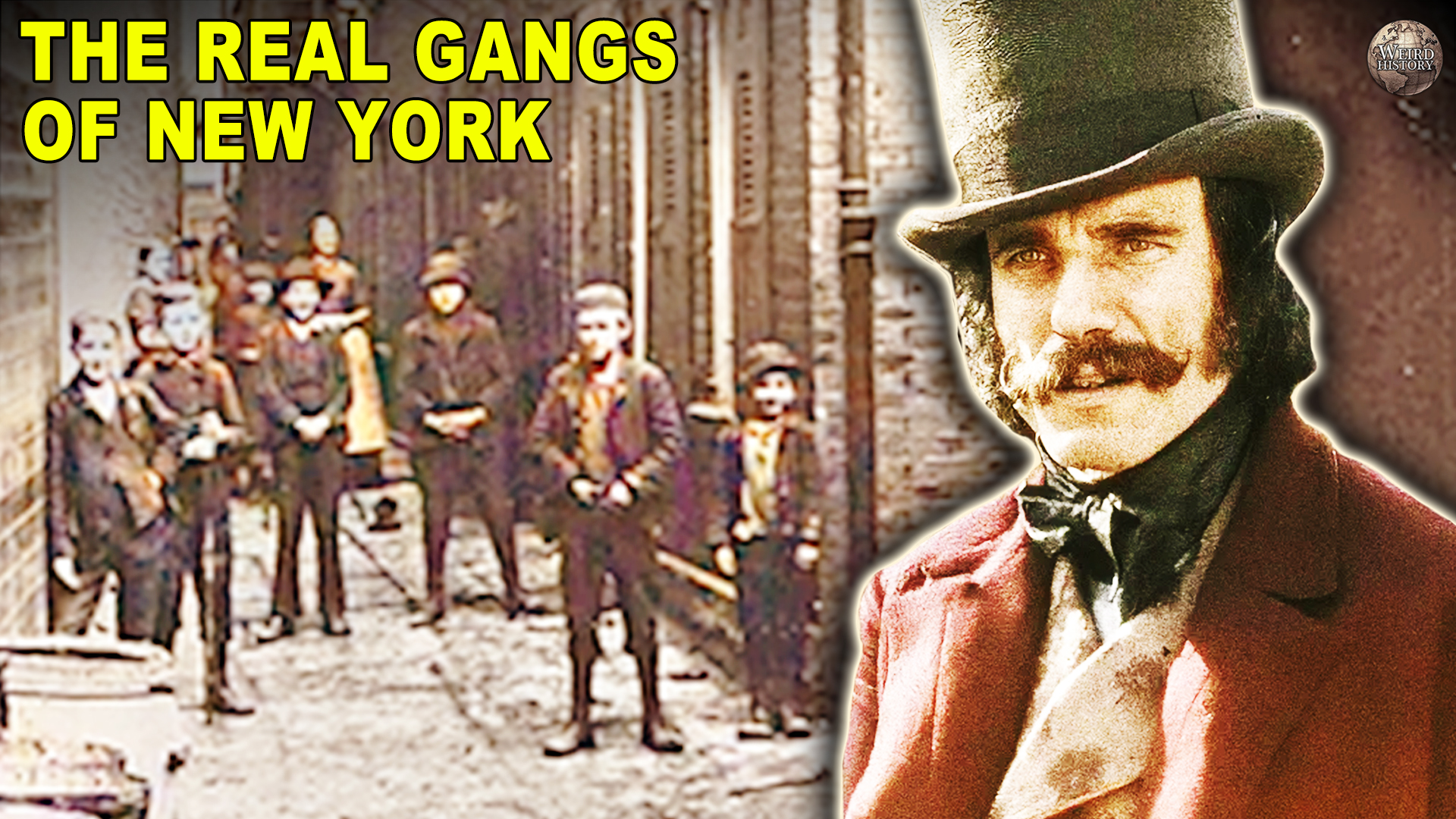
Martin Scorsese's period epic Gangs of New York took up residence in the chaos-ridden New York City neighborhoods of the mid-1800s, populated by eccentric characters and vicious acts of aggression. Its depiction wasn't entirely accurate, but it was based on a very real neighborhood and the very real misery it experienced. Five Points, a major intersection in lower Manhattan, was home to a host of impoverished immigrants seeking a better future for their families. That future wasn't easy to come by; newcomers mostly encountered hostility and distrust, which often boiled over into conflict.
Show More Show Less View Video Transcript
0:00
Martin Scorsese's 2002 period epic, Gangs of New York
0:03
takes several liberties with actual history. But a lot of the film, including a few of the characters
0:08
we see depicted on screen, were directly inspired by actual events. And the film setting, the dangerous slum known as The Five
0:15
Points, was a very real place. Today, we're looking at the true story behind Five Points
0:21
the neighborhood made famous by Gangs of New York. Time to take it to the streets
0:25
The Manhattan neighborhood once referred to as the Five Points no longer exists
0:33
and many of the streets that made its borders have been changed or renamed by now
0:38
like they all entered witness protection. The Five Points refers to the spots where
0:42
four streets intersected, Anthony, Cross, Orange, and Little Water. But today, Anthony is now Worth. Cross is called Moscow, Orange is switched over to Baxter Street
0:52
and little water simply no longer exists in any form. Today, part of the area is occupied by New
0:58
York's Civic Center, which includes City Hall, One Police Plaza, and other government buildings
1:03
while much of the rest has been incorporated into Chinatown. When European settlers first
1:08
arrived in what's now Manhattan, this area was mostly taken up by a freshwater pond known as
1:13
Colette Pond, which was a source of both drinking water and fish for the growing city
1:18
As the area around the pond turned into a bustling commercial district
1:21
particularly popular with slaughterhouses and tanneries, the water became severely polluted with bodily fluids, offal, and chemical byproducts, making the entire area one giant toxic fart jar
1:33
In the early 19th century, the city government filled in the pond and erected homes on the
1:37
newly created plots of land. But the landfill wasn't engineered properly. There was inadequate
1:42
drainage during storms, and decomposing vegetation that had just been covered up with dirt
1:47
caused pockets of methane gas to build up under the surface. In other words, it was so heinous, the Earth itself rejected it
1:54
The ground became unstable and muddy. Mosquitoes bred in stagnant pools of brackish water
2:00
Homes started shifting on their foundations or even crumbling. And a potent stench emerged, requiring many residents to breathe through camphor-soaked
2:08
handkerchiefs just to walk around, like a dead raccoon was permanently lodged in everyone's chimney
2:13
Before long, any New Yorkers with the means and resources to do so fled the area
2:22
As immigrants started pouring into New York in the 1820s through 1840s, particularly Irish
2:27
Catholics fleeing a famine in their homeland, the Five Points became not just the city's
2:31
most notorious slum, but one of the most infamous neighborhoods in the Western world
2:36
It's good to be number one at something. The extreme poverty and misery depicted in the Scorsese film were very real Outbreaks of cholera measles diphtheria and typhus were extremely common in the Five Points due to the dense population and unsanitary living conditions
2:51
particularly among young children. Five Points buildings and homes were also largely unsafe due
2:57
to a lack of oversight or any kind of housing regulations. Fires in the wooden tenement
3:01
buildings were extremely common, to the point that buildings were often referred to as fire
3:05
traps, and they weren't designed with any emergency exits or easy escapes in mind
3:10
Hmm, nowadays there are people who would pay four grand for that, just to have an address in Manhattan
3:15
Some of the Five Points' dire reputation also had its roots in racism and classism
3:19
so the level of vice and chaos we now associate with the Five Points was likely exaggerated
3:25
But salacious stories about the neighborhood sold a lot of newspapers, and eventually Five Points became a kind of grim tourist attraction
3:32
Upper-class people would occasionally travel there with police escorts to view the situation for themselves
3:37
like Tom Cruise taking his bodyguards to Food Lion. Author Charles Dickens visited the Five Points in 1842
3:43
while researching his book American Notes and was shocked after visiting a local house and saloon
3:49
He wrote, Poverty, wretchedness, and vice are rife enough where we are going now
3:53
This is the place. These narrow ways diverging to the right and left
3:57
and reeking everywhere with dirt and filth. Eh, must have been a Mets fan
4:02
While it was mostly known as an Irish neighborhood, many black Americans also lived in the Five Points
4:11
Slavery formally ended in New York on July 4, 1827, and the neighborhood became popular with recently emancipated black people looking to set down roots
4:19
Interestingly, it's believed that the intersection of recent Irish immigrants and freed African Americans in Five Points
4:23
may have led to the innovation of tap dancing. The theory suggests that black dancers in the Five Points viewed their neighbors doing an Irish jig
4:31
and modified it to suit their own style. A performer named William Henry Lane
4:35
billed as Master Juba or the King of All Dancers at the time, rose to prominence in the 1840s doing an early form of tap
4:42
dancing at a dance club known as Allmax at 67 Orange Street
4:45
in the Five Points. The King of All Dancers? Oh, you're going to buy a ticket to see that guy
4:51
Allmax, which sat on what's today known as Columbus Park, also became associated with the music hall genre
4:57
a precursor to both jazz and rock and roll. Gradually, the black population of the Five Points moved further to Manhattan's west side
5:04
specifically to undeveloped lands further north, which later became Harlem and the South Bronx
5:09
Italian immigrants also started arriving in the Five Points in the late 1840s and 1850s
5:15
Mulberry Bend, named for a curve in Mulberry Street bordering the Five Points
5:18
served as the hub of what would become New York's iconic Little Italy neighborhood
5:23
But despite its many contributions to world culture the five points are today most closely associated with organized crime Naturally due to its negative reputation the neighborhood became a popular site
5:37
for legally flexible, or outright black market, businesses, such as gambling dens and brothels
5:43
And they needed criminal organizations to keep them running smoothly. Local residents were mainly Catholic immigrants
5:49
dealing not just with the prejudices and intolerance of their neighbors, but often outright discrimination
5:53
by police, local bureaucrats, and other authorities. Forming local street gangs and turning to crime became an increasingly appealing way to make a living
6:02
One such Irish gang was known as the Roach Guards, named for their founder and leader
6:07
Ted Roach, and not after a brand of roach deodorant. The group formed in the 1820s
6:12
originally to protect local liquor merchants from theft before ultimately graduating into
6:17
robberies of their own and even murder. At their peak, the Roach Guards were the largest Irish gang
6:22
in New York, with well over 100 members. They frequently fought in the streets
6:27
against a rival gang known as the Bowery Boys, made up of native-born, anti-immigrant New Yorkers
6:33
Ultimately, a faction of the Roach Guard split off from the main group and renamed themselves
6:37
the Dead Rabbits, which is a pretty unique name. One story suggests that the name came from a Roach Guard meeting
6:43
during which someone threw a deceased rabbit into the center of the room as a call
6:47
to break off from the main gang and form their own new group. You know, if you want to speak even during a gang meeting
6:52
You can just raise your hand. The Dead Rabbits are featured in Gangs of New York
6:56
That's the gang led by Liam Neeson's character and the one Leonardo DiCaprio joins
7:00
when he returns to the city as an adult. As depicted in the film, the Dead Rabbits fought numerous gang battles
7:06
in the Five Points against the Bowery Boys and other associated anti-immigrant groups
7:10
starting in 1834. William Poole, also known as Bill the Butcher, was originally the leader of one of these nativist groups
7:17
known as the Washington Street Gang. He's the character played by an exquisitely mustachioed Daniel Day-Lewis in the movie
7:25
Eventually, Bill the Butcher's Washington Street Gang was assimilated into the Bowery Boys
7:29
There were many smaller gangs operating around this time in the Five Points as well. And just as in the film, most had their own special insignias, calling cards, and traditions
7:38
to distinguish themselves from the competition. The Bowery Boys preferred red shirts and stovepipe hats
7:44
while the dead rabbits really did march around with a rabbit nailed to a stick
7:48
Eh, I think I'd rather join the Hat Gang. A group called the Short Tails walked around with their shirts untucked, like tails
7:55
while a gang known as the Y.O.s announced their arrival with a distinct owl-like screech
8:00
Man, what is this, the Warriors? Though the scale of the movie's battle scenes may be a bit exaggerated
8:08
there were genuinely a lot of dead rabbits. Oh, the gang members, not the other thing
8:13
The gang frequently brought more men to these fights than the police and on some occasions more than even the state militia The most famous of these clashes was the Dead Rabbits Riot of July 1857 a two civil
8:25
disturbance that erupted from a street fight between the Rabbits and the Bowery Boys into a
8:29
full-on citywide gang war. Anywhere between 800 and 1,000 gang members took part in the riots during
8:34
the July 4th weekend, looting and damaging property across the city. It took two regiments
8:39
and the New York State Militia, along with two detachments of 75 police officers each
8:44
to ultimately put down the riots, mostly by clubbing rioters and gangsters with enough
8:48
brutality to scare everyone else off the streets. That is one way of doing it. Eight people perished
8:53
with an estimated 30 to 100 others injured, though it's believed many gang members who
8:57
were seriously hurt didn't seek medical attention for fear of being identified by authorities
9:01
You're not going to get clubbed by the police and then go tell the police about it. That's bad
9:06
ganging. According to underworld legend, there were a number of secret burials across the city
9:11
of criminals who had succumbed to their wounds in the days after the riots. It also would not be the
9:16
last time the gangs of New York fought with the government. A number of dead rabbits likely also
9:20
participated in the New York City draft riots of 1863, which opposed new laws drafting men into
9:25
the Union Army to fight the ongoing civil war. This is the conflict featured in the climax of
9:31
the Scorsese film. By the 1870s and 1880s, an Italian-American group known simply as the Five
9:40
Point Gang became the neighborhood's most notorious criminal outfit and developed a specific reputation
9:45
for brutality. Al Capone and Charles Lucky Luciano were both members while still young men living in
9:51
New York. You probably know those two guys from other gang movies. Five Points Gang founder Paul
9:56
Kellyanne has top lieutenants even managed to ingrain themselves into local New York politics
10:00
making financial contributions, threatening voters, and even stuffing ballot boxes to aid
10:05
their preferred candidates. Just like you see in Gangs of New York, the group worked closely with
10:09
the Democratic Party political machine known as Tammany Hall. In 1905, Kelly was involved in a
10:15
gunfight in the New Brighton Cafe, which he used as a clubhouse and headquarters, against two of his
10:21
former lieutenants. Though he survived the skirmish, it marked the beginning of the end of Kelly's
10:25
reputation and stature in the New York underworld, as well as the formal close of his time in the
10:30
Five Points. Kelly relocated his headquarters to Harlem, then Brooklyn, and then finally Chelsea
10:36
You know, wherever the next available hideout on Craigslist happened to be located
10:40
Ultimately, the mafia came in and took over most of the criminal activity that had formerly been
10:44
under the control of the Five Pointers, and gang members including Capone, Luciano, Giannitorio
10:49
and Meyer Lansky switched over to the new organization. Their fast collective rise to
10:54
the top of the criminal underworld was massively accelerated by the passage of prohibition and the
10:59
boom in bootleg liquor sales in 1920. And presumably at some point, they did something about the smell
Human Rights & Liberties
Documentary Films