Up next in 10



Quentin Tarantino has given us some of cinema’s most chilling and terrifying villains. From Hans Landa in Inglourious Basterds to Calvin Candie in Django Unchained and beyond. But none embody the Psycho Killer archetype quite like Mr. Blonde in Reservoir Dogs.
Show More Show Less View Video Transcript
0:00
Man, could you believe Mr. Blonde
0:02
That was the most insane thing I've ever seen. Why the f*** would you hire a guy like that
0:08
Michael Madsen's Mr. Blonde is Quentin Tarantino's most pure distillation of the psycho killer trope
0:14
He's not the leader, not the brains, and not even the most talkative, but he's the one
0:18
everyone fears. Because while the rest of the crew is busy yelling, bleeding, or dying, Mr. Blonde is
0:24
smiling, enjoying the silence, lighting a cigarette while the world burns around him
0:29
He's the one character who pushes the film's tone past gritty realism and into something more mythic and monstrous
0:35
A myth that, not coincidentally, Tarantino would revisit again and again in later films in an attempt to re-bottle that lightning
0:43
I told them not to touch the f***ing alarm, they did. If they hadn't done what I told them not to do, they'd still be alive
0:51
Released in 1992, Quentin Tarantino's debut film, Reservoir Dogs, was an inversion of the traditional heist film
0:57
Smartly working around the budgetary constraints of not being able to shoot the heist
1:01
Tarantino has the characters recalling the crime after everything went sideways, trying to piece together what happened
1:07
It quickly establishes a narrative voice for both the film and the characters, because we're not only seeing how they're reacting to the plot
1:14
but how they're reacting to one another. In what has become one of independent film's most famous opening scenes
1:20
we see our team of criminals having breakfast at a diner before the failed stick-up
1:23
It's a quick bit of character shorthand where we meet those organizing the heist
1:27
the Cabots, and the gang of strangers given fake names. The overly ytical Mr. Brown, the peacekeeper Mr. White
1:34
the rat Mr. Orange, the lifer Mr. Blue, the contrarian Mr. Pink, and the psychopath Mr. Blonde
1:40
played by Michael Madsen. At first, he's just another guy in a black suit eating breakfast
1:44
joking about pop music and the ethics of tipping, and he doesn't say much. He listens, he smokes
1:49
but when Mr. White refuses to give back Joe Cabot's book, there's one person he calls on, Mr. Blonde
1:54
Hey, I changed my mind. Shoot this piece of s***, will you
2:00
In addition to being one of the many bits of foreshadowing in this scene
2:03
Mr Blonde is the man you call on when you need dirty work done Once the heist goes sideways and the survivors retreat to the warehouse we get to see the real Mr Blonde And it worse than anyone expected
2:14
For a quick catch-up, just to remind everyone who's who, Mr. White and Mr. Pink are panicking
2:19
Mr. Orange is bleeding out on the floor. Everyone's pointing fingers, yelling about setups and rats
2:23
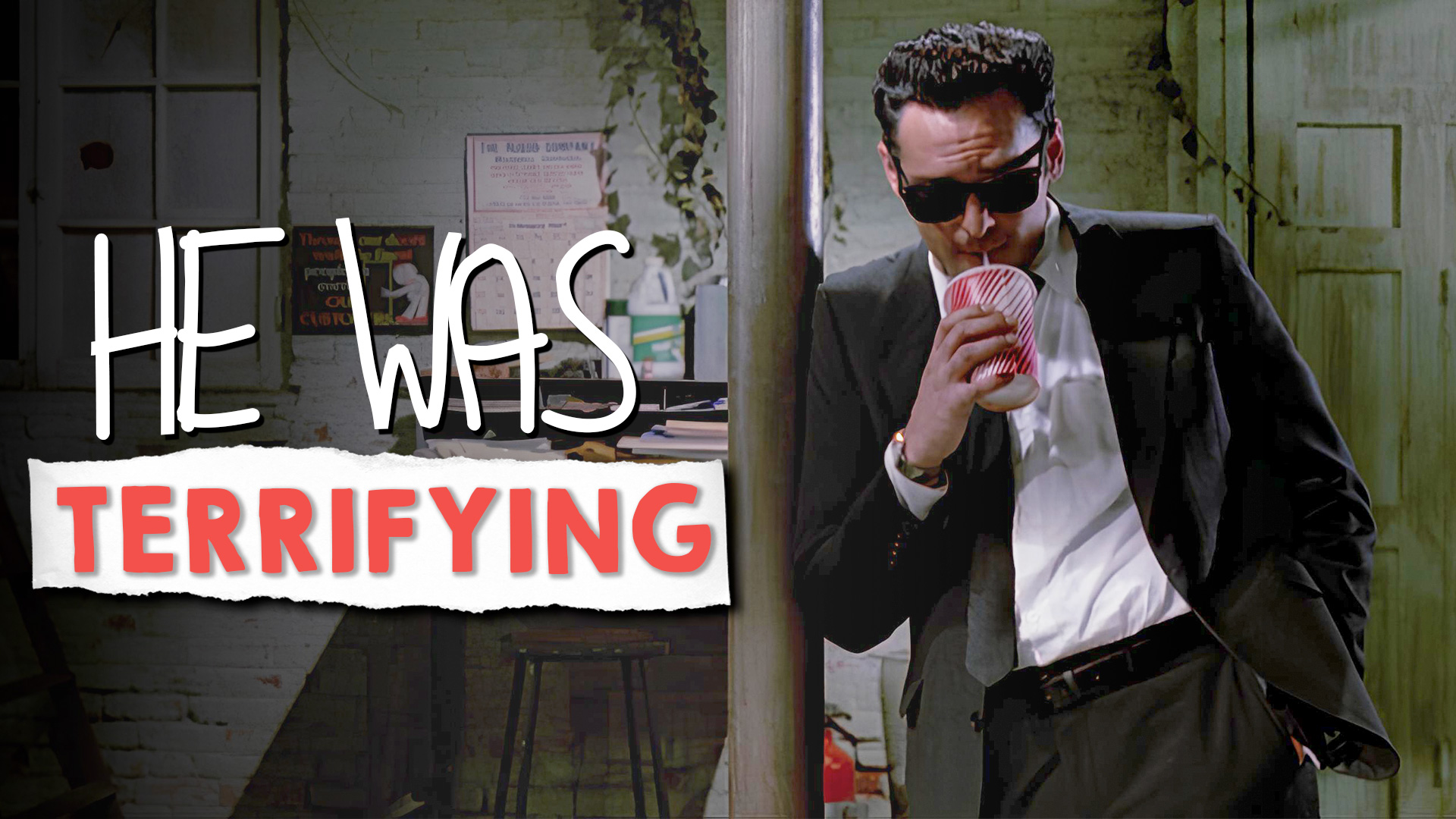
But Mr. Blonde, he's sipping soda like it's just another Tuesday. He's relaxed. He's calm
2:28
While Mr. White escalates, we learn that Mr. Blonde started shooting because someone set off the alarms
2:33
As matter-of-factly as possible, Mr. Blonde tells them they deserve what they get
2:36
It's this level of disregard, this sort of 1 plus 1 equals getting shot
2:40
that lets the audience know those finger guns over breakfast weren't just a joke
2:44
While Mr. White gets more and more emotional, Mr. Blonde just casually accepts whatever is about to happen with a level of disconnect
2:50
When Mr. Pink calms each of them down, Mr. Blonde makes a simple declaration
2:54
He's got a cop in the trunk of his car. Kidnapped, bound, gagged. That's when everything gets ratcheted up to 11
3:00
Which brings us to the dance. It's hard to overstate just how much this scene changed the cultural conversation around movie violence
3:07
what it could look like, and how it could feel. With the cop moved to the warehouse and tied to a chair
3:12
Mr. Blonde dials the radio into K. Billy's Super Sounds of the 70s, where Steeler's Wheels, Stuck in the Middle with You, is playing
3:18
He smiles, stands, and starts dancing with the razor he just pulled from his boot
3:23
It's not just sadistic, it's surreal. It's playful. It's scarier than rage
3:28
It's glee. That's the genius and the horror of it. because this is where Mr. Blonde breaks out of the mold of typical movie psychopaths
3:35
He's not snarling or foaming at the mouth. He doesn't give a dramatic speech
3:39
He just grooves like nobody's watching, smiling, humming, enjoying himself in what was an improvised dance
3:45
based on Tarantino's scripted, vague, maniacal dance. The audience, meanwhile, is trapped in the same helpless position as the cop
3:52
watching it unfold in real time. Because how do you reason with a man just dancing his little heart out
3:56
What makes this moment land isn't just the violence, it's the ease of it, the effortlessness
4:01
like he's done it before, like he's gonna do it again. Even the way the scene is shot plays into that feeling
4:06
Tarantino famously pans the camera away right before the ear is cut off
4:10
an old school trick that somehow makes the violence even worse. When Mr Blunt finally stands back into frame you hear him ask was that as good for you as it was for me There are obvious sexual connotations here as while no human in the last 50 years has probably said that phrase in earnestness
4:24
its place in the cultural lexicon can't be denied. That added bit of sexuality around the violence
4:29
is even more terrifying. Mr. Blonde then stands in front of the whimpering cop
4:33
and jokes like a child might with a fake telephone, like someone not holding a severed organ
4:38
It's pure cinema and it's pure nightmare. Of course, none of this would work
4:42
without Michael Madsen. There's a certain kind of actor who walks into a scene and instantly
4:47
shifts the gravity. Madsen is one of those guys. With his slow drawl, half-lidded eyes
4:52
and the posture of a taut spring, he doesn't need to say much. At the time of Reservoir Dogs
4:56
Madsen was already cultivating a reputation as a rough-edged actor with a chip on his shoulder
5:02
His real-life persona, part biker, part brooding loner, part self-destructive romantic, fit the character of Mr. Blonde almost too perfectly. And Tarantino knew it. That's why
5:11
Madsen gets the scene, that's why he gets the music. Because Tarantino isn't just casting for
5:15
the character, he's casting for mythology. And Madsen, a guy who could just as easily play a cop
5:21
or a cowboy or a killer, became the physical embodiment of Mr. Blonde's casual menace. The
5:26
line between actor and role blurred, and that's what made it stick. Let's be clear, Mr. Blonde
5:32
isn't a wholly original character. He's part of a long tradition of psycho killer archetypes in
5:37
crime films. From Tommy DeVito in Goodfellas to Frank Booth in Blue Velvet, cinema has always had
5:42
room for the unpredictable sadist who can't be reasoned with. But Mr. Blonde is different because
5:47
he's less theatrical. He doesn't fly off the handle. He doesn't choose scenery. He's refined
5:52
economical, almost minimalist. He's what happens when you strip all the excess off the psycho
5:58
killer and just leave the bone. That's what makes him scarier because he doesn't need to escalate
6:03
he's already operating at his natural resting state. And if you give him a rope, he's going to hang someone with it
6:08
calmly, efficiently, maybe even with a joke. In a post-Reservoir Dogs world, we've seen this archetype copied again and again
6:15
The charming psychopath who smiles while he tortures you. The soft-spoken killer who doesn't raise his voice
6:21
The wolf in a perfectly tailored suit You can draw a straight line from Mr Blonde to characters like Anton Chigurh Lorne Malvo or even Hans Landa All of them owe something to Madsen performance and to Tarantino willingness to just sit in the horror of a calm man with a blade But as we all
6:37
know, Mr. Blonde doesn't make it out alive. When he gets gunned down by Mr. Orange, it's shocking
6:42
not just because he dies, but because he dies fast. No monologue, no slow motion standoff
6:48
just bang, done. But it's fitting, because by the time he dies, he's already poisoned everything
6:53
He's already made the warehouse a war zone. He's already taken the movie from crime thriller to
6:57
psychological horror. His presence is still felt long after he's gone. Maybe more importantly
7:03
his death confirms what the rest of the movie's been hinting at all along. This crew never should
7:08
have brought him. Blonde isn't just a bad team member, he's a bad idea. He's the virus in the
7:13
system. The reason things went south, not because he talked to the cops or fumbled the getaway
7:17
but because he doesn't care. About the plan, about the people, about the consequences
7:22
he's the guy who makes everything worse just by being there. And in a genre where criminal crews always have that one guy who screws it up for everyone else
7:30
Mr. Blonde is the patron saint. And it's no coincidence that Tarantino couldn't let go of Madsen after Reservoir Dogs
7:36
He originally wrote Vincent Vega in Pulp Fiction as Vic Vega's brother
7:40
hoping to build a kind of Vega-verse around the two characters. And later, he brought Madsen back for Kill Bill as Bud
7:46
another slow-moving, dead-eyed killer who seems like he's just waiting for the world to end
7:50
Because that energy, the stillness, the weight, the unreadable expression, became a cornerstone of Tarantino's villain toolkit
7:58
Not the loudest, not the craziest, just the calmest. Because the most terrifying characters are usually the ones who don't need to raise their voice
8:05
the ones who smile while they ruin you, the ones who are already broken and have no interest in putting themselves back together
8:11
Mr. Blonde is that guy. And in many ways, he's still the best version of that guy Tarantino ever put on screen
8:18
Decades on, long after the credits roll, you remember the way he danced, the way he smiled, the way he lit a cigarette like nothing happened
8:25
You remember the ear, you remember the blood. But most of all, you remember the feeling that no matter how tough you are, there's always someone scarier in the room
8:34
And he might already be looking at you