Up next in 10



We never set eyes upon these horror movie characters.
Show More Show Less View Video Transcript
0:00
Horror movies are typically concerned with unnerving the viewer by any means necessary
0:04
and what can be easier than doing it through visual means. By showing the audience something
0:09
inherently unsettling or disturbing, a film can push their buttons and ensure they never forget
0:15
what they're seeing. But horror can also stem just as much from what we don't see. After all
0:20
Steven Spielberg's Jaws is one of the greatest horror films of all time, despite The Shark only
0:24
being featured briefly throughout. Yet these horror movies all one-upped that by featuring
0:29
prominent notable characters who are never actually physically seen once within the film
0:36
itself. Perhaps they're ghostly villains who are invisible, entities capable of possessing human
0:42
hosts, or even heroic characters who are only spoken about but never seen for one reason or
0:48
another. Whatever the circumstances, these notable characters are all never seen in their respective
0:54
movies, no matter the often huge impact they have on the story overall. It's a testament to the
1:01
filmmaking that these characters all feel present, even though we're never afforded an opportunity
1:07
to actually look at them. I'm Sean Ferrick for WhatCultureHorror, and here is our list of horror
1:13
movie characters we never see. The child narrator, Weapons. Zach Greger's stunning new horror film
1:21
weapons is bookended by narration from a young girl who provides crucial context for the beginning
1:27
and end of the story. And yet, this girl is never actually featured as an on-screen character
1:33
and the film makes little effort to explain who she might actually be. The voiceover is provided
1:39
by young actress Scarlett Sher, who is credited only as narrator. And while some have understandably
1:45
speculated that the girl may very well attend Maybrook Elementary School, where all the children
1:51
disappear, Shur herself doesn't seem to appear in the movie, not even as a background artist
1:57
The narration makes it clear that the girl is a local to the town of Maybrook, and Craigor's
2:03
original script refers to her as an 11-year-old girl called Maddie, but that's about it. Honestly
2:09
it's probably better off this way. Craigor's film delights in its eerie ambiguities and
2:15
trusting the audience to figure things out for themselves. So why mess that up by stripping all
2:21
the mystery away? The Entity. The Entity. The criminally underappreciated 1982 horror film
2:28
The Entity revolves around Carla Moran, a single mother who finds herself repeatedly terrorized
2:33
and sexually assaulted by an invisible poltergeist-like entity. The Entity is never directly
2:38
envisaged on screen, requiring the production to employ cutting-edge and impressively well-aged
2:44
effects work to show the force attacking Carla in her own home. More to the point, the entity's
2:50
invisibility makes it infuriatingly difficult for Carla to prove what's happening to her to the
2:56
authorities, ensuring that she's initially dismissed as mentally ill or attention-seeking. Though the entity does manifest energy by way of terrifying electrical discharges
3:05
we never actually see its own distinct form. The fact that we never see its actual body
3:10
only the impact it has on the environment as it moves around frankly makes it that much scarier
3:16
And to make matters worse, the film ends without Carla ever decisively triumphing over the force
3:24
the final scene only noting that the attacks have become less common and intense
3:29
Pablo, wreck. By their sheer nature, found footage movies don't often show too much of the person operating the
3:37
camera, though usually they'll at least be glimpsed in a mirror or another character will take hold of
3:42
the camera for a little while to give them some face time. But in the case of the classic Spanish
3:48
horror Wreck, cameraman Pablo isn't properly seen once during the entire film. The focus is solely
3:55
on news reporter protagonist Angela Vidal, and considering that Pablo is literally a cameraman
4:02
for the news, he's probably totally used to that being the case. Hell, even when Pablo is beaten to
4:07
death and devoured by the mutated, infected Tristana Medeiros, at the end we don't get any
4:13
sort of sustained look at him. The most we ever see are quick glimpses of his hands and feet
4:18
but never his face. This makes a certain amount of sense when you consider that the film's camera
4:24
operator was its cinematographer, Pablo Rossa, who presumably played Pablo because it was easier
4:30
than training a real actor to operate the camera. The baby. Rosemary's baby. Despite Roman Polanski's
4:37
incredible 1968 horror film Rosemary's Baby being centered entirely around the impending spawn of
4:43
Rosemary, we never actually get to see the baby once they're born. In the movie's unforgettably
4:49
bleak ending, Rosemary discovers that her child has been kidnapped by a demonic coven. And more
4:54
to the point, the father of her child isn't her husband Guy, but rather Satan himself. Rosemary
5:00
is left terrified at her son's eyes, yet we as the audience never see this for ourselves. We're only
5:07
left to watch in horror as she reluctantly mothers her son, the apparent antichrist. It goes without
5:13
saying that nothing a movie can show will ever quite live up to what we can conjure in our own
5:18
minds. For more than 50 years, viewers have pondered what Rosemary's son actually looked like, and
5:25
Rosemary's distraught reaction face really says it all. Plus, there's the obvious practical concern
5:31
of giving a young baby demonic eyes. You probably wouldn't be able to fit a baby with contact lenses
5:37
and in 1968, optical effects were a risky bet for something like this. All things considered
5:44
not showing the baby was definitely the right way to go Christina Carpenter Scream 2022 The fifth Scream film introduced audiences to new protagonists Sam Carpenter and her sister Tara with Sam later revealed to be the daughter of ghostface killer
6:00
Billy Loomis, who had an affair with Sam and Tara's mother Christina in high school. Despite
6:06
the impact of this revelation on Sam's arc throughout the fifth and sixth films, Christina
6:11
isn't seen in either film, being away on a business trip during the events of Scream 5
6:16
and then estranged from both of her daughters by Scream 6. Many fans initially suspected that Christina would finally be introduced in Scream 7
6:26
but with both Melissa Barrera and Jenna Ortega ultimately both exiting the sequel
6:31
it's safe to say that any potential plans for her are now kaput. Some even went so far as to speculate that Christina could be a killer in a future Scream film
6:40
but considering the possibility that we may never see Sam or Tara again in the franchise
6:44
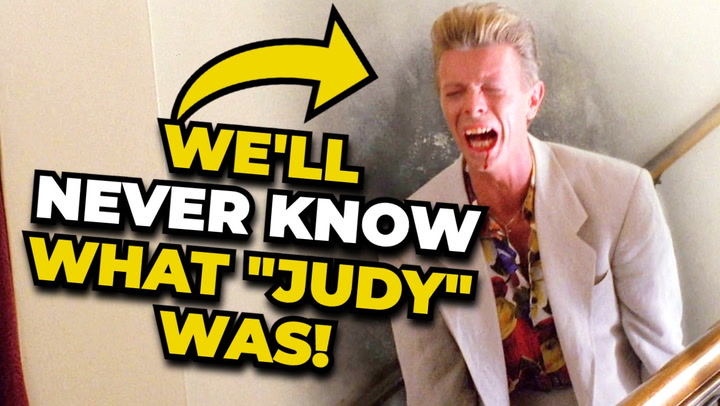
Christina may forever be a character who audiences simply don't meet. Judy, Twin Peaks, Fire Walk With Me
6:52
Twin Peaks, Fire Walk With Me is enigmatic, even for the standards of the late, great David Lynch
6:59
and sort of introduces audiences to the character of Judy. Judy is first mentioned by Special Agent Philip Jeffries
7:06
during his memorable scene at the FBI regional headquarters in Philadelphia, where he rocks up and immediately starts insisting that he won't be talking about Judy
7:16
With that, Jeffreys vanishes. And that's the last direct word we hear about Judy in the film
7:21
who was never once elaborated upon or physically seen. The implication is that Judy is a malevolent force of some kind
7:29
And while Lynch's sequel series, Twin Peaks The Return, continued to follow the Judy thread
7:35
we never got explicit confirmation that any of the entities seen throughout the series
7:40
were 100% Judy. And now that Lynch has tragically passed, in turn bringing the possibility of future
7:47
Twin Peaks stories to an end, her concrete appearance will remain a mystery forevermore
7:52
Then again, that eerie uncertainty possesses its own kind of staying power. Dan Brenner, Buried
7:59
The brilliance of 2010's horror thriller Buried is that the entire film only shows one single
8:06
character on screen, the ill-fated American truck driver Paul Conroy, who ends up buried alive in a
8:11
wooden coffin while working in Iraq. Though the film is basically the Ryan Reynolds show, he does
8:17
speak with numerous other characters over the phone, most prominently Dan Brenner, the head of
8:23
the hostage working group who attempts to locate Paul to save him before it's too late. And while
8:29
audiences might expect that they'll get to see Dan at the triumphant end of the movie when Paul is
8:35
inevitably rescued, that isn't quite what happens. In a devastating twist ending, Dan actually isn't
8:42
able to rescue Paul in time, leaving him to be suffocated to death as the coffin is filled with
8:48
sand and all Dan can do is profusely apologize for not making it. Keeping the camera in the coffin
8:54
with Paul the entire time makes his isolation that much more palpable and having his only
9:01
possibility of salvation be a remote disembodied voice we can never put a face to only further
9:07
hammers that point home. Billy Black Christmas. 1974's Black Christmas doesn't get nearly enough
9:14
credit for being one of the earliest and most innovative slasher films, nor for featuring such
9:19
a terrifying antagonist, despite the fact that we never get a clear look at him. The film follows a
9:25
group of sorority sisters who are stalked and killed by a shadowy man known only as Billy
9:30
whose face and body are never conclusively shown to the audience. Director Bob Clark does a fantastic job of blanketing Billy in shadow
9:38
such that we never see more than a limb or an eye peering out of the dark
9:43
This, combined with the character's lack of a clear motive, makes him stand out among slasher film antagonists
9:50
leaving him something of a blank slate for audiences to project their own fears and anxieties onto
9:56
Though his lack of palpable screen presence has made him less iconic than, say, Michael Myers
10:02
and probably explains why Black Christmas 2 never happened, it's ultimately an artistic choice that's aged incredibly well more than 50 years later
10:12
Paimon Hereditary Over the course of Ari Aster's mesmerising horror masterpiece Hereditary
10:18
we learn that a coven is plotting to resurrect the demon king Paimon
10:22
who requires a male body to serve as his host. The coven decides upon Annie's son Peter, and at the end of the movie, Peter does indeed appear to become possessed by King Paimon, completing the coven's plan
10:34
Yet, we never actually behold Paimon's true form physically on screen, though we see a picture of Paimon in a book, and occasionally glimpse strange glowing light when something supernatural is happening
10:47
That's it. This is likely a combination of both practical and artistic decision making
10:52
For one, it'd be tough to show Pyman on a screen for a $10 million budget
10:57
and the potential for him to look absolutely ridiculous speaks for itself
11:02
Having him instead operate through human vessels was definitely the smart play here
11:07
all while the audience is left to ponder what the newly resurrected Demon King will do with his new human body
11:16
The Entity, The Endless. Justin Benson and Aaron Moorhead's terrific sci-fi horror film The Endless follows two brothers who revisit an apparent cult to which they belonged as children
11:28
After arriving, Justin becomes convinced that he's being observed by an invisible entity
11:34
and it revealed later in the film that a strange unseen cosmic force is trapping people in time loops for its own seemingly perverse amusement Though the brothers do eventually find various structures which show different possible interpretations of what the entity looks like the film never gives a fixed account
11:54
of its true form. Given that The Endless firmly follows the Lovecraftian tradition of introducing
12:00
an entity which defies conventional human comprehension, once being described as made of
12:06
impossible colours, it's fitting that we as the audience are never shown what it looks like
12:12
After all, when a creature is built up so much, a physical reveal is almost certainly destined to be a disappointment
12:20
Azazel, Fallen. The massively underrated 1998 horror thriller Fallen stars Denzel Washington as John Hobbs
12:29
a dogged Philadelphia detective who investigates a series of killings which resemble the M.O. of a recently executed serial killer, Edgar Rhys
12:38
As it turns out, Hobbes is actually pursuing a demonic fallen angel by the name of Azazel
12:44
who harbors the ability to possess anyone he touches, allowing him to effectively hop from host to host to continue his killing spree when the heat closes in on him
12:53
And so by his sheer nature, we never actually see Azazel as a pure demon in the film
12:59
simply the many, many hosts he inhabits throughout the story to provoke Hobbes
13:04
including ultimately himself in the film's bonkers climax. Though chilling first-person shots do a fantastic job of lending his easel an otherworldly quality, Fallen quite smartly
13:16
decides not to give us a CGI rendition of his true form, the goofy potential of which
13:21
speaks for itself. Death, Final Destination. The Final Destination franchise revolves around
13:27
hapless people being chased down by death itself, a force capable of extreme punishment
13:32
and yet which is never physically depicted on screen as a tangible being, thankfully
13:37
Now, it's absolutely worth pointing out that the series has occasionally depicted the vague essence of death
13:43
by way of shadowy shapes moving around, but it's also quite sensibly never committed to showing death without ambiguity
13:51
For many years, it was a popular fan theory that mortician William Bloodworth
13:56
was actually the personification of death, hence his intimate knowledge of how death operates
14:01
But the most recent sequel, Final Destination Bloodlines, quite categorically proved that not to be true in an incredibly moving final performance from actor Tony Todd
14:13
Given the enormous potential for a physical rendition of Death to come off as obscenely silly, especially this far into the film franchise
14:22
the filmmakers would be best to stick to what works, keeping Death an intangible force pulling the strings from behind the curtain
14:29
Sometimes it's so tricky to do full justice to an entity described on the written page that it's
14:40
better to just not bother at all. And that was quite sensibly the case with the 1984 adaptation
14:45
of Stephen King's short story Children of the Corn. The focal religious cult worships a bloodthirsty
14:52
deity known as He Who Walks Behind the Rose, but the creature is never once shown, its presence
14:57
instead being implied through shadows, movement amid the cornfields, and so on. Considering the
15:03
film's mere three million dollar budget, it was certainly a smart choice, and one that's been
15:08
absolutely vindicated by the franchise's later attempts to show He Who Walks Behind the Rose
15:13
on screen. Children of the Corn 3 Urban Harvest misguidedly depicted it as a comical worm-like
15:21
creature, and 2020's risable remake envisioned it as a lo-fi CGI monster that's perhaps best
15:28
described as what you get when you order Groot from Wish. Given that Children of the Corn revolves
15:33
around a cult of murderous children, there should be plenty to sustain the audience's interest
15:38
Let He Who Walks stay out of sight. Olsen and Airback, The Thing from Another World. The original
15:45
1951 The Thing from Another World is decidedly tamer than John Carpenter's 1982 remake, with many
15:51
of the deaths at the hands of the plant-based alien creature taking place off screen. This is
15:57
true of two Doctor characters, Olsen and Ehrbach, who are said to have been discovered hanging from
16:03
the greenhouse with their throats cut and their bodies drained of blood by the alien. But while
16:09
it's not terribly surprising that a 1951 film doesn't depict The Thing's rampage as graphically
16:15
as Carpenter's remake did three decades later. What is more surprising here is that we never
16:20
actually see Olsen or Auerbach at all. That's right, we never meet these characters before
16:26
their demise, and so the audience likely isn't inspired to care much about them being killed
16:32
Even if the film couldn't show them dying, it might have been worth giving them a scene or two
16:38
on screen before dispatching them, especially as they're the two only human casualties in the
16:46
entire movie. The aliens, the fourth kind. Aliens are extremely tough to pull off well, especially
16:53
in a lower budget horror film like the fourth kind. And so filmmaker Olatunde Oson Sanmi was
17:00
absolutely smart to keep things vague. Despite being panned by critics upon release, the film
17:06
has won itself something of a cult following in the years since, largely due to its faux documentary
17:11
framing and admittedly unsettling style. Crucially, though the presence of the aliens is consistently
17:18
felt throughout the film by way of shadows and flashes of light, they're never shown in plain
17:23
view and often concealed under degraded video footage. It's an approach that definitely left
17:29
many frustrated when the fourth kind was first released back in 2009, but it also likely prevented
17:34
the film from collapsing in on itself with a potentially hokey extraterrestrial reveal It still not a great movie despite its fans though this was definitely the right creative call
17:48
Ken Loney, Pontypool. Bruce McDonald's terrifically inventive Pontypool is set primarily in a radio station as shock jock Grant Mazzy
17:58
receives calls and transmissions about a deadly viral outbreak of a virus that spreads through
18:04
through the English language itself. With its setting largely confined to the radio station
18:10
most of Pontypool unfolds very much like a radio play, which makes total sense given that the
18:15
filmmakers have cited Orson Welles' iconic radio broadcast of The War of the Worlds as a major
18:20
inspiration on the story. And while the characters do come and go from the station, there's one
18:25
pivotal person we never get to see, helicopter reporter Ken Loney. Ken repeatedly calls Grant
18:32
to report on the mayhem taking place in the town, painting a vivid picture of the outbreak and in
18:38
turn serving as a vital lifeline to the station. However, Ken ends up succumbing to the virus later
18:46
on, and though we never see him once throughout the movie, his loss is certainly still felt by
18:52
the audience. The creators of the Cube. Cube. 1997's cult classic horror Cube follows a group
18:59
of seven people who wake up trapped inside a labyrinth of deadly cube-shaped rooms. They have
19:04
no idea how they got there, nor why they've been put inside such a macabre creation, or who was
19:09
responsible for the cube being built. And brilliantly, the film ends without answering much of this
19:13
Only one character manages to find the cube's exit, but the film ends without revealing what
19:18
awaits them outside, or who made the damn thing. It's a perfectly enticingly vague one-off movie
19:25
enough that one might be compelled to ignore the sequel, Cube 2 Hypercube and Prequel Cube Zero
19:32
for making far too much effort to demystify the cube, revealing that it was built by a shadowy corporation by the name of Izon
19:38
Some things are better left up in the air, and if you take the original on its own terms
19:44
it was so smart to never show its single survivor, Kazan, meeting the people behind the cube
19:52
The driver, the car. Time for a deep cut now with 1977's cult classic The Car
19:58
in which a mysterious black vehicle goes on a rampage indiscriminately killing the residents of a small town
20:04
The driver of the 1971 Lincoln Continental, Mark III, is never once seen throughout the film
20:10
despite the efforts of the townsfolk to figure out who is behind the wheel
20:15
And while The Car has often been compared unfavourably to Steven Spielberg's, admittedly superior
20:21
1971 debut Duel, which similarly features a driver whose identity is never revealed to the audience
20:27
this film ultimately takes on a wild supernatural bent. In the finale, when the car is apparently
20:34
destroyed by an explosion, a seemingly demonic force can be briefly seen amid the flames
20:41
though its form is ultimately too ambiguous to be clearly identified. And honestly, the lack of a
20:47
concrete explanation for what was driving the car is probably for the best. We know it's something
20:52
supernatural and seemingly diabolic in origin, and that's really all we need to know. The creatures
20:59
Bird Box. Though Netflix's post-apocalyptic horror film Bird Box was ultimately a bit of a
21:04
disappointment, it at least gets credit for having the restraint to never show the central creatures
21:10
After all, in the film itself, anyone who looks at the monsters will be swiftly compelled to kill
21:15
themselves and so there's something thematically fitting about we the viewers also never getting
21:21
to look at them. However it almost didn't go this way. During development producers insisted that
21:26
screenwriter Eric Heiserer write a dream sequence where protagonist Mallory encounters one of the
21:33
monsters. A scene featuring an on-screen monster was indeed shot though Heiserer, director Suzanne
21:40
Beer and Sandra Bullock all pointed out that the results looked incredibly silly and so the decision
21:45
was made to never show the creatures to the audience. While Bird Box didn't live up to its
21:50
full potential, at least Beer had the good sense to push back against the producers and let our
21:57
imagination fill the monstrous blanks. The entity Skinnamarink. Kyle Edward Ball's wildly polarizing
22:05
experimental horror film Skinner Marine features a pair of young siblings waking up in the middle
22:10
of the night and finding themselves unable to locate their father or a way to exit their house
22:15
The siblings spend the movie being tormented by an unnamed entity that's also never seen
22:20
throughout the film and only heard. This is likely as much a practical choice as a vibes-based one
22:26
Introducing a physical antagonist would be much tougher to pull off persuasively
22:30
on the film's mind-bogglingly low $15,000 budget. We hear the entity and its presence is felt
22:38
through its ability to manipulate the environment of the house, but we never get a clear unambiguous
22:44
look at it. Even when we see shapes, they're grainy and tough to parse, as likely contributed
22:50
to Skin and War Inc. becoming a much-discussed viral hit in 2023. Because, as the history of
22:57
horror has proven time and time again, even the most incredible effects can't compete with what
23:04
the human brain can cook up when left to its own devices. That's everything for our list today
23:10
folks. Thank you so, so much for watching along. You are awesome. You are wonderful
23:15
Is there any decidedly missing characters that you think should be on this list? Let us know in the
23:19
comments below. Please make sure you're following us on the various socials. We're at WhatCultureHorror, I'm at Sean Farrick, and you are a big bunch of legends. Look after yourself until I see you again
23:27
make sure that you're liking sharing and subscribing and until I see you you might not see me but I'm there